

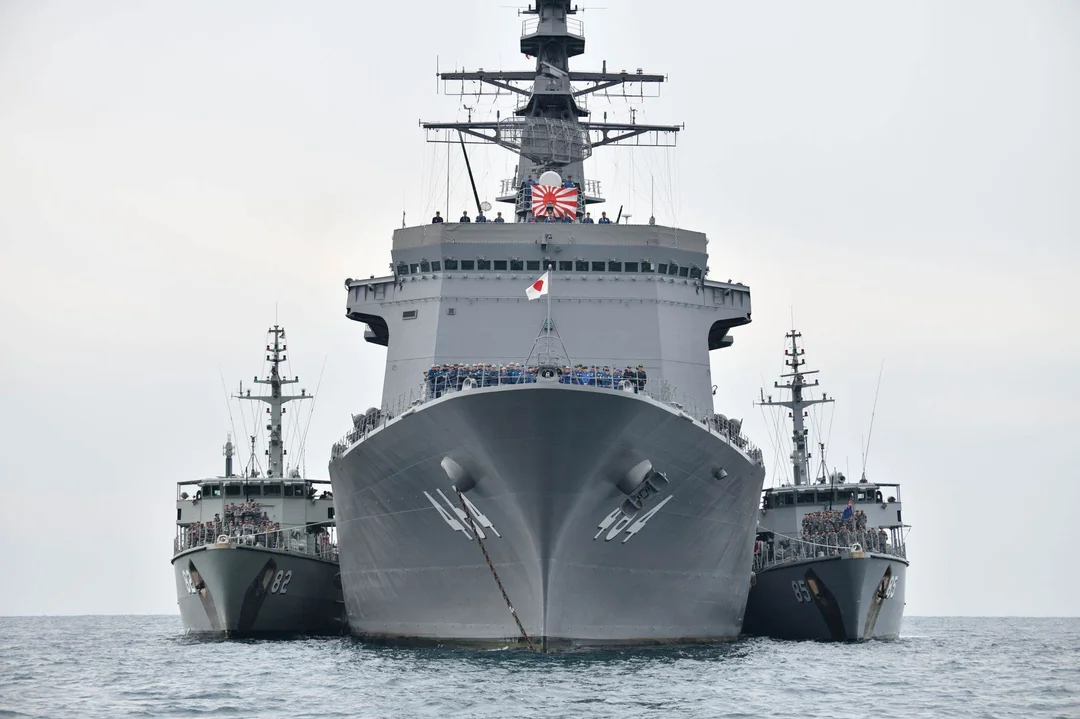

TOKYO – Japan is considering a major maritime deployment to secure vital Middle East oil routes following a direct request from Washington. The Japanese government and its ruling coalition have started serious discussions about sending Maritime Self-Defense Force (MSDF) minesweepers to the Strait of Hormuz.
This potential move comes directly in response to a call from US President Donald Trump. He asked global allies to help protect this critical Middle East waterway to ensure oil shipments can pass safely.
For Japan, this is not a simple request. It forces Tokyo to balance its vital alliance with the United States against its own strict laws and its need for a stable energy supply.
Why the Strait of Hormuz Matters
The Strait of Hormuz is one of the most important shipping lanes in the world. A massive portion of global oil passes through this narrow stretch of water between Oman and Iran. For a country like Japan, the stakes are incredibly high.
- Heavy Reliance on Imports: Japan has almost no domestic oil resources and relies entirely on global trade to keep its economy running.
- The Middle East Connection: The country buys over 90% of its crude oil from the Middle East.
- Economic Lifeline: Any blockage or threat in the strait directly threatens Japan’s economy, industry, and daily life.
President Trump has made it clear that he expects nations relying on these oil routes to step up and help protect them. Because Japan is deeply dependent on Middle Eastern oil, the pressure from Washington is strong.
The Constitutional Challenge
Sending military ships overseas is always a sensitive topic in Japan. After World War II, Japan adopted a pacifist constitution. Article 9 of this constitution limits the military to a strictly defensive role.
Because of this, the government cannot simply order the MSDF to join a foreign military coalition. They must find a clear legal path. Lawmakers are currently looking at a few different options:
- Maritime Security Operations: This is essentially a police action. It would allow Japanese ships to protect vessels flying the Japanese flag. However, it does not allow them to protect foreign ships, even if those ships are carrying cargo meant for Japan.
- Special Measures Law: The government could draft a new, temporary law specifically for this situation. This process takes time and requires intense debate in the Japanese parliament (the Diet).
- Self-Defense Posture: In extremely rare cases, if Japan’s survival is directly threatened, broader actions might be allowed. However, applying this to the Strait of Hormuz is legally difficult.
To avoid breaking the law, officials must ensure that any mission strictly focuses on gathering information or removing direct threats, like naval mines, rather than engaging in combat.
Historical Precedents for Japan
This is not the first time Japan has faced this kind of pressure. Historical actions give us a clue about how Tokyo might handle the current situation.
Following the 1991 Gulf War, Japan actually sent MSDF minesweepers to the Persian Gulf to clear explosive devices. That mission was widely considered a success and marked a turning point for Japan’s overseas operations. Later, during the early 2000s, Japan also provided refueling ships in the Indian Ocean to support US-led anti-terror operations.
These past events show that Japan is willing to contribute to global security, but only within carefully defined, non-combat roles.
Balancing Washington and Tehran
Japan is in a uniquely difficult diplomatic position. On one hand, the United States is Japan’s most important military and political ally. Tokyo needs Washington’s protection in the increasingly tense Asia-Pacific region.
On the other hand, Japan has historically maintained friendly relations with Iran. Unlike many Western nations, Tokyo has kept diplomatic and economic channels open with Tehran. Sending warships to join a US-led patrol near Iran’s coast could damage this long-standing friendship. Recent reports even suggest that Iran is willing to allow Japanese ships safe transit, highlighting the special diplomatic status Tokyo holds in the region.
To solve this problem, Japanese leaders are trying to find a middle ground. They want to show the US that they are helping, without angering Iran. One likely compromise is that Japan might send ships to nearby areas, like the Gulf of Oman or the Arabian Sea, but keep them out of the Strait of Hormuz itself.
What Happens Next?
The ruling Liberal Democratic Party (LDP) and its coalition partner, Komeito, are currently debating the exact details of the plan. Komeito is traditionally more cautious about sending military forces overseas, so reaching an agreement will take time and careful negotiation.
Right now, the focus is on gathering accurate intelligence. The government needs to know exactly what risks commercial ships face before committing any MSDF assets.
The final decision will be a major test of Japan’s modern foreign policy. It will show the world how Tokyo navigates the fine line between its domestic laws, its alliance with the US, and its need to secure its energy future. The entire shipping and energy sectors are watching closely to see what Japan decides to do.
Trending: Japan’s Growing Militarism Threatens Regional Security