

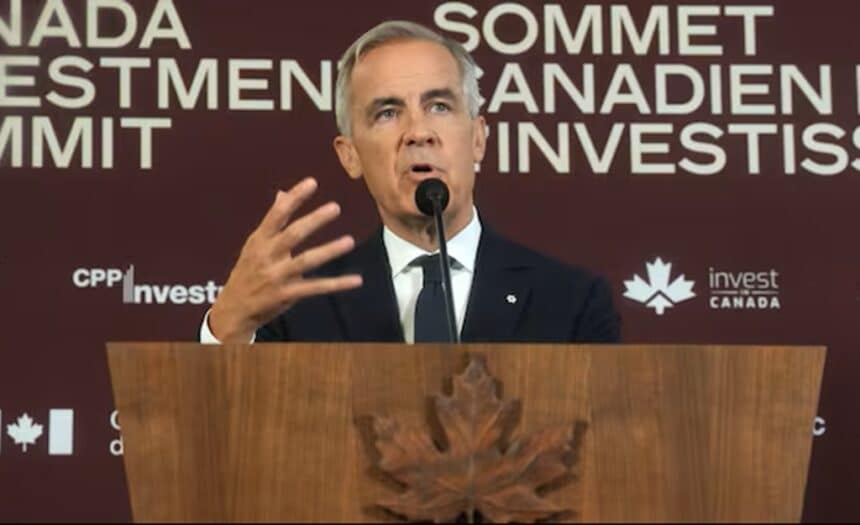

OTTAWA – Mark Carney’s Canada Investment Summit is making headlines with its bold promise to spark a $1-trillion investment boom over the next five years. It sounds like exactly what the Canadian economy needs right now. However, a closer look at what is happening behind the scenes raises some serious questions about the entire operation.
Just weeks before this massive event, a major shakeup occurred at the federal agency in charge of drawing foreign money. The sudden departure of top executives has many wondering who is actually steering the ship. Now, Canadians are demanding more transparency from their government.
Key Takeaways
- Invest in Canada’s CEO abruptly resigned just weeks before the crucial investment summit.
- Nearly half of Canada’s 2025 foreign investment came from buying existing corporate assets.
- Canadians are demanding more transparency on how the $1-trillion goal is actually calculated.
A Sudden Leadership Shakeup Before the Big Event
Less than two weeks before the summit kicked off, Invest in Canada CEO Laurel Broten suddenly left her post. This was a massive surprise move, as her term was not scheduled to end for over a year. Naturally, the timing of her exit has sparked intense speculation in Ottawa. It is highly unusual for a leader to depart right before their biggest event.
Following her unexpected resignation, the government quickly appointed Dominic Barton as the new board chair. However, tough questions remain about the agency’s overall board governance and internal culture. People are also asking how Ottawa’s summit partnership with CPP Investments and PSP Investments actually functions in practice. There seems to be a lack of clarity surrounding these powerful alliances.
These two massive pension funds are acting as heavy-hitting co-hosts for the high-profile Toronto summit. Yet, the specific details of their involvement and decision-making power remain largely out of the public eye. When public pensions are involved in political events, voters expect absolute clarity. Unfortunately, that clarity has been largely missing from the official press releases.
Transparency is absolutely essential when dealing with billions of dollars in public and private capital. Without clear governance structures, it is incredibly difficult to know if the summit will deliver genuine results. Canadians do not want flashy political announcements; they want tangible economic progress. The recent shakeups only fuel skepticism about the government’s true intentions.
Looking Closer at the Foreign Investment Numbers
Beyond the leadership drama, there are very serious concerns about the investment numbers themselves. The government absolutely loves to highlight its recent success in attracting foreign capital. But digging into the latest financial data reveals a slightly different and more complicated story. The reality is not always as bright as the official talking points suggest.
According to recent data, Canada officially recorded $96.8 billion in foreign direct investment inflows in 2025. On the surface, that sounds like a massive victory for the national economy. However, an incredible $43.6 billion of that total came directly through corporate mergers and acquisitions. That means nearly half of the money was spent buying what was already here.
To be completely fair, buying an existing Canadian company is a legitimate form of foreign investment. But it is not necessarily the same thing as building brand new productive capacity. It does not automatically create new factories, innovative infrastructure, or jobs from scratch. Often, it simply means that a foreign entity now owns a Canadian business.
This specific distinction is incredibly important for the long-term future of the Canadian economy. True economic growth relies heavily on building new things and expanding our industrial footprint. We cannot simply rely on trading the ownership of assets that already exist. If we want a stronger nation, we must focus on ground-up development.
What Does Record Investment Actually Mean?
So, what exactly does Ottawa mean when it talks about achieving record foreign investment? Are we seeing a genuine boom in new infrastructure, or just a shuffling of corporate ownership? These are the vital questions that financial journalists and leading economists are now asking. The public deserves honest answers, not just carefully crafted political spin.
The Canada Investment Summit was designed to show the global market that the country is open for business. But broad financial targets and catchy slogans are simply not enough to fix our deeper structural issues. The Canadian economy is currently facing significant productivity challenges that require real solutions. A two-day conference in Toronto cannot magically solve these deeply rooted problems.
With Prime Minister Mark Carney now targeting an astonishing $1 trillion in investment over five years, the stakes have never been higher. This is a massive, historic promise that requires flawless execution and total financial transparency. It also requires a stable bureaucracy that is not plagued by sudden executive resignations. Right now, it is unclear if the government can actually deliver on this bold vision.
Hard-working citizens deserve to know exactly how these ambitious financial numbers are being calculated. They also urgently need to understand how the summit is governed and who is making the crucial decisions behind closed doors. Until the government opens up its books, the skepticism will only continue to grow. A successful economy is always built on a foundation of trust.
The Need for Total Transparency and Accountability
As the investment summit wraps up, the public focus must shift from political promises to hard economic facts. The federal government cannot rely on empty rhetoric if it truly wants to restore faith in its economic management. Leaders must prove that their policies are actually creating wealth for everyday Canadians. Promises of future prosperity mean nothing without measurable results today.
If the $1-trillion goal includes mostly corporate mergers and international buyouts, it may not bring the long-term benefits promised. Canadians need to see investments that build actual value, improve national productivity, and create high-paying jobs. We need new tech hubs, modernized energy grids, and expanded manufacturing facilities. Selling off our current assets to foreign buyers will not achieve these vital goals.
Ultimately, the long-term success of this ambitious initiative depends entirely on clear communication and real accountability. The sudden leadership changes at Invest in Canada only highlight the urgent need for a more stable and transparent approach. When the people in charge are constantly changing, it is hard to build investor confidence. The world is watching how Canada handles this critical moment.
Only time will tell if Mark Carney’s ambitious economic agenda will actually deliver the promised results. Until then, taxpayers have every right to demand clear, honest answers from their government and its financial partners. The future of the Canadian economy is simply too important to be left in the dark. It is time for Ottawa to show us the real numbers.
Trending News:
Poilievre Blasts Carney’s Plan To Sell Off Airports
Food Insecurity and Surging Prices: Canada’s Inflation Squeeze