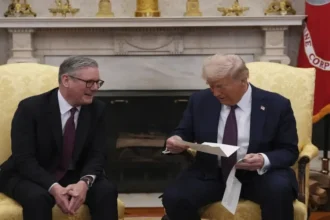


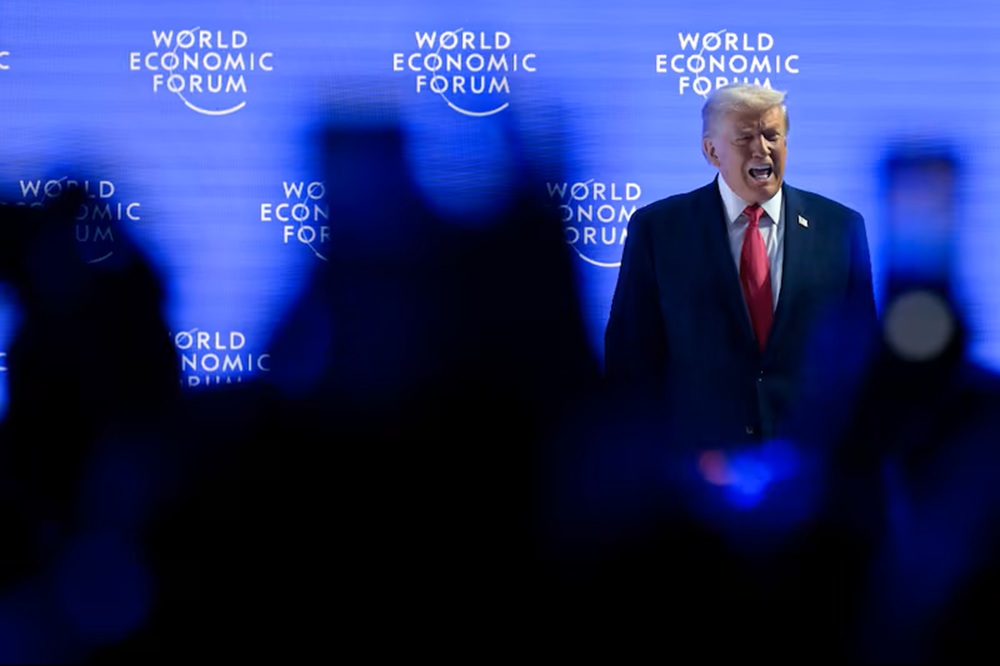

DAVOS– At the World Economic Forum, U.S. President Donald Trump took direct aim at Canada and Prime Minister Mark Carney. He called Canada ungrateful and said the country depends on the United States far more than it admits.
The comments landed a day after Carney drew praise in Davos for a speech that warned of a major break in global relations, where powerful countries put their own interests first and ignore old rules.
Together, the back-to-back speeches added fresh strain to a long alliance. They also showed two very different views of how the world should work as global tensions keep rising.
On January 20, Canadian Prime Minister Mark Carney spoke in Davos in English and French. Many attendees and analysts called it one of the forum’s most important speeches.
Carney said the post-World War II, rules-based system is fading, and it won’t return the way it was. He argued that major powers are walking away from shared solutions and choosing one-sided moves, using economic power as a weapon, and weakening basic diplomatic habits.
“The old order is not coming back. We should not mourn it,” Carney said. “Nostalgia is not a strategy.”
He didn’t name the United States or Trump. Still, the message felt clear, with U.S. pressure over Greenland and fresh tariff threats in the background. Carney urged “middle powers” such as Canada to work more closely, build new partnerships, and protect shared interests during a more unstable period.
The room responded strongly. Carney received a long-standing ovation from political leaders, CEOs, and policy experts. Many praised his plain talk and his push for cooperation across countries. Some commentators also framed the speech as Canada stepping forward on the global stage, with a calmer tone than the sharper approach coming from Washington.
Trump Fires Back, Says Canada “Lives Because of the United States”
Trump spoke the next day, January 21, and he didn’t wait long to answer Carney’s remarks. In a wide-ranging speech that jumped from NATO funding to the idea of buying Greenland, he singled out Canada and its prime minister.
“I watched your prime minister yesterday,” Trump said, calling Carney by his first name. “He wasn’t so grateful.”
Trump claimed Canada gets “a lot of freebies” from the United States and doesn’t show enough appreciation. “They should be grateful to us, Canada,” he said. “Canada lives because of the United States. Remember that, Mark, the next time you make your statements.”
His comments cast the U.S.-Canada relationship as one-sided, with America as the provider and Canada as the one receiving help. He suggested Canada’s safety and success rely on U.S. protection and trade, and he argued that criticism from Ottawa is misplaced.
People in the audience reacted right away. Davos crowds usually expect careful wording, and the blunt tone drew audible murmurs. Trump’s speech ran more than an hour. It mixed praise for the U.S. economy with warnings to allies, he says don’t pull their weight. He repeated his interest in acquiring Greenland, calling it a security need, while saying he wouldn’t use force. Still, some of his harshest lines were saved for Canada.
Two Speeches, Two Very Different Approaches
The contrast between the two leaders was hard to miss. Carney delivered a polished, forward-looking argument focused on teamwork among mid-sized countries. Trump spoke in a more personal and forceful way, with a clear focus on U.S. advantage and payback from partners.
Commentators pointed out the tension at the center of it all. Carney argued for a new kind of cooperation as the old system breaks down. Trump treated that same mindset as entitlement and pushed back with a demand for gratitude and reciprocity.
The moment has renewed talk about where U.S.-Canada relations go next. Trade disputes, border concerns, and defense spending have all been pressure points before, and this exchange put them back in the spotlight.
Canada’s government hasn’t issued an official response yet. Leaders in Ottawa now face a hard choice on tone. They can’t ignore a public jab at the prime minister, but an angry reply could raise the temperature even more. Carney’s office has stressed his focus on constructive talks, even as headlines focus on the personal nature of Trump’s remarks.
What It Could Mean for Global Alliances
The Davos clash comes at a shaky time for global alliances. Trump has repeatedly challenged multi-country groups and agreements, from NATO burden-sharing to trade frameworks. Carney has tried to position Canada as a defender of rules and shared norms. Their public clash may point to deeper problems ahead in the U.S.-Canada partnership, one of the most connected trade and security relationships in the world.
Some experts warn that open fights like this can weaken joint action on shared problems, including climate policy, supply chain stress, and growing global competition. Trump’s supporters see it differently. For them, his words fit his “America First” view, and they like his demand that allies recognize what the United States provides.
As Davos continues, the Trump-Carney exchange remains one of the main talking points. It captures a bigger shift in world politics, where power, principle, and pride are colliding in public.