



WASHINGTON, D.C – In a massive political blow to Virginia Democrats, the United States Supreme Court has officially rejected an emergency request to restore a controversial, voter-approved congressional map. The decision essentially kills the new map and locks in the state’s current political boundaries for the upcoming 2026 midterm elections.
The rejected appeal, spearheaded by Virginia Attorney General Jay Jones, aimed to revive a redistricting plan that voters easily approved in an April 2026 referendum. However, a stunning 4-3 decision by the Virginia Supreme Court declared the voter-approved map null and void, citing a technicality in how the state legislature passed it. When Attorney General Jones took the fight to the nation’s highest court, the justices declined to step in.
As the dust settles, Virginia will move forward with a congressional map that limits the Democratic Party’s hopes for a sweeping advantage, leaving national political strategists scrambling to adjust their game plans.
The Ruling That Brought Down the Map
To understand how a map approved by millions of Virginians was thrown out, you have to look at the state’s rules for constitutional amendments. Under the Virginia Constitution, any new amendment must pass the state legislature twice. Crucially, there must be a general election between those two votes so that citizens can weigh in on their representatives before the final passage.
The state legislature passed the new map during the 2025 election cycle. But here is where the legal trouble started: lawmakers passed the measure after early voting had already begun. More than a million Virginians had already cast their ballots before the legislature gave the map its final green light.
The Virginia Supreme Court ruled 4-3 that this timeline broke the rules. They decided that early voting counts as part of the “election.” Because the legislature acted after the voting period started, the court declared the April referendum null and void.
Attorney General Jay Jones heavily criticized this decision. He argued that the state court was misreading the law and stealing power from the voters. According to his office, the ruling:
- Ignored the federal definition of Election Day, which points to a single day in November, not a weeks-long early voting period.
- Silenced the voice of over 3 million Virginians who showed up to vote in the April 2026 referendum.
- Stripped the state legislature of its rightful power to manage federal elections.
Attorney General Jay Jones’s Legal Hail Mary
Refusing to back down, Attorney General Jones filed an emergency petition to the U.S. Supreme Court, asking the justices to pause the state court’s ruling. He was joined by top Democratic leaders, including House Speaker Don Scott and Senate Majority Leader Scott Surovell.
Jones and his team argued that the Virginia Supreme Court made a massive error by confusing federal election laws with state election timelines. They pointed out that federal law clearly marks Election Day as a specific, single day, not a rolling period that includes September and October early voting.
The legal team also used a fascinating and somewhat ironic legal strategy. They tapped into a narrower version of the “independent state legislature” theory. Usually, this theory is championed by conservative politicians to argue that state courts cannot interfere with a state legislature’s election rules.
In this case, Virginia Democrats used it to argue that the state Supreme Court had completely overstepped its bounds by tossing out a map crafted by lawmakers and approved by the public.
Despite these creative arguments, the U.S. Supreme Court rejected the emergency request on Friday, May 15, 2026. As is common with emergency appeals, the high court did not provide a detailed breakdown of its reasoning. However, legal experts note that federal courts generally avoid getting involved in disputes over state constitutions unless there is a glaring violation of federal rights.
The Stakes for the 2026 Midterm Elections
The stakes of this legal battle could not have been higher. If the U.S. Supreme Court had sided with Attorney General Jones, Virginia’s congressional map would have shifted dramatically.
Under the voter-approved map, Democrats were expected to gain a massive advantage. Political analysts projected that the new districts would have likely shifted Virginia’s congressional delegation to a 10-1 Democratic supermajority. For a party looking to offset gerrymandering efforts by Republicans in other states, Virginia was seen as a golden opportunity.
Instead, the state will use the current map, which features a much more competitive 6-5 Democratic edge.
Following the Supreme Court’s refusal to intervene, Virginia Governor Abigail Spanberger made it clear that the state must move on. With critical election administration deadlines fast approaching, Spanberger announced that Virginia will proceed with the old congressional map for the 2026 midterms.
For local election officials, the finality brings relief. Changing congressional districts at the last minute forces election workers to quickly reassign voters, reprint ballots, and update voter registration systems—a recipe for chaos.
A National Fight Over Political Boundaries
The failure of Virginia’s redistricting plan is part of a much larger national battle over voting maps. Both major political parties are constantly looking for legal ways to draw districts that favor their candidates, a practice known as gerrymandering.
Recently, Republican-led states across the South, including Alabama and Tennessee, have aggressively redrawn their maps to secure more GOP seats in Congress. Virginia Democrats saw their new map as a necessary defense against these southern gerrymanders. They argued that if Republicans were going to play hardball in red states, Democrats needed to do the same in blue states.
With the Virginia map officially dead, the Democratic Party loses a key piece of its national midterm strategy. They will now have to fight for control of the U.S. House of Representatives on much tougher terrain, fighting seat-by-seat under the older, more evenly divided map.
What Happens Next?
For Attorney General Jay Jones, the loss is a tough pill to swallow, but he has vowed to continue fighting for fair elections. “The Court overrode the will of the people who ratified the amendment,” Jones argued in his filings, making it clear that he views the state court’s actions as deeply undemocratic.
Moving forward, Virginia voters will head to the polls this November under the familiar 6-5 district lines. While the political maps will look the same as before, the energy around the upcoming elections will undoubtedly be higher. The battle over the map has sparked intense debates about voting rights, court power, and the true meaning of election rules.
While the legal fight is over, the political fallout is just beginning. Both parties will now focus entirely on campaigning, knowing that every single congressional district in Virginia will matter in the race for control of Congress.
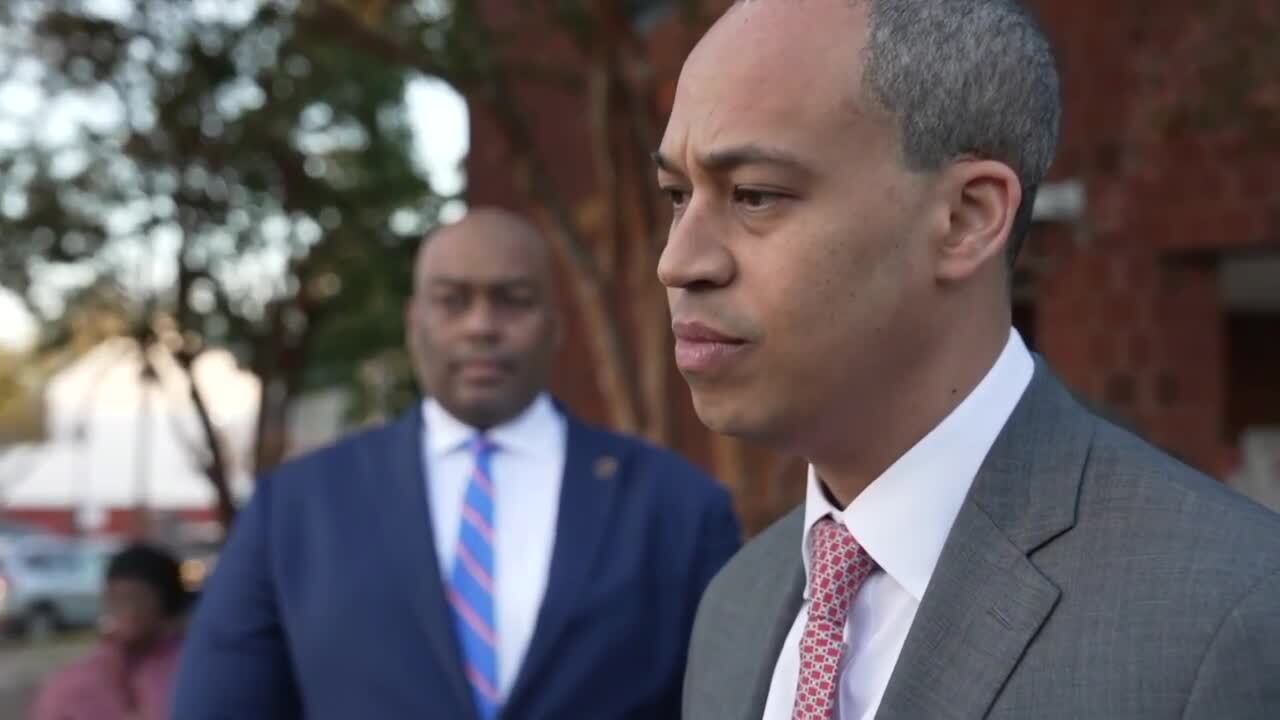
To learn more about the legal steps taken in this redistricting battle, watch this FOX 5 D.C. news report on the Attorney General’s appeal. This video provides helpful context on the state’s emergency filing straight from a legal correspondent.