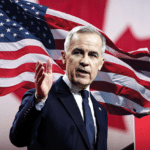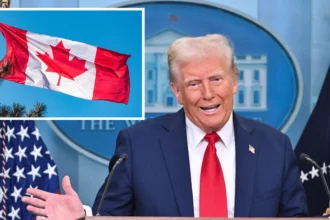



VANCOUVER, B.C. – The U.S.-Canada trade dispute has turned familiar policy language into daily headlines. Donald Trump, Mark Carney, U.S. officials, and Canadian leaders keep referring to tariffs, counter-tariffs, exemptions, retaliation, and the USMCA because each term describes a different part of the same fight over market access and trade rules.
The United States has announced 50% tariffs on selected Canadian products, scheduled to take effect on August 19, 2026. The measures cover products such as alcoholic beverages, dairy, and hundreds of other tariff classifications, while Canada already has counter-tariffs on some U.S. goods and plans to keep duties on vehicles, steel, and aluminum. At the same time, USMCA negotiations between Canada and the United States have resumed, with discussions focused on the agreement’s renewal and separate sector issues.
This glossary gives each trade term a plain-English meaning, then explains how politicians and officials are using it in current policy debates. Because tariff rules, product coverage, and court decisions can change quickly, always check the effective date and the specific goods covered before treating a headline as the final policy.
Key Takeaways
- A trade term such as tariff, counter-tariff, exemption, or retaliation describes a different policy action.
- Trump’s announced 50% duties target selected Canadian goods and are scheduled to take effect August 19, 2026.
- USMCA eligibility may not protect covered Canadian products from the new tariffs, according to the White House tariff fact sheet.
- Canada has kept some duties on U.S. vehicles, steel, and aluminum while weighing further action.
- Effective dates and product lists matter, so compare headlines with Canada’s official counter-tariff list.
Every Trade Term Carney and Trump Keep Using, Explained
Trade headlines often compress a complicated policy into one familiar phrase. A tariff may describe a tax, while “unfair trade” could refer to several different complaints. These definitions help separate the actual policy from the political argument around it.
Tariff, Import Duty, and Reciprocal Tariff
A tariff, also called an import duty, is a tax on goods entering a country. U.S. Customs generally collects it from the importer, not directly from the foreign government. The importer may then pass that cost to wholesalers, retailers, and consumers through higher prices.
For example, a duty on Canadian dairy, alcohol, or industrial goods can affect American businesses before it reaches a store shelf. The final price depends on how much of the tariff each company absorbs and how much it passes along.
A reciprocal tariff is presented as a matching response. The argument is that if another country charges U.S. goods a certain tariff or imposes other trade barriers, the United States should apply a comparable burden to that country’s goods. The White House has used “fair and reciprocal trade” to support this approach.
The calculation is not always a simple one-for-one match. Officials may include regulations, subsidies, taxes, licensing rules, and trade deficits in their assessment. As a result, “reciprocal” can function as political shorthand for a broader effort to rebalance trade. The White House reciprocal tariff order describes that wider policy framework.
MFN Rates, Preferential Rates, and Trade Deficits
Most-favored-nation, or MFN, treatment is the standard tariff rate a country applies to eligible trading partners. Despite the name, it isn’t a special favor. Under the WTO system, the basic principle is equal treatment among members.
A preferential rate is lower than the standard rate because a trade agreement provides special access. USMCA, called CUSMA in Canada, gives qualifying North American goods preferential treatment, and much of that trade remains duty-free. However, meeting the agreement’s rules doesn’t automatically protect every product from separate tariff actions.
A trade deficit occurs when a country buys more goods from a trading partner than it sells to that partner. Policymakers often focus on the goods deficit, but that figure doesn’t capture services, investment, income, or the full economic relationship.
Therefore, calls to “rebalance trade” or “address the deficit” describe policy goals, not proof that the relationship is unfair. The debate over Canada-U.S. tariff negotiations shows how the same deficit can support competing arguments.
Non-Tariff Barriers and Unfair Trade Practices
A non-tariff barrier makes imports harder or more expensive without imposing a direct import tax. Examples include quotas, licensing requirements, product standards, subsidies, government procurement limits, labeling rules, and border delays.
Officials often group these complaints under unfair trade practices. That label may refer to a specific regulation, a subsidy that lowers domestic producers’ costs, or a rule that limits foreign companies’ access to government contracts.
Readers should look past the label and ask which policy is involved. A quota limits quantity, a licensing rule controls who may import, and a product standard may require costly changes before goods can enter. Those differences matter when judging the dispute. The WTO’s explanation of most-favored-nation principles provides useful context for separating standard trade rules from claims of discrimination.
Who Pays, What Is Exempt, and How Quotas Change the Deal
A tariff headline gives you the headline rate, not the full cost for every product or shipment. The outcome depends on the product classification, country of origin, trade agreement, quantity, and entry method.
Exemptions, Carve-Outs, and Country of Origin
An exemption removes a product from a tariff altogether. A carve-out is narrower. It may limit relief to a certain product, country, quantity, or condition. For the 2026 Canadian tariff announcement, listed carve-outs include energy, potash, fish, critical minerals, and products already covered by Section 232 tariffs.
Country of origin also matters. A product that ships from Canada may contain materials or processing from another country, while a Canadian-made product may pass through the United States before reaching its final buyer. Customs applies origin rules and tariff classifications, not simply the address on the shipping label.
USMCA, known as CUSMA in Canada, adds another layer. Qualifying goods can receive preferential treatment under the agreement, but that status doesn’t automatically defeat every new tariff. Some Canadian goods covered by the new Section 338 measures may face the full tariff even when they satisfy USMCA or CUSMA rules. The product category and legal authority control the result. Readers can compare this distinction with the 2026 US tariff changes after the Supreme Court decision.
Quotas and Tariff-Rate Quotas
A quota limits how much of a product can enter during a set period. Once imports reach the limit, customs may block additional shipments or apply different treatment.
A tariff-rate quota, or TRQ, combines quantity and price rules. Goods entering under the quota receive a lower tariff, while goods above the limit face a higher rate. Agriculture often uses this structure, especially for products that governments want to protect without closing the market completely.
Tariffs usually make imported goods more expensive, but supplies can still enter if buyers accept the cost. Quotas restrict supply and create more uncertainty when importers compete for limited access. They also require paperwork that tracks quantities, permits, allocation rights, and timing.
Steel and aluminum measures may use tariffs, quotas, or product-specific arrangements, depending on the policy in force. Agriculture is a common setting for TRQs, while autos can face separate duties, origin requirements, or negotiated volume limits. Never assume that a headline about a quota means every product in that sector has the same restriction.
De Minimis and Low-Value Shipments
De minimis treatment is a low-value import rule that can allow qualifying shipments to enter with reduced or no duty and simpler customs processing. The United States previously applied this channel to shipments valued at $800 or less.
The current policy suspends duty-free de minimis treatment for many shipments regardless of value, origin, transportation method, or entry method. Nonpostal shipments can face applicable duties, taxes, fees, and charges. The White House de minimis order describes limited temporary treatment for some international postal items while a new process is established.
That change can raise costs for online shoppers and force small sellers to provide fuller customs information. Couriers may collect duties before delivery, and shipments that once cleared through a short entry process may need additional classification and documentation. On August 13, 2026, the Court of International Trade upheld the administration’s authority to end the duty-free treatment. Because customs procedures can change, check the latest CBP guidance before shipping or ordering across the border.
The Legal Toolbox Behind the Tariff Debate
The tariff percentage is only part of the story. Legal authority determines why a tariff exists, which products it covers, how long it can last, and whether courts can challenge it. These definitions explain policy language, not legal advice, so businesses should confirm current rules with customs counsel.
Section 232 and National Security Tariffs
Section 232 of the Trade Expansion Act of 1962 allows the president to restrict imports after the Commerce Department finds that certain imports threaten U.S. national security. The authority covers more than military equipment. National security can include domestic industrial capacity, critical production, transportation needs, and reliable supply chains.
That explains its use for products such as steel, aluminum, automobiles, trucks, timber, and related goods in current policy tracking. The concern is that heavy dependence on foreign sources could weaken industries needed during a military conflict, emergency, or major supply disruption.
Section 232 tariffs are different from broad duties imposed to address a trade deficit. They depend on a product-focused national security investigation and a formal finding. The Supreme Court’s IEEPA ruling did not invalidate existing Section 232 measures. Goods already covered by Section 232 were also reported as exempt from parts of the new Canadian tariff action.
For related reporting, see the Section 232 and Section 301 tariff coverage.
Section 301 and Country-Specific Actions
Section 301 of the Trade Act of 1974 targets unfair, discriminatory, or harmful foreign trade practices. The U.S. Trade Representative can investigate whether another government denies fair market access, violates trade commitments, or uses policies that harm U.S. commerce.
Because the investigation examines a particular country’s conduct, Section 301 measures are often country-specific and product-specific. A finding about Chinese subsidies, for example, does not automatically justify the same tariff on Canadian or Mexican goods. The final action may also cover only defined tariff classifications.
An investigation is not the same as a final tariff decision. Before assessing the commercial effect, look for:
- The agency’s finding and the foreign practice it identified.
- The affected products and tariff classifications.
- The effective date and any phase-in schedule.
- The review process, exclusions, and possible modifications.
This distinction matters because an announced investigation may lead to consultations or negotiations rather than immediate duties.
IEEPA, Section 122, and Emergency Trade Powers
The International Emergency Economic Powers Act, or IEEPA, gives the president emergency economic powers to address unusual and extraordinary foreign threats. Before the reported February 20, 2026 Supreme Court ruling, the administration relied on IEEPA for a disputed tariff program involving broad reciprocal duties and tariffs tied to Canada, Mexico, and China.
The Court held that IEEPA does not authorize tariffs. Collection of those IEEPA-based duties ended on February 24, 2026, while refund questions continued in lower-court proceedings. The Congressional Research Service summary explains the ruling and the separate authorities that remained available.
Policymakers then turned toward statutes with narrower triggers. Section 122 of the Trade Act of 1974 permits a temporary import surcharge when serious balance-of-payments problems require action. The authority generally limits the surcharge to 15% and 150 days, subject to its statutory conditions and congressional action.
That legal shift affects more than headlines. It can change refund claims, filing deadlines, product exclusions, and the expected life of a tariff. Importers must track the authority behind each duty because the statute can determine whether a charge continues, expires, or is replaced.
USMCA, CUSMA, and Retaliation in the Canada-U.S. Dispute
The North American trade agreement has different names depending on the country discussing it. The United States and Mexico call it the United States-Mexico-Canada Agreement, or USMCA. Canada calls the same agreement the Canada-United States-Mexico Agreement, or CUSMA. The trade term changes, but the agreement and its obligations remain the same.
USMCA and CUSMA Compliance
CUSMA compliance means a product meets the agreement’s conditions for preferential treatment. One major condition is the rules of origin, which determine whether a good qualifies as North American rather than originating outside the agreement’s member countries.
Those rules can require a certain share of a product’s materials, labor, or processing to come from the United States, Canada, or Mexico. Automotive goods, for example, face detailed requirements involving regional value content and the origin of key parts. Importers must also provide accurate documentation and use the correct tariff classification.
When a product qualifies, the importer may claim a preferential tariff rate, often zero. That benefit can reduce the cost of cross-border trade, but it isn’t a general exemption from every future duty. The legal authority behind a separate tariff still controls.
Current U.S. measures illustrate the distinction. The White House says new Section 338 tariffs can apply to covered Canadian goods regardless of whether they qualify under USMCA. Reports also indicate that some CUSMA-compliant Canadian products may face the full tariff. Recent reporting on tariffs affecting CUSMA-compliant goods helps show why agreement compliance and tariff protection are separate questions.
A product can satisfy CUSMA’s rules of origin and still face a separate national-security, emergency, or product-specific tariff.
For importers, the practical test is not simply whether goods are “CUSMA goods.” They must check the product code, origin records, tariff authority, effective date, and any exclusions. The escalating Canada-U.S. trade dispute has made each detail more important.
Retaliation, Counter-Tariffs, and Escalation
Retaliation is a response intended to impose costs or create bargaining pressure after another country takes a trade action. A counter-tariff is one formal type of retaliation. Canada, for example, has reported 25% counter-tariffs on selected U.S. steel, aluminum, and motor vehicles.
Governments can also respond by suspending trade concessions, removing products from store shelves, filing a dispute under a trade agreement, or negotiating exemptions. Those actions may create pressure without adding a new import tax.
Escalation begins when each side adds measures, raises tariff rates, or expands the list of affected products. Businesses then face higher costs and less certainty about contracts, sourcing, and delivery schedules.
When Prime Minister Mark Carney says “everything’s on the table” and that Canada will defend its interests, he is using strategic signaling. The statement communicates that Canada is preparing options, but it doesn’t prove that every possible countermeasure will happen. U.S. officials may describe Canadian duties as retaliation, while Canadian officials describe their actions as a response to U.S. tariffs. Both descriptions identify the same cause-and-response pattern, even though the two governments disagree about who acted unfairly first.
Fast Facts & Costs Table: What These Trade Terms Can Mean in Dollars
A trade term can describe a tax, a quantity limit, or a government response. The table below shows how each term can affect an importer, business, or consumer.
| Term | What it changes | Current example or rate | Who may feel the cost |
|---|---|---|---|
| Tariff | Adds an import duty to the customs value | Additional 50% on selected Canadian goods, effective August 19, 2026 | Importers, retailers, consumers |
| Reciprocal tariff | Applies a duty based on another country’s trade barriers | No single Canada rate; the announced Canadian measure is 50% on covered goods, effective August 19, 2026 | Importers and exporters |
| Exemption | Removes covered goods from a specific tariff | Energy, potash, fish, and some Section 232 goods are excluded from the new Canadian measure, August 2026 | Eligible importers avoid that duty |
| Quota | Limits the quantity entering during a period | The current dispute includes product-specific limits, not one rate for all goods, August 2026 | Importers facing limited supply |
| De minimis | Changes low-value customs treatment | U.S. duty-free treatment below $800 was suspended for all countries on August 29, 2025 | Online shoppers, small sellers, couriers |
| Retaliation | Adds pressure in response to another trade action | Canada has applied 25% counter-tariffs to selected U.S. vehicles, steel, and aluminum, 2026 | U.S. exporters and Canadian buyers |
| Section 232 | Adds product-specific duties tied to national security | Current guidance references 50% on the metal portion of covered goods, 2026 | Metal users, manufacturers, consumers |
| Section 301 | Targets specified foreign trade practices | Canada is listed at 10% for new forced-labor tariffs, effective July 24, 2026 | Importers of covered products |
The Congressional Research Service tariff timeline helps place the recent measures and retaliation dates in context. For Section 232 background and metal rates, see this Section 232 tariff reference.
A tariff rate is not always the final consumer price. Import value, product classification, shipping, exchange rates, retailer margins, and each company’s pass-through decision all affect the result. A business may absorb part of the duty, raise prices by the full amount, or change suppliers.
For a simple example, a 50% tariff on a $1,000 customs value adds $500 before other fees. The importer would face $1,500 in customs value plus applicable charges, although actual treatment depends on the product classification, exclusions, origin records, and the ruling applied at entry. Currency markets can add another variable, as shown by tariff pressure on the Canadian dollar.
Step-by-Step Guide to Reading a New Tariff Announcement
A new tariff headline rarely tells you what a specific shipment will cost. Use this process to separate the announcement from the rules that customs will apply at the border.
Find the Legal Notice, Date, and Authority
Start with the official document, such as a presidential proclamation, executive order, customs notice, or agency release. News reports can summarize a policy, but the legal notice identifies the exact products, authority, and filing instructions.
Record these details in one place:
- The law or authority used to impose the measure.
- The publication date and effective date.
- Any transition rules, phase-in schedule, or retroactive language.
- Whether the measure is temporary, subject to review, or open-ended.
- The government agency responsible for implementation.
The announcement date and the date goods enter the United States may produce different results. A company could order goods after a tariff is announced, yet have them enter before the duty takes effect. Another shipment might leave the supplier before the announcement but arrive after the effective date. Customs rules often focus on the relevant entry date, so confirm how the notice treats goods already in transit, stored in a bonded facility, or placed in a foreign-trade zone.
For implementation details, compare the announcement with CBP tariff guidance.
Check the Product Code, Origin, and Exemption List
Next, identify the product’s HS or HTS classification. The code can change the base duty, additional tariff, quota treatment, and eligibility for an exclusion. Search the current Harmonized Tariff Schedule rather than relying on a product name in a news story.
Then verify the country of origin. Customs may examine where the product was manufactured, where substantial processing occurred, and which materials went into it. A finished product assembled in Canada may contain components from several countries, so the shipping address alone doesn’t settle the question.
Check whether the item is a finished good or a component. After that, compare it with every relevant exclusion, quota, sector rule, and USMCA or CUSMA preference. A headline about “Canadian goods” cannot replace the actual tariff list.
Estimate the Cost and Plan the Next Action
For a basic estimate, multiply the customs value by the stated tariff rate. A $10,000 customs value at 25% produces $2,500 in duty before other charges. Add brokerage, storage, shipping, taxes, merchandise processing fees, and possible compliance costs.
Businesses should ask suppliers for origin records, bills of materials, and manufacturing details. A customs broker can also review classification and advise on entry procedures. Consumers should check whether an online seller collects duties at checkout. If not, the courier or customs authority may bill the buyer before delivery. Keep the official notice, product code, origin evidence, and broker advice together before making a pricing or purchasing decision.
Local Tips and Common Mistakes to Avoid
Tariff rules can change by product, origin, customs entry, and border direction. Before shipping or ordering, verify the current tariff notice, product code, effective date, and any agreement or sector-specific treatment.
Tips for Canadian Exporters and U.S. Importers
Keep a complete file for every product crossing the border. That file should include the country of origin, HS or HTS classification, supplier details, bills of materials, invoices, customs value, and manufacturing records. A product shipped from Canada is not automatically Canadian-origin goods, and a correct tariff result depends on more than the shipping label.
Next, check whether the product qualifies for USMCA, known as CUSMA in Canada. Qualification can support a preferential rate, but it may not remove a separate tariff. Confirm the product’s origin rules and documentation, then review whether Section 232 treatment applies to the finished product, its components, or a specific portion of its value.
Canadian businesses should also ask a direct question before assuming agreement rules settle the matter: Does a new Canadian tariff or U.S. tariff apply even when the goods meet USMCA or CUSMA requirements? The answer can differ by classification and tariff authority. For current Canadian trade exposure, Canada’s tariff-driven economic outlook offers useful business context, while official customs guidance should control the filing decision.
Build several cost scenarios before signing a contract or setting a customer price:
- The base tariff rate remains in place.
- An existing exemption or carve-out is removed.
- A tariff-rate quota fills before the shipment arrives.
- Retaliation expands to additional products or industries.
Share those scenarios with your customs broker, freight provider, suppliers, and customers early. A broker may need time to review classification or request a ruling, while customers may need revised delivery dates or pricing.
Mistakes Cross-Border Shoppers and Small Sellers Make
The phrase “free trade” does not mean every shipment enters duty-free. USMCA or CUSMA benefits apply only when the product qualifies and the importer supports the claim. Also, the country where a package ships is different from its legal country of origin.
Small sellers often treat de minimis treatment as permanent. Rules can change quickly, so check current CBP e-commerce guidance before promising an all-in shipping price. Use the current tariff chart, not an old spreadsheet, and confirm the product code when merchandise changes.
Don’t guess the classification from a product’s marketing name. Brokerage fees, taxes, storage, and courier charges can apply even when the tariff rate is zero. Finally, splitting one order into several shipments or misstating its value can trigger delays, extra assessments, penalties, or other customs problems. Accurate invoices and honest shipment details are usually the simplest way to avoid an expensive correction.
Frequently Asked Questions
These answers clarify several trade terms that often remain confusing after reading a tariff announcement. The key details are who pays at the border, which legal authority applies, and whether an agreement or court ruling changes the result.
Does a tariff mean the foreign country pays the tax?
Usually, the U.S. importer pays the duty to customs first. The foreign government does not normally send that payment to the United States. An importer may then recover some or all of the expense through its supply chain.
The cost can be shared in several ways. A supplier might lower its price, the importing business might accept a smaller profit, or wholesalers and retailers might raise their prices. In many cases, customers eventually pay at least part of the tariff through higher prices.
Can USMCA or CUSMA stop a new tariff?
USMCA, called CUSMA in Canada, can remove ordinary tariffs when a product meets the agreement’s rules of origin and documentation requirements. However, agreement treatment may not block a separate measure imposed under a different law.
For example, a product can qualify for preferential treatment yet remain subject to a national-security, emergency, or product-specific tariff. Check the legal notice, tariff classification, effective date, and product list instead of assuming USMCA compliance provides complete protection.
What is the difference between a tariff and a quota?
A tariff raises the cost of imported goods, while a quota limits the amount that may enter during a specified period. Importers can generally continue bringing in goods after a tariff takes effect, provided they pay the required duty. A quota may restrict additional shipments once the permitted quantity has been reached.
A tariff-rate quota combines both tools. Imports within the quota receive a lower tariff, while goods above the limit face a higher rate or different treatment. That structure can keep a market open while limiting the volume of lower-cost imports.
What happened to IEEPA tariffs?
On February 20, 2026, the Supreme Court ruled that IEEPA does not authorize the president to impose tariffs. The decision invalidated the IEEPA-based programs, including duties tied to Canada, Mexico, China, and the broader reciprocal tariff plan. SCOTUSblog’s account of the ruling summarizes the decision in Learning Resources, Inc. v. Trump and V.O.S. Selections, Inc. v. United States.
The ruling did not eliminate tariffs imposed under other laws. Policymakers may rely on authorities such as Sections 232 and 301, along with other statutory powers. Replacement measures, refund proceedings, and further litigation can still change the practical result for importers. Readers can also review the Supreme Court tariff ruling’s reported aftermath.
Why do officials call tariffs reciprocal?
The word reciprocal suggests that one country is matching another country’s tariffs or trade barriers. In simple terms, officials may claim that a foreign duty on U.S. goods justifies a similar duty on imports from that country.
The calculation may include more than a tariff-for-tariff comparison. Officials can also consider subsidies, regulations, taxes, licensing requirements, or other barriers. Therefore, check the legal notice for the method used before treating a “reciprocal” rate as a direct match.
What to Remember When the Next Trade Announcement Arrives
A new tariff announcement can sound final before the legal details are clear. Treat each headline as an alert, not a complete answer. The actual cost depends on the measure’s authority, timing, product coverage, and treatment under existing agreements.
Read the Fine Print Behind the Headline
Start with the official proclamation, executive order, customs notice, or agency release. Identify the law behind the action, such as Section 232, Section 301, IEEPA, or another authority. That choice affects the tariff’s scope, duration, exclusions, and legal challenges. For background on how IEEPA treatment has changed, review current CBP IEEPA guidance.
Next, record the exact effective date and time. The rule may apply to goods entered for consumption, withdrawn from a warehouse, or shipped after a specific cutoff. A shipment already in transit may receive different treatment, so the departure date alone doesn’t answer the question.
Check the product’s HTS classification rather than relying on a broad description such as “Canadian auto parts” or “dairy.” A small difference in the tariff line can change the duty, exclusion, quota treatment, or agreement benefit. Also confirm whether the rule uses the country of origin or the country where the seller ships the goods.
Keep the Announcement in Context
Exemptions and quotas can change the result for an entire shipment. Some measures exclude named products, existing Section 232 goods, qualifying USMCA merchandise, or goods covered by a separate limit. Others apply a lower rate until a quota or annual value cap is reached.
USMCA, called CUSMA in Canada, also requires careful checking. Agreement eligibility may preserve preferential treatment in one case but provide no protection from a separate tariff in another. Trump’s new tariff warning to Canada shows why the political announcement and the customs rules deserve separate attention.
For a shipment or purchase, save the notice, HTS code, origin records, effective date, exemption list, quota terms, and agreement requirements together. That file gives you a clearer answer than a changing headline.
The tariff rate is only one part of the story. Before you estimate a price or move goods, check the legal authority, product code, country of origin, effective date, exemptions, quotas, and agreement rules. Those details determine whether the announced rate applies to your shipment at all.
Understanding terms such as retaliation, de minimis, Section 232, Section 301, IEEPA, and USMCA or CUSMA makes fast-moving trade news easier to follow. You can then separate a proposed measure from an active duty, distinguish a product exclusion from a general exemption, and spot when a political statement still needs official customs instructions.