

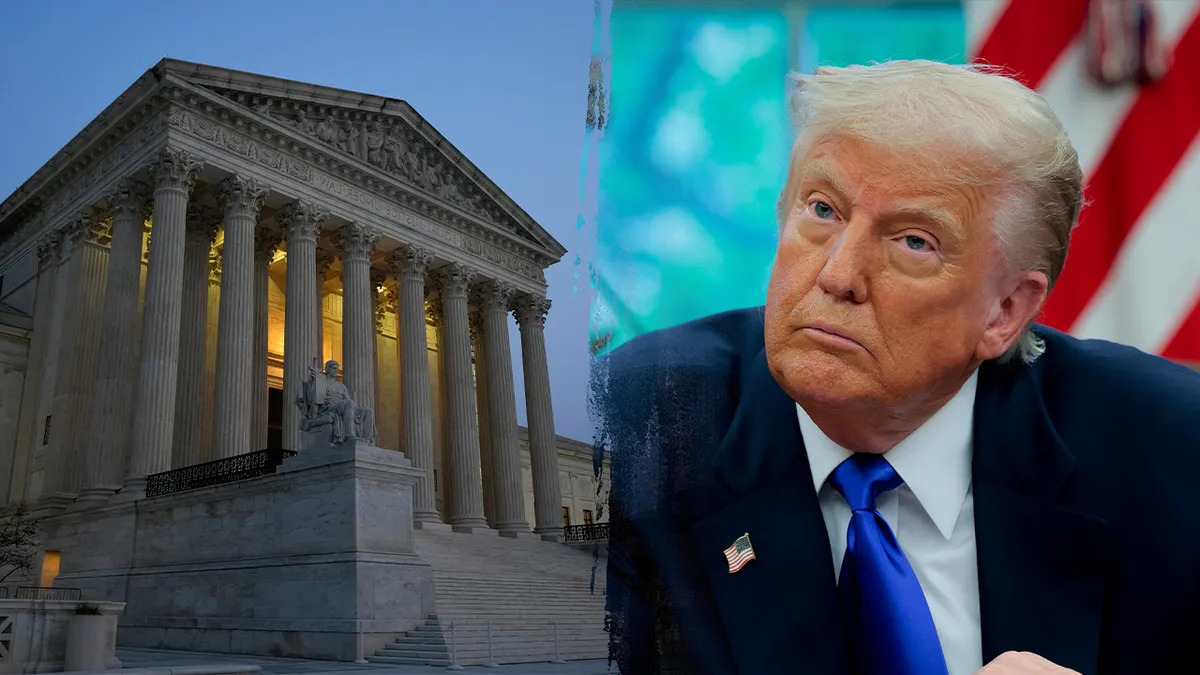

WASHINGTON, D.C. – President Donald Trump moved fast after a major setback at the U.S. Supreme Court. He announced and signed an executive order that places a new 10% tariff on imports from almost every country.
The order came only hours after the Court ruled 6-3 that many of his broad tariffs, created under the International Emergency Economic Powers Act (IEEPA), went beyond presidential power and therefore broke the law.
On February 20, 2026, the Court issued its decision in the combined cases Learning Resources, Inc. v. Trump and related challenges. The ruling wiped out tariffs put in place in 2025 under IEEPA.
Those measures included wide “reciprocal” duties starting at 10% on imports from most nations, with higher rates aimed at major partners such as China, Canada, Mexico, the European Union, Japan, and South Korea. The Court said IEEPA, a 1977 law meant to address foreign threats during national emergencies, does not give a president the power to set tariffs, a role the Constitution assigns to Congress under the revenue clause.
Chief Justice John Roberts wrote for the majority, joined by Justices Sotomayor, Kagan, Gorsuch, Barrett, and Jackson. Roberts said the IEEPA language that lets a president “regulate… importation” does not mean the president can tax imports through duties. “The statute contains no reference to tariffs or duties,” Roberts wrote. He also pointed to the major questions doctrine, rejecting broad claims of executive authority without clear direction from Congress.
The decision landed as a rare, cross-ideological pushback against Trump’s wide view of executive power, even from a Court that often leans conservative. Meanwhile, dissenting Justices Thomas, Kavanaugh, and Alito warned the ruling could trigger major disruptions. They also raised the prospect of refunds tied to previously collected tariffs, with estimates topping $160 billion, plus uncertainty for trade agreements shaped around those duties.
Trump’s Fast Reply: New 10% Tariffs Using Trade Act Power
Soon after the ruling, Trump attacked the decision as “deeply disappointing” and “a disgrace to our nation.” During a White House news conference and later posts on Truth Social, he criticized certain justices as “unpatriotic,” “fools,” and “disloyal to our Constitution.” Still, he said the decision would not derail his “America First” trade plans.
Then, within hours, Trump signed a new order based on Section 122 of the Trade Act of 1974, an uncommon tool that allows temporary tariffs of up to 15% for 150 days to address large U.S. trade deficits.
Under this authority, the administration set a 10% global tariff that applies widely. It also stacks on top of other duties that the Supreme Court ruling did not touch. Administration officials described the move as a short-term “bridge” meant to shield U.S. industries while the White House works on longer-term steps.
“This is just the beginning,” Trump said. “We have great alternatives, tremendous alternatives, and we’ll bring in more money for our country.” The new tariffs are expected to take effect quickly, possibly within days, adding another wave of uncertainty for global markets already reacting to the Court’s decision.
How the IEEPA Tariffs Rose, Then Fell
Trump’s latest tariff fight traces back to his return to office, when he framed trade deficits and issues like drug inflows as national emergencies. Using IEEPA, he rolled out the so-called “Liberation Day” tariffs in April 2025, aiming them at nearly every trading partner. The goal was to force changes tied to trade gaps, immigration enforcement, and fentanyl flows.
Importers, businesses, and some states challenged the measures in the U.S. Court of International Trade and the Federal Circuit. Those courts largely ruled against the administration, and the Supreme Court later took the case. With this decision, the Court reinforced a simple point: tariffs act like taxes, so they need clear approval from Congress, not broad emergency language.
At the same time, the ruling leaves other Trump-era tariffs in place when they rest on different laws, including:
- Section 232 of the Trade Expansion Act of 1962 (national security tariffs on steel, aluminum, and select goods)
- Section 301 of the Trade Act of 1974 (duties tied to unfair trade practices, often focused on China)
- Section 201 safeguards (short-term relief for domestic industries)
Because these tools require set processes, such as formal reviews and investigations, they remain available routes for the administration.
Where Trump Can Go From Here
After the Court blocked IEEPA as a tariff tool, legal and trade analysts pointed to several paths Trump could take to keep pushing his trade agenda:
- Widen Section 232 reviews: The administration could open new national security probes in more sectors, such as autos, semiconductors, or pharmaceuticals, which could support new tariffs or quotas.
- Use Section 301 more often: Claims of unfair practices, including subsidies, intellectual property theft, or currency issues, could support higher duties, similar to past actions focused on China.
- Ask Congress for new authority: Even with a divided Congress, Trump could push for legislation that gives clear tariff power tied to trade deficits or emergency conditions.
- Rely on Section 122 renewals or shifts: The current 10% tariff lasts up to 150 days, so Trump could seek an extension from Congress or move to other legal options.
- Pursue one-on-one deals: The White House could use tariff pressure to win concessions, then swap broad duties for country-specific agreements.
- Declare new emergencies under other laws: While IEEPA is now closed off for tariffs, other statutes, including possible Trading with the Enemy Act changes, could be tested, though new lawsuits would likely follow.
Analysts also warned that tougher tariff moves could bring retaliation, higher prices, supply chain trouble, and more disputes at the WTO. In addition, businesses that paid IEEPA-based duties may press for refunds, although lower courts will now handle much of that process.
Economic and Political Fallout
Together, the Court ruling and Trump’s quick response put the spotlight back on a long-running fight: how much control a president should have over trade, versus Congress. Supporters of the decision praised it as a firm defense of constitutional limits. Critics said it ties the administration’s hands as it tries to boost U.S. manufacturing.
Reactions overseas were mixed. Allies such as Canada and the EU signaled relief that the IEEPA tariffs were struck down, but they also raised concerns about the new 10% global levy. Markets dipped at first, then steadied, as investors waited to see how fast the new order would roll out and how other countries might respond.
For now, the next few weeks will show whether Trump can reshape his tariff strategy under other laws, or whether the Supreme Court has set a lasting boundary on one-sided trade action. Trump, however, has made clear he plans to keep pushing.