

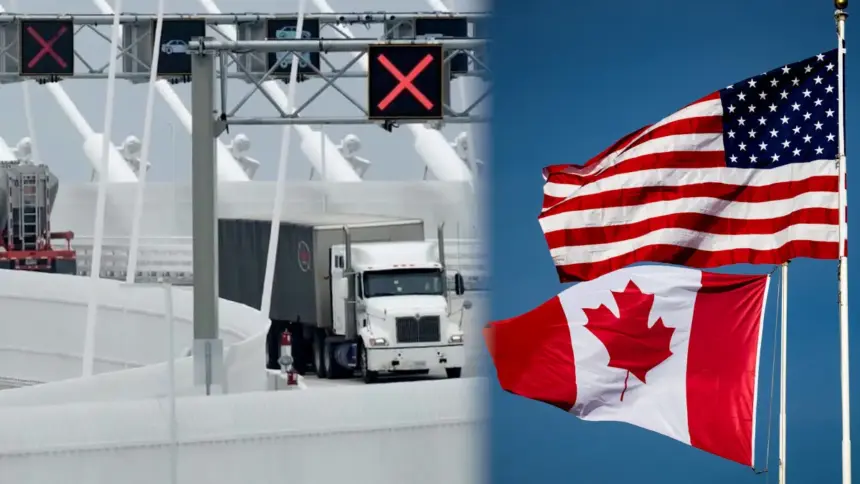


OTTAWA – A tariff deadline that threatened about $30 billion worth of Canadian goods has been extended while Canada and the United States continue working toward a deal. The pause may give negotiators more time, but the reported terms remain tentative, and Canadian officials had not publicly confirmed the details at the time of the report.
The biggest questions involve possible changes to auto counter-tariffs, Canadian dairy quotas, alcohol sales, and U.S. access to Canadian oil. President Donald Trump’s separate reference to reviving the Keystone XL pipeline added another unresolved issue to already complicated negotiations.
The Tariff Talks Affect About $30 Billion in Canadian Goods
The United States had been preparing tariffs on roughly $30 billion worth of Canadian products. By extending the deadline, Trump created more time for both countries to settle the remaining disputes before the proposed measures took effect.
For businesses, workers, and consumers, the extension offers temporary relief from an immediate policy change. It doesn’t settle the larger disagreement, however. The tariff threat remains tied to negotiations over market access and Canada’s possible concessions.
The latest development also fits into a broader period of tension in Canada-U.S. trade relations. The Congressional Research Service overview of U.S.-Canada trade outlines the scale of the economic relationship and the tariff measures that have already affected both countries.
What the deadline extension means
The extension means negotiators still have time to turn preliminary discussions into a completed arrangement. It doesn’t confirm that the United States has withdrawn the tariffs permanently, nor does it provide a final list of changes Canada has agreed to make.
Several questions were still open:
- What concessions might Canada make to avoid the tariffs?
- Which existing counter-tariffs could the United States roll back?
- What changes would Canada make to dairy quotas?
- When would alcohol products return to store shelves?
- Had the two sides reached a final agreement, or were they still negotiating the wording and details?
These questions matter because a delay can produce very different outcomes. The tariffs could be canceled if the countries reach a deal, adjusted as part of a partial agreement, or imposed later if negotiations break down.
CTV News chief political correspondent Vassy Kapelos said most of the information available at that hour came from the American side. Canadian officials had not offered the same level of public confirmation.
Why the details were still unclear
Kapelos said she had spoken with two sources close to the negotiations. Those sources indicated that some terms had been discussed and tentatively agreed to, but the language did not suggest that a final deal had been signed or publicly announced.
That distinction is important. A tentative agreement can show that negotiators have found common ground on certain points, while leaving unresolved questions about timing, enforcement, public announcements, or other parts of the package.
The reported concessions were described as tentative, while Canadian officials had not yet confirmed the terms.
The lack of confirmation also created uncertainty for provincial governments. Staff members for at least three or four premiers said they had not received information from the federal government at the time of the report. That left provincial officials waiting for Ottawa to explain what had been discussed and what the possible agreement would require.
Reported Concessions Under Discussion
The American sources cited in the broadcast described three main areas of possible compromise: auto counter-tariffs, dairy quotas, and alcohol products.
| Issue | Reported discussion | Status at the time |
|---|---|---|
| Automobiles | The United States could roll back counter-tariffs affecting autos | Tentative |
| Dairy | Canada could adjust dairy quotas | Tentative |
| Alcohol | Alcohol products could return to store shelves | Tentative |
The table shows the outline of a possible deal, but it doesn’t answer the most important implementation questions. The discussion did not establish the size of the quota changes, the exact tariff rates, or the timing for products to return to shelves.
Possible changes to auto counter-tariffs
One reported part of the negotiations involved rolling back counter-tariffs on automobiles. The broadcast presented this as something the U.S. side had discussed, rather than as a fully completed commitment.
Automobiles are closely connected to trade between Canada and the United States, so any tariff change could affect companies that move vehicles and parts across the border. Still, the report didn’t provide enough detail to determine which vehicles or auto products would be covered, how much relief would be offered, or when the changes would begin.
For that reason, the auto issue remained part of the negotiation rather than a confirmed policy change. The language pointed to possible movement, but the final terms were still unknown.
Adjustments to Canadian dairy quotas
Dairy access was another subject tied to the possible agreement. The sources said Canada could make adjustments to its dairy quotas, but they didn’t provide details about the size or effect of those changes.
Quota changes can involve how much product enters a market under specific trade rules. In this case, the report only established that dairy access was under discussion. It didn’t say how Canadian producers, American exporters, or consumers would be affected.
That missing information made it impossible to judge the full significance of the proposal. Until Canadian officials released the details, the public could only identify dairy quotas as one of the areas where negotiators might reach a compromise.
Alcohol products could return to store shelves
Alcohol products were also mentioned in the reported discussions. According to the information Kapelos received, alcohol could return to store shelves as part of the tentative arrangement.
The report didn’t identify which products were involved, which stores would carry them, or when sales might resume. It also didn’t establish whether the change would apply across Canada or only in certain provinces.
Those details matter because alcohol distribution and retail sales involve provincial authorities. The lack of federal communication to several premier offices made the timing of any return especially uncertain.
The Missing Step: Finalizing the Agreement
The central issue was the difference between a tentative understanding and a final deal. Negotiators may agree in principle on several points while still working through the language that turns those points into a binding arrangement.
What would finalization involve?
The broadcast raised the question directly: What does finalization entail?
No answer was available at the time. The reported terms still had to move beyond private discussions and preliminary agreement. That process could include confirming the exact measures, determining when they would take effect, and communicating the outcome to federal and provincial officials.
The report didn’t describe a formal signing process or provide a timetable for completion. As a result, readers could not assume that every item discussed by American sources had been accepted by Canada.
The difference between “agreed to” and “finalized” can seem small in a political statement, but it carries practical consequences. Businesses need to know which tariffs apply, governments need to know what they have promised, and provinces need clear instructions before they change policies affecting products such as alcohol.
Canadian premiers were still waiting for information
Several premier offices had not received details from the federal government. Kapelos said that at least three or four staffers she contacted had no information at that hour.
That communication gap suggested the federal government was still waiting for the negotiations to develop or had not yet briefed provincial governments. Either way, the absence of confirmation left premiers unable to explain how the possible deal would affect their provinces.
The issue was expected to receive more attention the following day. Provincial leaders would likely want answers about alcohol products, dairy access, auto tariffs, and any other concessions connected to the agreement.
Coverage of the deadline extension and the ongoing discussions was also available in CP24’s Canada-U.S. trade updates, which tracked the talks as the deadline approached.
Trump’s Reference to Keystone XL
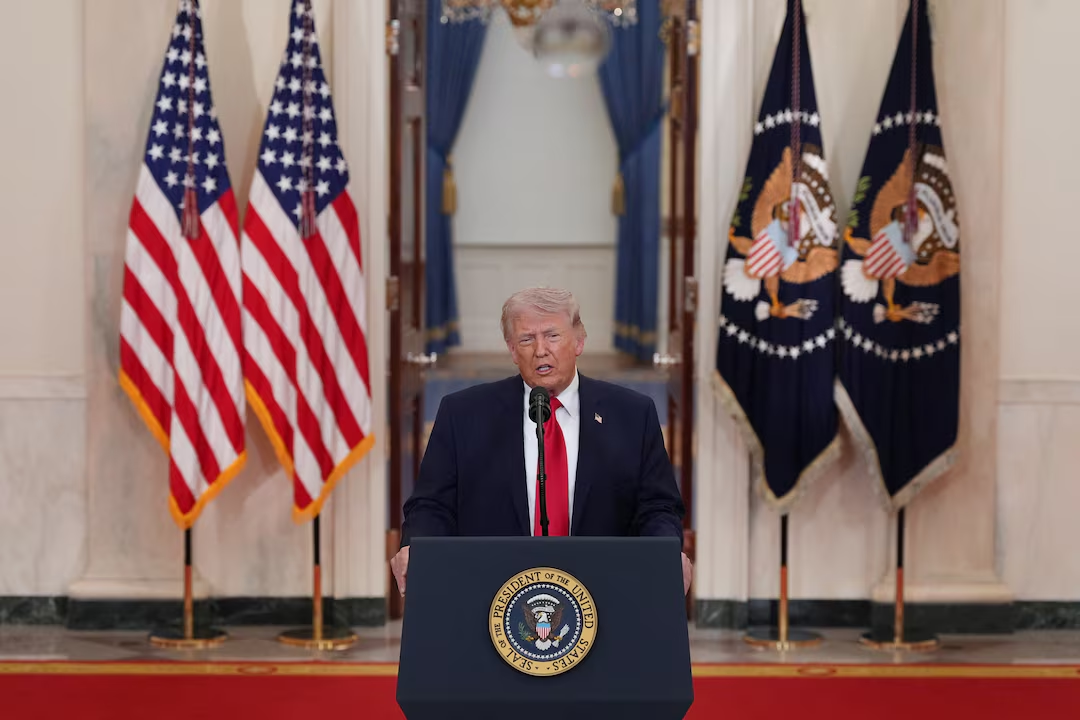
Trump’s post included another subject that raised questions: the Keystone XL pipeline. He referred to his predecessor and said the pipeline would be revived.
That statement drew attention because the broadcast said a related pipeline development was already known. The reference therefore didn’t clearly establish whether Trump was announcing a new project, restating an earlier decision, or describing a related plan using the Keystone XL name.
What Trump said about the pipeline
Trump’s post presented Keystone XL as part of the broader discussion surrounding Canada. The pipeline reference appeared alongside the tariff deadline update, which linked energy access to the trade negotiations.
The report did not provide a new construction schedule or a full project description. It also didn’t explain whether the statement covered the entire original Keystone XL proposal or only a related section.
Because the wording was unclear, both Canadian and American officials still had to clarify what Trump meant.
Why the reference was confusing
Kapelos described the pipeline mention as a “headscratcher” because Trump had already approved a related southern pipeline construction project at the end of April. The project was described as running from the Canadian side toward Wyoming and following much of the Keystone XL route.
Some details remained to be worked out. The key uncertainty was whether Trump’s latest post referred to that already announced development or pointed to an additional project.
The distinction can be summarized simply:
- Known: A related southern pipeline construction project had already received approval.
- Unclear: Whether Trump was referring to that project or announcing something beyond it.
- Still unresolved: Which pipeline commitments, if any, were connected to the tariff negotiations.
Without clarification from either side, the pipeline reference could not be treated as a clear new agreement.
The Energy Question in the Negotiations
The United States was seeking preferential access to Canadian oil. Kapelos said that American interest was clear, while the Canadian response remained uncertain.
Energy access appeared to be one of the larger questions surrounding the possible deal. The tariff discussions involved specific products and trade measures, while oil access raised a broader question about what Canada might provide in exchange for relief from tariffs.
U.S. interest in Canadian oil
American negotiators wanted preferential access to Canadian oil, according to the report. The statement identified the goal, but it didn’t explain the proposed structure.
No details were provided about volumes, prices, transportation, buyers, or the length of any arrangement. Those issues therefore remained outside the confirmed information available at the time.
The pipeline reference made the energy question more prominent. A pipeline connection could relate to oil transportation, but the broadcast didn’t confirm that the construction project was part of a completed trade deal.
What might Canada offer?
The main unanswered question was simple: What does Canada give the United States in return?
The reported discussions pointed to several possible Canadian concessions, including adjustments to dairy quotas and changes affecting alcohol products. However, the report did not provide a confirmed list of Canadian commitments.
Auto tariffs and oil access were also part of the conversation, but their final treatment remained unclear. The United States appeared to be seeking improved access in multiple areas, while Canada was trying to avoid tariffs on Canadian exports.
The exact Canadian concessions had not been confirmed.
That uncertainty also explains why the federal government’s communication with the premiers mattered. Provincial leaders would need to understand any commitments before the public could know what the deal would mean in practice.
What Remained Unconfirmed
The information available at the time came mainly from American sources close to the negotiations. Kapelos cited two such sources, while noting that Canada had not issued matching official confirmation.
That doesn’t mean the reported terms were false. It means their status remained provisional. Until both governments confirmed the same details, the public couldn’t know whether the proposals had been accepted, revised, or left out of the final agreement.
The unresolved questions included:
- Were the auto counter-tariff rollbacks final?
- What changes would Canada make to dairy quotas?
- When would alcohol products return to store shelves?
- Had the federal government briefed the premiers?
- Was Trump referring to an existing pipeline project or a new one?
- What form of preferential access to Canadian oil did the United States want?
- Would the tariff deadline be extended again if the negotiations continued?
Each question pointed to a different part of the same problem. The announcement created more time, but it didn’t remove the need for a detailed agreement.
Readers following the dispute can also review reporting on Canada’s ongoing tariff negotiations for additional context about the wider disagreement between Ottawa and Washington.