



ATLANTA, Ga – Cable news is a tough business, and CNN is feeling it. The channel that helped build 24-hour news is now dealing with some of its lowest ratings ever. At the same time, it’s facing loud claims of left-wing bias and a parent company that seems more focused on reshuffling assets than protecting CNN’s future. As 2025 wraps up, CNN keeps losing viewers, and the chatter about a sale or spin-off hasn’t slowed. So far, no clear buyer has stepped up.
The audience drop is hard to ignore. CNN spent much of 2025 posting some of its weakest viewership numbers on record. The fall got worse after the post-election slowdown that followed the 2024 presidential race.
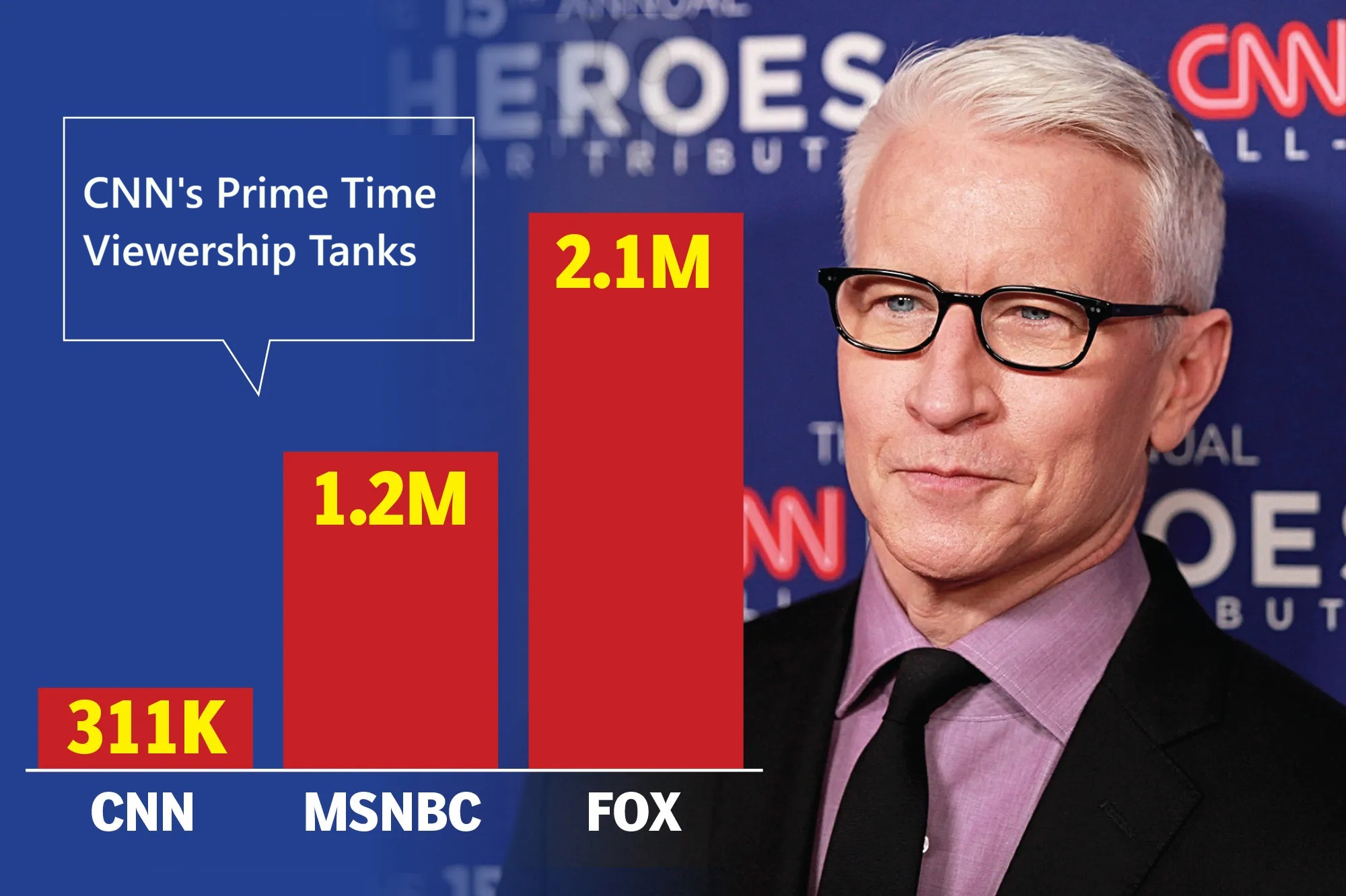
In July 2025, CNN averaged just 497,000 total primetime viewers, a 42% decline from July 2024, based on Nielsen data cited by Cord Cutters News. The slide continued into the third quarter, with primetime down 42% year over year. The 25-54 age group fell even faster, dropping 58%.
Every big cable news channel took a hit in 2025 after the election spikes of 2024. Still, CNN’s losses stand out. In many months, primetime sat around 400,000 to 500,000 viewers. Fox News, by contrast, often pulled in audiences in the millions. Some former CNN staffers called the July figures “disastrously bad.” By mid-year, the network had reached fresh lows for the post-inauguration period.
Big trends are part of the story. Cord-cutting keeps growing, streaming keeps expanding, and younger viewers often get news from YouTube and X. Even so, CNN’s steeper fall suggests the problem isn’t just the industry. Many viewers also seem worn out by the network’s tone and editorial choices.
Bias Perception Keeps Pushing Viewers Away
A major driver of CNN’s decline is trust, or the lack of it. CNN has long been tagged as left-leaning by media bias trackers. Outlets like AllSides and Media Bias/Fact Check rate CNN as Lean Left or Left-Center, pointing to editorial framing and on-air commentary that often reads as more liberal.
That view isn’t limited to critics on social media. John Malone, a major Warner Bros. Discovery (WBD) stakeholder, has also blasted what he calls CNN’s “embedded” liberal bias.
Polling has shown a sharp partisan split. Many Democrats say they trust CNN. Most Republicans say they don’t, and many see it as hostile to their views. That divide has pushed moderates and conservatives away, and it has helped speed up the ratings collapse. Efforts by past leadership teams to soften the network’s approach didn’t land well either. Those moves drew heat from the left and still didn’t bring back the viewers CNN had already lost.
CNN now has to operate in a time when trust in the news is already low. For a growing group of former viewers, the network’s perceived far-left tilt has become a deal-breaker, and the audience keeps shrinking.
Warner Bros. Discovery Upheaval Adds More Pressure
CNN’s problems aren’t happening in isolation. Its parent company, Warner Bros. Discovery, has been in turmoil. In late 2025, WBD said it was exploring a full sale after receiving multiple bids.
Netflix surfaced as a buyer for the studios and HBO assets, while leaving out CNN and other cable channels. Those cable properties would be spun into a new company called Discovery Global.
Another bidder, Paramount Skydance, came in aggressively. After finishing its own merger in August 2025, Paramount Skydance launched a hostile takeover bid for the full WBD package, CNN included. Reports said Paramount CEO David Ellison, backed by his father Larry Ellison (a Trump ally), offered signals to regulators and political influencers that CNN could see changes. WBD’s board rejected Paramount’s proposals, calling them too low and too uncertain, and stuck with the partial Netflix deal instead.
President Trump also weighed in, saying it was “imperative” for CNN to be sold separately or included in any deal, while criticizing its current leadership. Even with all the noise, CNN still hasn’t found a clear, committed buyer of its own. That raises a basic question about how much the network is worth in a cable market that keeps shrinking.
CNN: A Hard Asset to Sell
Media analysts say CNN has two big problems as a sales target. First is brand baggage. Second is the steady drop in linear TV money. CNN has promoted its digital reach and points to growth in streaming subscriptions, but the cable side still brings in a large share of revenue, and that part is sliding.
In recent years, revenue has fallen by hundreds of millions of dollars, tied to weaker ad sales and lower carriage fees. That makes CNN a harder bet for buyers who don’t want to inherit a declining business model.
There are also a number of complications. Pairing CNN with CBS News under Paramount has raised concerns about antitrust issues and newsroom independence. If CNN stands alone, experts expect more restructuring, deeper cost cuts, or another spin-off plan down the road.
What’s Next for CNN?
CNN’s path forward is cloudy. CEO Mark Thompson has tried to push a stronger focus on digital, including subscription options and a bigger emphasis on online growth. CNN also says it remains the top multiplatform news brand, pointing to strong digital engagement and solid performance from some original programming. Partnerships, including work with prediction market Kalshi for data integration, show the company is still trying new ideas.
Still, the pressure is rising. If the WBD split moves ahead, Discovery Global (with CNN inside it) could face demands to cut spending fast or find a buyer later. Layoffs have hurt morale, and the network has to balance a deeply polarized audience without driving away the viewers it still has.
Some insiders think a sale could reset the brand with new leadership and a more even tone. Others worry CNN will keep sliding as streaming pulls more attention away from cable. One former executive summed up the core challenge: CNN needs to reach people where they already are, online, or risk fading out.
CNN’s story now reads like a warning for legacy media. A network that once defined breaking news is fighting to stay relevant while politics, technology, and public trust keep shifting. In 2026, more disruption looks likely for a channel that used to feel untouchable.