

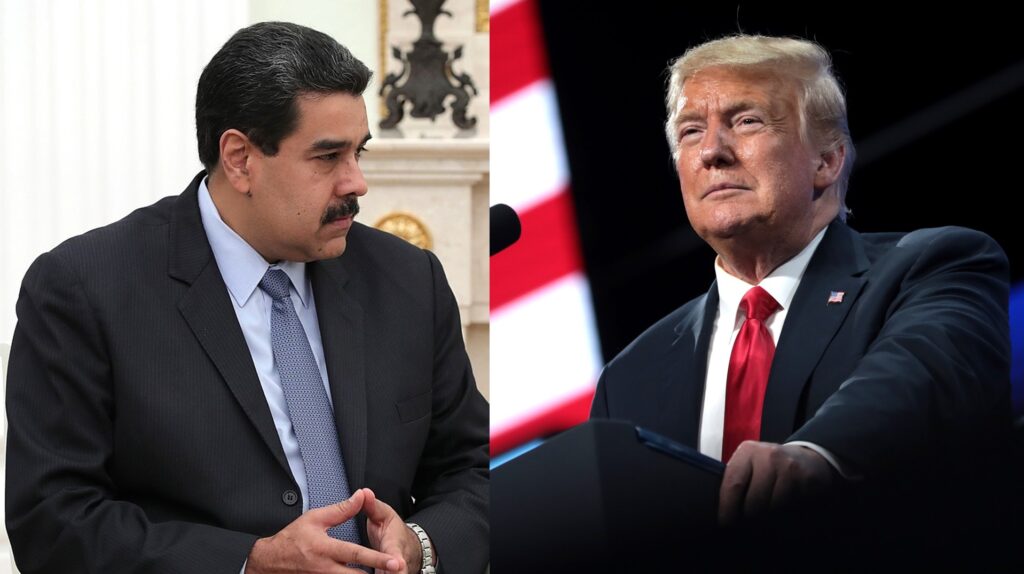


WASHINGTON D.C. – President Donald Trump has delivered a blunt message to Venezuelan leader Nicolás Maduro: step down right away and leave Venezuela, and the United States will allow safe passage for him and his family. The details surfaced through leaked accounts of a phone call in November, as the US ramps up military activity in the Caribbean and tightens actions aimed at Venezuela’s oil trade and alleged drug networks.
People familiar with the November 21 call say Trump’s offer was direct: Maduro could protect himself and his closest relatives, but only by resigning immediately and exiting the country. The proposal reportedly covered Maduro, his wife Cilia Flores, and their son. Maduro refused, according to the same sources, and pushed back with demands that included broad international amnesty and keeping control of Venezuela’s armed forces.
The standoff is fueling concern about a military clash. US forces continue operating near Venezuela’s coastline, and Washington has moved to stop sanctioned oil tankers tied to the country.
The Call That Pushed Tensions Higher
Direct talks between Trump and Maduro are rare. This one was arranged with help from intermediaries said to include Brazil, Qatar, and Turkey. The call lasted under 15 minutes, based on accounts cited by the Miami Herald and Reuters.
Those reports say Maduro asked for protection from US cases tied to narco-terrorism allegations, plus relief from sanctions that target more than 100 officials. Trump rejected those requests, according to the sources.
Maduro also floated a plan where Vice President Delcy Rodríguez would run a transition government before elections. Washington’s stance, as described by the same accounts, stayed fixed on one point: Maduro had to resign immediately. The talks went nowhere, and there’s been no confirmed second call, even though Maduro reportedly tried to set one up.
Trump later acknowledged the conversation in public. He described it as brief and said he “told him a couple of things.” In later comments, he declined to take military action off the table. He told NBC News he doesn’t “rule it out.”
Large US Military Presence Builds in the Caribbean
The ultimatum follows months of stepped-up US military activity near Venezuela. Since summer 2025, the Trump administration has sent major assets to the region. Those deployments include the aircraft carrier USS Gerald R. Ford, close to a dozen warships, F-35 jets based in Puerto Rico, and roughly 15,000 troops.
The operation, often referred to as Operation Southern Spear, was first described as a counter-narcotics push aimed at boats tied to alleged smuggling routes. US officials have linked the effort to the so-called Cartel de los Soles, a label used to describe corrupt elements inside Venezuela’s military accused of drug trafficking. Reports say more than 28 strikes on vessels have led to over 100 deaths, drawing criticism and raising concerns about possible extrajudicial killings.
In recent weeks, the campaign widened. On December 16, Trump announced a “total and complete blockade” of sanctioned oil tankers entering or leaving Venezuela, posting on Truth Social and citing terrorism, drug smuggling, and human trafficking. US forces have seized at least two tankers, including the Skipper. Maduro condemned the seizures as “piracy.”
Venezuela has responded by sending naval escorts with oil shipments. That move raises the risk of a direct confrontation at sea. Defense Minister Vladimir Padrino López has also ordered mobilizations and said the country is ready to defend itself.
Economic Squeeze and Claims About US Assets
Trump has increasingly tied the pressure campaign to Venezuela’s oil wealth, which includes the world’s largest proven reserves. He has also called for the return of “oil, land, and other assets,” he says were taken from the United States. He has pointed to nationalizations carried out under Hugo Chávez in 2007, which impacted US firms.
Analysts say the effort that began with drug interdiction messaging now looks more focused on choking off revenue. The tanker blockade has slowed shipments and created what some describe as an “existential crisis” for Maduro’s government, which depends heavily on oil income. Oil prices have moved up modestly as markets factor in fewer Venezuelan exports.
Washington has also broadened sanctions. Targets include Maduro’s relatives and other close allies, including nephews accused of corruption tied to PDVSA, the state oil company.
Maduro Holds His Ground and Tries to Rally Support
In Caracas, Maduro has used the US actions to rally supporters. He has framed the pressure as imperialism and a grab for Venezuela’s resources. At a December rally, he said: “We want peace, but peace with sovereignty, equality, freedom! We do not want a slave’s peace.”
He has hinted at possible concessions, including access to oil and minerals, but he has not signaled any intent to leave office. He has leaned on relationships with partners like Russia and Iran, even as support across the region appears weaker than in earlier years.
Venezuela’s opposition, still divided after years of internal conflict, has reacted cautiously. Some voices welcome stronger pressure on Maduro, but others warn that a military intervention could trigger chaos.
Global Response and the Danger of Escalation
The crisis has triggered mixed reactions abroad. Russia has warned of “unpredictable consequences.” Several Latin American governments have voiced concern about unilateral US actions. The UN has been briefed on Maduro’s complaints, according to reporting.
Security experts warn that smaller steps can add up fast. Boat strikes, tanker seizures, and tighter control of nearby air and sea routes can spiral into broader conflict. Reports also describe Trump telling advisers he wants to “keep blowing up boats until Maduro cries uncle.”
Legal scholars have questioned the administration’s claims that current operations fit an “armed conflict” framework that would justify lethal force, since there’s no declared war. Human rights groups have criticized the reported civilian toll from vessel strikes.
In the US, many Trump supporters back a hard line tied to drugs and migration. Still, analysts say a full-scale intervention could strain “America First” politics if it turns into another long war.
Background: Years of Bad Blood
US-Venezuela relations worsened under Chávez in the early 2000s and deteriorated further after Maduro’s disputed 2018 re-election. During Trump’s first term, the US expanded sanctions and recognized opposition figure Juan Guaidó. The current pressure campaign echoes older US regional thinking, with Secretary of State Marco Rubio pushing a tough approach.
Past talks have failed. Proposals involving oil access in exchange for reduced pressure have collapsed again and again, often because neither side trusts the other.
What Comes Next
As of December 22, Maduro remains in place, and US patrols continue. White House officials are also reportedly planning for what could follow Maduro, including models for a transition government.
Trump has said diplomacy is still possible, but his public comments suggest impatience. “Maduro knows exactly what I want,” he said recently. “His days are numbered.”
The next few weeks may decide whether tighter economic pressure forces a political opening, or whether the region moves closer to its most dangerous standoff in decades. Many observers worry about a single spark, like a resisted tanker boarding or a strike gone wrong, that could widen the conflict quickly. For now, the Caribbean remains tense, and the world is watching.