

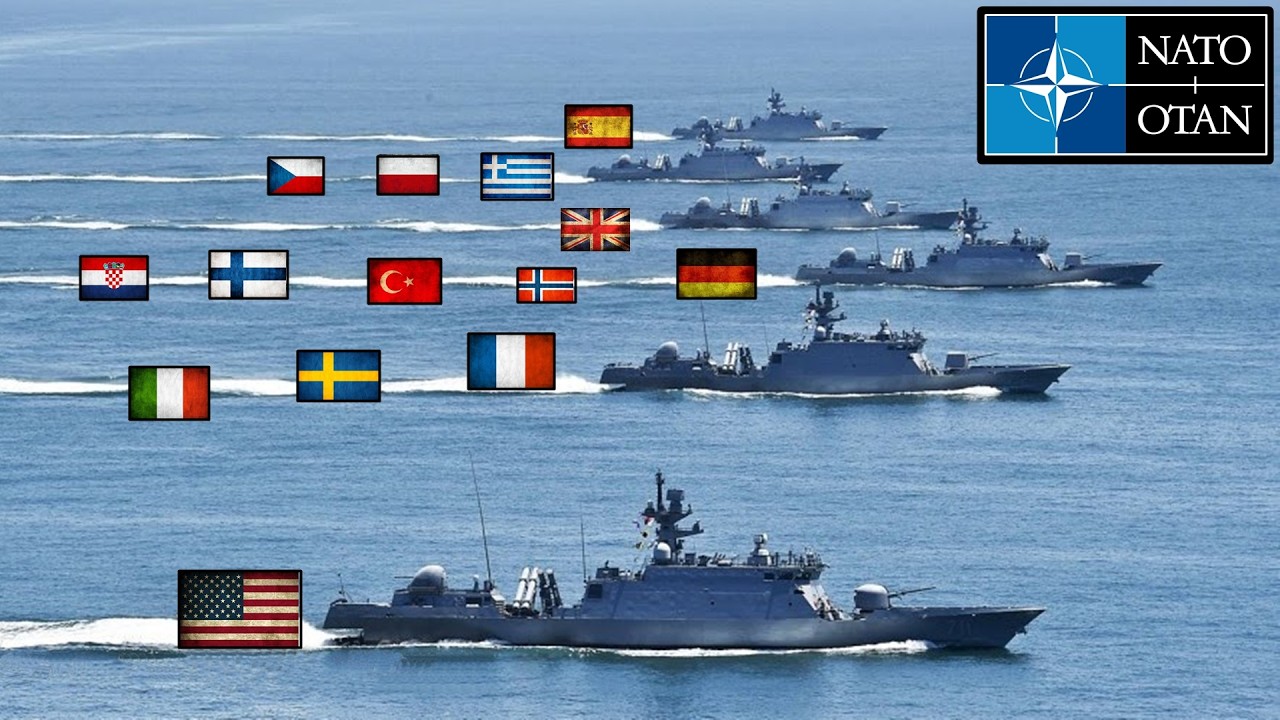


BRUSSELS – NATO Secretary General Mark Rutte says 22 countries are now working with the United States to keep the Strait of Hormuz open after Iran moved to block the waterway during the ongoing US-Israeli military campaign. The update comes as oil prices climb and governments try to stop a wider energy shock that could hit economies around the world.
Speaking with FOX News on Sunday, Rutte shared news that helped calm some fears in global energy markets. “The good news is this,” he said, “since Thursday, 22 countries, most of them NATO, but also Japan, Korea, Australia, New Zealand, Bahrain, the UAE, have come together to basically answer three questions: what do we need? When do we need it? And where do we need it?”
The move marks a sharp shift after President Donald Trump publicly criticized NATO allies as “cowards” for not moving faster to protect the strait. Rutte said he understood Trump’s anger, but he also said countries needed time to get ready because they had no advance notice of the US strikes on Iran.
Why the Strait of Hormuz Matters So Much
The Strait of Hormuz lies between Iran and Oman and links the Persian Gulf to open waters. About one-fifth of the world’s seaborne oil, roughly 21 million barrels a day, moves through this narrow passage. Oil tankers carrying crude from Saudi Arabia, Iraq, Kuwait, and the UAE depend on it every day.
Since the US and Israel began Operation Epic Fury on February 28, 2026, Iran has made safe passage far more dangerous. Tehran has targeted ships tied to its rivals, placed mines, and threatened commercial traffic in response to strikes that damaged its nuclear and ballistic missile programs. As a result, fuel prices have jumped around the world, and leaders in Europe and Asia fear another wave of inflation.
Rutte made the stakes plain. “This is crucial for the world economy. It is also crucial because it’s unacceptable if a key sea lane is closed, or it is so difficult to use that sea lane because of all the threats currently there.”
NATO Strongly Supports US Action Against Iran
Rutte went beyond the shipping issue and gave full backing to the US-Israeli strikes. He called the operation “very important” for Europe’s security. “If Iran would have the nuclear capability, including, together with the missile capability, it will be a direct threat, an existential threat, to Israel, to the region, to Europe, to the stability in the world,” he said.
He also praised the campaign for weakening Iran’s ability to act as “an exporter of chaos.” Recent Iranian missile attacks, including one said to have targeted the US base at Diego Garcia, added to his argument. “What the President is doing here, taking out the ballistic missile capability, taking out the nuclear capability from Iran, is crucial,” Rutte said.
At the same time, NATO’s formal position has not changed. The alliance is not directly involved in combat against Iran. Instead, the 22-country effort is operating as a separate coalition outside NATO command. That setup gives members more room to move quickly while NATO stays focused on its main mission.
Which Countries Are Involved in the 22-Nation Coalition
Rutte did not list every country in the group, but he gave a clear picture of who is taking part.
- Main NATO contributors: Most of the alliance’s 32 members are involved, including the UK, France, Germany, Italy, and the Netherlands.
- Partner nations outside NATO: Japan, South Korea, Australia, New Zealand, Bahrain, and the United Arab Emirates.
- Top political coordination: British Prime Minister Keir Starmer is “at the forefront” and working closely with French President Emmanuel Macron. Rutte said calls between leaders this week helped lock in the agreement.
Military teams from those countries are now focused on the practical work, including escort missions, mine-clearing, air patrols, and setting up safer transit lanes. The goal is simple: restore oil shipments as quickly as possible.
Key details about the 22-country effort:
- The coalition came together within days, starting Thursday, after public pressure from Trump.
- It is built around three basic questions: what forces are needed, when they can deploy, and where they should operate.
- The plan includes naval support, air cover, and intelligence sharing.
- The main objective is to restore free passage through the strait without Iranian disruption.
Taken together, this group stretches across Europe, the Indo-Pacific, and the Gulf. It shows how concern over Iran has brought longtime allies and regional partners onto the same page.
Why the Economic Impact Reaches Ordinary Families
The disruption in the Strait of Hormuz has already pushed oil prices higher. That means more pressure at gas stations and tighter household budgets. Europe faces a bigger risk because many countries there rely heavily on Gulf oil, and that could mean higher heating costs and possible supply strain later in the year.
Analysts say a long shutdown could fuel recession worries. On the other hand, reopening the strait would likely calm markets and reduce the risk of a wider economic hit.
Rutte tried to project confidence. “We will find a way forward.” His comments match a broader push from leaders in France, Germany, Italy, Japan, the Netherlands, and the UK, all of whom have condemned Iran’s actions and voiced support for the coalition.
Trump’s Pressure Pushes NATO Allies to Act
Trump had accused NATO of being a “paper tiger without the U.S.” He also called for quick action to secure the strait, describing it as a “simple military maneuver.” Rutte answered in a measured tone but made clear that the alliance is now moving. “I understand the president’s frustration that it takes some time… but now coming together to make sure that we can be able to secure the Strait of Hormuz.”
He also gave Trump credit for earlier pressure on defense spending. According to Rutte, the push toward spending 5% of GDP on defense left alliance members in a stronger position to deal with a crisis like this one.
What Comes Next, and What Risks Remain
Military planners are moving fast. US signals suggest combat operations against Iran could begin to slow by early April. Because of that, the coalition wants protective measures in place before then.
Still, the danger has not passed. Iran still has mines and missiles that could hit tankers or naval vessels. A single mistake could widen the conflict. Even so, Rutte sounded confident, saying, “I am absolutely convinced” the effort will work.
The operation also sends a clear warning to Tehran: the international community will not let one country choke off global energy supplies.
Wider Effects on Security and Alliances
This 22-country mission is about more than oil. It also shows how the US and its partners can form flexible coalitions outside formal alliance structures when speed matters most. At the same time, it highlights NATO’s place in a period shaped by several major threats, from Russia’s war in Ukraine to growing tension with Iran in the Middle East.
For Washington, the coalition reduces the pressure of acting alone. For Europe and Asia, it protects a major trade route. For the global economy, it offers a path toward more stable oil flows and less market panic.
As tensions continue, the Strait of Hormuz remains the main focus. Rutte’s confirmation of a 22-nation coalition working with the US is the clearest sign yet that a broad group of countries is prepared to respond to the Iran threat and keep this key shipping lane open.