Canada
Why Alberta Separatist Leaders Say It’s Time to Leave Canada

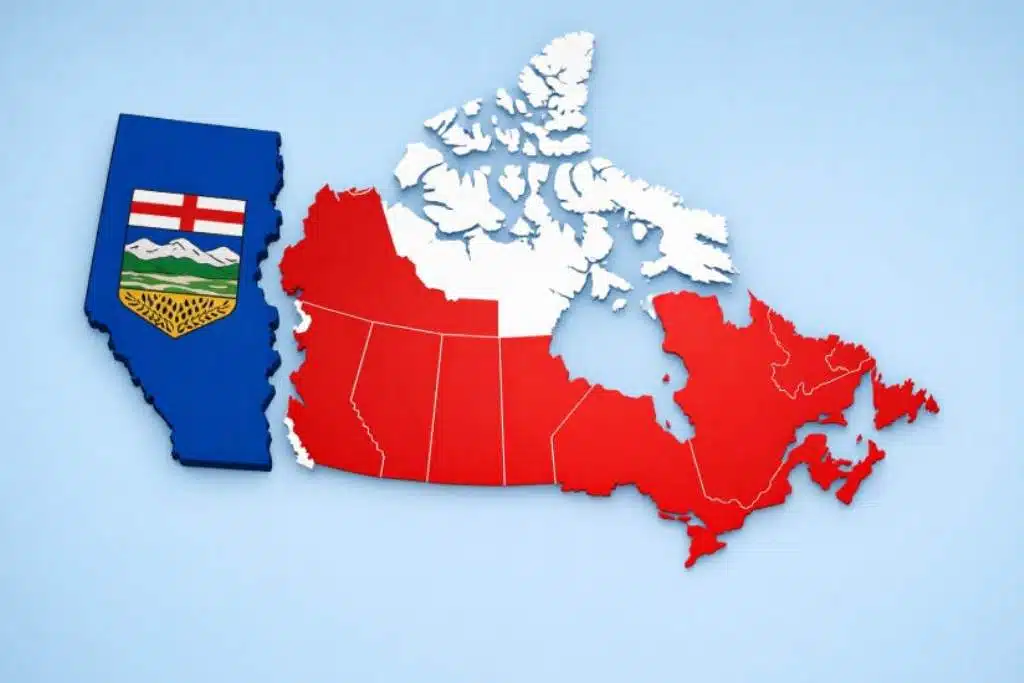
CALGARY – Why are some Alberta leaders calling for a path toward independence? Frustration with Ottawa has fueled the campaign, with separatists arguing that Alberta should have more control over its resources, revenues, and provincial decisions. Their case includes claims about federal pipeline approvals and the province’s relationship with the rest of Canada, as Keith Wilson’s argument for Alberta independence illustrates.
But support for separation isn’t the same as a decision to leave Canada. The October 19, 2026, referendum question asks whether to begin a legal process for a later vote on independence, not whether Alberta should separate immediately. The arguments behind the campaign, the steps a referendum could trigger, and the legal hurdles ahead help explain what’s at stake.
Key Takeaways
- Alberta separatist leaders say the province needs more control over its resources, revenue, and decisions, arguing that Ottawa has not addressed its concerns.
- The campaign has drawn wider attention, including public support for Alberta independence.
- Alberta’s referendum is scheduled for October 19, 2026. The separation question asks whether to begin the legal process for a later binding vote, according to Elections Alberta.
- A vote to start that process would not make Alberta independent or automatically trigger a binding separation referendum.
- Any lawful secession would require constitutional negotiations. A referendum result alone cannot take Alberta out of Canada.
Why Alberta separatist leaders say it’s time to leave Canada
Alberta separatist leaders make a case built around money, energy policy, and provincial authority. They argue Ottawa has failed to respect Alberta’s economic interests and constitutional powers. Those are campaign arguments, not settled facts or evidence that most Albertans support independence.
They say Alberta’s energy wealth does not bring enough back
Separatists argue that Alberta’s oil and gas wealth helps fund Canada, while the province gets too little in return. They often point to federal spending, transfers, and the equalization program when they describe Alberta as a net contributor. However, claims about Alberta’s overall net contribution depend on how revenues and federal spending are counted. A campaign estimate should not be treated as an agreed accounting figure.
Equalization also works differently from the way some campaign rhetoric suggests. The federal government pays for the program from general revenues, rather than sending Alberta a direct bill or collecting a separate equalization payment from the province. Alberta has not received equalization payments since 1965. The federal government explains how the program is funded in its overview of the Equalization Program.
That distinction does not settle the wider debate over federal finances. Separatists say Alberta’s economic contribution and its influence over federal decisions do not feel balanced. Their complaint is about the broader fiscal relationship, not a direct transfer from Alberta to equalization. For context, federal budgets include equalization alongside other major transfers to provinces, as this review of federal spending reports explains.
Pipeline delays and environmental rules fuel anger at Ottawa
Alberta is landlocked, so its oil producers need pipelines, rail, or other routes to reach customers beyond the province. Separatists argue that federal approval delays and opposition to pipeline projects limit access to coastal export markets. They see that constraint as a problem for Alberta’s ability to sell its resources and develop its energy sector.
Campaigners also criticize federal environmental rules, which they say can make energy development harder or less predictable. That criticism reflects their view of Ottawa’s role; it does not establish that any single law or review process caused a specific economic loss. Pipeline decisions can involve federal and provincial governments, regulators, companies, and affected communities.
For separatists, the issue reaches beyond a particular project. They argue that Alberta should have more say over how its resources are produced and transported. The province’s push for new export routes is also part of broader political disputes over energy policy and trade, including Alberta’s call for faster West Coast pipeline development.
Some campaigners see a wider fight over provincial control
The separation argument also concerns who gets to make decisions about natural resources and other provincial matters. Separatists say Ottawa has used its authority in ways that restrict Alberta’s choices. Their supporters often describe independence as a way to put more power in the hands of Alberta’s government.
Alberta Prosperity Project leader Mitch Sylvestre has said a major change in Alberta’s relationship with Ottawa could affect his group’s campaign. He has also said that without such change, the push for independence would continue. His comments show how campaign leaders connect specific disputes to a larger demand for greater control, as CBC News reported on Sylvestre’s position.
That remains a campaign position, not proof that Albertans broadly agree. People can object to federal policies or want more provincial authority without supporting separation. The campaign’s argument is that leaving Canada could resolve those disputes; whether voters accept that claim is a separate question.
How Alberta’s separation campaign and 2026 referendum question work
Alberta’s separation debate involves three distinct steps: a citizen petition, the October referendum question, and a possible later binding referendum. The distinction matters because signing a petition or choosing to start a legal process does not itself make Alberta independent.
The petition campaign helped bring separation onto the ballot
Stay Free Alberta, led by Mitch Sylvestre, sought a direct vote on whether Alberta should leave Canada. CBC reported that the petition gathered 222,600 verified signatures. The Alberta Prosperity Project, a leading separatist organization, has also helped organize and promote the independence campaign.
Alberta changed its citizen-petition rules in July 2025. The required number of signatures fell from 294,000 to 177,000, and the collection period grew from 90 to 120 days. Those rules made it easier for a petition to reach the threshold, but a petition is still a request for government action, not a referendum result.
The campaign’s petition later faced a legal challenge. A court quashed its approval, and Premier Danielle Smith said her government would appeal the ruling. CBC’s report on the court decision details the dispute over whether the petition could proceed.
A choice to begin the process would not create independence
Elections Alberta lists October 19, 2026, as the referendum date. The ballot asks voters whether Alberta should remain a province of Canada or whether the provincial government should begin the constitutional legal process required to hold a later, binding referendum on separation. A timeline of Alberta’s referendum campaign explains how the question reached the ballot.
This is a two-option question, not a simple yes-or-no vote on immediate independence. Choosing the option to begin the process would direct the government to pursue the steps needed for a later binding vote. It would not make Alberta independent, nor would it settle whether voters would support separation in that later referendum.
That distinction also separates the October ballot from the original citizen petition. The petition asked for a direct referendum on leaving Canada; the October question asks whether the government should begin the legal process for holding one.
Danielle Smith’s role is different from the campaign’s
Separatist organizers promoted the Stay Free Alberta petition, while Smith’s government set the question for the provincewide referendum. After the court quashed the petition, Smith said she would appeal. She then added the process question to the October ballot, presenting it as a way for voters to decide whether the government should take the next legal step.
A separate pro-Canada effort, called Forever Canada by Smith, asked Albertans to support remaining in Canada. In her October 9 address, Smith said the two petitions together represented about 700,000 signatures. That was her approximate combined figure, not a single certified count of verified signatures. The transcript of Smith’s address describes the two campaigns and her reasoning for putting the process question to voters.
The petitions expressed opposing positions, but neither one by itself decided Alberta’s future. The October vote is the next decision point, and its result will determine whether the government is asked to pursue a later binding referendum.
What could make Alberta’s path to independence difficult
Even if Albertans vote to start a separation process, the vote would leave major legal and political questions unresolved. Treaty rights, constitutional negotiations, and public support would all shape what happens next.
A court ruling put First Nations treaty rights at the center
On May 13, 2026, Alberta Court of King’s Bench Justice Shaina Leonard quashed the approval of the citizen petition seeking a separation referendum. Leonard found errors in the petition’s approval process and concluded that Alberta had a duty to consult First Nations before allowing it to proceed. In her reasoning, separation could affect treaty rights, including rights under Treaties 7 and 8. CBC’s report on the ruling describes the court’s decision.
The ruling did not decide whether Alberta can or should separate. However, Premier Danielle Smith’s government is appealing, and the decision remains binding unless an appeal court overturns or clarifies it. The order quashed the citizen petition, while the separate government-sponsored referendum question is a different process.
Consultation matters because treaty relationships involve the Crown, and changing Alberta’s constitutional status could affect how those relationships and related rights are recognized. Any separation plan would have to address Indigenous peoples’ rights, rather than treating them as a question to settle after negotiations. Indigenous concerns already feature in provincial energy disputes, including First Nations’ concerns in Alberta pipeline negotiations.
Leaving Canada would require more than a provincial referendum
A provincial vote cannot, by itself, settle Alberta’s place in Canada. The Supreme Court of Canada’s Reference re Secession of Quebec says a clear majority on a clear question would create an obligation to negotiate, not an automatic right to leave. The negotiations would have to follow constitutional rules, and the federal Clarity Act sets out how the federal government considers a referendum question and majority clear.
The talks would raise practical questions with no settled answers. They could involve the division of federal assets and liabilities, borders, citizenship, the status of federal institutions, and the rights of Indigenous peoples. The parties would also have to determine what constitutional changes are required and how to approve them. No definitive timetable or agreed formula for Alberta’s separation has been established, so no particular outcome can be assumed.
Polling shows a gap between campaign claims and province-wide support
Poll results distinguish broad provincial opinion from the views of committed separatists and some UCP voters. A CBC-commissioned poll found that 23% of respondents supported voting to start the legal process for a later binding referendum, while 72% preferred that Alberta remain in Canada. CBC’s coverage of Janet Brown’s poll reported different results among people who said they would vote UCP: 53% supported starting the process, and 40% preferred staying in Canada.
Those subgroup figures do not describe the province as a whole. Separatist leader Mitch Sylvestre has also offered a personal estimate of 40% to 65% support for a later binding vote. That estimate is his projection, not a poll result, and it measures a different question from the CBC survey. The distinction matters: support for considering a future vote does not necessarily mean support for separation itself.
Frequently Asked Questions
Can Alberta legally leave Canada?
Alberta cannot become independent through a provincial vote alone. Under the Supreme Court of Canada’s secession framework, a clear majority voting on a clear question would create an obligation to negotiate, not an automatic right to leave. Any separation would require constitutional negotiations and a legal process.
Does Alberta pay equalization directly to other provinces?
No. Equalization is a federal program paid for from general federal revenues, not a direct payment from Alberta to other provinces. Separatist critics may describe Alberta as a net contributor to Canada, but that broader fiscal claim is different from saying Alberta directly funds equalization.
Is Danielle Smith leading the separatist movement?
No. Premier Danielle Smith’s government placed a question about starting the legal process on the ballot, while independence advocacy is led by outside organizers, including Mitch Sylvestre and the Alberta Prosperity Project. Smith has said she would vote to remain in Canada, and CBC reported her pledge about a second referendum.
What happens if voters reject the referendum question?
The October 19 question asks whether to begin the legal process for a later binding separation referendum. If voters reject that option and choose to remain in Canada, Smith has said she would not call another separation referendum while she remains premier. That would not prevent future governments from revisiting the issue.
Do most Albertans support separation?
Available provincewide polling shows more support for remaining in Canada than for starting the process toward a later vote. A Janet Brown Opinion Research poll found 23% supported starting the process, while 72% preferred that Alberta remain in Canada. Results vary by poll and voter group, and organizers’ estimates of support are not survey findings.
Conclusion
Alberta separatist leaders point to energy policy, fiscal arrangements, and provincial control as reasons to consider leaving Canada. However, frustration with Ottawa, support for starting a referendum process, and a clear mandate for independence are different things.
Court challenges, treaty rights, constitutional negotiations, and public opinion will shape what happens next. The October vote is a decision about whether to begin a legal process for a later referendum, not a decision to separate. The outcome will show how far Albertans are willing to take the debate, while the question of independence remains unresolved.


Poilievre Takes Aim at Carney on Stellantis, Telus, Brazil

LeBlanc: Some U.S. Tariffs Will Stay Even With a Deal

Pichette Faces MPs Over Cohere Ties and $1.6B Federal Stake

B.C. Premier Doerkson Move to Roll Back Housing Mandates

Carney Seeks Interim U.S. Trade Deal as Auto Tariffs Stall

Freeland Urges Allies to Invite U.S. Back on New Terms

Trump Touts Alaska LNG as Canada’s Pipeline Faces Court

Checking Carney’s DealBook Claims Against the Data

LeBlanc Backs Carney on Why Trade Talks Collapsed

Carney’s China Deal Opens Pork, Loosens Steel Rules
LeBlanc Backs Carney on Why Trade Talks Collapsed

Carney Holds Up Shenzhen as a Model for Canada

Poilievre, Liberals Clash Over $560M Brazil Forest Pledge

Carney Floats Chinese Automakers if US Trade Talks Fail

Canada Sheds Jobs Again as Inflation Stays at 3.1%
Carney’s China Deal Opens Pork, Loosens Steel Rules
Poilievre Takes Aim at Carney on Stellantis, Telus, Brazil

Canada Loonie Sits Near 19-Month Low as Macklem Plans Exit
Checking Carney’s DealBook Claims Against the Data
Trump Touts Alaska LNG as Canada’s Pipeline Faces Court


-

 Immigration & Border Policy9 months ago
Ilhan Omar’s Connections to Convicted Somali Fraudsters Surface
-
Politics10 months ago
CNN Delivers Stark Reality Check to Democrats Over Voter ID
-
Immigration & Border Policy9 months ago
Rep. Ilhan Omar Faces Heat as Minnesota Voters Seek Change
-
Politics10 months ago
Trump Approval Rating (February 2026 Poll Results, Approve vs Disapprove)
-
United States10 months ago
China Backed US Billionaire Singham Allegedly Funding of Anti-ICE Protests
-
Immigration & Border Policy9 months ago
Calls Mount to Expel Rep. Ilhan Omar from Congress
-
Politics8 months ago
NATO Chief Says 22 Nations Working With US to Keep the Strait of Hormuz Open
-
United States9 months ago
Austin Tucker Martin Who Was He And Why Was He at Mar-a-Lago?