
Canada
Canada’s Constitution Amendments: The 7/50 Rule Explained

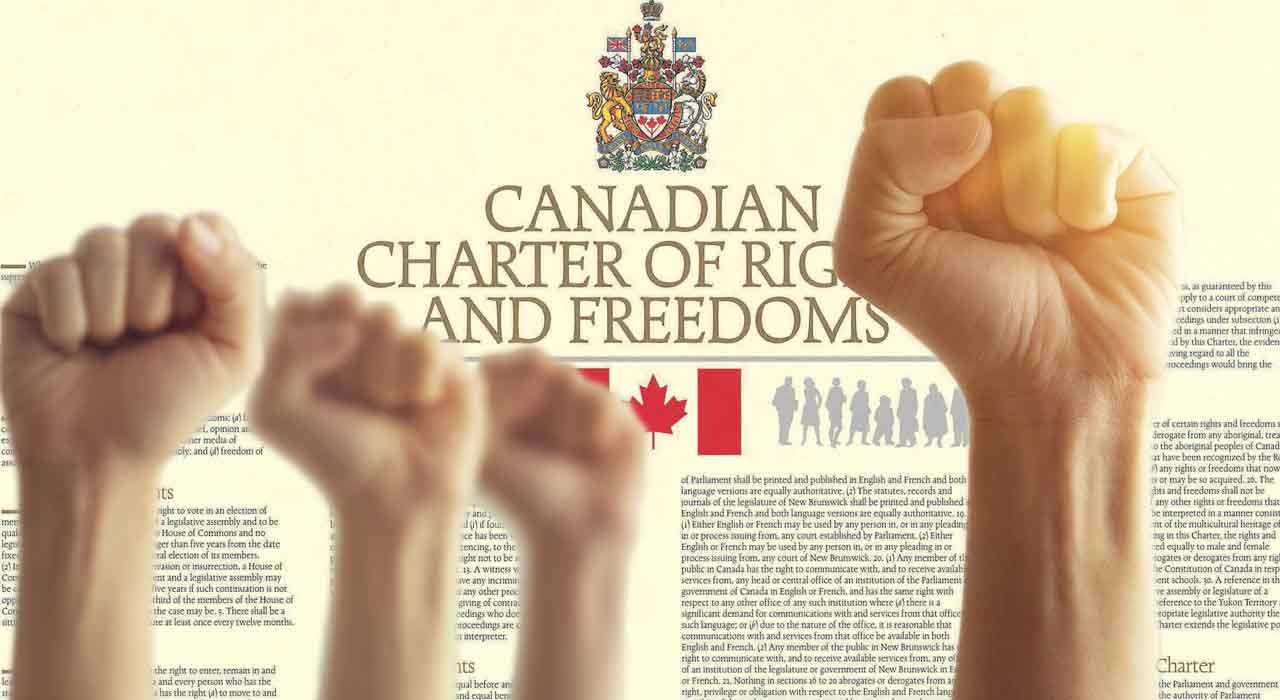
OTTAWA – How can Canada change its highest law without giving any one government complete control? Its general amendment formula, known as the 7/50 rule, requires approval from at least seven provincial legislatures, representing at least half the population of all provinces.
Both tests must be met, so support from seven provinces alone may not be enough. And because some constitutional changes follow different procedures, the first step is identifying which formula applies. Alberta’s constitutional amendment proposals offer a current example of how political calls for change can raise that question.
Key Takeaways
- The 7/50 rule requires resolutions from at least seven of Canada’s ten provincial legislatures, representing at least 50% of the provinces’ combined population.
- The Senate and House of Commons must also approve the amendment, followed by a proclamation from the Governor General under the Great Seal. See the official constitutional amendment procedure.
- Some changes require unanimous provincial approval, while others need consent only from affected provinces or can be made by Parliament or a provincial legislature.
- A province may opt out of certain amendments, but compensation applies only to a narrow category of changes involving education or cultural matters.
- A referendum is not generally required, and a provincial vote alone cannot settle constitutional questions about separation. Explore the constitutional requirements for Alberta separation.
How Canada’s Constitution Is Amended Under the 7/50 Rule
Section 38 of the Constitution Act, 1982 sets out Canada’s general amending formula. For an amendment covered by this rule, approval requires resolutions from the Senate and House of Commons, plus support from a qualifying group of provincial legislatures. The Governor General then issues a proclamation under the Great Seal to bring the amendment into effect.
The formula has two provincial tests, and both must be met. However, it does not apply to every constitutional change. Other provisions set different procedures, as Canada’s constitutional negotiations involving Quebec illustrate.
What the seven provinces and 50% thresholds mean
Canada has 10 provinces, so two-thirds means at least seven provincial legislatures. Those provinces must also account for at least 50% of the population of all provinces, according to the latest general census.
The province-count and population requirements are separate. A group of seven smaller provinces could pass the first test but fail to represent half the provincial population. Conversely, a few highly populous provinces might exceed 50% of the population but still fall short of the minimum seven legislatures.
The population calculation covers the provinces only, not the territories. Section 38 also sets no minimum population for each province. Each participating province counts toward the combined total, whether it is large or small.
Which proposals use the general 7/50 formula
Section 42 identifies major subjects that must follow the general formula. These include changes to the Senate’s powers or selection, the number of senators, and senators’ residence qualifications. The rule also applies to changes to the principle of provincial representation in the House of Commons.
Other section 42 subjects include the Supreme Court of Canada, except its composition, and the creation of new provinces or extension of existing provinces into territories. For these matters, the seven-province and 50% population tests both apply, along with the required federal resolutions.
That list matters because 7/50 is not a universal amendment rule. The Constitution sets out other procedures for some changes, including unanimity for certain subjects and approval by only the affected provinces for others. The first question is therefore which amending procedure covers the proposed change.
What Happens When Governments Try to Pass a 7/50 Amendment
Meeting the 7/50 thresholds is part of a formal legal process, not simply a matter of political agreement. Parliament and the qualifying provincial legislatures must adopt resolutions, and the amendment takes effect only after the Governor General issues a proclamation.
Resolutions, the Senate, and the final proclamation
The House of Commons and Senate each adopt a resolution authorizing the amendment. At least seven provincial legislatures must also pass resolutions, and those provinces must represent at least 50% of the population of all provinces. A referendum is not a general constitutional requirement. For example, a proposed provincial referendum, such as Alberta’s 2026 independence vote, is distinct from the resolutions required to amend the Constitution.
The Senate has a limited delaying role under section 47. If it hasn’t passed its resolution within 180 days after the House of Commons passes its resolution, the House can pass the resolution again. The Senate’s approval is then no longer required. Periods when Parliament is prorogued or dissolved don’t count toward the 180 days. The Canadian Constitutional Law Open Access Casebook describes this as a suspensive veto.
Once the required resolutions authorize the amendment, the Governor General issues a proclamation under the Great Seal. The proclamation brings the amendment into effect; political support or a negotiated agreement alone doesn’t change the Constitution.
The one-year and three-year clocks
The timing rules begin when the first resolution initiating the amendment process is adopted. Under section 39, a proclamation generally can’t be issued until one year has passed. The exception is when every provincial legislature has adopted a resolution of dissent. In all cases, the proclamation must be issued within three years of that first resolution.
A province can change its position before the proclamation. It may revoke a resolution that supported the amendment, while a province that initially dissented may later pass a resolution supporting it. These changes matter because the required provincial support must still be in place when the amendment is proclaimed.
When Canada Uses a Different Constitutional Amendment Formula
The 7/50 rule is Canada’s general amendment formula, but Part V of the Constitution Act, 1982 sets out other procedures. The required approvals depend on what a proposed change would affect, so some amendments need every province’s consent while others require approval only from Parliament or specific provinces.
Unanimity for a short list of major changes
Section 41 requires resolutions from the Senate, House of Commons, and every provincial legislature. This unanimous procedure applies to a narrow set of major subjects:
- The offices of the King, Governor General, and provincial lieutenant governors.
- A province’s right to have at least as many members in the House of Commons as it has senators, as specified in section 41(b).
- The use of English or French.
- The composition of the Supreme Court of Canada.
- Changes to Part V’s amendment rules.
Unlike the 7/50 formula, section 41 gives each province a say over these listed matters. The exact scope comes from the provision itself, not from a general rule that all changes to federal institutions require unanimity. The Constitution Act’s amendment provisions set out these distinct approval routes.
Changes that affect only one or some provinces
Section 43 applies to certain constitutional provisions that concern one or more provinces, but not all of them. In these cases, Parliament and the legislatures of each affected province must pass resolutions. The other provincial legislatures do not need to approve the amendment.
For example, a change to a provincial boundary would require approval from the provinces involved. The same procedure covers changes to constitutional provisions about the use of English or French within a province. This formula is narrower than 7/50 because it focuses on the provinces directly affected, rather than requiring a qualifying group of at least seven.
Amendments Parliament or a province can make on its own
Sections 44 and 45 allow limited changes without resolutions from the provinces or Parliament as a whole. However, neither section gives a government a general power to rewrite the Constitution.
Under section 44, Parliament may amend parts of the Constitution of Canada related to the federal executive, Senate, or House of Commons. That authority is expressly subject to sections 41 and 42. As a result, Parliament cannot use section 44 to bypass unanimity or the 7/50 formula when another provision requires it.
Section 45 lets a provincial legislature amend the constitution of that province, subject to section 41. It does not authorize a province to amend the Constitution of Canada as a whole or alter rules that fall under another Part V formula. For instance, constitutional questions around a province’s possible separation require broader legal and political steps, not a unilateral provincial amendment. The legal steps toward Alberta independence illustrate why section 45 has a defined, limited reach.
Opting out, compensation, and lessons from failed accords
The 7/50 formula gives provinces a defined role, but it doesn’t give every province a veto. The rules also distinguish a province’s dissent from a right to compensation, while past failed accords show that political agreement alone cannot amend the Constitution.
When a province can dissent and receive compensation
Under section 38(3), a province may adopt a resolution of dissent when an amendment derogates from its legislative powers, property rights, or other rights or privileges. That dissent can let the province opt out of the amendment, but it doesn’t automatically stop the change if the required federal and provincial support is in place.
Compensation is much narrower. Section 40 covers a qualifying dissent from a section 38(2) amendment that transfers provincial legislative powers over education or other cultural matters to Parliament. The province must also establish or maintain the kind of education system or cultural institutions described in the provision. This is not a general right to compensation for opting out of any constitutional amendment or federal program. The limits appear in sections 38 to 40 of the Constitution Act, 1982.
That distinction matters because the Meech Lake Accord proposed a broader right to financial compensation when a province opted out of future federal programs in areas of provincial jurisdiction. The proposal never became law.
What Meech Lake and Charlottetown show about the process
Meech Lake was a negotiated package supported by the federal government and eight provinces. However, Manitoba and Newfoundland did not ratify it before the three-year deadline, so the accord failed. The Newfoundland and Labrador Heritage account of Meech Lake describes the missed ratification deadline.
The episode shows why an agreement among political leaders is only a starting point. A proposed change must still receive the approvals required by the applicable constitutional formula, within the prescribed time. Without those approvals, the accord does not become part of the Constitution.
Charlottetown brought another major package of constitutional proposals to voters in a national referendum in 1992. Voters rejected it, and the proposals did not become amendments. The Parliamentary Research Branch’s review of constitutional reform discusses both rounds of negotiations.
A referendum can be part of a political plan, as it was for Charlottetown, but the Constitution doesn’t require one for every amendment. The formal process still depends on the resolutions and approvals set out in the relevant amending formula, followed by a proclamation where required.
Frequently Asked Questions
Canada’s amendment rules raise practical questions about who can start the process, how courts may get involved, and what the 7/50 threshold means for individual provinces.
Can citizens directly propose a constitutional amendment?
No. Part V’s formal amendment procedures depend on resolutions or laws passed by Parliament and provincial legislatures, depending on the formula. Citizens can influence public debate and political decisions, but there is no general citizen-initiated amendment process.
Can courts decide whether the right amendment formula was used?
Courts can consider legal disputes about constitutional powers and procedures when a proper case or reference brings those issues before them. The Supreme Court’s Quebec Secession Reference is one example of a constitutional question the Court considered. However, a political disagreement about an amendment does not automatically become a court case.
Does Quebec have a special legal veto under the 7/50 rule?
No. Under section 38, Quebec counts as one province, and its population contributes to the provincial total, but the rule gives no single province a general veto if the required approvals are met. Quebec may still carry significant political influence, as debates over Quebec’s constitutional future show.
Can a constitutional change be made without a proclamation?
For procedures that require one, no. Passing the necessary resolutions authorizes the amendment, but the Governor General’s proclamation is the formal step that brings it into effect. Other amendment procedures use their own legal forms.
Why is changing the Constitution often difficult?
Part V sets different approval thresholds to balance national change with federal and provincial consent. The federal government and provinces may have competing interests, and some changes require every provincial legislature’s approval. Reaching that broad agreement can be difficult, especially when unanimity applies.


Cost of Living in Canada vs. USA: Which Is Cheaper?

Poilievre Pushes Tariff-Free Auto Deal as 50% Tariff Looms

Canada’s Constitution Amendments: The 7/50 Rule Explained

Trump Approval Hits Record Low of 36% in Fox News Poll

Deadly Fire and Explosion Rocks CFB Wainwright in Alberta

Stelco Faces Forced Asset Sale Amid Layoffs

Can a Naturalized U.S. Citizen Lose Citizenship?

Quebec Referendums: How Canada Almost Broke in Two

Trump’s $5,000 Check Promise: Will It Actually Happen?

Ilhan Omar Demands Seized Devices Be Returned

Opinion: Is Modern Political Empathy Really About Self-Image?

Opinion: Canada’s Combating Hate Act Threatens Free Speech

US Trade Moves Put Massive Pressure on Canada

How Progressivism Replaced Religion With A New Secular Faith

Pierre Poilievre Critiques Reporter Who Questions His Leadership

Uncovering the Truth Behind Inequality: A Bold New Vision

Canada Sheds 68,000 Jobs As Economic Fears Deepen

Opinion: What South America’s Political Shift Means for Canada

Why Alberta Separatist Leaders Say It’s Time to Leave Canada

Opinion: Canada’s Economy Is Under Pressure From Debt, a Weak Dollar and Steel Tariffs

Jimmy Kimmel Slammed for “Vile” Melania Trump “Expectant Widow” Joke

President Trump Addresses Nation on War with Iran

Trump Warns NATO Allies: America Won’t Protect Slackers After Iran Clash

Senate Hearing on Fraud and Foreign Influence Turns Tense Over Minnesota Scandals

CNN Forced to Backtrack Its Reporting on Trump’s Iran Talks

Joe Rogan Slams Gavin Newsom for Mocking Nick Shirley

Mosque Set Ablaze in Iran a Citizens Revolt Against the Islamic Regime

AOC Accuses Jessie Watters of Fox News of Sexualizing and Harassing Her

JD Vance Exposes Walz’s Fraud and CNN’s Lies in White House Presser

Milestone Card Credit: How the Milestone MasterCard Can Transform Credit


-

 News9 months ago
China-Based Billionaire Singham Allegedly Funding America’s Radical Left
-
Crime10 months ago
YouTuber Nick Shirley Exposes BILLIONS of Somali Fraud, Video Goes VIRAL
-
Politics10 months ago
Ilhan Omar Faces Renewed Firestorm Over Resurfaced Video
-
Politics10 months ago
2026 Midterms Guide: Candidates, Key Issues, and Battleground States
-
Politics8 months ago
Ilhan Omar’s Connections to Convicted Somali Fraudsters Surface
-
Politics8 months ago
CNN Delivers Stark Reality Check to Democrats Over Voter ID
-
Politics7 months ago
Rep. Ilhan Omar Faces Heat as Minnesota Voters Seek Change
-
Politics8 months ago
Trump Approval Rating (February 2026 Poll Results, Approve vs Disapprove)















