
Opinion
Opinion: Canada’s Economy Is Under Pressure From Debt, a Weak Dollar and Steel Tariffs

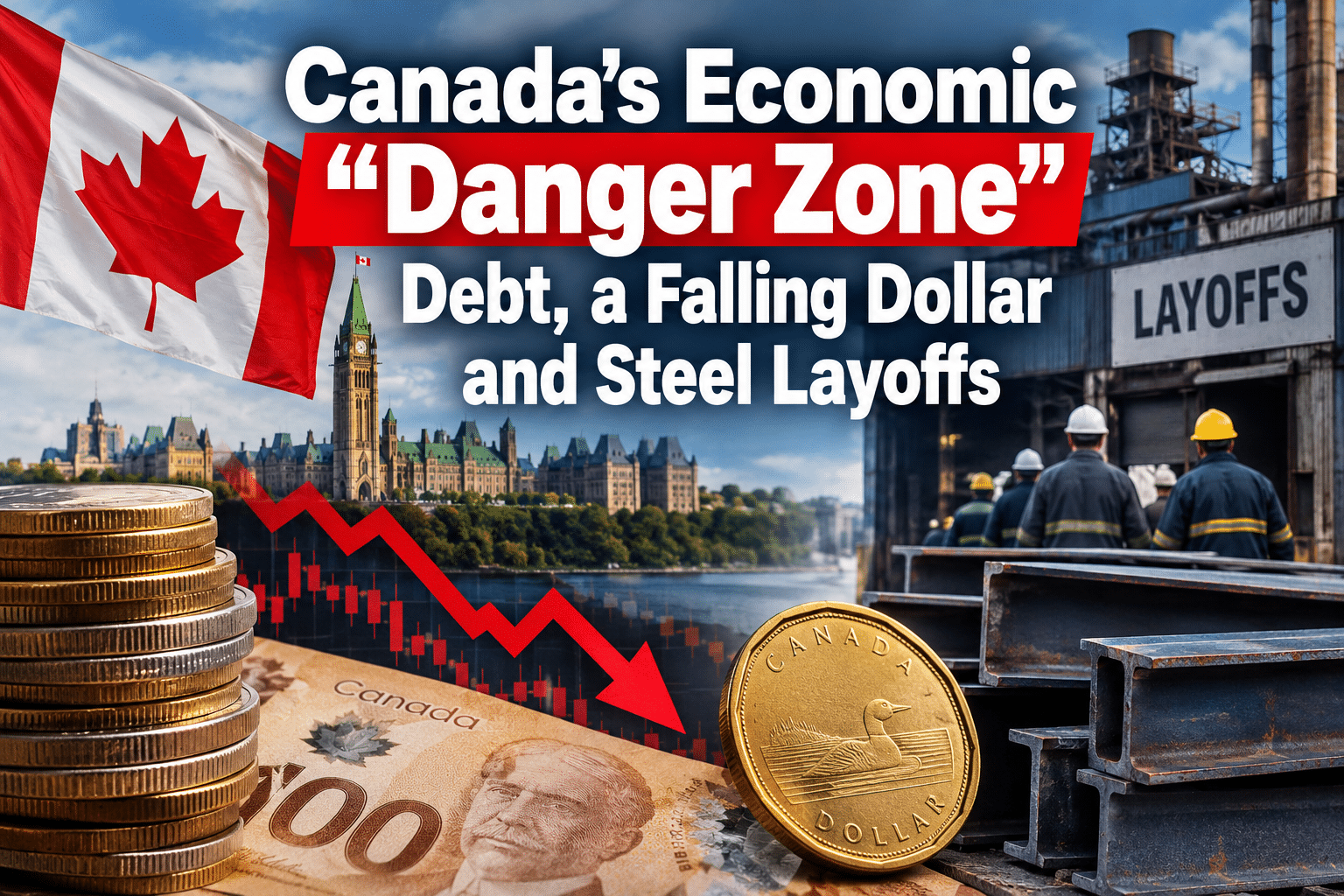
OTTAWA – Canada is facing a harsh economic winter. The nation has officially entered what many financial experts call a dangerous economic zone. High debt levels, a sinking currency, and massive job losses in manufacturing are raising loud alarm bells across the country.
Just recently, the Canadian dollar made headlines by dropping below 70 U.S. cents during a live television broadcast. This shocking moment highlights a growing crisis for everyday families and local businesses alike. Meanwhile, massive layoffs in the steel sector show the real-world cost of these intense economic pressures.
Key Takeaways
- The Canadian dollar recently plunged below 70 U.S. cents, marking a severe and costly currency slump for consumers.
- Federal spending and rising national debt have triggered strict warnings from the Parliamentary Budget Officer.
- Canada is lagging behind global peers like the U.S. and Australia, while the vital steel industry faces harsh layoffs.
The Loonie Takes a Shocking Dive
The sudden drop in the Canadian dollar is incredibly hard to ignore. During a recent news broadcast, viewers watched in sheer disbelief as the loonie fell below the 70 U.S. cent mark. This was not just a brief, harmless blip on a screen. It was a clear, flashing sign of deep economic trouble.
A weaker dollar makes imported goods much more expensive for everyday Canadians. From fresh grocery items to new vehicles, the daily cost of living is climbing fast. For a country that relies heavily on consumer goods from the United States, this currency drop is a heavy blow to tight household budgets.
Furthermore, financial experts warn that a weak loonie seriously hurts business investment. Companies are very hesitant to spend money when the currency remains so unpredictable. In turn, this lack of spending slows down overall economic growth and severely limits job creation across various sectors.
Red Flags on Federal Spending and Debt
At the absolute center of this crisis is massive government debt. The office of the Parliamentary Budget Officer (PBO) has issued stern warnings about the current path of federal spending. They suggest that Ottawa is simply borrowing far too much money for the economy to handle safely.
When a government spends significantly more than it takes in, the national debt piles up quickly. Paying the high interest on this debt takes billions of dollars away from essential public services. The PBO has made it completely clear that this massive level of spending is simply not sustainable over time.
Ultimately, hardworking taxpayers are the ones who will pay the final price. Higher national debt almost always leads to higher taxes or reduced community services in the future. Many critics argue that the federal government needs to cut costs immediately to avoid a long-term financial disaster.
Falling Behind Global Competitors
Canada’s economic struggles become even clearer when looking directly at its global peers. Economists frequently compare Canada with the United States and Australia. Right now, both of those friendly countries are outperforming Canada in several vital economic areas.
The U.S. economy has shown remarkable strength, driven by strong consumer spending and solid, consistent job growth. Australia is also managing its core inflation and national debt levels much better than Canada. Both nations are attracting the kind of valuable foreign investment that Canada is currently missing.
Why exactly is Canada falling so far behind? Many business leaders point to heavy government regulations and notably slow workforce productivity. When global businesses find it easier and cheaper to operate in the U.S. or Australia, they take their money and jobs there. This unfortunate trend leaves Canadian workers completely out in the cold.
Steel Industry Layoffs Spark Outrage
The Canadian manufacturing sector is feeling the most immediate and painful impact. Canada’s vital steel industry is currently under intense financial pressure, leading to thousands of recent job losses. These sudden layoffs are absolutely devastating local communities that rely on these large factories to survive.
Steel plants are currently dealing with sky-high production costs, cheap foreign imports, and the terribly weak Canadian dollar. When the cost to make raw steel rises but the global selling price stays low, companies are forced to cut staff. The tragic results are empty factory floors and financially struggling families.
Local union leaders are loudly calling for immediate government action to protect these critical manufacturing jobs. However, meaningful federal help has been incredibly slow to arrive. Without strong, immediate support, experts greatly fear that more steel mills will close their heavy doors permanently in the coming months.
Questioning the Heat-Pump Subsidy
While core industrial sectors suffer, some recent government priorities are raising serious eyebrows. Recently, federal officials announced a major new subsidy program specifically for home heat pumps. This surprising move has left many seasoned economists and struggling factory workers deeply frustrated.
Vocal critics argue that spending millions on green energy subsidies is the wrong move during a deep economic crisis. While upgrading home heating systems is a nice environmental goal, it does not create the large-scale economic boost that Canada desperately needs right now. It simply feels completely out of touch to many citizens.
Instead of funding heat pumps, business leaders want the government to focus on core economic drivers. They are actively asking for supportive tax breaks for manufacturers and strict, sensible limits on government borrowing. The sharp contrast between spending on home gadgets and saving core industrial jobs is incredibly stark.
A Call for Economic Common Sense
Canada is quickly running out of time to fix these pressing financial problems. With the dollar stuck below 70 U.S. cents and national debt levels actively rising, the economic danger zone is no longer a future threat. It is the harsh, current reality for millions of hardworking Canadians today.
The clear warnings from the Parliamentary Budget Officer must not be ignored by lawmakers any longer. If Canada truly wants to catch up to the United States and Australia, it must make difficult financial choices right away. Protecting vital, job-creating industries like steel should naturally take priority over flashy, short-term spending projects.
Ultimately, the difficult path forward requires clear leadership and basic economic common sense. By aggressively cutting wasteful federal spending and supporting true industrial growth, Canada can slowly rebuild its strength. Until those important steps are taken, the entire nation remains walking on very thin economic ice.
Trending News:
Legacy Media Protects Carney After Canada Lost 68,000 Jobs
Why Alberta Separatist Leaders Say It’s Time to Leave Canada


Why Alberta Is Voting on a Future Independence

Alberta Votes on Independence: Advance Polls Open

Opinion: Is Canada in a Deep Crisis Over Trade and Defense

Canadian Manufacturers Face Bankruptcy Amid U.S. Tariffs

Opinion: Canada’s Economy Is Under Pressure From Debt, a Weak Dollar and Steel Tariffs

H1-B Visa Crackdown Rocks Big Tech and India

Millions of Shoppers Boycott Real Canadian Superstore

Opinion: Media Went Easy on Carney After Canada Lost 68,000 Jobs

Mark Carney’s Million Dollar Wind Up and Nickel Delivery

Mark Carney Faces Ethics Backlash Over Heat Pumps

Opinion: Is Modern Political Empathy Really About Self-Image?

US Trade Moves Put Massive Pressure on Canada

How Progressivism Replaced Religion With A New Secular Faith

Opinion: Canada’s Combating Hate Act Threatens Free Speech

Pierre Poilievre Critiques Reporter Who Questions His Leadership

Canada Sheds 68,000 Jobs As Economic Fears Deepen

Uncovering the Truth Behind Inequality: A Bold New Vision

Opinion: What South America’s Political Shift Means for Canada

Food Insecurity and Surging Prices: Canada’s Inflation Squeeze
Behind Carney’s $1-Trillion Canada Investment Scheme

Jimmy Kimmel Slammed for “Vile” Melania Trump “Expectant Widow” Joke

President Trump Addresses Nation on War with Iran

Trump Warns NATO Allies: America Won’t Protect Slackers After Iran Clash

Senate Hearing on Fraud and Foreign Influence Turns Tense Over Minnesota Scandals

CNN Forced to Backtrack Its Reporting on Trump’s Iran Talks

Joe Rogan Slams Gavin Newsom for Mocking Nick Shirley

Mosque Set Ablaze in Iran a Citizens Revolt Against the Islamic Regime

AOC Accuses Jessie Watters of Fox News of Sexualizing and Harassing Her

JD Vance Exposes Walz’s Fraud and CNN’s Lies in White House Presser

Milestone Card Credit: How the Milestone MasterCard Can Transform Credit


-

 News9 months ago
China-Based Billionaire Singham Allegedly Funding America’s Radical Left
-
Crime10 months ago
YouTuber Nick Shirley Exposes BILLIONS of Somali Fraud, Video Goes VIRAL
-
Politics10 months ago
Ilhan Omar Faces Renewed Firestorm Over Resurfaced Video
-
Politics10 months ago
2026 Midterms Guide: Candidates, Key Issues, and Battleground States
-
Politics8 months ago
CNN Delivers Stark Reality Check to Democrats Over Voter ID
-
Politics8 months ago
Ilhan Omar’s Connections to Convicted Somali Fraudsters Surface
-
Politics7 months ago
Rep. Ilhan Omar Faces Heat as Minnesota Voters Seek Change
-
Politics8 months ago
Trump Approval Rating (February 2026 Poll Results, Approve vs Disapprove)















