
Opinion
Opinion: What South America’s Political Shift Means for Canada

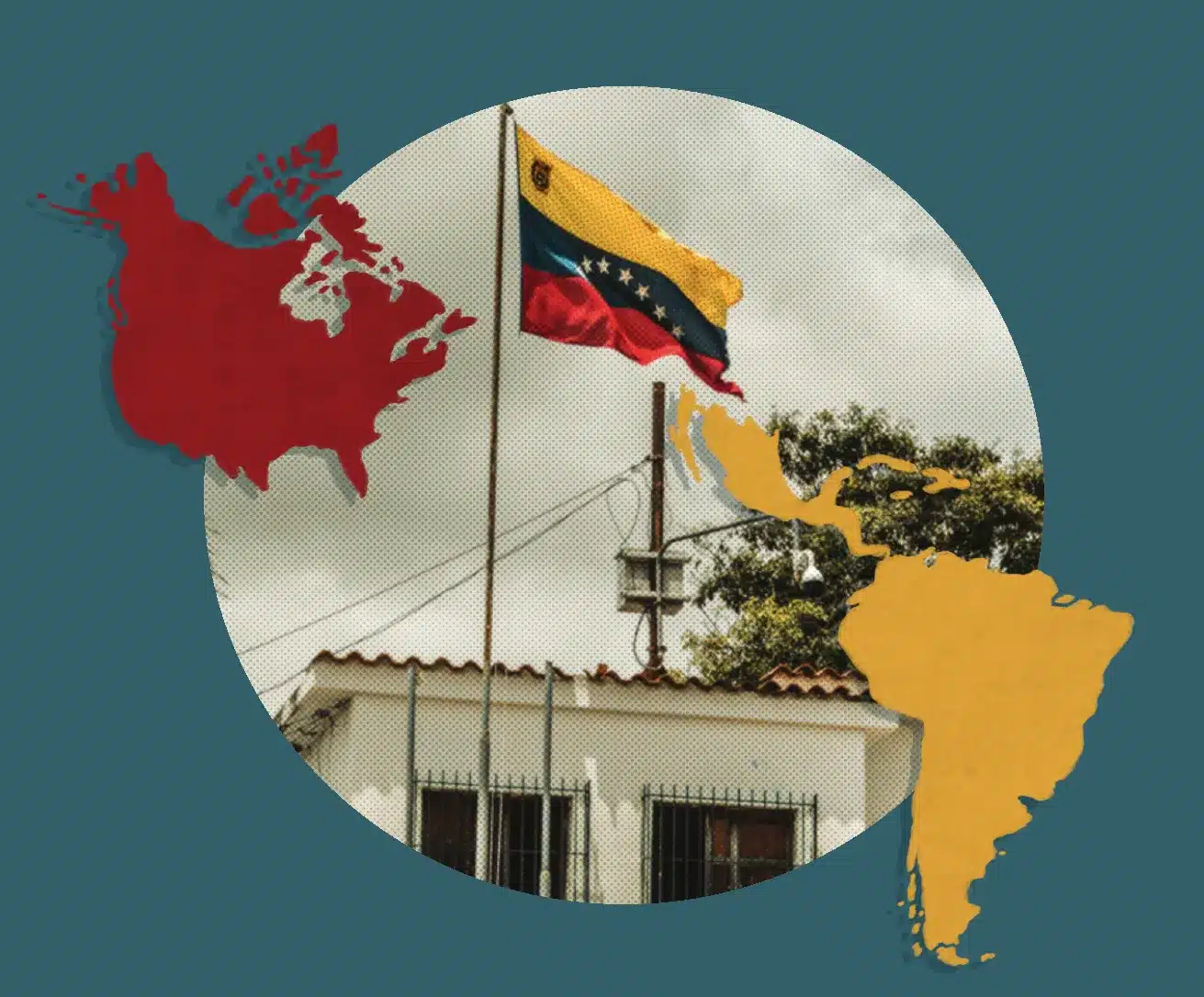
VANCOUVER – As right-wing political movements gain momentum across South America, international observers are carefully analyzing what this ideological pivot means for the rest of the world. From the stunning economic reforms in Argentina to the highly contested presidential election in Brazil, voters are decisively rejecting decades of leftist governance.
In a recent in-depth interview on Juno News, Venezuelan-Canadian political commentator Cesar Guarte shared his unique perspective on these dramatic geopolitical shifts. Drawing from his firsthand experience living under socialist regimes, Guarte offered stark warnings about parallel political trends currently emerging within the Canadian government.
Key Takeaways
- South American voters are driving a massive right-wing shift in response to historic fiscal mismanagement, institutional corruption, and skyrocketing crime rates.
- Political commentators warn that Canada’s current policies regarding media regulation and civilian disarmament strongly mirror early warning signs from Venezuela.
- Record immigration levels and heavy economic regulations are increasingly straining Canada’s infrastructure while simultaneously suppressing entrepreneurial growth and domestic productivity.
The Right-Wing Surge Across South America
The political landscape of Latin America is undergoing a seismic transformation that few mainstream political analysts fully anticipated. For nearly two decades, leftist political parties utterly dominated the continent, promising expansive social programs and widespread wealth redistribution. However, the harsh reality of fiscal mismanagement, rampant corruption, and rising crime has left many of these nations struggling to survive.
Now, the political pendulum is swinging aggressively in the opposite direction across the entire region. In Brazil, Flávio Bolsonaro has secured a spot in the upcoming presidential runoff against incumbent Luiz Inácio Lula da Silva. A diverse field of over a dozen candidates competed in the first round, reflecting a highly fractured political landscape that is desperate for stable leadership.
This potential victory for the Bolsonaro camp represents a much larger regional trend toward conservative economic and social policies. Guarte suggested this regional shift might be partially linked to the Trump administration aggressively cutting off international funding to non-governmental organizations. These specific activist groups had allegedly been funneling massive amounts of cash to left-wing political factions across the continent.
The Turning Point in Brazil’s Election
Brazil serves as a perfect microcosm for the broader societal frustrations currently bubbling up throughout South America. As an incredibly large nation wealthy in natural resources and featuring a highly educated population, Brazil possesses immense global economic potential. Unfortunately, the country has been repeatedly hampered by devastating systemic issues, including widespread poverty, organized crime, and deep institutional corruption.
Guarte highlighted that it is essentially impossible to justify how ordinary Brazilians are currently living given the vast wealth their nation possesses. Voters are clearly expressing their deep dissatisfaction at the ballot box by actively supporting more economically focused political platforms. Flávio Bolsonaro has introduced a comprehensive package of economic measures designed to stimulate growth, reduce bureaucratic waste, and aggressively tackle corruption.
Historically in Brazil, the candidate who secures the lead in the first round of voting almost invariably wins the final runoff election. With a remarkably strong performance in early October, Bolsonaro appears firmly on track to secure the presidency in the coming weeks. If he successfully defeats Lula, it will cement a massive victory for right-wing politics and potentially reshape the economic future of the continent’s largest economy.
Argentina’s Historic Economic Miracle
Perhaps the most glaring and dramatic example of this regional political pivot can be found in Argentina under the leadership of Javier Milei. For roughly fifty years, the ideology of Peronism heavily influenced Argentina, leading to a bloated public sector and catastrophic economic instability. The nation, despite boasting immense agricultural wealth and a massive industrial base, was completely paralyzed by unsustainable government spending.
The economic crisis became so extraordinarily severe that citizens literally raced to pay for groceries before the prices changed within minutes. The previous government was aggressively printing money to fund its massive social programs, operating with absolute disregard for basic fiscal discipline. Citizens eventually reached a profound breaking point where they felt they had absolutely nothing left to lose by embracing a radical alternative.
Javier Milei stepped into this unprecedented chaos with a bold promise to take a metaphorical chainsaw to bloated government waste. Although western media consistently predicted his political demise, he has managed to stabilize the economy and attract massive foreign investment. By delivering transparent, honest governance and making incredibly hard economic choices, Milei is actively turning the struggling country around.
Reversing Decades of Hyperinflation
The sheer scale of Argentina’s previous financial mismanagement is truly something that will be studied in university economic textbooks for generations. At its absolute worst, the country was experiencing staggering hyperinflation that exceeded 200 percent, effectively wiping out the entire middle class. Milei’s remarkably swift actions to slash government bloat and restore faith in the national currency have fundamentally changed the country’s economic trajectory.
Guarte emphasized that this specific success story has provided immense hope to right-leaning political parties throughout all of Latin America. Conservative leaders now realize that they can win major elections, implement strict fiscal discipline, and actually improve the daily lives of their citizens. They no longer feel compelled to passively accept leftist economic theories that have repeatedly failed the region over the past thirty years.
While it is exceptionally difficult to reverse fifty years of systemic mismanagement overnight, Argentina is finally back on the right path. Milei has retained significant political support from the working class, proving that citizens are willing to endure short-term pain for long-term stability. This modern blueprint for economic recovery is currently being closely monitored by political leaders from Colombia to Brazil.
United States and Venezuela Relations
Meanwhile, the complex geopolitical situation in Venezuela has taken a fascinating turn under newly established diplomatic and economic realities. The United States has recently begun cutting highly lucrative new export deals with Venezuela, specifically focusing on critical resources like oil and aluminum. These bilateral agreements mark a massive departure from previous years of strictly enforced economic sanctions and deep diplomatic hostility.
This unexpected shift follows the dramatic ousting and capture of former Venezuelan leader Nicolás Maduro, who now faces severe criminal charges in New York. The Trump administration played a highly strategic role in facilitating this historic transition and establishing immediate economic ties. Guarte noted that these quiet back-channel negotiations were absolutely essential for ensuring a relatively peaceful and democratic transition of power in Caracas.
While some international observers are surprised by the speed of these new trade deals, they represent a highly pragmatic approach to foreign policy. Reintegrating Venezuela into the global economy is a crucial first step toward rebuilding the entirely shattered South American nation. By opening up vital exports to the United States, the newly formed Venezuelan administration can begin generating the capital desperately needed for domestic recovery.
Media Control Warnings For Canada
While South America diligently works to rebuild its democratic institutions, Guarte expressed deep concern about the current political trajectory in Canada. Having formally immigrated to Canada in 2015 to escape the oppressive Chavez and Maduro regimes, he is highly sensitive to subtle government overreach. He pointed out that while Canada undoubtedly remains a free country, several recent policy trends are incredibly worrisome for long-term democratic stability.
The most glaring issue is the Canadian government’s increasing desire to tightly regulate and monitor the independent media landscape. Guarte drew direct historical parallels between the current government’s media policies and the early censorship tactics utilized by socialist leaders in Venezuela. Creating official state lists of “verified” and “trustable” news organizations is a highly dangerous practice that inherently marginalizes independent and alternative journalists.
When a federal government essentially dictates which media outlets its citizens should trust, it creates a heavily manipulated and deeply biased public narrative. State-funded broadcasters are automatically elevated and promoted, while critical independent outlets are unfairly flagged as purveyors of potential misinformation. This subtle form of narrative control is exactly how authoritarian regimes initially consolidate power before attempting much more overt forms of press censorship.
The Danger of Eroding Gun Rights
Another major area of deep concern for political observers like Guarte is the Canadian government’s aggressive push to severely restrict legal firearm ownership. In recent years, Canada has introduced sweeping federal legislation aimed at banning various types of firearms and severely restricting lawful sporting activities. Legislation like Bill C-21 has fundamentally changed the landscape for legal gun owners, despite significant political pushback from rural and indigenous communities.
Guarte warned that widespread civilian disarmament was a primary tactical maneuver used by the Venezuelan government right before they began violently repressing their citizens. Initially, the state argued that private citizens did not need weapons because the police and military forces would adequately protect them. Eventually, this highly flawed logic was expanded to cover nearly all firearms, leaving the general civilian population completely defenseless against unchecked state violence.
Guarte emphasized that statistically, there is very little correlation between the number of legally owned firearms in Canada and the overall level of violent crime. The vast majority of deadly gun violence is committed by gang members using illegal weapons smuggled directly across the United States border. By heavily targeting peaceful legal owners rather than funding border security, critics argue the government is prioritizing political optics rather than genuine public safety.
Stifling Entrepreneurship With Red Tape
Beyond valid concerns regarding core civil liberties, the current economic climate in Canada is becoming increasingly hostile to small business owners and independent entrepreneurs. Guarte, who operates his own private company, noted that the sheer volume of bureaucratic red tape is actively strangling grassroots economic growth. The federal government appears heavily invested in micro-regulating businesses, making it exceptionally difficult and incredibly expensive to simply open and operate a company.
While recent federal government announcements have offered various tax incentives, these benefits primarily favor massive, highly capitalized corporations that can easily afford dedicated compliance teams. Small and medium-sized enterprises are left completely incapable of fronting the exorbitant financial costs associated with navigating constantly changing federal regulations. This heavy regulatory burden actively prevents ordinary citizens from unleashing their full entrepreneurial power, which ultimately harms the broader Canadian economy.
In stark contrast, the United States has made significant, concerted efforts to slash unnecessary government regulations and reduce bureaucratic barriers to entry. By dramatically lowering the operational cost of doing business, the American economy has fostered rapid innovation and allowed startup companies to become profitable much faster. If Canada stubbornly refuses to modernize its economic rulebook, it will undoubtedly continue losing its brightest entrepreneurial minds to its southern neighbor.
The Politicization of Mass Immigration
Perhaps the most hotly debated public policy in Canada today is the unprecedented surge in mass immigration orchestrated by the federal government. Since 2015, the national population has swelled by millions, placing an absolutely crushing financial burden on housing, healthcare, and basic municipal infrastructure. Guarte views this not simply as an administrative failure, but as a calculated political strategy designed to artificially import future loyal voters.
This massive influx of incredibly cheap labor has effectively annihilated the overall productivity of the Canadian labor force by artificially suppressing working-class wages. Highly educated immigrants are frequently forced to take minimum-wage jobs at the very bottom of the economic pyramid just to survive in expensive cities. Consequently, the widely anticipated tax revenues and economic productivity the government initially promised simply have not materialized in any meaningful or sustainable way.
Meanwhile, Canada is quietly experiencing a massive exodus of its own native citizens, with roughly ten thousand young people leaving the country every single month. These highly skilled young professionals have completely given up hope of ever affording a home or achieving upward mobility in the current economic system. Canada’s immigration process, which was once the absolute envy of the western world, has tragically devolved into a highly politicized and deeply broken system.
Understanding the Importance of Free Information
A recurring historical theme in the gradual decline of democratic nations is the intentional suppression of free information and basic consumer choices. Beyond traditional media censorship, excessive government regulation often extends into deeply personal lifestyle choices and completely legal adult consumer products. For instance, public health policies frequently restrict adult access to vital information regarding effective harm reduction and legally available safer alternatives.
In Canada, incredibly strict communication bans actively prevent citizens from learning about potentially life-saving nicotine alternatives, such as heated tobacco or oral smokeless products. Despite a rapidly growing body of peer-reviewed scientific evidence suggesting these alternative products are substantially less harmful than combustible cigarettes, the government severely restricts public awareness. Adult consumers are essentially treated like helpless children, completely banned from accessing the critical information required to make their own informed health decisions.
This highly paternalistic approach perfectly mirrors the broader authoritarian mindset that actively seeks to control every minor aspect of daily civilian life. When a federal government arbitrarily decides that its citizens cannot be trusted with basic scientific information, it fundamentally undermines the very concept of a free society. Ultimately, Canadians deserve the fundamental human freedom to access scientific data, intelligently evaluate the potential risks, and make autonomous choices regarding their own personal health.
A Crossroads For Canada
The profound political transformations currently occurring across South America offer a fascinating global glimpse into the complex mechanics of societal change and economic recovery. Voters in Brazil and Argentina have clearly demonstrated that decades of fiscal irresponsibility will eventually be met with a massive, undeniable public backlash. They are actively choosing harsh economic truths and strict fiscal discipline over the highly comforting but ultimately destructive promises of leftist populism.
For Canada, the critical lessons drawn from these South American experiences serve as a highly important warning about the inherent dangers of unchecked state overreach. Whether it involves centralizing media control, disarming law-abiding citizens, or deeply mismanaging immigration, the current national trajectory is undeniably causing deep societal fractures. The fundamental question remains whether Canadian voters will recognize these early warning signs and demand a swift return to pragmatic, transparent, and accountable governance.
As brilliant young Canadians continue to flee the country and local entrepreneurs struggle endlessly against bureaucratic red tape, the need for a political correction grows exponentially stronger. The recent success of bold leaders like Javier Milei definitively proves that reversing national decline is entirely possible with immense courage and strong political will. Ultimately, Canada must decide if it will humbly learn from international history, or if it is tragically destined to repeat the exact same mistakes.
To learn more about the profound economic reforms sweeping across South America, check out this deep dive on Javier Milei’s economic impact on Argentina. This report provides excellent background context regarding the hyperinflation crisis and the radical fiscal changes currently stabilizing the nation’s battered economy.
Trending News:
US Trade Moves Put Massive Pressure on Canada
How Canada’s Combating Hate Act Stifles Free Speech


Opinion: Canada’s Economy Is Under Pressure From Debt, a Weak Dollar and Steel Tariffs

H1-B Visa Crackdown Rocks Big Tech and India

Millions of Shoppers Boycott Real Canadian Superstore

Opinion: Media Went Easy on Carney After Canada Lost 68,000 Jobs

Mark Carney’s Million Dollar Wind Up and Nickel Delivery

Mark Carney Faces Ethics Backlash Over Heat Pumps

Quebec Election 2026: Will the Province Leave Canada?

Why Alberta Separatist Leaders Say It’s Time to Leave Canada

Opinion: What South America’s Political Shift Means for Canada

Opinion: Is Modern Political Empathy Really About Self-Image?
Opinion: Is Modern Political Empathy Really About Self-Image?

US Trade Moves Put Massive Pressure on Canada

How Progressivism Replaced Religion With A New Secular Faith

Opinion: Canada’s Combating Hate Act Threatens Free Speech

Pierre Poilievre Critiques Reporter Who Questions His Leadership

Canada Sheds 68,000 Jobs As Economic Fears Deepen

Uncovering the Truth Behind Inequality: A Bold New Vision
Opinion: What South America’s Political Shift Means for Canada
Behind Carney’s $1-Trillion Canada Investment Scheme
Opinion: Canada’s Economy Is Under Pressure From Debt, a Weak Dollar and Steel Tariffs

Jimmy Kimmel Slammed for “Vile” Melania Trump “Expectant Widow” Joke

President Trump Addresses Nation on War with Iran

Trump Warns NATO Allies: America Won’t Protect Slackers After Iran Clash

Senate Hearing on Fraud and Foreign Influence Turns Tense Over Minnesota Scandals

CNN Forced to Backtrack Its Reporting on Trump’s Iran Talks

Joe Rogan Slams Gavin Newsom for Mocking Nick Shirley

Mosque Set Ablaze in Iran a Citizens Revolt Against the Islamic Regime

AOC Accuses Jessie Watters of Fox News of Sexualizing and Harassing Her

JD Vance Exposes Walz’s Fraud and CNN’s Lies in White House Presser

Milestone Card Credit: How the Milestone MasterCard Can Transform Credit


-

 News9 months ago
China-Based Billionaire Singham Allegedly Funding America’s Radical Left
-
Crime10 months ago
YouTuber Nick Shirley Exposes BILLIONS of Somali Fraud, Video Goes VIRAL
-
Politics10 months ago
Ilhan Omar Faces Renewed Firestorm Over Resurfaced Video
-
Politics9 months ago
2026 Midterms Guide: Candidates, Key Issues, and Battleground States
-
Politics8 months ago
CNN Delivers Stark Reality Check to Democrats Over Voter ID
-
Politics8 months ago
Ilhan Omar’s Connections to Convicted Somali Fraudsters Surface
-
Politics7 months ago
Rep. Ilhan Omar Faces Heat as Minnesota Voters Seek Change
-
Politics8 months ago
Trump Approval Rating (February 2026 Poll Results, Approve vs Disapprove)















