
Business
Tesla Halts Model 3 Orders in Canada as Tensions Rise


OTTAWA – Tesla recently paused Canadian orders for its highly popular Model 3 electric vehicles. The automaker sent mass emails to eager customers explaining a sudden delivery halt. Tesla claimed their import quota for the China-built cars had been completely exhausted.
However, federal government data reveals a glaring discrepancy that has ignited fierce political debate. Official figures show that over 33,000 import slots remain entirely unused. This massive gap has prompted vocal critics to ask if hidden political motives are actually driving the sudden freeze.
Key Takeaways
- Tesla halted Model 3 orders in Canada, citing an exhausted import quota, yet government records show 33,069 permits are still available.
- The freeze follows a highly public clash between Tesla CEO Elon Musk and Prime Minister Mark Carney regarding provincial separatism.
- Critics claim the restriction is a politically motivated retaliation that favors Chinese imports while penalizing American tech companies.
Tesla sent a shockwave through the Canadian auto market this month. The company abruptly stopped taking orders for its two cheapest Model 3 variants. These specific vehicles are manufactured in Shanghai, China, which subjects them to international import rules.
Customers received frustrating emails stating the import quota had officially run out. Buyers were told that ordering might resume if the government issues more permits. Most industry insiders expect this quota reset to happen in March 2027.
The pause applies specifically to the rear-wheel-drive Model 3 Premium. This model started at a highly affordable C$39,490 before destination fees. The sudden halt has left thousands of prospective buyers completely stranded without viable options.
The situation quickly became complicated by official federal government records. According to data from Global Affairs Canada, the quota system is far from empty. In fact, a massive number of permits remain completely available for use.
Canada recently agreed to allow up to 49,000 Chinese EVs annually under a reduced tariff. The current import window officially opened on September 1. Since that date, only 328 cars have been imported under this specific quota limit.
Records updated recently show exactly 33,069 permits are still sitting unused. This massive gap between Tesla’s claims and government data reported by AutoNext has sparked intense speculation. People are now demanding to know who is actually blocking these vehicles from entering Canada.
The Elon Musk and Mark Carney Feud
Many political commentators believe the vehicle restriction is not an administrative accident. They point to a growing public feud between Tesla CEO Elon Musk and Prime Minister Mark Carney. This political tension has escalated dramatically in recent weeks.
Musk recently weighed in on Canadian domestic politics through his social media platform, X. He publicly supported the separatist movements in Quebec, Alberta, and Saskatchewan. Musk bluntly stated that these provinces would be better off leaving Canada entirely.
Prime Minister Carney quickly responded to the tech billionaire’s inflammatory comments. He told reporters that Canada’s future will be decided by Canadians alone. He firmly stated that discussions must remain free from foreign interference by large tech firms.
The timeline of these events is highly suspicious to many political observers. Musk made his comments shortly after a separatist party gained massive momentum in Quebec. He also directly referenced an upcoming sovereignty vote scheduled for October 19 in Alberta.
Critics argue that the Tesla import freeze is direct retaliation for these specific comments. Independent political analysts and online commentators have voiced incredibly strong suspicions. They claim the government is deliberately holding back Tesla’s share of the quota as a punishment.
A popular YouTube channel, “Fight for Canada,” recently published a viral investigative video on the topic. The host accused the government of punishing an American company over a personal political grudge. They suggested that free speech is being actively penalized through international trade restrictions.
Is Starlink the Next Target?
The political clash extends far beyond the realm of consumer electric vehicles. The Canadian government is also reportedly looking to transition entirely away from Starlink. This incredibly popular satellite internet service is operated by Musk’s aerospace company, SpaceX.
During a September interview with The New York Times, Carney discussed this strategic shift. He suggested that Canada needs to desperately reduce its reliance on foreign-owned critical infrastructure. The proposed alternative is Telesat, a Canadian-based satellite communications company.
This potential move has deeply alarmed many residents living in rural Canada. Starlink currently provides essential high-speed internet to isolated and remote communities. Users worry that being forced onto Telesat will severely disrupt their daily lives and local businesses.
The Rural Internet Connectivity Debate
The potential shift to Telesat has raised serious questions about blatant corporate favoritism. Critics immediately point out that Telesat has received billions of dollars in government funding. The company’s leadership also reportedly shares incredibly close ties with top federal officials.
Commentators from the “Fight for Canada” channel have heavily criticized this impending transition. They fiercely argue it is an illogical move that puts political alliances far above consumer needs. They also loudly question the legal mechanics of forcing consumers off an existing, functional service.
The debate over internet connectivity heavily mirrors the controversy surrounding the Tesla vehicle imports. In both cases, everyday consumers feel they are being denied access to preferred American products. The overarching public fear is that political spats are now directly dictating daily consumer choices.
The Role of Chinese Electric Vehicles
The severe restriction on Tesla imports is happening alongside a massive surge in Chinese vehicles. Canada has committed to accepting up to 49,000 Chinese EVs this year alone. This number is rapidly expected to grow to 60,000 vehicles next year.
Tesla’s Model 3 Premium is built in Shanghai, which explicitly places it under this specific quota. However, other fully Chinese-owned brands are also actively preparing to enter the Canadian market. This sudden influx has sparked a fierce national debate about national security and data privacy.
Some critics fiercely worry about the advanced data collection capabilities of modern electric vehicles. They quickly note that other nations have banned certain Chinese EVs from highly sensitive areas. Military bases and federal government facilities are prime examples of highly restricted zones globally.
The warm acceptance of Chinese vehicles contrasts sharply with the apparent block on American-owned Teslas. The 6.1 percent in-quota tariff makes these imports incredibly lucrative for foreign automakers. It represents a massive reduction from the standard 100 percent surtax previously discussed by lawmakers.
Political commentators view this as a highly dangerous shift in global geopolitical alliances. They argue that Canada is embracing the Chinese Communist Party while actively distancing itself from the U.S. This narrative was a major focal point in the recent “Fight for Canada” broadcast.
The video host aggressively pointed out that the CCP has a highly controversial global human rights record. Yet, the Canadian government appears incredibly eager to facilitate massive automotive trade deals with Beijing. The end result is an economic environment that feels actively hostile to American business innovation.
Deep Political Ties and Controversies
Political commentators are now heavily scrutinizing the personal financial background of the Prime Minister. Critics point out that Mark Carney spent many years building vast wealth outside of Canada. They note that the vast majority of his financial investments are reportedly held in the United States.
Furthermore, critics passionately argue that Carney maintains dual citizenships and multiple foreign passports. These specific details are frequently used to paint him as a disconnected, elite globalist. Detractors claim he leverages anti-American sentiment strictly to manipulate local voters and consolidate domestic political power.
This strategy intentionally distracts the general public from pressing domestic failures and prolonged economic stagnation. By creating an external enemy in American tech companies, politicians can avoid answering tough domestic questions. The Tesla import pause fits absolutely perfectly into this highly curated political narrative.
The Century Initiative Connection
The ongoing controversy also shines a bright light on the political advisors surrounding the Prime Minister. Many of these highly influential figures have direct ties to an organization known as the Century Initiative. This specific group heavily advocates for massive population growth through vastly increased national immigration levels.
Key figures like Dominic Barton and Mark Wiseman are frequently mentioned by frustrated political critics. Observers quickly point out that these men possess deep and long-standing ties to the Chinese Communist Party. This raises incredibly serious red flags for citizens deeply concerned about foreign policy alignment.
The overarching public fear is that Canadian trade policy is being quietly dictated by foreign interests. The deliberate decision to accept Chinese vehicles while blocking American ones seems to support this exact theory. Citizens are increasingly demanding absolute transparency regarding these shady backroom international relationships.
Financial Loans and Global Influence
The extensive financial history of the country’s leadership is also under intense public review right now. Before entering his current political role, Mark Carney held senior executive positions at Brookfield Asset Management. This massive global firm manages enormous portfolios of real estate and vital public infrastructure projects.
During his controversial tenure, the firm reportedly received a massive and highly questionable financial loan. Critics actively highlight a staggering $237 million loan originating directly from the Chinese Communist Party. They fiercely argue this financial arrangement creates an undeniable and highly dangerous conflict of interest today.
Furthermore, industry reports suggest the firm actively managed billions of dollars in Chinese real estate investments. These massive financial entanglements make it incredibly difficult to completely trust the impartiality of current trade decisions. The sudden, overwhelming influx of Chinese electric vehicles is viewed entirely through this highly skeptical lens.
The Hypocrisy of Green Mandates
The general public is also growing incredibly tired of perceived environmental hypocrisy from top leaders. The Prime Minister recently faced incredibly heavy backlash for his extensive use of private air travel. Reports indicate he has taken dozens of international flights, spending over a million dollars on in-flight catering alone.
Meanwhile, ordinary working-class Canadians are constantly lectured about severely reducing their personal carbon footprints. They are continuously subjected to incredibly aggressive carbon taxes and highly restrictive national energy policies. The federal government essentially dictates how far they can drive and what specific energy they can consume.
Banning highly affordable electric vehicles like the Tesla Model 3 directly contradicts these strict green mandates. It forcefully removes a viable, eco-friendly option from everyday consumers who desperately want to reduce emissions. This blatant, frustrating contradiction heavily fuels the rapidly growing anger directed at the current federal government.
Economic Struggles and Trade Wars
The massive EV controversy is unfolding against a terrifying backdrop of severe economic anxiety in Canada. The country is currently grappling with rapidly rising unemployment and incredibly stubborn national inflation rates. Youth unemployment is reportedly nearing a staggering 20 percent in some heavily populated regions.
Crippling food insecurity is also rapidly becoming a major daily crisis for many working Canadian families. Some sobering statistics suggest that one in four Canadians are currently struggling to afford basic groceries. Against this incredibly grim economic reality, international trade disputes feel especially damaging to the general public.
Furthermore, Canada has tragically seen massive job losses in recent weeks due to shifting policies. A newly ignited trade war has reportedly cost the fragile economy over 100,000 jobs in just five weeks. This starkly contrasts with the incredibly robust job growth currently being seen in the United States.
The Steel Industry Crisis
The vital automotive sector is not the only industry feeling the intense pressure of global trade. The historic Canadian steel industry is currently facing massive, unprecedented challenges due to foreign imports. Companies like Stelco have recently been forced to tragically lay off hundreds of highly skilled workers.
Industry experts directly blame these devastating layoffs on the mass dumping of incredibly cheap Chinese steel. They fiercely argue that this predatory international practice makes domestic producers entirely uncompetitive in the market. The federal government’s incredibly slow response to this crisis has been heavily criticized as hopelessly inadequate.
Canada currently imposes a very modest 25 percent tariff on illegally dumped foreign steel. However, critics vehemently argue this number is far too low to actually protect vulnerable domestic jobs. They quickly note that other competitive nations have implemented tariffs of 50 percent or much higher.
The Battle Against the Free Market
Ultimately, the sudden restriction on Tesla imports is viewed by many as a direct attack on capitalism. Political pundits loudly argue that the government is actively interfering with natural free-market consumer dynamics. They firmly believe un-elected bureaucrats are unjustly dictating massive winners and losers in the automotive industry.
The Tesla Model 3 Premium was a highly affordable and wildly popular green option for everyday consumers. By essentially removing it from the open market, the government severely limits basic, fundamental consumer choice. Everyday buyers are incredibly frustrated that they cannot simply purchase the exact vehicle they desire.
This heavy-handed, restrictive approach to market regulation perfectly aligns with broader political philosophies documented by critics. Some loudly claim that certain powerful leaders view modern capitalism as inherently flawed and totally dangerous. They deeply fear that a much lower standard of living will be violently forced upon everyday citizens.
Canadian car consumers are currently left in a terrible state of deep anxiety and frustrating uncertainty. Those who eagerly ordered a Model 3 Premium have absolutely no clear, reliable timeline for ultimate delivery. The promised resumption of vehicle orders in March 2027 feels like an absolute lifetime away for buyers.
Meanwhile, the incredibly heated political rhetoric shows absolutely no signs of cooling down anytime soon. The ongoing, highly public feud between tech leaders and politicians will likely yield further massive market disruptions. The entire automotive industry is sadly caught directly in the crossfire of this massive, destructive ego battle.
For now, the 33,000 available import slots absolutely remain a glaring symbol of terrible bureaucratic friction. The exact reason why Tesla cannot access these open permits remains officially unanswered by the federal government. However, public opinion has already officially formed a powerful and unshakable narrative of strict political retaliation.
Trending News:
BMR California Explained: Rules, Income Limits, and How to Apply
Canada’s Economic Decline: Is it a Warning to the World?


U.S. Investigation Uncovers Canadian Banks Debanking Conservatives

Tesla Halts Model 3 Orders in Canada as Tensions Rise

Why Alberta Is Voting on a Future Independence

Alberta Votes on Independence: Advance Polls Open

Opinion: Is Canada in a Deep Crisis Over Trade and Defense

Canadian Manufacturers Face Bankruptcy Amid U.S. Tariffs

Opinion: Canada’s Economy Is Under Pressure From Debt, a Weak Dollar and Steel Tariffs

H1-B Visa Crackdown Rocks Big Tech and India

Millions of Shoppers Boycott Real Canadian Superstore

Opinion: Media Went Easy on Carney After Canada Lost 68,000 Jobs

Opinion: Is Modern Political Empathy Really About Self-Image?

US Trade Moves Put Massive Pressure on Canada

Opinion: Canada’s Combating Hate Act Threatens Free Speech

How Progressivism Replaced Religion With A New Secular Faith

Pierre Poilievre Critiques Reporter Who Questions His Leadership

Uncovering the Truth Behind Inequality: A Bold New Vision

Opinion: What South America’s Political Shift Means for Canada

Canada Sheds 68,000 Jobs As Economic Fears Deepen

Food Insecurity and Surging Prices: Canada’s Inflation Squeeze
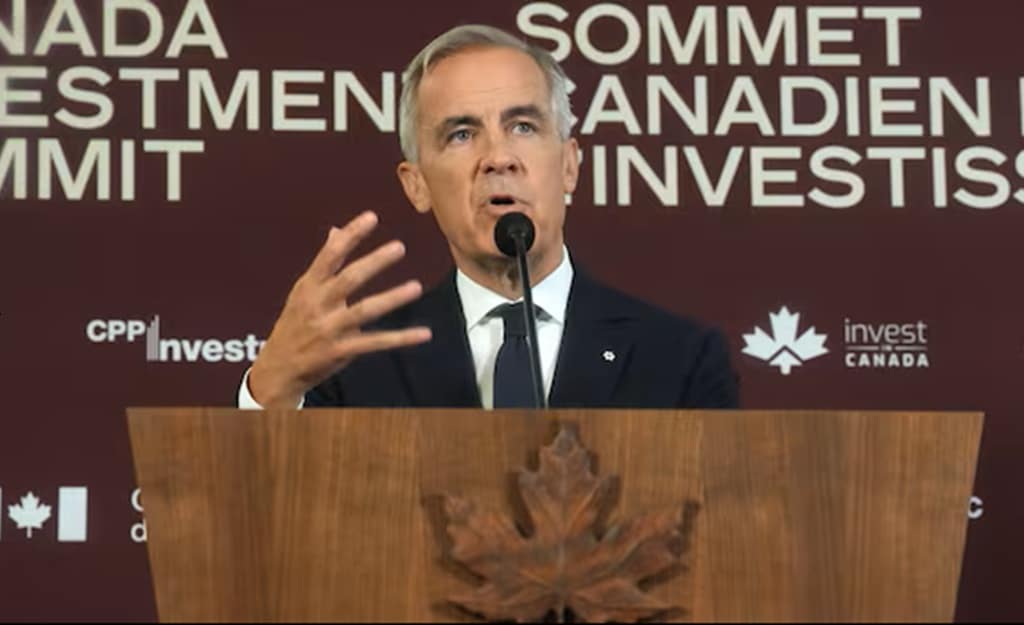
Behind Carney’s $1-Trillion Canada Investment Scheme

Jimmy Kimmel Slammed for “Vile” Melania Trump “Expectant Widow” Joke

President Trump Addresses Nation on War with Iran

Trump Warns NATO Allies: America Won’t Protect Slackers After Iran Clash

Senate Hearing on Fraud and Foreign Influence Turns Tense Over Minnesota Scandals

CNN Forced to Backtrack Its Reporting on Trump’s Iran Talks

Joe Rogan Slams Gavin Newsom for Mocking Nick Shirley

Mosque Set Ablaze in Iran a Citizens Revolt Against the Islamic Regime

AOC Accuses Jessie Watters of Fox News of Sexualizing and Harassing Her

JD Vance Exposes Walz’s Fraud and CNN’s Lies in White House Presser

Milestone Card Credit: How the Milestone MasterCard Can Transform Credit


-

 News9 months ago
China-Based Billionaire Singham Allegedly Funding America’s Radical Left
-
Crime10 months ago
YouTuber Nick Shirley Exposes BILLIONS of Somali Fraud, Video Goes VIRAL
-
Politics10 months ago
Ilhan Omar Faces Renewed Firestorm Over Resurfaced Video
-
Politics10 months ago
2026 Midterms Guide: Candidates, Key Issues, and Battleground States
-
Politics8 months ago
CNN Delivers Stark Reality Check to Democrats Over Voter ID
-
Politics8 months ago
Ilhan Omar’s Connections to Convicted Somali Fraudsters Surface
-
Politics7 months ago
Rep. Ilhan Omar Faces Heat as Minnesota Voters Seek Change
-
Politics8 months ago
Trump Approval Rating (February 2026 Poll Results, Approve vs Disapprove)















