

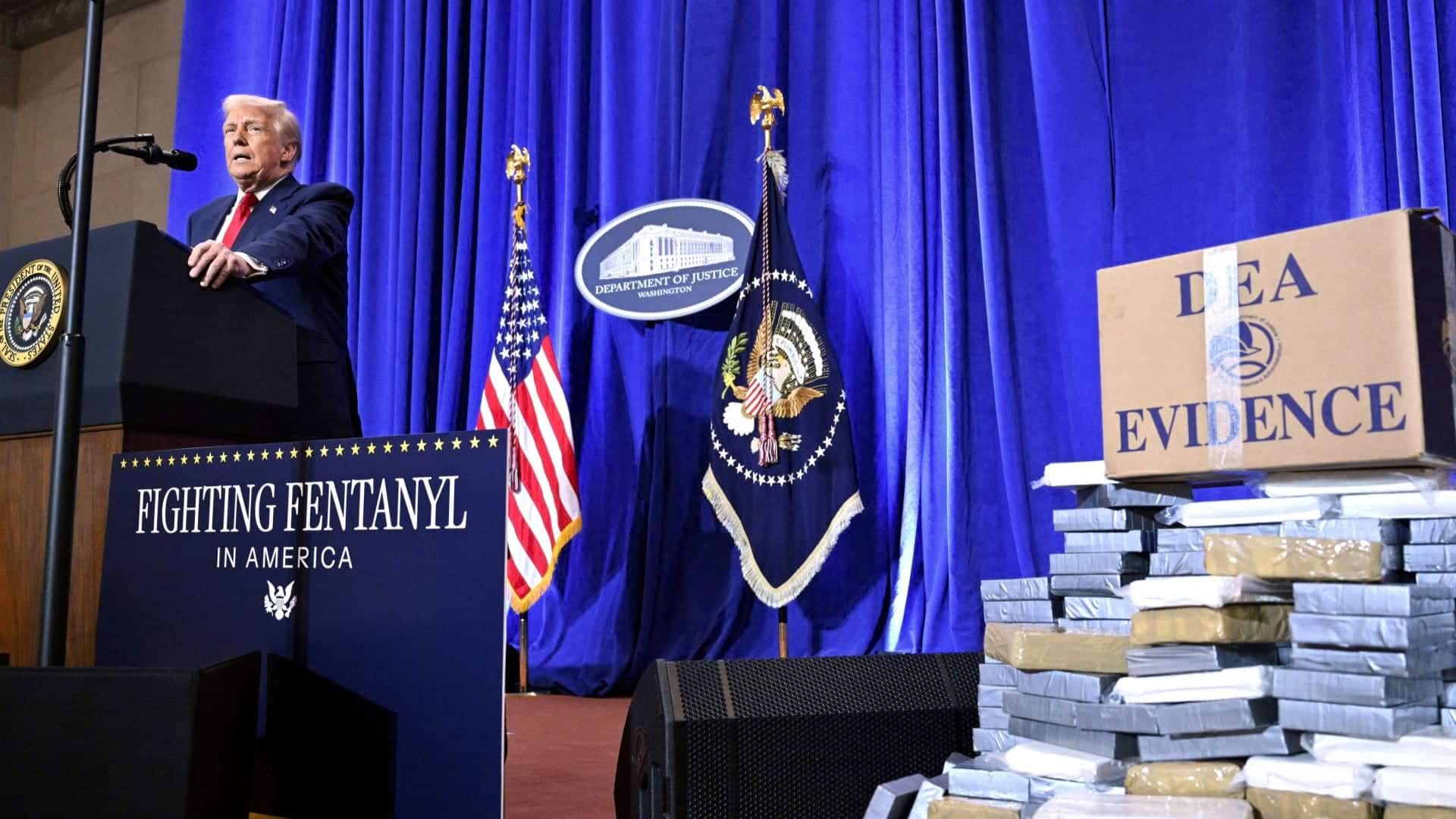

WASHINGTON D.C. – In a move his team calls historic, President Donald J. Trump has signed an executive order that classifies illicit fentanyl and its key precursor chemicals as a Weapon of Mass Destruction (WMD).
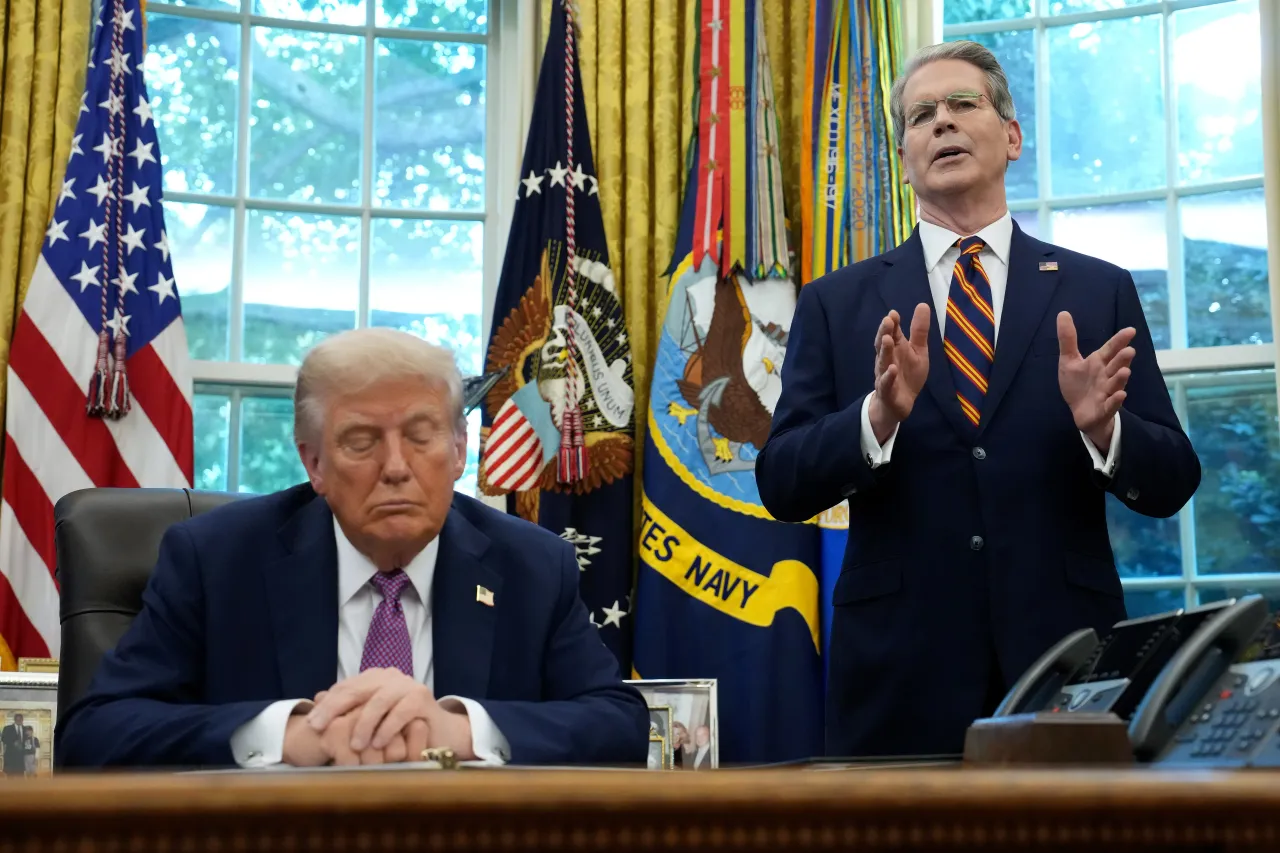
The order was signed in the Oval Office during a ceremony that also honored border security officials with medals. The setting highlighted how central the fentanyl crisis has become to the administration’s security and immigration agenda.
“No bomb does what this is doing,” Trump said, claiming fentanyl kills between 200,000 and 300,000 Americans each year. “We are officially labeling fentanyl as a weapon of mass destruction, because that is exactly what it is.”
In the text of the executive order, illicit fentanyl is described as “closer to a chemical weapon than a narcotic.” Just two milligrams, about the size of 10 to 15 grains of table salt, can be fatal.
By using the WMD label, the administration wants to pull in America’s national security agencies and treat fentanyl more like a biological or nuclear threat than a street drug.
Some legal scholars and policy analysts question how much the label will change on-the-ground enforcement, since current laws already allow long prison terms for fentanyl trafficking. The White House insists the change is more than symbolic. Officials say it pushes the crisis into the top tier of security threats and warns that fentanyl could be used for “concentrated, large-scale terror attacks” by hostile actors.
What the Executive Order on Fentanyl Actually Does
The order directs a broad group of federal agencies to increase action against fentanyl and its supply networks:
- The Attorney General is instructed to ramp up investigations, prosecutions, and sentencing enhancements for fentanyl-related crimes.
- The Departments of State and Treasury are ordered to target and sanction banks, companies, and individuals tied to fentanyl production, finance, or distribution.
- The Department of Homeland Security is asked to apply WMD-focused intelligence tools to track smuggling routes and criminal networks.
- The Departments of Defense and Justice must review when and how military resources could be used in cases of extreme fentanyl-related emergencies.
The move builds on earlier decisions, including labeling major cartels as Foreign Terrorist Organizations, raising tariffs on China, Mexico, and Canada, and authorizing strikes on international drug-smuggling vessels.
The administration argues that fentanyl profits fund cartel violence, corrupt foreign institutions, and weaken U.S. security from within.
A Crisis Still Killing Tens of Thousands
Fentanyl remains the top cause of death for Americans between 18 and 45 years old. While overdose numbers have improved from earlier peaks, the damage is still severe.
After years above 100,000 total drug deaths annually, overdoses involving synthetic opioids, mainly fentanyl, fell in 2024 to an estimated 60,000 to 70,000 deaths. Even with this drop, the toll is staggering.
Provisional CDC data show that synthetic opioids like fentanyl are involved in roughly 70 percent of recent overdose deaths. The White House highlights long-term totals and points to several hundred thousand lives lost to fentanyl over the last decade.
Families who have lost loved ones to fentanyl have been visible at Trump’s events, sharing stories of sudden loss, counterfeit pills, and addiction fueled by cheap, powerful drugs.
How Fentanyl Reaches the United States
Most illicit fentanyl that ends up in the United States is cooked in Mexico by powerful cartels, especially the Sinaloa Cartel and Cartel Jalisco Nueva Generación (CJNG). These groups buy or receive precursor chemicals mainly from China and India, then synthesize fentanyl in clandestine labs.
Smugglers move the finished drug mostly through ports of entry on the southern border. It is often hidden in cars, trucks, or commercial shipments, and mixed into fake prescription pills or cut into other street drugs.
According to the DEA, Mexican transnational criminal organizations control much of the fentanyl supply chain, from chemical sourcing to wholesale distribution. The same groups are tied to kidnappings, extortion, and brutal violence across Mexico and beyond.
Trump has publicly pressured foreign governments, using tariffs and hints of military force, and has accused some rivals of allowing or encouraging the flow of fentanyl that kills Americans.
White House Strategy: Using Every Policy Tool
The WMD designation is part of a wider strategy that blends border enforcement, foreign policy, intelligence work, and criminal prosecutions.
The administration points to:
- Tougher border security measures and more resources at ports of entry
- Terrorist designations for major cartels
- The HALT Fentanyl Act, which permanently placed fentanyl-related substances in Schedule I
- Increased seizures of fentanyl at the border and inside the country
Officials argue that these steps, paired with local and state efforts, have played a role in reducing overdose numbers. They stress that fentanyl is not just a public health concern, but a threat that demands military, intelligence, and diplomatic tools.
Democrats Push Back on Trump’s Approach
Democratic lawmakers and many public health experts say the WMD label is more about politics than policy. Some legal experts describe the move as a “political exercise” that adds little, since fentanyl trafficking is already heavily punished.
Democrats and many treatment advocates prefer a focus on:
- Expanding addiction treatment
- Increasing access to medications like buprenorphine and methadone
- Supporting harm-reduction programs such as naloxone distribution
- Addressing mental health and the economic roots of substance use
These critics argue that enforcement alone will not solve the problem and that decades of harsh drug policies have not stopped addiction.
They also point out that the recent decline in overdose deaths is likely influenced by several factors, such as changing drug use patterns among younger people and shifts in the illegal drug supply, rather than enforcement alone.
Some warn that when law enforcement is shifted away from drug investigations to handle immigration tasks, it can weaken efforts to target traffickers and major supply networks.
Sanctuary Policies and the Fight Over Local Cooperation
Republicans in Congress and conservative commentators often connect fentanyl trafficking to immigration debates, especially in cities with “sanctuary” policies.
They argue that Democratic governors and mayors in sanctuary jurisdictions block federal immigration enforcement and, in doing so, shield criminal networks that traffic drugs.
In cities like Chicago, Denver, Boston, and New York, local policies limit cooperation with ICE detainers unless there is a criminal warrant or certain serious charges. These rules generally prevent local jails from holding people longer solely for immigration purposes.
House Oversight Committee hearings earlier this year put mayors from sanctuary cities under scrutiny. Republican members accused them of creating loopholes that let repeat offenders, including suspected traffickers, avoid deportation.
The mayors and their allies counter that:
- Sanctuary policies do not stop police from arresting or prosecuting criminals
- Local officers still honor court-approved warrants
- Community trust increases when residents do not fear immigration arrests for reporting crimes
- Research has often linked sanctuary policies with equal or lower crime rates compared to similar cities
Conservatives remain unconvinced and argue that defiance of federal immigration authorities gives cartels and gangs room to operate. Proposals to cut federal funds from jurisdictions that refuse to cooperate with ICE are still being debated in Congress.
A Defining Fight in Trump’s Second Term
Trump has framed the fentanyl crisis as one of the defining battles of his second term. His team says they are using “every available tool” against cartels, chemical suppliers, and financial middlemen who profit from the drug.
Supporters see the WMD designation as a long-overdue recognition of how deadly fentanyl has become. Critics warn that dramatic language without strong treatment and prevention policies could repeat the mistakes of earlier drug wars.
As the executive order rolls out and agencies adjust their strategies, the country will see whether treating fentanyl like a weapon of mass destruction changes the course of an epidemic that has taken hundreds of thousands of American lives.