

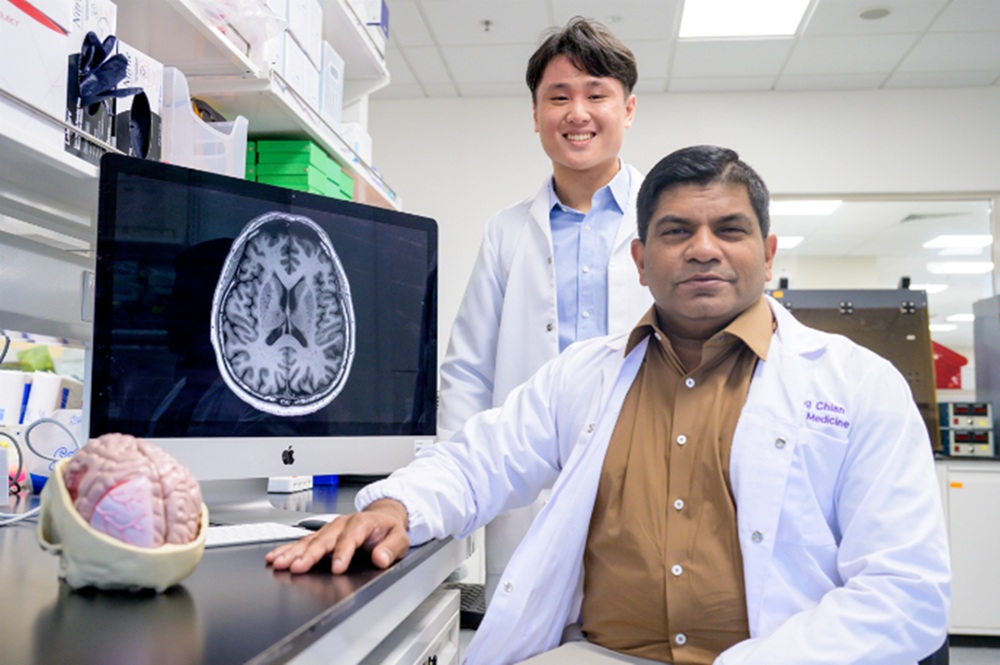


SINGAPORE – “Drains” in the brain that clear away toxic waste appear to get blocked in people who show early signs of Alzheimer’s disease, according to new research from Nanyang Technological University, Singapore (NTU Singapore).
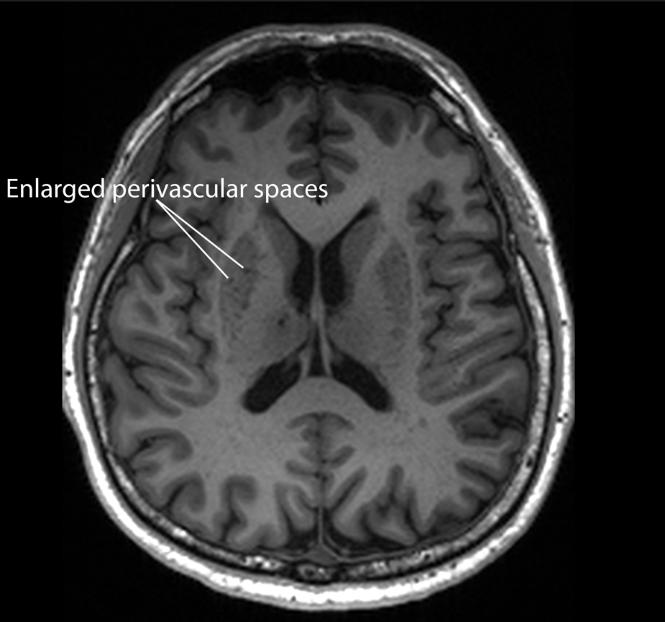
These blocked brain drains, known as enlarged perivascular spaces, seem to act as an early warning sign for Alzheimer’s, which is the most common type of dementia.
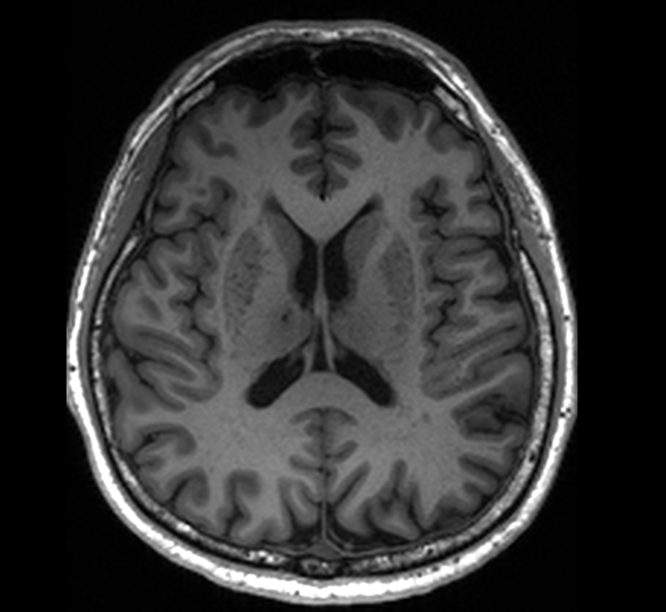
Associate Professor Nagaendran Kandiah from NTU’s Lee Kong Chian School of Medicine (LKCMedicine), who led the study, explained that these changes can be picked up on routine MRI (magnetic resonance imaging) brain scans used to investigate memory or thinking problems. Because of this, spotting enlarged perivascular spaces could support current methods of detecting Alzheimer’s at an earlier stage, without needing extra tests that cost more time and money.
Justin Ong, a fifth-year LKCMedicine student and the study’s first author, shared that early detection of Alzheimer’s helps doctors act sooner to slow worsening symptoms. These symptoms include memory loss, slower thinking, reduced concentration, and changes in mood or behaviour. The project was carried out as part of LKCMedicine’s Scholarly Project module in the Bachelor of Medicine and Bachelor of Surgery programme.
The work also stands out because it focuses on Asian participants. Most dementia studies so far have centred on Caucasian groups. In this research, the team studied almost 1,000 people in Singapore, across ethnic groups that reflect the local population. They compared people with normal cognitive function and those with mild thinking or memory problems.
Research on Asian populations is important because past studies suggest that dementia can present differently in different ethnic groups.
Assoc Prof Kandiah, who also serves as Director of the Dementia Research Centre (Singapore) at LKCMedicine, pointed out one example. Among Caucasian patients with dementia, past data show that between 50 and 60 per cent have a major risk gene, apolipoprotein E4, which is linked to Alzheimer’s.
In contrast, less than 20 per cent of dementia patients in Singapore carry this gene. This means that patterns seen in Caucasian patients might not apply directly to Asian patients, and the reverse is also true.
Spotting Alzheimer’s before symptoms worsen
Blood vessels in the brain sit within small fluid-filled gaps called perivascular spaces. These spaces act like channels that allow toxic waste products to drain away. These waste products include beta amyloid and tau proteins, which build up in large amounts in the brains of people with Alzheimer’s disease.
When this waste clearance system does not work properly, the perivascular spaces can become clogged and enlarge. These enlarged perivascular spaces are visible on MRI scans. Until now, it was not clear how strongly this condition was linked to dementia, especially Alzheimer’s disease.
The NTU team set out to improve on earlier studies by comparing these blocked brain drains with a wider set of biological signs of Alzheimer’s. They examined how enlarged perivascular spaces matched up with key Alzheimer’s markers, such as beta amyloid protein build-up and damage to the brain’s white matter. White matter is the network of nerve fibres that connects different brain regions and helps them communicate.
The researchers studied close to 1,000 people in Singapore. Around 350 participants had no cognitive problems, meaning their thinking, memory, decision making, and focus were normal.
The remaining participants had mild cognitive issues that may signal the early stages of disease, including mild cognitive impairment. Mild cognitive impairment is a recognised stage that comes before full-blown dementia. Past research shows that people with mild cognitive impairment have a higher chance of later developing conditions such as Alzheimer’s disease and vascular dementia, a type of dementia caused by reduced blood flow in the brain.
For this study, the team reviewed MRI scans from all participants. They found that people with mild cognitive impairment were more likely to have enlarged perivascular spaces, in other words, clogged brain drains, compared with those who had no cognitive problems.
The scientists also measured seven blood markers linked to Alzheimer’s, including levels of beta amyloid and tau proteins. Raised levels of these markers are a sign that Alzheimer’s disease may be present or developing.
They discovered that enlarged perivascular spaces were associated with four out of the seven blood markers. This means people with clogged brain drains tend to have more amyloid plaques, tau tangles, and brain cell damage. As a result, they appear to face a higher risk of going on to develop Alzheimer’s disease.
The team then looked at white matter damage, which doctors already view as a key marker of Alzheimer’s. They checked how strongly white matter changes were related to the same seven blood markers and found links with six of them. However, there was an interesting twist.
When they compared white matter damage with enlarged perivascular spaces, they found that, in people with mild cognitive impairment, the link between the blood markers and enlarged perivascular spaces was even stronger than with white matter damage. This pattern suggests that clogged brain drains may show up earlier in the disease process than white matter damage.
If doctors can use this information in practice, they may be able to act earlier, slow disease progression, and reduce the chance of permanent brain injury.
Assoc Prof Kandiah said the results have “substantial clinical implications”. White matter changes are currently more widely used to assess dementia because doctors can spot them easily on MRI scans. However, the study suggests that enlarged perivascular spaces may offer unique value in identifying early signs of Alzheimer’s disease.
What other experts say
Dr Rachel Cheong Chin Yee, Senior Consultant and Deputy Head at Khoo Teck Puat Hospital’s Department of Geriatric Medicine, who was not involved in the study, explained that the research highlights the role of small blood vessels in the brain. In this case, the enlarged perivascular spaces around blood vessels, which help clear waste, may play a part in the development of Alzheimer’s disease.
She added that the findings are important because they suggest that MRI scans showing enlarged perivascular spaces could help pick out people at higher risk of Alzheimer’s, even before clear symptoms appear.
Dr Chong Yao Feng, a Consultant in the Division of Neurology at the National University Hospital and Clinical Assistant Professor at the National University of Singapore’s Yong Loo Lin School of Medicine, also commented on the study. He noted that cerebrovascular diseases, which affect the blood vessels of the brain, and Alzheimer’s disease have long been viewed as separate conditions with different underlying processes.
He described the results as intriguing because they show that these two conditions may interact and worsen each other, instead of acting in isolation.
In practical terms, this means that when a doctor orders an MRI scan to explore a patient’s memory or thinking concerns, and the scan reveals markers of cerebrovascular disease such as enlarged perivascular spaces, the doctor should not simply assume that blood vessel problems are the only cause of the symptoms. The presence of such markers may also point to a higher risk of Alzheimer’s disease.
Dr Chong said that doctors will need to weigh the scan findings together with the patient’s symptoms, medical history, and concerns. They may then discuss with the patient whether further tests are needed to confirm or exclude Alzheimer’s disease.
What comes next
The NTU research team plans to continue tracking the same group of participants to see how many eventually go on to develop Alzheimer’s dementia. This long-term follow-up will help confirm whether enlarged perivascular spaces can reliably predict which people with clogged brain drains are more likely to progress to dementia.
If more studies in different countries and populations support this link between clogged brain drains and Alzheimer’s, the presence of enlarged perivascular spaces on MRI scans could become part of routine assessment. In time, this could give clinicians another useful tool to identify people at risk of Alzheimer’s disease much earlier in the course of illness, when treatment has the best chance of slowing decline.
About Nanyang Technological University, Singapore
A research-intensive public university, Nanyang Technological University, Singapore (NTU Singapore) has 35,000 undergraduate and postgraduate students in the Business, Computing & Data Science, Engineering, Humanities, Arts, & Social Sciences, Medicine, Science, and Graduate colleges.
NTU is also home to world-renowned autonomous institutes – the National Institute of Education, S Rajaratnam School of International Studies, and Singapore Centre for Environmental Life Sciences Engineering – and various leading research centres such as the Earth Observatory of Singapore, Nanyang Environment & Water Research Institute, and Energy Research Institute @ NTU (ERI@N).
Under the NTU Smart Campus vision, the University harnesses the power of digital technology and tech-enabled solutions to support better learning and living experiences, the discovery of new knowledge, and the sustainability of resources.
Ranked amongst the world’s top universities, the University’s main campus is also frequently listed among the world’s most beautiful. Known for its sustainability, NTU has achieved 100% Green Mark Platinum certification for all its eligible building projects. Apart from its main campus, NTU also has a medical campus in Novena, Singapore’s healthcare district.
For more information, visit www.ntu.edu.sg