Connect with us

Business

International Air Chiefs Meet in Dubai for 12th DIACC

VORNews

Published

on

Dubai International Air Chiefs Conference (DIAC)

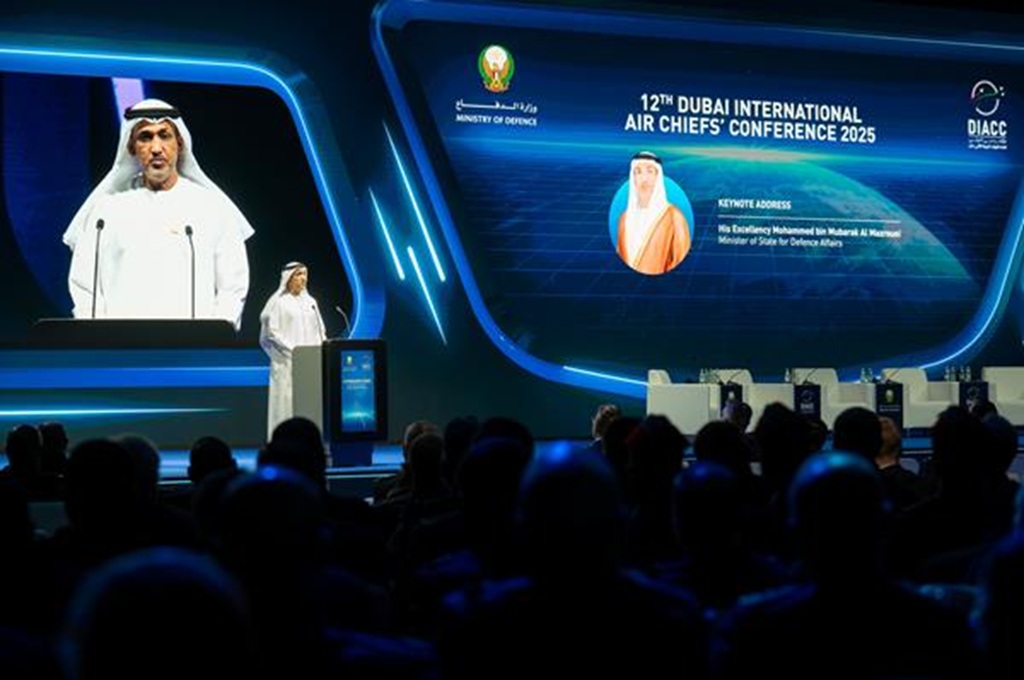
DUBAI, United Arab Emirates – Under the patronage of His Highness Sheikh Mohammed bin Rashid Al Maktoum, Vice President and Prime Minister of the UAE and Ruler of Dubai, His Excellency Mohamed bin Mubarak bin Fadhel Al Mazrouei, UAE Minister of State for Defence Affairs, opened the 12th Dubai International Air Chiefs Conference (DIACC).

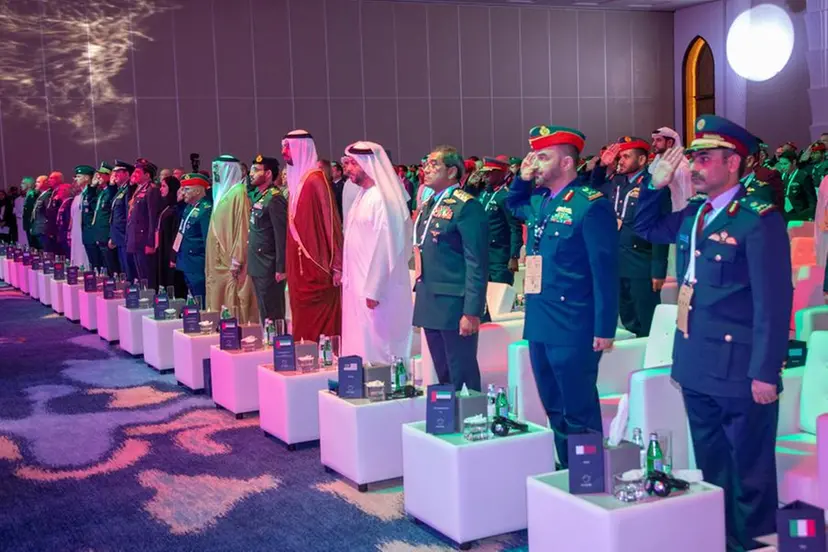
The opening ceremony took place at Atlantis, The Palm in Dubai, with more than 100 official delegations from across the globe. Senior officers from the Ministry of Defence, air force leaders, chiefs of staff from partner and allied countries, as well as decision-makers and CEOs from major national, regional, and international companies, also attended. These organizations work in defense, aviation, advanced technology, space sciences, and artificial intelligence.

The UAE Ministry of Defence organized the conference in strategic partnership with ADNEC Group, under the theme “Hypersonic Edge: Re-Envisioning Airpower Across Asymmetric Spaces.”

The first session, titled “Hypersonics, UAVs, and Artificial Intelligence: Adapting Airpower to Asymmetric Battlespaces,” began with opening remarks from Joseph Guastella, Corporate Vice President and Regional Executive for Europe and the Middle East at Northrop Grumman.
Dubai International Air Chiefs Conference (DIAC)

This session brought together Major General Rashid Mohammed Al Shamsi, Commander of the UAE Air Force and Air Defence, General Adrian L. Spain, Commander of the US Air Combat Command, General Jérôme Bellanger, Chief of Staff of the French Air and Space Force, and Lieutenant General J.R. Speiser-Blanchet, Commander of the Royal Canadian Air Force. They spoke about how to build agile coalitions and lead through modern airpower challenges, followed by an interactive discussion with official delegations.

The second session, titled “Beyond the Atmosphere: Integrating Air and Space Capabilities for Strategic Superiority,” highlighted the growing link between air and space power.

Speakers included Major General Vincent Chusseau, Commander of the French Space Command, and His Excellency Eng. Salem Butti Al Qubaisi, Director General of the UAE Space Agency. Air Marshal Stephen Chappell, Chief of the Royal Australian Air Force, also took part, followed by Air Marshal Narmdeshwar Tiwari, Vice Chief of Air Staff of the Indian Air Force.

The third and final session, titled “The Warfighter of Tomorrow: Standards, Artificial Intelligence, and Accountability in Next-Generation Airpower,” opened with an introductory remark from Dr. Chaouki Kasmi, President of Technology and Innovation at EDGE Group.

Dubai International Air Chiefs Conference (DIAC)

Dr. Kasmi also moderated the session, which focused on how to prepare future air forces and their people. Major General Jonas Wickman, Commander of the Swedish Air Force, spoke about new approaches to recruitment and building the force of the future.

General Son Sug Rag, Chief of Staff of the Republic of Korea Air Force, addressed the topic “Mastering asymmetric spaces: redefining the warfighter for the future.”

Lieutenant General Antonio Conserva, Chief of the Italian Air Force, discussed “Standards under pressure: maintaining excellence in the age of automation.”

Professor Peter Hays from the Space Policy Institute at George Washington University presented a paper titled “Learning to Learn: Building Intellectual Readiness for the Future Space Battlespace.” The conference wrapped up with an official recognition ceremony for participants, followed by a group photo session.

The Dubai International Air Chiefs Conference (DIAC)

The Dubai International Air Chiefs Conference (DIAC) is a high-level event held every two years. It brings together air force commanders, senior defense officials, and aerospace specialists from across the globe. The conference is one of the leading international forums devoted entirely to air and space power.

Key Details

  • Organized by: United Arab Emirates Air Force & Air Defence, in cooperation with the Dubai Airshow organizing team. DIAC usually takes place alongside, or just before, the Dubai Airshow.
  • First held: 2005
  • Frequency: Every odd-numbered year (2005, 2007, 2009, and so on through 2025 and beyond)
  • Location: Dubai, United Arab Emirates, typically at the Al Maktoum Ballroom or a similar venue close to the Dubai Airshow site at Dubai World Central (Al Maktoum International Airport)
  • Next edition: The 2025 conference is planned for 10–11 November 2025, just ahead of the Dubai Airshow 2025, which takes place from 17–21 November

Main Objectives

  1. Promote strategic dialogue among air chiefs on current and future air power issues.
  2. Share operational lessons from recent missions, such as counter-terrorism campaigns and air operations in Libya, Syria, Yemen, Ukraine, and other theaters.
  3. Address new technologies, including 5th and 6th generation fighters, unmanned combat aircraft, hypersonic systems, space-based capabilities, artificial intelligence, and cyber protection of air assets.
  4. Support international cooperation and encourage new defense and security partnerships.
  5. Connect industry with decision-makers, giving aerospace and defense companies direct insight into the Air Force’s needs and long-term plans.

Typical Attendees

  • Air chiefs and commanders from more than 40 to 50 air forces worldwide. Recent editions have seen participation from the USAF, RAF, French Air Force, Russian Aerospace Forces, Indian Air Force, PLAAF, RSAF, Turkish Air Force, Egyptian Air Force, and many others.
  • Senior officials from defense ministries and government agencies.
  • CEOs and senior leaders from major aerospace and defense firms, including Lockheed Martin, Boeing, Dassault, Airbus, BAE Systems, Raytheon, Leonardo, EDGE Group, and more.
  • Representatives from international bodies, such as NATO and the Gulf Cooperation Council air power coordination groups.

Format

  • Day 1–2: Closed plenary sessions for air chiefs only, with classified briefings and discussions.
  • Open sessions that feature keynote speeches, expert panels, and audience Q&A.
  • Scheduled bilateral and multilateral meetings, along with networking receptions and side events.
  • The conference often ends with a joint statement or communiqué that reflects the main themes and shared views.

Significance

  • DIAC is one of the very few platforms where air chiefs from countries that may belong to rival or competing blocs, such as U.S./NATO partners and Russia or China-aligned forces, sit together and openly exchange perspectives.
  • The conference has a direct impact on future procurement plans; many large defense contracts announced at or shortly after the Dubai Airshow often grow out of contacts and discussions that start at DIAC.
  • The United Arab Emirates uses DIAC to highlight its role as a key global center for aerospace, defense, and advanced air power cooperation.

In simple terms, DIAC is often seen as the “Davos of air power,” a rare mix of high-level strategy talks and industry networking, held every two years in Dubai under the patronage of the UAE leadership.

Related News:

Long overshadowed by Dubai, Wizz Air will leave Abu Dhabi’s Zayed International Airport.

Continue Reading

Business

Trump Tariff Revenue Jumps 300% as Supreme Court Fight Nears

Trump Tariff Windfall: Customs Revenue Jumps About 300% as Supreme Court Fight Nears

Tariff revenue hits $124 billion so far this fiscal year, with January collections at $30.4 billion, fueling talk of debt payoff and direct checks

VORNews

Published

on

By

Trump Tariff Revenue Jumps 300%

WASHINGTON, D.C. – President Donald Trump’s tariff push is driving a major spike in federal customs revenue. New Treasury Department figures show customs duties are up about 300 percent since Trump returned to office. In January, the US brought in about $30.4 billion from customs duties. As a result, the fiscal year-to-date total sits near $124 billion, up roughly 304 percent from the same period a year earlier.

The administration is using those numbers to back a central claim: tariffs can raise money without raising US income taxes. Trump has also said the new tariff revenue can help chip away at the $38 trillion national debt. At the same time, he argues that the duties shield US industries from unfair competition abroad.

The jump in revenue follows a set of broad tariff moves that began in early 2025. First, the White House rolled out across-the-board duties on many imports starting in April 2025. Next came “reciprocal” tariffs aimed at certain countries. The administration tied these actions to the International Emergency Economic Powers Act (IEEPA), citing national emergencies tied to issues such as fentanyl trafficking and trade imbalances.

Collections started rising fast. Monthly totals moved from about $9.6 billion in March 2025 to more than $23.9 billion later that year. That run-up set the stage for the big fiscal 2026 numbers now being reported.

Looking back, fiscal 2025 (which ended September 30, 2025) produced $215.2 billion in customs duties, more than twice the prior year. So far, fiscal 2026 is moving even faster. In addition, the early deficit picture looks better. The federal budget deficit fell 17 percent in the first four months of fiscal 2026 (or 21 percent after calendar adjustments), as revenue grew more quickly than spending.

A core part of Trump’s economic pitch

Trump has cast the rising customs revenue as proof that his trade strategy works. In posts and public remarks, he has said other countries end up paying because tariffs reduce their export edge, while the US collects the money. Supporters inside and outside the administration point to the monthly totals as evidence that the policy is producing real cash for the Treasury.

That revenue talk has also revived a big idea: direct $2,000 payments to Americans. Trump has described the plan as a “tariff dividend” aimed at lower- and middle-income households. He has said the money would come from the “hundreds of billions” flowing in through customs duties. In comments from November 2025, he said he was taking the idea seriously and still supported it. Even so, no bill or detailed framework has been released. Because of that, the proposal has drawn both attention and doubts, including concerns about how to target payments fairly.

Many economists and trade researchers argue that tariffs act like a tax on US importers, and those costs often show up in higher prices. Research cited from the New York Federal Reserve suggests US firms and households cover most of the bill, as much as 90 percent in some estimates.

Some analyses put the added cost at about $1,000 per household in 2025. Projections rise to around $1,300 in 2026 if the policy stays the same. Over time, tariffs could bring in large gross revenue, but critics say the net gain shrinks once you factor in slower growth, job losses in exposed industries, and possible retaliation from trading partners.

Supreme Court decision could change everything.

The revenue boom is unfolding while the tariff program faces heavy legal pressure. The Supreme Court is expected to rule on whether Trump can use IEEPA to impose broad tariffs without Congress. The court heard oral arguments in November 2025 in cases that challenge the scope of that authority, since Congress normally controls tariff policy.

Lower courts have already pushed back. The US Court of International Trade and the Federal Circuit Court of Appeals ruled against key parts of the tariff structure, saying the measures go beyond what the statute allows.

Meanwhile, importers have filed hundreds of refund suits. If the Supreme Court sides with challengers, the federal government could owe tens of billions, or even more, in returned duties. That outcome would cut into the revenue totals and could force the White House to rely on other trade laws.

For now, administration officials say they expect to win. Treasury Secretary Scott Bessent has called an adverse ruling “very unlikely.” Still, the wait has stretched longer than many expected. That has added stress for importers dealing with compliance demands and growing bond requirements. US Customs data also shows record importer bond shortfalls, totaling nearly $3.6 billion in fiscal 2025, which highlights the strain tied to the policy.

What it means for trade and the economy

Trump’s tariff strategy has shifted global trade talks. Negotiations continue as some countries push for lower rates while the US keeps pressure on issues like intellectual property theft and currency practices. Supporters say tariffs are helping bring investment home, open factories, and boost jobs in protected sectors.

On the other hand, critics warn about higher prices, supply chain headaches, and risks to industries that depend on exports, including agriculture and manufacturing, if retaliation grows.

As fiscal 2026 continues, tariff revenue will stay at the center of budget and trade arguments. The big unknown is whether the surge holds up, or whether a Supreme Court ruling forces a reset. For now, the numbers are clear: customs duties are pouring in at a pace that is reshaping the budget debate and fueling bold ideas on debt reduction and direct payments.

Trending News:

Trump and EPA Chief Zeldin End Obama Era Net-Zero Climate Policies

Continue Reading

Business

Tech Titans Flee California to Low-Tax Havens Like Florida

California’s Wealth Drain: Billionaires Leave as Taxes Climb and Debt Grows

Tech Leaders Head to Low-Tax States Like Florida

Mark Zuckerberg’s $150M+ Miami Mansion Buy Points to a Bigger Shift Among Silicon Valley’s Rich

VORNews

Published

on

By

Tech Titans Flee California to Low-Tax Havens Like Florida

LOS ANGELES – A high-profile real estate deal is adding fuel to the talk of money leaving California. Meta CEO Mark Zuckerberg has reportedly bought a waterfront estate on Miami’s Indian Creek Island, the guarded enclave often called the “Billionaire Bunker,” for an estimated $150 million to $200 million.

Sources familiar with the deal, widely reported in February 2026, say the purchase puts him near neighbors like Jeff Bezos and Ivanka Trump. People close to the situation also suggest it’s more than a second home, with Zuckerberg and his wife, Priscilla Chan, planning to settle in by April. For many observers, it looks like another major tech name is choosing to leave California as new tax proposals stir concern.

Zuckerberg’s reported move fits into a bigger story, a capital exodus tied to California’s high tax burden and a new ballot push that critics say could speed up departures. The proposal is called the 2026 California Billionaire Tax Act. It would place a one-time 5% tax on the net worth of residents over $1 billion, paid over five years (about 1% per year).

Supporters, including groups such as the Service Employees International Union-United Healthcare Workers West, say it could raise tens of billions for health care as federal support shrinks. Opponents, including Gov. Gavin Newsom, warn it could damage a tax system that already depends heavily on a small group of top earners.

California Facing Ongoing Outmigration

California already has one of the toughest tax setups in the country. The top state income tax rate is 13.3%, the highest in the U.S. In many cases, the state doesn’t separate regular income and capital gains. When federal taxes are added, the bill can be steep. The state also relies heavily on the top 1% of earners, who pay roughly half of all personal income tax revenue.

With the proposed wealth tax set to apply to people who are residents as of January 1, 2026, some wealthy residents appear to be moving early. Entrepreneurs like Chamath Palihapitiya and David Friedberg have cited estimates that $1 trillion to $2.5 trillion in assets left the state in late 2025 and early 2026. Private polling has also suggested that 80% to 90% of those affected have already moved or plan to if the measure moves forward.

This isn’t only about billionaires. California has faced ongoing outmigration tied to taxes, regulations, homelessness, and the high cost of living. U.S. Census data shows net domestic losses of more than one million residents from 2020 to 2024.

Higher earners, especially those making over $200,000, tend to be the most likely to leave. Many head to states with no state income tax, including Florida, Texas, and Nevada. The effects can stack up fast: less income tax revenue, weaker sales and property tax collections, fewer big donations, and risks to jobs linked to businesses and investors that relocate.

California Lawmakers Target the Wealthy

California’s budget problems sit in the middle of this debate. The state moved from a record $97.5 billion surplus in 2022 to recurring deficits. Current projections point to an $18 billion gap that could reach $35 billion by 2028.

A major issue is how dependent the state is on income and capital gains taxes from top earners, which rise and fall with markets and can shrink when people move. Critics blame years of Democratic-led spending, pointing to expanded programs, health care growth, and environmental rules they say raised long-term costs without steady revenue to match.

Many Democratic lawmakers and progressive groups have responded to the budget strain by pushing for higher taxes on the rich. If the billionaire tax qualifies for the November 2026 ballot, it would need nearly 875,000 signatures. Backers say it would apply to about 200 ultra-wealthy residents with a combined net worth above $2 trillion.

Supporters frame it as a fairness issue, arguing billionaires can face lower effective rates because much of their wealth is tied to unrealized gains. The push has sparked strong pushback, with economists warning it could trigger even more departures. Recent examples often mentioned include Google co-founder Larry Page (reported to have bought Miami property), PayPal’s Peter Thiel, and other major names who have set up residency outside California.

Even if the wealth tax never passes, the threat of it can change behavior. Florida, with no state income tax, offers a clear financial draw. For celebrities and executives, it also offers privacy and security. Indian Creek, with gates, its own police, and marine patrols, is part of the appeal for people who want distance from public attention.

Wave of Billionaire Relocations

The bigger concern for California is what happens if this pattern continues. When investors and founders leave, Silicon Valley’s funding networks and job creation can weaken over time. People who want tighter budgets argue that constant tax hikes on the rich backfire, pushing out the very people the state relies on, then shifting pressure onto everyone else through higher costs and fewer services.

Supporters of progressive tax policy say top earners benefit greatly from California’s system and should pay more, and they often argue that claims of mass migration are overstated based on past research showing limited millionaire movement.

Still, the trend line is hard to ignore. From Oracle’s headquarters move years ago to the latest wave of billionaire relocations, California is competing with states that make it easier to keep more of your income. In a country where people and money can move quickly, that competition matters.

If Zuckerberg is settling into Florida life, the signal is clear. With high taxes and growing debt fears, even leaders tied to California’s tech boom are choosing to leave. California now faces a tough choice: adjust its approach, or keep losing the wealth that has long helped fund the state.

Related News:

Vice President JD Vance to Head Anti-Fraud Task Force Targeting California Welfare Abuses

Continue Reading

Business

Trump Takes Aim at China’s Critical Minerals Control With Project Vault

Trump Targets China’s Critical Minerals Dominance with Bold ‘Project Vault’ Stockpile and Strategic U.S.-India Trade Framework

Washington’s Aggressive Push to Reshape Global Supply Chains Amid Rising Geopolitical Tensions

VORNews

Published

on

By

Trump. China, Critical Minerals,Project Vault

WASHINGTON, D.C. – President Donald Trump has stepped up his push this month to reduce China’s hold over critical minerals, the raw materials used in electric vehicles, smartphones, advanced weapons systems, and many AI-related tools.

China controls about 70% of global rare earth mining and as much as 90% of processing. The Trump administration says that kind of control puts the United States at risk, especially after Beijing used export limits and pricing pressure to sway markets.

At the center of the plan is Project Vault, a nearly $12 billion strategic stockpile announced on February 2, 2026. It’s backed by a $10 billion loan from the U.S. Export-Import Bank, plus $2 billion from private investors.

The goal is to build reserves of minerals such as rare earths, lithium, cobalt, and nickel. The White House says the stockpile will help protect U.S. manufacturers from supply disruptions, calm price swings, and support more mining and processing at home.

Critical Minerals Ministerial

“American businesses have risked running out of critical minerals during market disruptions,” Trump said during the Oval Office event. “Project Vault keeps our workers and industries from getting hit by shortages.” The announcement followed China’s recent limits on rare earth magnets, which rattled supplies tied to semiconductors, drones, and electric vehicles.

Two days later, the administration brought together the first Critical Minerals Ministerial on February 4, with officials from 54 countries. Attendees included India, Japan, Australia, the United Kingdom, and several resource-rich nations in Africa and Latin America.

Vice President JD Vance promoted the idea of a preferred trade group among allies. The proposal included enforceable price floors, shared stockpiles, and tariffs meant to counter China’s practice of driving prices down by flooding markets with cheaper supply.

Alongside the meeting, the U.S. signed 11 new bilateral frameworks and memorandums of understanding (MOUs). Partners included Argentina, Peru, the Philippines, the United Arab Emirates, and Uzbekistan. The agreements focus on joint projects, pricing guardrails, access to financing, and expanding refining and processing capacity, areas where China still holds the upper hand.

One of the biggest headlines is a growing U.S.-India partnership. An interim trade framework released February 6 sets the tone, with U.S. Trade Representative Jamieson Greer calling it a deal that opens “one of the largest economies in the world for American workers.” It includes two-way tariff changes and supply chain commitments meant to reduce dependence on China.

Building US Supply Chains

Under the framework, India would cut or remove tariffs on a wide range of U.S. industrial products and farm goods, including dried distillers’ grains, soybean oil, tree nuts, and wine. In return, the U.S. would impose an 18% reciprocal tariff on certain Indian exports such as textiles, apparel, leather, and machinery, while lifting tariffs on others, including generic drugs, gems, and aircraft parts.

India also agreed to buy $500 billion in U.S. goods over five years. The list includes energy (oil and gas), coking coal, aircraft, precious metals, and tech items such as graphics processing units used in AI and data centers.

The framework is not limited to minerals, but it fits the broader goal of building supply chains less exposed to China. India took part in the ministerial talks and has also explored related arrangements with countries like Brazil and Canada.

Many analysts see this as a shift in geopolitics. By signaling support for a U.S.-led minerals group, India shows it shares Washington’s interest in cutting reliance on Beijing. That matters as New Delhi works to expand its own mining and processing base. The interim agreement also supports a longer-term U.S.-India trade deal that began taking shape in 2025 under Trump and Prime Minister Narendra Modi.

The administration is also using executive action. A January 2026 order on imports of processed critical minerals puts more weight on negotiations with other countries. It also raises the possibility of tariffs or import limits if partners do not cooperate. These steps build on earlier work, including updates to U.S. critical minerals lists and new incentives tied to domestic production.

U.S.-China Tensions

Skeptics question whether the strategy can hold up over time, pointing to past policy swings and China’s deep lead in infrastructure and processing know-how. Backers say the mix of stockpiles, allied trade rules, and country-by-country deals marks the strongest U.S. push yet on minerals policy.

With U.S.-China tensions still high, the White House is framing these moves as part of an “America First” push to secure materials tied to economic strength and defense readiness. Billions of dollars are now in motion, and more countries are lining up behind new rules. The administration says it wants to do more than compete; it wants to break China’s grip on the materials that will shape the next few decades.

The next several months will show whether these announcements turn into real mines, refineries, and supply contracts that lower risk for the U.S. industry. For now, Trump’s latest actions have redrawn lines in the global critical minerals fight, with allies coordinating more closely and China facing a more organized challenge.

Trending News:

Trump’s 2006 Call to Police About Epstein Dispels Mainstream Media Narrative

Continue Reading

Get 30 Days Free

Express VPN

Create Super Content

rightblogger

Flight Buddies Needed

Flight Volunteers Wanted

Trending