Connect with us

News

China Backed US Billionaire Singham Allegedly Funding of Anti-ICE Protests

The Quiet Controversy: Neville Roy Singham’s CCP Links and Money Behind US Unrest
Mapping the Network: Singham’s Past and Reported CCP Connections

Leyna Wong

Published

on

Neville Roy Singham, China, CCP

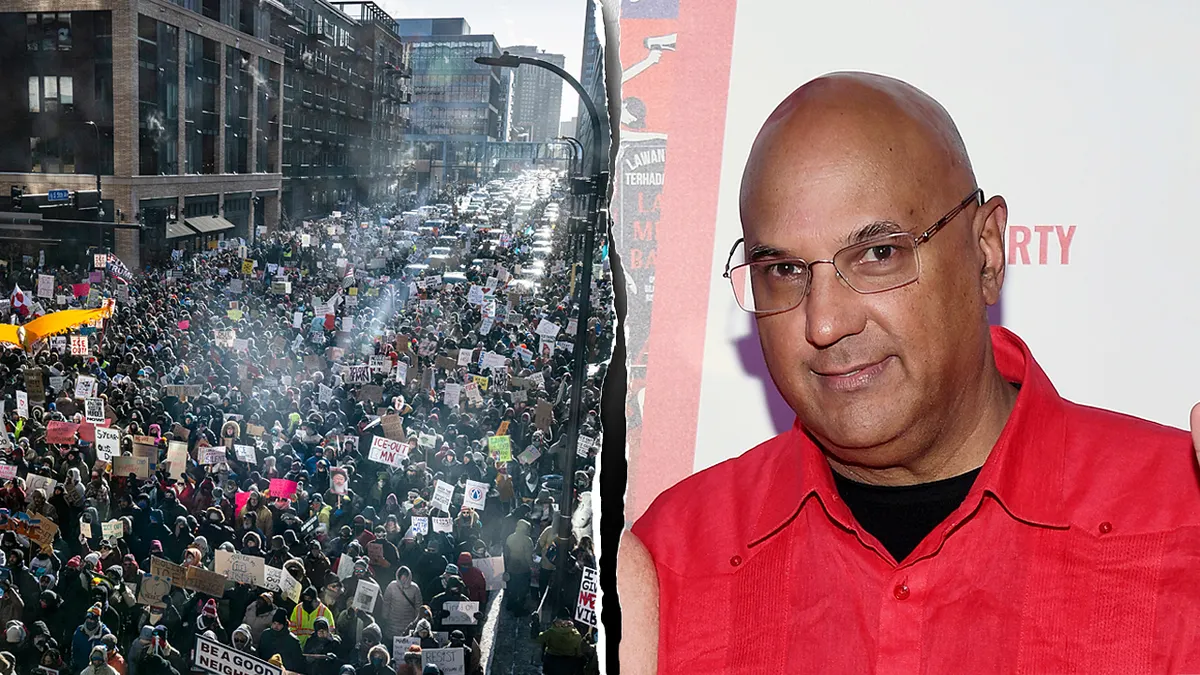
NEW YORK – Neville Roy Singham is a US-born tech entrepreneur who sold his software firm, Thoughtworks, for close to $1 billion in 2017. Since then, he has moved to Shanghai and has become a key name in claims of foreign influence tied to US activism.

Critics and congressional investigators say he has sent millions of dollars to left-leaning groups in the United States, including groups involved in protests against Immigration and Customs Enforcement (ICE).

Investigators allege the funding supports goals aligned with the Chinese Communist Party (CCP), and they point to public reporting that describes Singham attending CCP workshops focused on overseas messaging. Other reports say he has shared office space with organizations such as the Maku Group, a media company that has displayed banners praising Xi Jinping.

Singham has been active in political causes since the 1970s, but his work after 2017 has drawn the most attention. Reports describe money moving through layers of shell companies, donor-advised funds, and nonprofits, including the United Community Fund and the Justice Education Fund.

These groups have little public presence, which critics say makes it easier to move money quietly into activist and media efforts. One example raised in public reporting is that nearly $1.8 million from related funding streams went to Chinese media outlets that echo CCP messaging. His wife, Jodie Evans, a co-founder of Code Pink, is also connected to this ecosystem, and Code Pink has reportedly received a large share of its donations from sources tied to Singham.

Supporters of Singham-funded groups often describe the network as values-driven, not just financial. Some groups have called him a “Marxist comrade,” and critics say the model matches a CCP approach sometimes described as a “Strategy of Sowing Discord,” meant to deepen divisions inside rival countries.

The concern is that money and organizing support can amplify protests, strain local systems, and harden social conflict, while still flowing through tax-exempt structures that reduce oversight.

Claims Around Singham Funding Anti-ICE Protests

The biggest flashpoint is Singham’s alleged role in bankrolling anti-ICE protests across the US. Reports and committee statements have named organizations such as The People’s Forum, Code Pink, and the Party for Socialism and Liberation (PSL) as major beneficiaries.

The People’s Forum is said to have received more than $20 million from Singham between 2017 and 2022, with funds routed through intermediaries that keep the source hard to trace. The New York-based group has been accused by critics of encouraging aggressive protest tactics aimed at ICE, including disruptions in large cities and actions on college campuses.

In Los Angeles, riots linked to PSL, described by some reports as Singham’s “main backer,” led President Trump to deploy the National Guard after federal officers were attacked. In Minneapolis, investigators and critics have also pointed to activists tied to these funding lines, saying they coordinated efforts to pressure or harass ICE during enforcement actions.

Protests in Minnesota and other places, including Buffalo, have featured calls to abolish ICE. Some participants have discussed tactics on encrypted apps, according to reporting cited by critics.

These actions are not limited to immigration. They also overlap with pro-Palestine campus occupations and wider anti-capitalist organizing. Critics argue that some messaging in these circles lines up with CCP-friendly narratives, including defenses of China’s actions toward Uyghurs.

The overall funding totals cited in public claims are large, with reports saying Singham has directed as much as $250 million into connected organizations and projects. The People’s Forum has also hosted events that praise China and promote Leninist ideas, which critics say support the argument that this is coordinated influence work, not simple grassroots activism.

Capitol Hill Pressure: Multiple Investigations

Singham and his network have drawn attention from several congressional committees. The House Ways and Means Committee, chaired by Rep. Jason Smith (R-MO), has pointed to The People’s Forum as a possible CCP-linked propaganda hub operating under tax-exempt status.

In a September 2025 letter, Smith requested records and described the group as tied to unrest while receiving large sums linked to Singham. The committee framed the issue as protecting the tax code from abuse and keeping nonprofit benefits from being used against US interests.

The House Oversight Committee, led by Rep. James Comer (R-KY) and joined by Rep. Anna Paulina Luna (R-FL), opened an inquiry in June 2025 focused on funding connected to the Los Angeles riots. The committee subpoenaed Singham for records tied to his relationship with PSL and warned that failure to comply could trigger contempt steps.

Oversight also raised concerns about possible Foreign Agents Registration Act (FARA) violations, which can apply when someone acts in the US on behalf of a foreign principal. In September, the committee went further and asked Treasury Secretary Scott Bessent to review options such as sanctions, asset freezes, or seizures tied to Singham-connected entities.

The Senate Judiciary Committee, led by Sen. Chuck Grassley (R-IA), has also focused on The People’s Forum and Code Pink. Grassley’s April 2025 letter raised concerns about possible FARA duties tied to CCP-linked funding and influence. He also pointed to appearances by leaders of these groups in state-owned Chinese media as part of the broader picture.

Together, these inquiries show growing concern about foreign influence, even if the loudest push has come from Republicans in the current Congress.

Why the Story Hasn’t Broken Through in Mainstream Media

Despite the seriousness of the claims, coverage in major outlets has been limited. Critics point out that CNN, MSNBC, and The Washington Post have spent extensive time on Donald Trump’s policies and personal controversies, while giving far less attention to the Singham story. They argue that this gap is not random. Anti-ICE protests often fit into progressive political narratives, and a deeper look at possible CCP ties could complicate the way those protests are framed in public debate.

A few outlets have given the topic more airtime. Bill O’Reilly’s No Spin News has run segments focused on Singham and featured Rep. Jason Smith discussing claims that violence is being fueled through tax-exempt channels. NewsNation has also covered the subpoenas and the broader claims about money supporting campus actions and anti-ICE protests.

Critics say the uneven attention leaves the public with an incomplete picture. They argue that when headlines focus on familiar political drama, quieter stories about foreign meddling can fade into the background, even when the national security stakes are high.

Bessent Signals a Push for Oversight

As congressional pressure builds, Treasury Secretary Scott Bessent has moved toward stronger enforcement. Appointed in the Trump administration, Bessent has been recruiting a senior enforcement official, described as a new “top cop,” to watch for nonprofits that misuse 501(c)(3) status.

The plan includes an interagency task force aimed at groups that cross legal lines through heavy political activity, improper lobbying, or fraud. Supporters of the effort say this approach speaks directly to concerns raised in the Singham-related probes.

This shift follows requests from congressional Republicans, including lawmakers on Ways and Means, who have called for tougher action against nonprofits they say promote “anti-American” goals or help fund terrorism. Oversight’s letter to Bessent also pressed Treasury to review steps like sanctions or asset actions tied to Singham-linked entities. Bessent has framed the effort as a way to trace money flows and reduce waste, fraud, and abuse.

If Treasury follows through, the impact could extend well past one donor network. A more aggressive review could disrupt how political money moves through nonprofit structures. Legal fights may still follow, including disputes over FARA requirements and any attempt to freeze or seize assets.

US Sovereignty and Public Trust

The Singham story highlights pressure points in US systems, including tax rules, free speech protections, and the way political movements are covered. Committees can investigate, and Treasury can tighten enforcement, but the public also depends on clear reporting to understand what is happening and why.

Supporters of the investigations say the goal is simple: protect lawful protest while stopping foreign-backed influence campaigns that use US freedoms as cover. With the Treasury building new enforcement capacity and Congress asking sharper questions, the next phase may bring more records into the open and more accountability for groups that used secrecy to avoid scrutiny.

Related News:

Why America is so Polarized in 2026: Expert Analysis of the Main Drivers

News

Did AOC Really Say She Wants to ‘Take From Americans’ to Fund Illegal Migrant

VORNews

Published

on

By

AOC is in ‘favor’ of ‘ROBBING’ the American people

WASHINGTON, D.C. – In today’s hyper-polarized political climate, a single soundbite can travel around the world before the truth even has a chance to put its boots on. Recently, a fiery claim has circulated across social media and conservative news outlets: Representative Alexandria Ocasio-Cortez (AOC) is allegedly in “favor” of “taking from Americans to pay for illegals.”

But in the fast-paced world of political journalism, it is crucial to separate partisan framing from actual policy. Did the progressive firebrand actually say those exact words? And more importantly, what is the real debate surrounding taxpayer dollars and the ongoing migrant crisis in the United States?

This article breaks down the origins of this rhetoric, the reality of the immigration funding crisis, and what political leaders are actually proposing.

The Origin of the Outrage

To understand this controversy, we first have to look at how political messaging works. The specific phrase—”taking from Americans to pay for illegals”—is not a direct, verbatim quote from Congresswoman Ocasio-Cortez. Instead, it is a highly charged summary created by her political critics.

Conservative commentators and rival politicians frequently use this language to describe progressive immigration policies. When progressive lawmakers, including AOC, advocate for using government funds to provide shelter, healthcare, and legal representation for undocumented immigrants and asylum seekers, critics frame this as a direct theft from American taxpayers.

The logic of the critics is straightforward: government budgets are finite. Therefore, any dollar spent on a non-citizen is a dollar taken away from services meant for American citizens. While AOC did not utter the viral quote, the phrasing perfectly captures the core conservative argument against her platform.

The Reality of the New York City Budget Crisis

To understand AOC’s actual stance, we have to look at her home turf. New York City is currently the epicenter of a massive migrant crisis. Over the past two years, more than 150,000 migrants and asylum seekers have arrived in the city, stretching local resources to their absolute breaking point.

Democratic Mayor Eric Adams has repeatedly warned that the crisis will cost the city an estimated $12 billion over three years. Consequently, the city has been forced to announce budget cuts to critical public services, including:

  • Public Safety: Reduced funding for the NYPD and delayed recruitment classes.
  • Education: Cuts to universal pre-kindergarten programs and public library operating hours.
  • Sanitation: Reductions in public litter basket collections.

This local crisis is exactly what fuels the narrative that politicians are “taking from Americans.” When a local library closes on Sundays to help balance a budget strained by the migrant shelter system, working-class Americans feel the sting directly.

What AOC Actually Advocates For

So, where does Representative Ocasio-Cortez stand on this issue?

Rather than advocating for local budget cuts, AOC has consistently placed the blame on the federal government. She argues that immigration is a federal issue and, therefore, the financial burden should not fall on the shoulders of local New York taxpayers.

Her actual policy proposals focus on a few key areas:

  1. Federal Reimbursement: AOC has demanded that the federal government step in to reimburse cities like New York, Chicago, and Denver for the money they have spent housing migrants.
  2. Expedited Work Permits: She is a vocal advocate for allowing asylum seekers to work legally as soon as possible. She argues that if migrants can work and pay taxes, they will not need to rely on taxpayer-funded city shelters.
  3. Comprehensive Immigration Reform: She supports creating a humane pathway to citizenship, arguing that integrating immigrants into the formal economy benefits all Americans in the long run.

In her view, the current crisis is a failure of bureaucratic processing, not a reason to abandon vulnerable people. She argues that framing the issue as “us versus them” distracts from the government’s failure to build a functional immigration system.

The Core Arguments: Progressive vs. Conservative

The debate over funding migrant services highlights a massive ideological divide in American politics. Here is a breakdown of the two primary viewpoints:

The Progressive View (AOC and Allies):

  • Human Rights: Providing basic shelter and food is a moral imperative, regardless of a person’s legal status.
  • Economic Investment: Immigrants have historically revitalized cities, started businesses, and paid taxes. Short-term support leads to long-term economic growth.
  • Federal Responsibility: The federal government must fund local cities to prevent cuts to public services used by American citizens.

The Conservative View (Critics of AOC):

  • Taxpayer Fairness: Hardworking Americans should not be forced to subsidize the living expenses of individuals who crossed the border illegally.
  • Incentivizing Illegal Crossings: Providing free housing, healthcare, and debit cards only encourages more illegal immigration, worsening the crisis.
  • America First: The government’s primary duty is to its own citizens, particularly vulnerable populations like homeless veterans and low-income families, before allocating funds to non-citizens.

Why the Language Matters

In political reporting, language is everything. The use of the word “illegals” in the viral claim is a deliberate choice. Progressive lawmakers like AOC strictly use terms like “undocumented immigrants” or “asylum seekers,” arguing that these terms respect human dignity. Conversely, critics use “illegal aliens” or “illegals” to emphasize that the law was broken and to argue that these individuals are not entitled to taxpayer-funded benefits.

Furthermore, the phrase “taking from Americans” is designed to evoke an emotional response. It taps into very real anxieties about inflation, the rising cost of living, and the shrinking middle class. When families are struggling to pay for groceries, the idea that their tax dollars are going to non-citizens is a highly effective political wedge issue.

The Bottom Line

Did Alexandria Ocasio-Cortez say she is in favor of “taking from Americans to pay for illegals”? No. That quote is a partisan framing of her policies, not a factual statement she made.

However, the debate behind the quote is very real. AOC undeniably supports using federal government funds to manage the migrant crisis and provide basic services to asylum seekers. For her, it is a matter of basic human rights and federal responsibility. For her critics, it is an unacceptable misuse of taxpayer money during an era of economic strain.

As the 2024 election cycle heats up, this clash over resources, compassion, and the rule of law will only become more intense. Voters will ultimately have to decide which vision of American responsibility they agree with at the ballot box.

Trending News:

AOC Clueless Says Billionaires Never Earned Their Money

AOC Says the US May Have Already Had a Gay President, Obama, Buchanan?


Continue Reading

News

Mamdani Drops Property Tax Hike as Gov. Hochul Delivers $4 Billion Bailout

VORNews

Published

on

By

Mamdani Drops Property Tax Hike

NEW YORK – Property owners and renters can finally breathe a massive sigh of relief. Mayor Zohran Mamdani has officially abandoned his highly debated plan to raise property taxes across the five boroughs.

This sudden reversal comes after Governor Kathy Hochul announced a massive $4 billion state bailout to close the city’s glaring budget gap. The deal, finalized late Tuesday evening, completely reshapes the financial future of the city and avoids placing a heavy financial burden on everyday New Yorkers.

For weeks, the city has been locked in a tense debate over how to fund essential services while facing a historic financial shortfall. Now, thanks to the state’s intervention, the city can balance its books without asking residents to dig deeper into their pockets.

A Major Shift in City Hall Strategy

When Mayor Mamdani first took office, he faced an uphill battle. The city was staring down a multi-billion-dollar deficit. This massive gap was caused by a perfect storm of expiring federal COVID-19 relief funds, rising inflation, and the ongoing costs of housing new arrivals.

To solve the crisis, Mamdani originally proposed a broad property tax increase. He argued that the city needed permanent, reliable revenue to keep streets clean, schools funded, and public transit running. However, the proposal faced immediate and fierce pushback.

Homeowners in Queens and Staten Island argued the tax hike would price them out of their neighborhoods. Meanwhile, tenant advocacy groups warned that landlords would simply pass the extra costs down to renters, driving up the already sky-high cost of living in the city.

Faced with mounting pressure from the New York City Council and his own political base, the Mayor sought an alternative. The solution ultimately came from the state capital in Albany.

Gov. Hochul’s $4 Billion Lifeline

Governor Kathy Hochul traveled to Manhattan to deliver the good news in person. Standing alongside Mayor Mamdani at a joint press conference at City Hall, she confirmed that the state will inject exactly $4 billion into the city’s budget over the next fiscal year.

“New York City is the economic engine of our entire state,” Governor Hochul told reporters. “We cannot allow our greatest city to fall into financial ruin, nor can we balance the budget on the backs of hardworking families. This $4 billion investment ensures that the city can thrive without punishing its residents.”

The funds will be drawn from a larger-than-expected state tax revenue surplus, as reported by the New York State Division of the Budget. Because the state collected more money than anticipated this year, Hochul was able to redirect emergency funds directly to the city’s general fund.

As a result, the city no longer needs to rely on emergency tax hikes to keep the lights on.

What This Means for Everyday New Yorkers

The elimination of the property tax hike is a huge win for city residents. But the $4 billion bailout goes far beyond just keeping taxes flat. Here is a breakdown of how this historic deal will directly impact everyday New Yorkers:

  • No Property Tax Increases: Homeowners will pay the same rates as last year. Renters are also protected from the rent hikes that usually follow property tax increases.
  • Protection for Essential Services: There will be no cuts to the city’s sanitation department. Trash pickups will remain on their normal schedule, keeping the streets clean.
  • School Funding Security: Public schools will not lose their after-school programs. The state money fully restores the funding cuts that were previously threatened.
  • Public Safety Maintained: Funding for emergency responders, including the FDNY and EMTs, will be completely preserved, ensuring fast response times across the city.
  • Library Doors Stay Open: Public libraries, which were bracing for reduced weekend hours, will continue to operate on their full, normal schedules.

The Politics of the Compromise

This budget deal represents a significant moment of compromise between a progressive Mayor and a moderate Governor. Mayor Mamdani, who built his campaign on holding the wealthy accountable and expanding public services, had to pivot away from a core revenue strategy.

However, political analysts say this is a massive victory for his administration. By securing state funding, Mamdani avoids the political damage of raising taxes while still delivering on his promise to protect city services.

“This is exactly what cooperative government looks like,” Mayor Mamdani said during the announcement. “We looked at the numbers, we listened to the fears of working-class New Yorkers, and we worked with the Governor to find a better way. Today, we are keeping our city running without making life harder for the people who live here.”

Governor Hochul also benefits greatly from the deal. By playing the role of the savior, she boosts her popularity among downstate voters and proves that the state government can step in effectively during a local crisis.

Looking Ahead to Mamdani’s Final Budget

While the major hurdle has been cleared, the work is not entirely over. The Mayor and the City Council must now officially draft and vote on the final city budget before the July 1st deadline.

Given the massive infusion of state cash, the vote is expected to pass smoothly. Local council members, who previously threatened to vote against the Mayor’s budget because of the property tax issue, are now openly praising the agreement.

Furthermore, financial watchdogs are urging the city to use this bailout as a lesson. Civic groups are already advising the Mayor’s office to build stronger cash reserves and reduce unnecessary spending, so the city does not have to rely on a state bailout the next time revenues fall short. Check the latest city financial reports directly at the NYC Comptroller’s Office to see how the city plans to manage the new funds.

For now, though, the crisis is averted. The city’s financial gap is closed, public services are fully funded, and property taxes are staying exactly where they are.

Related News:

New York’s Wall Street Exodus: Investors Flee Mamdani’s Communism

Mamdani Wants $229M From New York Employee Retirement Fund


Continue Reading

News

California Governor Hopeful Katie Porter Admits Democrats Need Illegal Immigrants

VORNews

Published

on

By

California Governor Hopeful Katie Porter Admits Democrats Need Illegal Immigrants

LOS ANGELES, California – As the 2026 governor’s race heats up, Katie Porter’s push for undocumented immigrant benefits fuels a fierce debate over California’s shrinking population and political future.

A massive political storm is brewing in California. The state is preparing for a critical election in 2026 to choose its next governor. At the center of the debate is a highly controversial issue: Are Democratic leaders relying on undocumented immigrants to save their political power?

This fierce debate exploded after recent policy stances from former U.S. Representative Katie Porter. Porter is a leading Democratic candidate for governor. During a heated televised debate in early May 2026, she made her progressive views very clear. She argued strongly that undocumented immigrants should receive state-funded health care.

For her supporters, this is simply a matter of basic human rights and public health. However, her critics heard something entirely different. Conservative commentators and rival politicians quickly attacked her statements.

They argued that Porter’s policy is basically a quiet admission of a hidden Democratic strategy. They claim the party desperately needs undocumented immigrants to replace the massive number of taxpaying citizens who are fleeing California for Republican-led states.

This accusation strikes at the heart of California’s current crisis. The state is actively losing people, losing tax revenue, and potentially losing its grip on federal power.

The Taxpayer Flight to Red States

To understand why Porter’s comments caused such a huge reaction, you have to look at the hard numbers. The reality is that every day, people are packing up and leaving the Golden State.

For decades, California was a place of endless growth. People moved there for good jobs, beautiful weather, and a booming economy. Today, that trend has completely reversed. According to recent reports from the U.S. Census Bureau, California is one of only five states that actually lost population between 2024 and 2025.

Where are these people going? They are mostly moving to states like Texas, Florida, and Nevada. These states generally offer lower taxes, fewer business regulations, and are run by Republican governors.

Why are they leaving? The reasons are very clear:

  • Sky-High Costs: The cost of living in California is incredibly high. Buying a home is simply unaffordable for most working families.
  • Heavy Taxes: California has some of the highest income taxes in the country. Many middle-class workers and small business owners feel they are paying too much and getting too little in return.
  • Quality of Life: Growing concerns about crime, homelessness, and strict rules are pushing frustrated residents away.

Data from the Public Policy Institute of California shows that the state has lost residents to other parts of the country every single year since 2001. When these people leave, they take their tax dollars with them. This creates a massive problem for the state budget. It leaves California with fewer people to pay for its expensive public programs.

Immigration and the Battle for Political Power

This brings us back to the controversy surrounding Katie Porter and the Democratic Party. If taxpayers are leaving in droves, how does California keep its population numbers up? The answer, according to political critics, is immigration.

In California, immigrants make up a huge portion of the population. Some political analysts argue that Democratic leaders are purposely passing friendly policies to attract and keep undocumented immigrants in the state. Policies like offering state-funded health care, providing driver’s licenses, and maintaining sanctuary city protections make California a very appealing destination.

Why would politicians want this if undocumented individuals cannot legally vote in federal elections? The answer is raw political power.

The U.S. Census counts every single person living in a state, regardless of their legal immigration status. This total population number is incredibly important. It is used to determine two vital things:

  1. How much federal funding the state receives.
  2. How many seats does the state get in the U.S. House of Representatives? If California’s population drops too low, it loses seats in Congress. In fact, California already lost one congressional seat after the 2020 census. Experts warn it could lose up to four more seats by 2030 if the current trends continue.

Therefore, conservative critics argue that politicians like Porter “need” undocumented immigrants. Even if these immigrants do not cast a ballot on election day, their physical presence in the state helps Democrats keep their total population numbers high. This, in turn, helps California maintain its powerful political influence in Washington, D.C.

The Debate Stage Clash

This intense tension was obvious during the recent CNN gubernatorial debate in Monterey Park. Katie Porter stood firmly by her progressive values. She argued that providing care for everyone in the state is the right thing to do. She also focused her campaign message on cutting taxes for the middle class and holding big corporations accountable.

However, her opponents did not hold back their anger. Republican candidates like Chad Bianco, a tough-on-crime sheriff, and Steve Hilton, a former political adviser, used the stage to attack the entire Democratic record.

Bianco argued that California must stop being a sanctuary state. He blamed the current leadership for making the state unlivable for regular, taxpaying citizens. He stated clearly that offering free services to people who crossed the border illegally is an insult to the working families who are struggling to pay their bills.

The debate highlighted a very clear choice for voters. Do they want to continue the progressive path outlined by candidates like Porter? Or do they want the drastic changes proposed by Republicans, who want to slash taxes and roll back rules to bring businesses back?

The Media Reaction

The media reaction to Porter’s healthcare stance was fast and furious. On networks like Fox News and Sky News, commentators expressed deep shock. They viewed her policies as absolute proof of a broken political system.

Commentators noted that it feels disconnected from reality to offer state-funded healthcare to undocumented individuals while regular citizens are packing up moving trucks. They argue this creates a dangerous cycle. Higher taxes are needed to pay for more social services. These services attract more undocumented immigrants. This requires even more taxes, which ultimately drives more citizens away.

This narrative is very powerful for voters. It connects the daily frustration of high taxes with the complex national issue of border security. While Porter did not use the exact words “we need illegal immigrants for votes,” her opponents are aggressively telling the public that her policies speak louder than words. They frame her actions as a desperate survival tactic for a political party that is slowly losing its taxpaying base.

Looking Ahead to the Election

The 2026 election will be a major turning point for California. The state is facing very real challenges. The population is stagnant, the budget is under severe pressure, and every day, voters are deeply frustrated.

Katie Porter is fighting hard to win the Democratic nomination. She faces tough competition from other strong candidates like Xavier Becerra and billionaire Tom Steyer. To win the governor’s mansion, she will have to convince voters that her progressive vision for California is fair, balanced, and financially sustainable.

She must prove that her policies are about genuinely helping people, not just playing political math games to keep congressional seats. On the other side, her critics will continue to argue loudly that Democratic policies are emptying the state of its taxpayers and replacing them with a dependent population.

Ultimately, the voters will decide which story they believe. They will decide if California remains a progressive beacon or if it desperately needs a massive change in direction.

Trending California News:

California Democrats are Panicking Over the 2026 Governor’s Race

Yamaha Joins the Mass Exodus from California

Gavin Newsom’s $20 Million Diaper Scam Gets Exposed


Continue Reading

Get 30 Days Free

Express VPN

Create Super Content

rightblogger

Flight Buddies Needed

Flight Volunteers Wanted

Trending