China
The Honey Trap: How China’s “Red Women’s Army” Is Seducing Western Power
BEIJING, China – For decades, espionage was about satellites, encrypted codes, and high-altitude balloons. But today, the United States intelligence community is sounding the alarm on a much older, more intimate threat. It doesn’t involve hacking into a server; it involves walking into a bar, a tech conference, or a political fundraiser.
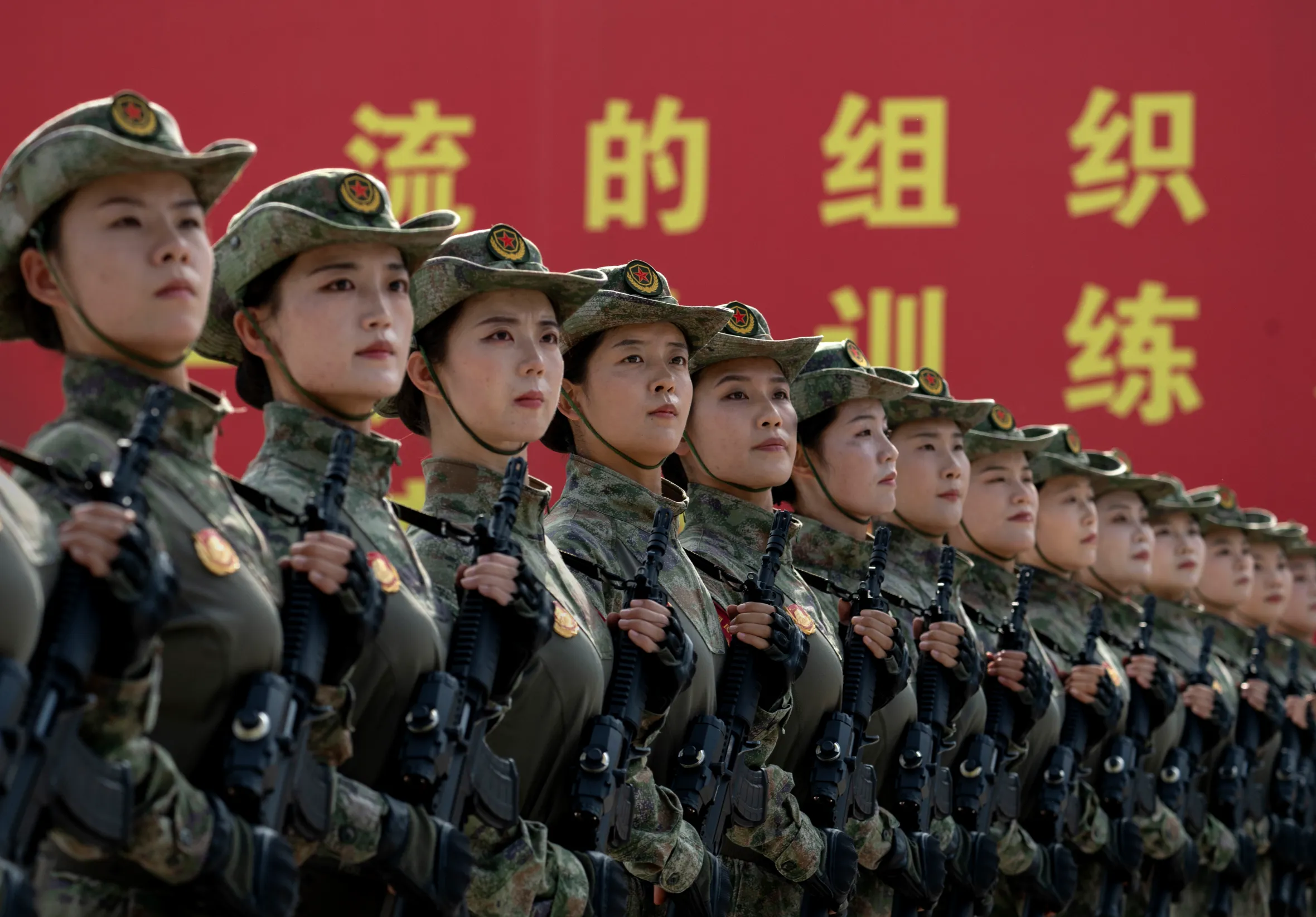
The threat is human. Specifically, a highly trained group of women, the West has dubbed China’s “Red Women’s Army.” These operatives are chosen for their beauty, their high intellect, and their ability to blend seamlessly into the highest echelons of Western society. From Silicon Valley to the halls of Congress, these women are reportedly using a specific playbook to extract secrets, influence policy, and compromise the leaders of the free world.
The “Blue-Gold-Yellow” Playbook: A Three-Pronged Attack
To understand how these operatives work, one must understand the strategy known as BGY (Blue-Gold-Yellow). This is a systematic method of subverting foreign officials and businessmen, popularized in reports by whistleblowers and intelligence analysts.
- Blue (Control the Internet): This involves mass surveillance and cyber-influence. Operatives use social media and dating apps to identify targets who have access to sensitive information or political power.
- Gold (Money and Greed): This refers to financial bribery. Once a target is identified, they are offered lucrative business deals, “consulting” fees, or investment opportunities that are too good to pass up.
- Yellow (The Honey Trap): This is the most personal and dangerous phase. The color “yellow” in Chinese slang often refers to eroticism. Operatives use romance, companionship, and sexual relationships to gain leverage over a target.
From Fleeting Flings to Life Partners
The danger of these operatives lies in their patience. They are not just looking for a one-night stand to snap a compromising photo—though that certainly happens. Often, they play the “long game.”
Some appear as the perfect companion at a high-end gala. Others might become a steady girlfriend or even a spouse. According to FBI warnings on economic espionage, the goal is to create a deep emotional bond. Once a target is “in love,” they become a fountain of information. They share work frustrations, mention upcoming projects, or introduce their partner to other influential colleagues.
By the time the target realizes their partner is reporting back to Beijing, they are often too compromised to come forward. They face the loss of their career, their reputation, and their family.
High-Profile Cases: When the Trap Snaps Shut
This isn’t just the plot of a spy novel. There have been several documented cases where intelligence officials and politicians fell victim to these tactics.
- The Case of Christine Fang (Fang Fang): Between 2011 and 2015, an operative named Christine Fang targeted up-and-coming politicians in California. She helped raise funds for campaigns and allegedly had romantic relationships with at least two mayors. Her ultimate goal was to gain proximity to national-level leaders.
- The Eric Swalwell Connection: Representative Eric Swalwell was one of the politicians Fang targeted. While there was no evidence of wrongdoing by Swalwell, the Axios investigation highlighted how easily a foreign agent could infiltrate the inner circle of a U.S. Congressman.
- The “Honey Trap” in the UK: British intelligence (MI5) has issued similar warnings. They recently alerted Parliament about Christine Lee, a lawyer who was allegedly working to influence MPs on behalf of the Chinese Communist Party (CCP).
Why the West is Vulnerable
Intelligence experts argue that the West’s open society and “dating app culture” make it an easy target. High-powered individuals are often lonely or looking for companionship outside their professional circles.
Furthermore, many Westerners underestimate the scale of China’s intelligence operations. Unlike Western agencies that focus on specific military or political targets, the CCP utilizes a “whole-of-society” approach. This means that students, researchers, and business professionals can be co-opted—willingly or through pressure on their families back home—to gather “scraps” of information that eventually form a complete picture.
How to Spot a “Red Army” Operative
While these women are trained to be discreet, intelligence briefings suggest there are common patterns to their approach:
- Sudden Interest in Niche Topics: They may show an unusual level of interest in your specific technical field or political committee.
- “Random” Encounters: They seem to appear at the same events as you, despite having a different professional background.
- Rapid Escalation: The relationship moves very quickly from professional to deeply personal.
- Inquisitiveness: They ask detailed questions about your colleagues, your travel schedule, and your frustrations with government or corporate policy.
The Cost of Silence
The greatest weapon the CCP has is the shame of the victim. Many men who find themselves caught in a “Yellow” trap choose to keep quiet to protect their personal lives. This silence allows the operative to continue their work, moving from one target to the next.
The U.S. government has ramped up its Counterintelligence Strategy, encouraging officials and tech leaders to report suspicious contacts immediately. The message is clear: the most dangerous threat to national security isn’t always a missile—sometimes, it’s a smile.
Protecting National Security in the Modern Age
As the “cold war” of the 21st century heats up, the battlefield has moved into the boardroom and the bedroom. To protect secrets, Western leaders must be as vigilant about their personal associations as they are about their cybersecurity.
Education is the best defense. By understanding the “Blue-Gold-Yellow” playbook, potential targets can see the trap before it snaps shut. The “Red Women’s Army” relies on secrecy and the element of surprise. Once their methods are exposed to the light of day, their power begins to fade.
Trending News:
New Allegations Link Ilhan Omar to China-Backed NGO in CUBA
China’s Billions Are Buying the Western Media Narrative
The Silent Ticking: Why China’s Recent Wave of Chaos Feels Like a Breaking Point
China
China’s Social Safety Net in Crisis: From Bankrupt Hospitals to “Disappearing” Bank Deposits
BEIJING – China is currently navigating a period of unprecedented social and economic instability that is reaching into the most fundamental sectors of society. What began as a real estate crisis has now metastasized, affecting healthcare systems, financial institutions, and even the religious sector.
While the official narrative often speaks of “steady growth,” the reality on the ground—shared through citizen reports and emerging data—paints a picture of a nation struggling with systemic failure.
Hospitals Facing Bankruptcy Amidst Rising Demand
One of the most startling developments is the collapse of China’s healthcare infrastructure. Traditionally, hospitals are seen as recession-proof; viruses do not care about GDP fluctuations. However, even as major top-tier hospitals are overwhelmed with waves of respiratory infections and other outbreaks, smaller and mid-sized facilities are closing at an alarming rate.
- Closure Rates: In 2024, private hospitals closed at an average rate of 1.4 per day. By the first half of 2025, that number escalated to approximately seven closures per day.
- Star Hospitals Failing: Even high-investment projects like Shandong’s Lu Shinan Hospital—which cost 2 billion yuan to build—have declared bankruptcy, leaving behind 1.2 billion yuan in debt and hundreds of unpaid staff.
- The Insurance Drain: A primary driver of this crisis is the depletion of the medical insurance fund during the three years of strict pandemic lockdowns. With reimbursement rates falling, even “busy” hospitals are losing money on every patient they treat.
The End of Financial Trust: Why You Can’t Withdraw Your Cash
For many Chinese citizens, the most personal impact of the crisis is the inability to access their own savings. A “withdrawal difficulty” crisis has exploded on social media, with commercial banks implementing extreme hurdles for customers trying to take out cash.
Under the guise of the “national anti-fraud center” requirements, banks are now treating ordinary depositors like suspects. To open a card, move money, or withdraw cash, citizens must provide proof of employment and detailed explanations of how the funds will be used.
More alarmingly, some deposits are simply “disappearing.” In Henan, a woman discovered her 800,000 yuan deposit had been moved without her consent to a real estate developer who subsequently collapsed. In another case, a 29 million yuan deposit in an Agricultural Bank of China regulatory account vanished within a week, leaving the depositor with a zero balance and no recourse.
Religious Institutions as “State ATMs”
In a desperate search for liquidity, the state has turned its sights toward the religious sector. Reports indicate that major temples and sacred sites are being placed under military-style management. Internal sources suggest this campaign, coordinated by the Ministry of Public Security and the National Religious Affairs Administration, will continue through 2027.
Because the state does not recognize true religious freedom, these temples function as government-owned assets and tourist attractions. With the economy down, many citizens have turned to temples for spiritual support, leaving behind significant donations. These funds—once kept within the temple system—are now reportedly being redirected to cover government expenditures and military funding.
The Wage Crisis: Working for 1990s Pay
The economic pressure has led to a dramatic regression in wages. In provinces like Shanxi, essential jobs such as preschool interns and receptionists are paying between 800 and 1,000 yuan per month (roughly $140–$160 USD). This is a wage level not seen for nearly 30 years.
Even government-linked entities are not immune. Beijing Reian Technology, a company owned by the Ministry of Public Security, reportedly withheld wages for 24 consecutive months, totaling 80 million yuan in unpaid salary. When workers are not paid for two years in the capital city at a state-backed firm, it signals deep fiscal distress at the heart of the regime.
The New Face of Poverty
The consequence of these overlapping crises is a massive surge in the displaced population. Official data from the National Bureau of Data shows a fivefold increase in homelessness since 2020, reaching approximately 47.5 million people.
Perhaps most concerning is the demographic shift: 61% of these homeless individuals are under the age of 33. In labor hubs like Beijing, long lines form for “5-yuan box meals” (about 70 cents), which have become the only affordable option for recent graduates and unemployed workers.
The 35-Year-Old Rule and Job Desperation
Desperation has reached a point where people are paying massive bribes to secure low-paying but “stable” government jobs. In Guangdong, individuals reportedly paid up to 45,000 yuan—more than a year’s salary—just to get a job as a high-speed rail security inspector that pays only 2,500 yuan a month.
This behavior is driven by the “35-year-old rule,” a widespread practice where tech and finance companies refuse to hire anyone over the age of 35. Faced with a ruthless open market, many choose to sacrifice their savings for a “stable” position, even if it pays barely enough to live.
China’s current situation is no longer a standard economic slowdown. It is a fundamental breakdown of the social contract. When hospitals close, banks withhold savings, and the state liquidates religious assets to stay afloat, the doors to upward mobility for an entire generation are being slammed shut.
Trending News:
China’s Billions Are Buying the Western Media Narrative
The Silent Ticking: Why China’s Recent Wave of Chaos Feels Like a Breaking Point
The Honey Trap: How China’s Red Women’s Army Is Seducing Western Power
China
China’s Billions Are Buying the Western Media Narrative
NEW YORK – In the gleaming boardrooms of London and New York, the ink on multi-million dollar advertising contracts is drying. But these aren’t typical deals for luxury watches or tech gadgets. They are agreements for “sponsored content”—glossy, professionally produced supplements that look like news but are written in Beijing.
Over the last decade, the Chinese government has launched a global media offensive of staggering proportions. Estimates from organizations like Freedom House suggest that China spends billions of dollars annually to “tell China’s story well.” This campaign isn’t just about promoting tourism; it’s a sophisticated effort to reshape global public opinion, silence critics, and ensure that Western newsrooms think twice before biting the hand that feeds them.
The Billion-Dollar Megaphone: How the Money Flows
China’s strategy for media dominance is multi-layered. It combines traditional advertising with “covert” influence and ownership. The goal is to create an information environment where Beijing’s narrative is the only one people hear.
1. The “China Watch” Strategy
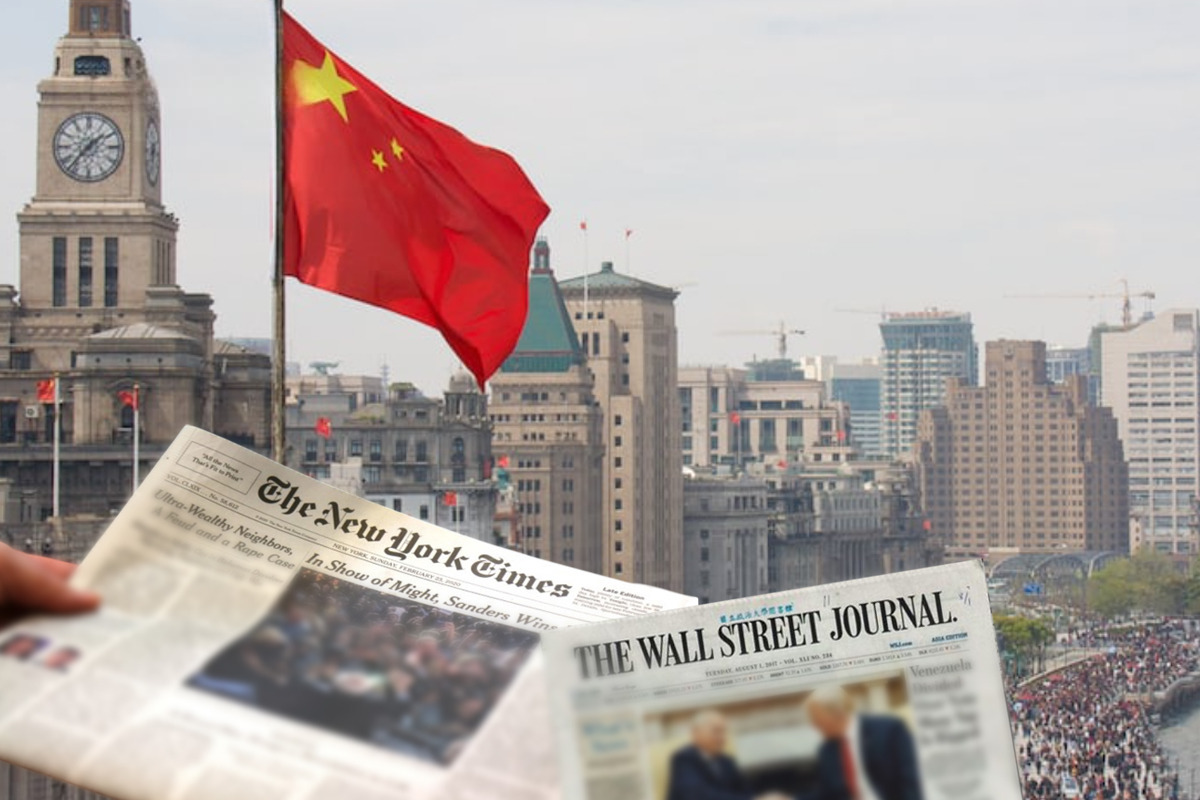
For years, major Western newspapers—including those considered the “gold standard” of journalism—carried a monthly supplement called China Watch. Produced by the state-run China Daily, these inserts were designed to look like legitimate reporting.
- The Cost: Data from U.S. Foreign Agents Registration Act (FARA) filings shows that China Daily has paid tens of millions of dollars to outlets like The Washington Post, The Wall Street Journal, and The New York Times for these placements.
- The Result: Readers were presented with articles praising China’s “poverty alleviation” or “ethnic harmony” in Xinjiang, often placed right next to genuine investigative pieces about human rights abuses.
2. Buying the Infrastructure
Beyond buying space in existing papers, China has moved to buy the “pipes” through which news travels.
- Content Sharing: State-run agencies like Xinhua have signed cooperation agreements with hundreds of news agencies worldwide. In many developing nations, Xinhua provides its wire service for free, effectively becoming the default source for world news.
- Direct Ownership: In some regions, Chinese-linked entities have purchased controlling stakes in local TV stations and newspapers, ensuring a pro-Beijing editorial line from the top down.
The “Ideological Buffet”: Why the Leftist Media Is Vulnerable
There is a growing concern among media watchdogs that “progressive” or “Leftist” media outlets in the West have become particularly susceptible to Chinese influence. This isn’t necessarily because of shared ideology, but rather a combination of financial desperation and a common skepticism of Western power structures.
Mainstream journalism is in a death spiral. As traditional ad revenue vanishes, many outlets are desperate for any cash infusion. Beijing offers a “no-strings-attached” (at least on paper) stream of revenue that is hard to refuse.
“When a legacy outlet is facing layoffs, a $500,000 ‘partnership’ with a Chinese tech giant or a state-backed cultural foundation doesn’t look like propaganda—it looks like a lifeline.”
China’s propaganda often uses the language of the Western Left to deflect criticism. By framing Western concerns about human rights as “Orientalism,” “imperialism,” or “anti-Asian hate,” Beijing successfully silences many progressive journalists who are wary of appearing aligned with Western “Cold War” hawks.
The “Invisible” Propaganda: Social Media and Influencers
As we move into 2026, the battleground has shifted from the newsstand to the smartphone. Beijing has pivoted toward a “soft” approach, using social media influencers to reach younger audiences who don’t read traditional newspapers.
- The “Traveler” Influencers: Scores of Western vloggers are invited on all-expenses-paid “tours” of China. They produce beautiful videos showing high-speed trains and bustling night markets, often echoing state talking points about the “real China” that the “Western media won’t show you.”
- AI and Botnets: Research from the European Union’s EEAS has identified massive networks of fake accounts that amplify pro-Beijing content and harass journalists who report on sensitive topics like Taiwan or Tibet.
The Impact: What Happens When Truth is for Sale?
The danger of this billion-dollar campaign isn’t just that people will start believing Chinese state TV. The danger is narrative exhaustion.
When the public is flooded with conflicting stories—one about a “dynamic, modernizing China” and another about “forced labor”—many people simply tune out. They begin to believe that “everyone has an agenda” and “the truth is unknowable.” This cynicism is exactly what Beijing wants. It neutralizes the moral authority of Western journalism.
Key Tactics Used to Influence Newsrooms:
- Journalist “Study Tours”: Offering free trips to China for reporters to meet with “happy locals.”
- Economic Threats: Threatening to pull advertising or deny visas to outlets that cover “sensitive” topics.
- Direct Subsidies: Funding “China Desks” or academic centers that produce “balanced” (pro-Beijing) research.
The tide may be turning. Countries like Australia and the United States have tightened foreign influence laws. In 2025, several major European outlets announced they would no longer accept “advertorial” cash from state-run entities.
However, as long as Western media remains financially fragile, the temptation to take Beijing’s billions will remain. The question for readers is no longer just “Is this story true?” but “Who paid for me to see it?”
Trending News:
US-China Tensions Reach Boiling Point Over Hormuz Blockade
China
US-China Tensions Reach Boiling Point Over Hormuz Blockade
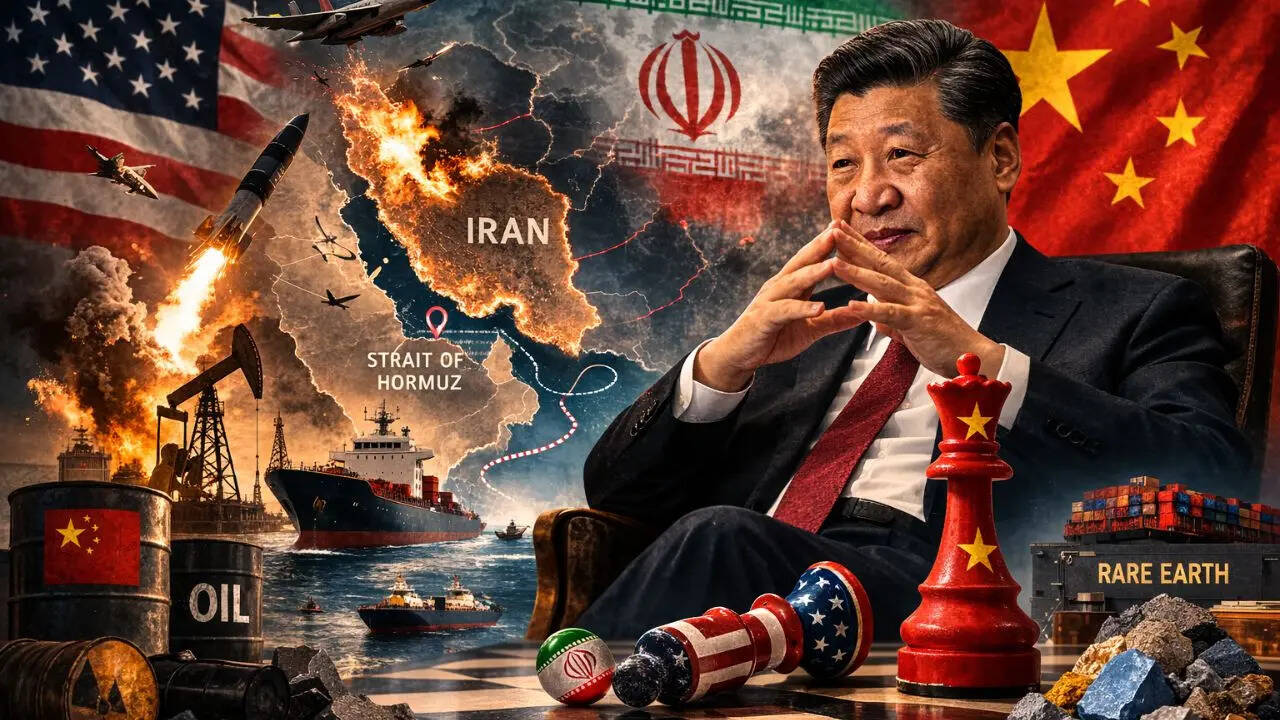
BEIJING – The global energy market is bracing for a historic shock as tensions between the United States and China reach a fever pitch. At the center of the storm is the Strait of Hormuz, a narrow but vital waterway where President Donald Trump has initiated a military blockade. The move, aimed at starving the Iranian government of revenue, has drawn a fierce response from Beijing, which relies heavily on the region for its energy needs.
The blockade, which officially took effect on Monday, marks a dramatic escalation in U.S. foreign policy. President Trump has vowed that the U.S. Navy will intercept and “sink” any vessels attempting to challenge the perimeter or pay tolls to Tehran. For Beijing, the stakes could not be higher. China is the world’s largest buyer of Iranian oil, and any disruption to this supply chain threatens its industrial stability.
A “Dangerous and Irresponsible” Move
The Chinese Foreign Ministry did not mince words following the announcement. Spokesperson Guo Jiakun described the U.S. actions as “dangerous and irresponsible,” warning that the blockade undermines a fragile ceasefire that had been holding between Washington and Tehran.
“The United States has ramped up military deployment and resorted to a targeted blockade,” Guo told reporters during a press briefing in Beijing. “This will only aggravate confrontation and further jeopardize safe passage through the Strait.”
China’s frustration is rooted in its economic dependence on the Middle East. While many Western nations have moved away from Iranian crude due to sanctions, Beijing has continued its trade, often using “ghost fleets” and independent refineries to keep the oil flowing. The new blockade effectively puts a physical stop to these workarounds, placing Chinese tankers directly in the crosshairs of the U.S. Fifth Fleet.
Why the Strait of Hormuz Matters
The Strait of Hormuz is often called the “world’s most important oil chokepoint.” It is a narrow passage between Oman and Iran that connects the Persian Gulf with the Gulf of Oman and the Arabian Sea.
The strategic importance of this waterway is staggering:
- Global Oil Flow: Roughly 20% of the world’s total oil consumption passes through the Strait every day.
- Energy for Asia: Nearly 75% of the oil moving through the Strait is destined for Asian markets, specifically China, India, Japan, and South Korea.
- Natural Gas: About 20% of the world’s Liquefied Natural Gas (LNG), primarily from Qatar, travels this route.
The blockade has already sent oil prices surging past $120 per barrel, sparking fears of a global inflationary spiral not seen since the 1970s.
The Tariff Threat and Economic Warfare
The conflict is not just happening at sea. President Trump has linked the maritime blockade to broader trade tensions with China. He has threatened to impose a 50% tariff on Chinese goods if Beijing is found to be providing military or technological aid to Iran.
U.S. intelligence reports recently suggested that China might be preparing to send advanced anti-air missile systems to Tehran. While Beijing has dismissed these reports as “fabricated,” the White House remains skeptical.
“We told them to buy from elsewhere,” Trump reportedly said, suggesting China source its energy from the U.S. or South America instead. This “extreme pressure” strategy is designed to force China to use its influence in Tehran to secure a more favorable nuclear deal for Washington.
Beijing’s Counter-Strategy
China is not without its own leverage. Analysts point out that Beijing has spent years building a “cushion” for just such a crisis.
- Strategic Reserves: China has built one of the world’s largest strategic petroleum reserves.
- Floating Storage: Currently, an estimated 38 million barrels of Iranian oil are sitting on tankers at sea, many anchored near the Chinese coast, ready to be offloaded if imports are cut off.
- Diplomatic Alliances: Russian Foreign Minister Sergey Lavrov recently arrived in Beijing to discuss a coordinated response to the blockade, signaling a growing “bloc” against U.S. maritime dominance.
Despite these buffers, a long-term blockade would be devastating. If the U.S. Navy begins boarding Chinese-flagged vessels, the risk of a direct military confrontation between the world’s two largest powers becomes a terrifyingly real possibility.
The Humanitarian and Global Impact
Beyond the halls of power in Washington and Beijing, the blockade is causing immediate suffering. Gulf nations that rely on the Strait for food imports are reporting a “grocery supply emergency.” Because the region imports over 80% of its calories, the halt in shipping has caused food prices to double in some areas.
International reaction has been mixed. While some U.S. allies have remained quiet, others, including the United Kingdom and Spain, have stated they will not participate in the blockade. French President Emmanuel Macron has called for an international conference to discuss a “defensive mission” that would protect shipping without escalating the war.
As of today, the situation remains a stalemate. The U.S. Navy is patrolling the waters, and the Chinese leadership is weighing its next move. Will Beijing risk its ships to challenge the blockade, or will it seek a diplomatic “off-ramp”?
The world is watching the horizon. For now, the only certainty is that the price of gasoline—and the price of global peace—has never been higher.
Trending News:
China Upset Over Hormuz Blockade As Oil Supply Line Cut
-
China3 months agoChina-Based Billionaire Singham Allegedly Funding America’s Radical Left
-
Politics2 months agoCNN Delivers Stark Reality Check to Democrats Over Voter ID
-
Politics2 months agoIlhan Omar’s Connections to Convicted Somali Fraudsters Surface
-
Entertainment3 months agoCNN Admits Melania Documentary is HUGE Box Office Success
-
News3 months agoChina Backed US Billionaire Singham Allegedly Funding of Anti-ICE Protests
-
News3 months agoFBI Investigates Who’s Funding and Coordinating ICE Protests and Attacks
-
Crime3 months agoFBI to Launch Sweeping Crackdown on Left-Wing Extremist in Minnesota
-
Politics2 months agoAOC’s Critique of Rubio’s Speech Turns into an Huge Embarrassment