


Business
New York Property Owners Flee Over Mamdani’s ‘Socialist Housing’ Agenda
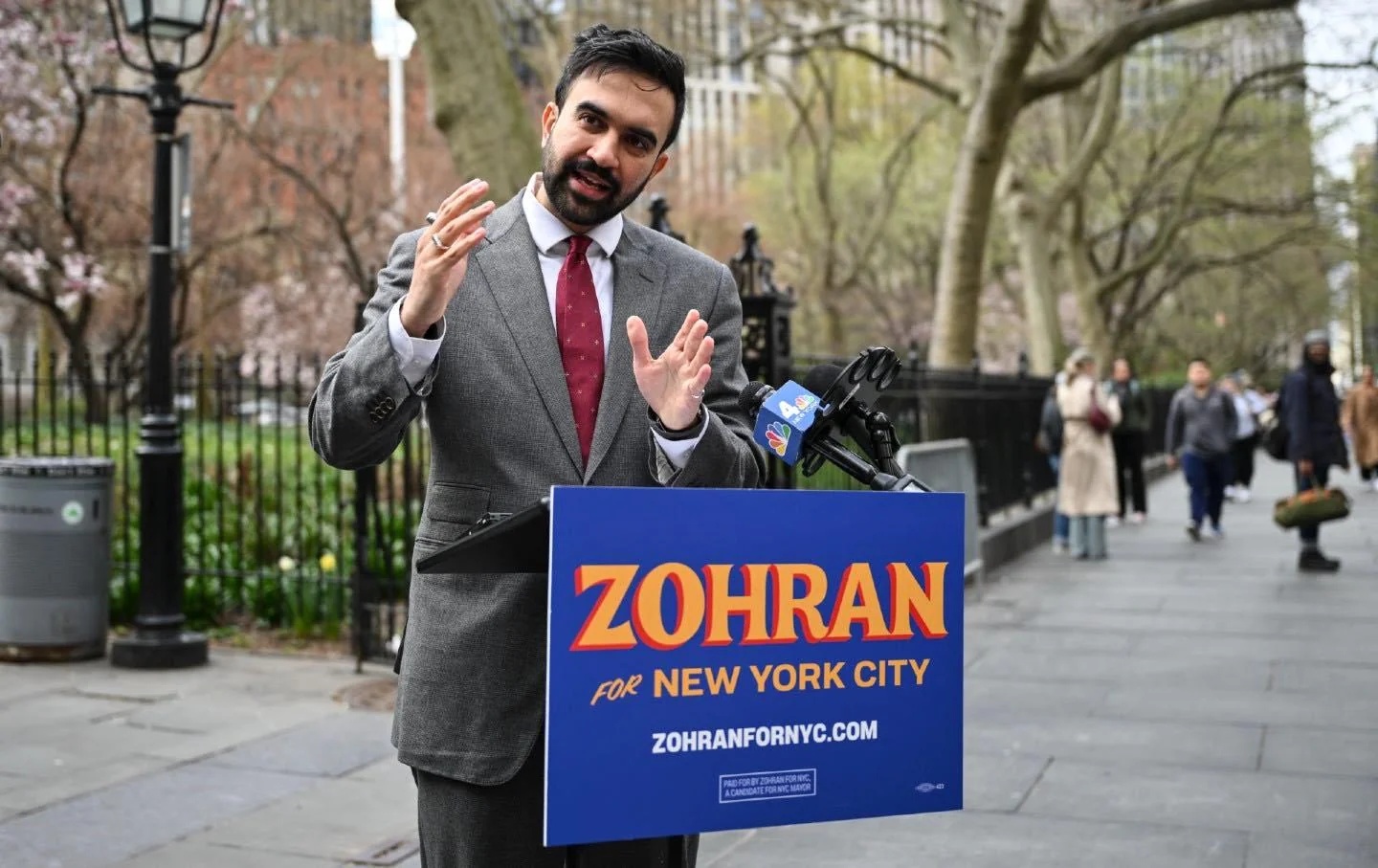
NEW YORK — A growing wave of property owners and real estate investors is planning their exit from New York City following the rollout of Mayor Zohran Mamdani’s aggressive new housing policies. Critics are calling the administration’s flagship Block by Block initiative a “socialist fantasy” that penalizes private investment and risks shrinking the city’s tax base.
Mayor Mamdani, a member of the Democratic Socialists of America who took office in January 2026, recently announced a five-year, $22 billion capital housing plan. While City Hall frames the agenda as a necessary fix for the city’s affordability crisis, private housing providers view it as a direct threat to property rights. The tension has sparked concerns about an exodus of taxpayers to business-friendly states like Florida and Texas.
The centerpiece of the administration’s strategy is a plan to build or preserve 400,000 rent-stabilized units over the next decade. Rather than using market incentives to spark new development, the city relies heavily on public funding, government mandates, and non-profit partnerships.
A particularly controversial element of the strategy is the “Fix the City” enforcement campaign. Under this program, the administration intends to use municipal inspectors to heavily audit buildings with chronic maintenance issues. If an owner is deemed negligent, the city plans to pursue legal avenues to strip them of operational control.
According to a review by The Washington Examiner, the administration aims to transfer these seized properties to community land trusts and local non-profit organizations. Advocates argue this model creates permanent public stewardship, but critics see it as an unprecedented, state-sanctioned transfer of private wealth.
Why Landlords Say They Are Forced to Leave
For many small and mid-sized housing providers, the combined pressure of strict price ceilings and aggressive city enforcement makes operating in New York financially unsustainable. Property owners point out that decades of strict rent regulations have already left them without the capital needed to fund major building repairs.
Real estate advocates argue that the administration’s platform sets up a predictable, damaging cycle for local housing markets:
- Vilifying the Productive: Local housing providers are frequently painted as villains in public policy debates, ignoring the rising costs of insurance, utilities, and property taxes.
- Punishing Investment: Strict price ceilings on nearly half of the city’s rental stock restrict the revenue needed for modern building upkeep.
- Imposing Higher Labor Costs: New mandates like the Construction Justice Act require city-financed projects to pay a minimum combined wage and benefits package of at least $40 an hour, driving up construction costs.
- Shrinking the Tax Base: As independent owners face the prospect of rent strikes, litigation, or eminent domain, many are choosing to liquidate their assets and move their capital out of state.
“This is the classic socialist cycle,” said one real estate analyst who requested anonymity. “You vilify the productive, punish investment, shrink the tax base, raise taxes again, and then blame capitalism for the resulting shortages.”
The Shift to Low-Tax States
Frustrated by what they describe as a hostile regulatory environment, a notable segment of New York’s tax base is looking southward. States like Florida and Texas have become primary destinations for fleeing capital. These regions offer favorable tax environments, fewer real estate regulations, and a political climate that welcomes private enterprise.
Critics suggest the mayor should look more closely at market-rate success stories. For instance, cities like Austin, Texas, managed to lower average adjusted rents by loosening zoning restrictions and allowing private developers to rapidly increase the housing supply to meet demand. In contrast, New York’s strategy relies on doubling down on regulation and spending billions of taxpayer dollars to subsidize government-controlled units.
The long-term risk of capital flight extends far beyond the real estate sector. Property taxes represent a massive portion of New York City’s operating budget, funding critical public services like schools, transit, and law enforcement. If large-scale property owners and high-earning taxpayers leave the city en masse, the fiscal burden will inevitably fall on the residents who remain.
Furthermore, the city’s largest existing housing provider, the New York City Housing Authority (NYCHA), is already facing severe financial struggles. NYCHA currently estimates it needs roughly $80 billion to repair its aging infrastructure—a figure that dwarfs the city’s current $5.6 billion funding commitment. Skeptics question how the city expects to manage thousands of newly acquired properties when its existing public housing stock remains plagued by long-standing maintenance backlogs.
As the “Block by Block” initiative begins rolling out across the five boroughs, the real estate community is watching closely. For a growing number of property owners, the choice is becoming clear: adapt to a tightly regulated local economy, or take their investments to states where private enterprise is still secure.
Trending News:
New York’s Wall Street Exodus: Investors Flee Mamdani’s Communism
CNN Host Abby Phillip Forced to Apologize Over New York Attack Claims

Business
Gristedes Grocery CEO Responds to Mamdani – THREATENS To Shut Down NYC Stores
NEW YORK – Imagine arriving in America as an infant from a small Greek island. You grow up in Harlem, the child of a hardworking busboy. By age 23, you open Gristedes, a small grocery store on Manhattan’s Upper West Side.
Over the next five decades, you build that single shop into the largest private supermarket chain in the city, creating thousands of jobs and generating billions in revenue. It is the ultimate American success story.
But what happens when your own city government decides to open a competing store right around the corner? What if that government store pays no rent, no property taxes, and uses public funds to undercut your prices?
This is not a hypothetical scenario. It is happening right now in New York City. The billionaire in question is John Catsimatidis, owner of the Gristedes and D’Agostino supermarket chains. His recent response to the city’s new business venture has sent shockwaves through the local economy.
As detailed in a recent financial news report, Catsimatidis is threatening a massive exit from the city. But the story goes much deeper than one wealthy CEO’s frustration. Hidden beneath the promises of cheap groceries is a financial reality that could impact every resident, renter, and small business owner in the city.
The Rise of the Government-Run Grocery Store
The conflict began on April 13, 2026. Celebrating his first 100 days in office, a top New York City official, Zohran Mamdani, made an announcement that shook the retail industry. The city revealed plans to open its first fully municipal, government-run grocery store.
Located in a historic marketplace in East Harlem, the new store aims to sell groceries at wholesale prices. The goal is to provide relief to residents struggling with high food costs. The promise of cheaper eggs, cheaper bread, and lower weekly grocery bills quickly drew cheers from the crowd and even earned praise from national figures like Senator Bernie Sanders.
However, the business model behind the store is raising major alarms. The city-run store will operate under rules that no private business could ever match.
- Zero Rent: The city owns the space and will not charge the store rent.
- Zero Property Taxes: As a municipal entity, the store is exempt from local taxes.
- Public Backing: Any financial losses can be absorbed by the city’s massive budget.
Officials openly welcomed the competition, stating that the most affordable store should win the customer. But private business owners say this is not a fair fight.
Gristedes CEO Strikes Back
Catsimatidis, whose net worth is estimated at nearly $4.8 billion, did not hold back. Upon hearing the news, the CEO issued a blunt threat to the city.
He stated that he simply cannot compete with a tax-free, rent-free government supermarket. Catsimatidis warned that he is prepared to close, sell, or franchise every single Gristedes and D’Agostino location in New York. Furthermore, he threatened to move his entire corporate headquarters out of the state entirely.
If he follows through, the fallout would be severe. The closure of over 50 supermarkets would mean thousands of lost jobs for checkout workers, stock clerks, and delivery drivers. But the pushback is not just coming from the top of the corporate ladder.
Small Bodegas Face an Existential Threat
While a billionaire leaving the city makes for great headlines, the real victims of this policy might be the smallest players in the market.
Fernando Mateo, head of the United Bodegas of America, which represents roughly 25,000 workers, called the city’s plan a total disaster. He warned that a handful of government stores would only create chaos, long lines, and uneven market conditions.
Think about the average bodega owner in East Harlem. They have spent years building a business. Every month, they pay a massive list of bills just to keep their doors open:
- High commercial rent
- Property taxes (passed down from landlords)
- Business licensing and permits
- Health inspection fees
- Workers’ compensation insurance
Grocery profit margins are famously thin. If a fully subsidized government store opens up a few blocks away, selling goods at wholesale prices, the local bodega simply cannot survive. If independent stores pack up and leave, the “food deserts” the city is trying to fix could actually become much worse.
Even the National Grocers Association has stepped in. The group is urging officials to crack down on price discrimination using existing antitrust laws, rather than using taxpayer money to fund an unfair competitor.
The Hidden $30 Million Price Tag
Perhaps the most shocking part of this story is the math. While the idea of cheap groceries sounds wonderful, the true cost to the taxpayer is staggering.
When the idea was first pitched, the total budget to build five government grocery stores across all five boroughs was set at $70 million. Today, the reality is very different. The very first store alone will cost an estimated $30 million to build.
Industry experts note that even with New York’s high construction and union labor costs, a standard 25,000-square-foot grocery store should only cost about $15 million to build. No one in city government has clearly explained where the extra $15 million is going.
A City on the Brink of a Financial Crisis
This massive spending comes at the worst possible time for New York. The city is currently staring down a $7.3 billion budget gap over the next two fiscal years.
The financial warning signs are flashing bright red:
- Credit Downgrade: Moody’s recently downgraded the city’s credit outlook from stable to negative, citing poor financial flexibility.
- Collapsing Surplus: The city’s operating surplus recently dropped by 94% in just one year.
- Unbalanced Growth: City revenues are growing at about 2%, while government spending is growing at 4.5%.
To cover this massive deficit, officials are proposing a 9.5% property tax increase—the first major hike in over a decade. This tax does not just hurt wealthy building owners. Landlords will pass these costs directly down to everyday renters. For example, a family paying $3,000 a month for an apartment could quickly see their rent jump to $3,200.
In short, the city is spending tens of millions on a single grocery store that pays no taxes, while simultaneously raising taxes on everyone else to cover the bill.
This conflict is not confined to the five boroughs. The push for government-run grocery stores is becoming a national trend. Atlanta opened a municipal grocery store last year. Chicago is heavily pursuing a similar model, and Boston is actively exploring the idea.
If you live in a city facing high living costs, this exact playbook could be coming to your neighborhood very soon.
Ultimately, this debate forces us to ask a hard question. Can the government run a retail business better than the private sector? When public officials spend money they do not have, drive out the private businesses that pay the taxes, and raise living costs for everyone else, the whole city suffers.
Whether you buy your groceries at a corner bodega or a massive supermarket, the outcome of this turf war will shape the future of urban life in America.
Trending News:
Socialist Seattle Mayor Retreats on Starbucks Boycott Amid Surging Tech Layoffs
Karen Bass Faces Furious Voters Over Her Claim NON-CITIZENS Should VOTE
Business
New York’s Wall Street Exodus Investors Flee Mamdani’s Communism
New York City has always been the undisputed financial capital of the world. For over a century, the ringing of the bell at the New York Stock Exchange signaled the heartbeat of global capitalism. Today, however, that heartbeat is moving south. What began as a slow trickle of financial firms leaving Manhattan during the pandemic has accelerated into a full-blown stampede.
Trillions of dollars in assets under management are quietly shifting to cities like Miami, Dallas, and West Palm Beach. While the initial exodus was blamed on remote work and high costs of living, a new catalyst has emerged: the rapid rise of progressive, socialist-leaning politics in New York.
Critics and business leaders are pointing directly at figures like Assemblyman Zohran Mamdani, a prominent Democratic socialist running for mayor, and the growing influence of his political allies. Detractors have loudly dubbed this political wave “New York Communism,” warning that hostile tax policies and anti-business rhetoric are driving away the very engines that fund the city.
The Numbers Behind the New York Stampede
The flight of capital is not just anecdotal; it is measurable, and the numbers are staggering. Wall Street is physically relocating its talent and its tax base. According to data from the New York State Comptroller, the securities industry traditionally accounts for more than a fifth of the state’s entire tax revenue. When these firms leave, they take billions of dollars in tax contributions with them.
Several high-profile moves have highlighted this trend in recent years:
- Citadel: The massive hedge fund founded by Ken Griffin famously relocated its global headquarters from Chicago and its heavy operations in New York to Miami, citing crime and taxes.
- AllianceBernstein: This global asset management firm shifted its headquarters and over 1,000 jobs from Manhattan to Nashville, Tennessee, aiming to cut costs and improve employee quality of life.
- Elliott Management: Paul Singer’s massive hedge fund moved its headquarters to West Palm Beach, Florida, drawing a clear line away from New York’s tax environment.
- Icahn Enterprises: Billionaire Carl Icahn moved his firm to Florida, joining the growing “Wall Street South” movement.
Consequently, this is no longer a temporary pandemic-era shift. Furthermore, these firms are signing long-term leases and building massive new corporate campuses in the Sun Belt. They are putting down permanent roots far away from the Empire State.
The “Mamdani Effect” and the Progressive Push
To understand why the exodus has turned into a stampede, one must look at the changing political landscape of New York. Zohran Mamdani, backed by the Democratic Socialists of America (DSA), represents a growing faction in New York politics that views Wall Street not as an asset to be protected, but as a piggy bank to be broken open.
Mamdani’s mayoral platform is built on aggressive wealth redistribution. His proposals include freezing rent for millions of tenants, eliminating fares for the Metropolitan Transportation Authority (MTA), and funding vast new public housing projects.
How does he plan to pay for this? The answer is simple: by heavily taxing the wealthy, increasing corporate taxes, and aggressively targeting Wall Street profits.
For progressive advocates, these policies are necessary to solve the city’s crippling affordability crisis and close a widening wealth gap. They argue that New York’s working class has been squeezed for too long while billionaires amass record profits.
However, for business leaders, these policies represent a hostile takeover. Financial executives have privately and publicly expressed fear over what they call “New York Communism”—a political climate where private enterprise is villainized, and success is heavily penalized. Investors argue that capital goes where it is welcome and stays where it is well-treated. Right now, Wall Street feels decidedly unwelcome in New York.
Why the Sun Belt is Winning
As New York contemplates higher taxes and stricter regulations, states like Florida and Texas are rolling out the red carpet. The contrast is stark, and the appeal for financial firms is multifaceted.
First and foremost is the tax structure. Both Florida and Texas boast zero state income tax. For a hedge fund manager pulling in millions of dollars a year, relocating to Miami equals an instant, massive pay raise. Additionally, these states offer lower corporate taxes and fewer regulatory hurdles, making it easier and cheaper to operate a business.
Secondly, the quality of life factor plays a major role. Financial executives cite lower crime rates, cleaner streets, and a generally pro-business civic leadership in cities like Miami and Dallas. Local mayors in the Sun Belt actively court Wall Street executives, taking them to dinner and offering tax incentives. In contrast, New York politicians are increasingly using these same executives as political punching bags.
The Devastating Impact on Everyday New Yorkers
The irony of the political push to “tax the rich” is that driving the rich away may end up hurting everyday New Yorkers the most.
Wall Street is the financial anchor of New York. The taxes paid by financial institutions and their highly compensated employees fund the city’s public schools, the police department, sanitation services, and the very social safety nets that progressive politicians want to expand.
If the top 1% of earners—who pay a disproportionately massive share of the city’s income taxes—continue to flee, New York will face an unprecedented budget crisis.
We are already seeing the warning signs. Commercial real estate in Manhattan is struggling. Office vacancy rates remain stubbornly high, which in turn hurts the small businesses that rely on office workers—the local coffee shops, the dry cleaners, and the deli owners. Bloomberg frequently reports on the plunging valuations of older Manhattan office buildings, a direct result of firms downsizing or leaving the city entirely.
Furthermore, if tax revenues plummet, the city will be forced to make a painful choice: either cut essential public services or raise taxes even higher on the middle class to make up the difference. Neither option bodes well for the future of the city.
Can New York Pivot Before It’s Too Late?
The situation is critical, but it is not completely irreversible. New York still possesses undeniable advantages. It has a concentration of cultural institutions, world-class restaurants, and deep pools of diverse talent that are hard to replicate anywhere else. Wall Street may be building outposts in Florida, but the prestige of a Manhattan address still holds weight.
However, prestige cannot pay the bills forever. For New York to stop the bleeding, it needs to address the concerns of the business community. This means finding a balance between funding essential social services and maintaining a competitive economic environment.
If political leaders continue to lean into hostile, anti-capitalist rhetoric, the current stampede will only accelerate. Capital is highly mobile. It does not have loyalty to a zip code; it has loyalty to growth, stability, and sensible regulation.
Ultimately, the clash between Wall Street and New York’s rising progressive wing will define the next decade of the city’s history. If “Mamdani’s New York” becomes a reality, the financial capital of the world may permanently lose its crown.
Trending News:
New York City Prepares to Ban Amazon’s Logistics Model
Mamdani Wants $229M From New York Employee Retirement Fund
Business
Jimmy Kimmel and ABC in the Crosshairs of An FCC Investigation
Regulators launch deep dive into Disney-owned broadcaster’s practices and licensing standards.
NEW YORK — The Federal Communications Commission (FCC) has broken its silence, signaling a major investigation that could jeopardize the future of ABC and its late-night star, Jimmy Kimmel. For a network already grappling with a declining stock price and internal leadership shifts, the timing could not be worse.
Brendan Carr, a key commissioner at the FCC, recently confirmed that the agency is moving forward with a formal probe into the affiliate licenses of Disney-owned ABC. While the investigation officially focuses on Diversity, Equity, and Inclusion (DEI) practices and hiring rules, it comes at a moment when public patience with the network’s political tone is reaching a breaking point.
The Licensing Crisis: Is Network TV a Privilege or a Right?
Unlike cable news or streaming platforms, traditional network television operates under a specific legal framework established by the Communications Act of 1934. Broadcasters are granted licenses to use public airwaves on the condition that they serve the “public interest, convenience, and necessity.”
Commissioner Carr has indicated that this investigation is not just about a few jokes. Instead, it targets:
- Station Licenses: A review of “Owned and Operated” (O&O) stations in major cities like New York, Los Angeles, and Chicago.
- Illegal Discrimination: Allegations that Disney’s DEI mandates resulted in “invidious forms of discrimination” in hiring and casting.
- Public Interest Standards: Whether the network’s increasingly partisan programming violates the spirit of its federal charter.
Jimmy Kimmel and the “Tasteless” Joke Controversy
While the FCC’s legal teeth are currently sunk into hiring practices, the public face of this crisis is Jimmy Kimmel. The late-night host has faced a firestorm of criticism following what many described as a “tasteless” joke regarding Donald Trump and Melania Trump.
Critics argue that Kimmel has “jumped the shark,” relying on increasingly aggressive political attacks rather than humor. Sources suggest that Disney’s new leadership, including CEO Josh D’Amaro, is attempting a “radio silence” strategy—hoping the controversy fades by ignoring it.
However, with the FCC involved and Donald Trump using his platform to highlight the network’s bias, the “ignore it” strategy may be failing.
The trouble isn’t just political; it’s financial. Disney stock has struggled significantly, trading at roughly half its 2021 value. Shareholders are growing restless, pointing to a string of box-office disappointments and the alienating nature of “forced” DEI narratives in content.
“If you invested in Disney stock, it’s been dead money,” notes industry analyst Trish Regan. “Investors are looking at the leadership and asking why the company continues to double down on practices that are clearly hurting the brand.”
The Road Ahead: Shareholder Lawsuits and License Reviews
The FCC’s probe is more than just a warning shot. Experts suggest it could lead to:
- Massive Shareholder Lawsuits: Following in the footsteps of companies like Target and Anheuser-Busch, Disney could face legal action for failing its fiduciary duty to investors.
- License Non-Renewal: If the FCC finds that ABC has failed to serve the public interest or engaged in illegal hiring, the very licenses that allow it to broadcast could be at risk.
- Creative Overhaul: With Bob Iger’s era winding down, the network may be forced to abandon its current political trajectory to survive the regulatory storm.
As the investigation unfolds, the question remains: Can ABC separate itself from the controversy of its late-night stars, or will the network’s legal and financial foundations continue to crumble? For now, the “bad news” for Jimmy Kimmel is only the tip of the iceberg for Disney.
Trending News:
FCC Targets ABC Licenses Over DEI and Workplace Discrimination
Don Lemon’s Absurd Pleas on Jimmy Kimmel Live Mocked
Jimmy Kimmel Slammed for Vile Melania Trump Expectant Widow Joke
-
Politics3 months agoRep. Ilhan Omar Faces Heat as Minnesota Voters Seek Change
-
News2 months agoNATO Chief Says 22 Nations Working With US to Keep the Strait of Hormuz Open
-
News3 months agoIlhan Omar Accused of Leaking U.S. Strike Plans to Iran as Tensions Rise
-
Politics2 months agoCNN Reveals Trump Has a Perfect 100% Approval Rating Among MAGA Voters
-
Crime2 months agoMissing Virginia High School Coach Update, March 2026
-
Entertainment2 months agoChuck Norris Dies at 86, Family Withholds Official Cause
-
Politics2 months agoCNN Shows Shocking 2028 Polling Numbers for Marco Rubio
-
News2 months agoIs Ilhan Omar at Risk of Deportation? The Facts and U.S. Immigration Law