Politics
Bill Maher Reveals Why Democrats Keep Losing Voters On Live TV
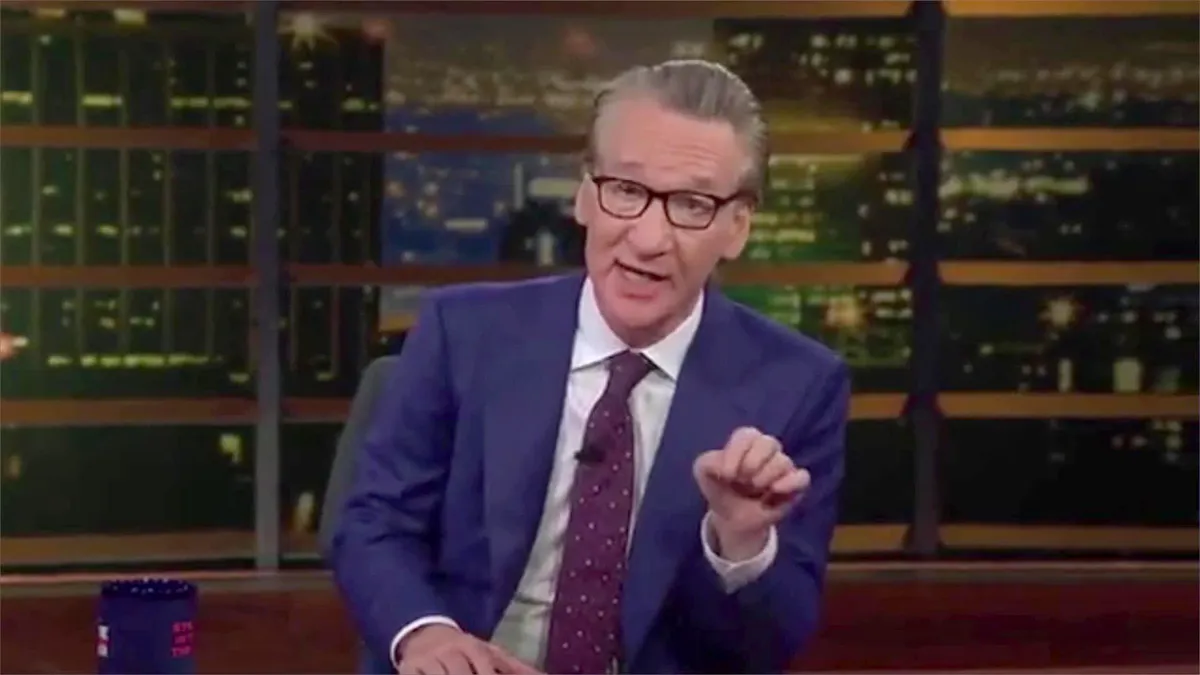
LOS ANGELES – Late-night host and political commentator Bill Maher has never been one to bite his tongue. But recently, on his hit HBO show Real Time with Bill Maher, the veteran comedian delivered one of his most blistering and honest critiques of the Democratic Party to date. The question on the table was simple but painful: Why do Democrats keep losing everyday voters?
Maher’s answer was blunt, unapologetic, and struck a chord with millions of Americans tuning in. He did not blame foreign interference, right-wing media, or bad campaign financing. Instead, he pointed the finger directly at the political left itself. According to Maher, the Democratic Party has abandoned the working class, become obsessed with “woke” culture, and transformed into a party of out-of-touch coastal elites.
Let’s dive into exactly what Bill Maher said on live television and why his viral warning is serving as a massive wake-up call for politicians everywhere.
The Great Working-Class Exodus
For decades, the Democratic Party was known universally as the champion of the working class. It was the political home for union members, factory workers, teachers, and everyday Americans simply trying to make ends meet. However, Maher argues that this is no longer the case. On live TV, he laid out a harsh reality: Democrats have traded the factory floor for the faculty lounge.
Maher noted that the party has increasingly alienated blue-collar voters. Instead of focusing on everyday, kitchen-table issues like the rising cost of groceries, affordable housing, and good-paying jobs, the party’s messaging often feels tailored exclusively to highly educated, wealthy voters living in cities like New York and Los Angeles.
“You can’t be the party of the working class if you look down on them,” is the core of Maher’s argument. When politicians lecture voters about complex, academic social theories while those same voters are struggling to pay for a tank of gas, a massive disconnect happens. This elitist attitude, Maher explained, is exactly why millions of blue-collar workers have walked away from the Democratic Party and shifted their votes to the right.
The Obsession with “Woke” Culture and Identity Politics
One of Maher’s most frequent targets is “woke” culture, and he held nothing back during his recent broadcasts. He argued that the modern left has become deeply obsessed with identity politics. Rather than uniting people under common, shared goals, Maher claims the left insists on dividing everyone into hyper-specific categories based on race, gender, and sexual orientation.
For the average American voter, this constant focus on identity politics feels exhausting and disconnected from reality. Maher pointed out that while social media activists and far-left politicians spend their time policing language and arguing over pronouns, average voters are worried about inflation, crime in their local neighborhoods, and the quality of their public schools.
Maher warned that when Democrats allow the loudest, most extreme voices on social media platforms to dictate their official platform, they alienate the quiet majority of common-sense Americans. By catering to the fringes, the party is practically handing moderate and independent voters over to their political rivals.
Cancel Culture and the Purity Tests
Another major reason Democrats are losing voters, according to Maher, is the toxic environment of cancel culture and political purity tests. In the past, political parties operated as large tents where people with different ideas could debate, disagree, and still work together for a common cause. Today, Maher argues, the left demands absolute perfection and total agreement on every single issue.
If a voter agrees with the Democratic Party on 90% of issues but disagrees on just 10%, they are often branded as a traitor, a bigot, or a right-wing extremist. Maher correctly pointed out that you cannot build a winning, sustainable political coalition by constantly excommunicating people who do not pass a strict ideological purity test.
This rigid intolerance for differing opinions pushes away moderate Democrats, independent voters, and anyone who does not want to spend their life walking on eggshells. Voters simply want leaders who will solve problems, not politicians who spend all day scolding them for having the “wrong” opinions.
What Everyday Voters Actually Want
To highlight the massive gap between left-wing politicians and everyday Americans, Maher broke down what normal voters actually care about. The contrast is staggering. According to the Real Time host, the Democratic Party is completely missing the mark by ignoring basic common sense.
Here is a clear breakdown of the disconnect Maher highlighted:
- The Economy: Voters want lower inflation, cheaper gas, and affordable housing. They do not want to be told that the economy is secretly doing great while they are struggling to pay their monthly bills.
- Public Safety: People want safe streets, fully funded police departments, and violent criminals kept off the streets. They aggressively reject fringe slogans like “Defund the Police.”
- Education: Parents want their children to learn math, reading, and history. They do not want extreme political ideologies or heavy-handed activism pushed into elementary school classrooms.
- Border Security: Every day, Americans want a secure border and a highly organized, legal immigration system. They reject the idea that wanting border security automatically makes someone a bad person.
- Common Sense: Most voters are inherently moderate. They want fairness and equality, but they are tired of being told that traditional common sense is somehow offensive.
A Dire Warning for the Future
As his segment came to a close, Bill Maher delivered a sobering warning to Democratic leaders. He stated that the writing is clearly on the wall. If the party continues down this current path of elitism, identity politics, and constantly scolding the working class, they will continue to lose elections that they should otherwise easily win.
Maher is not a conservative; he has been a lifelong liberal. His critique comes from a place of tough love. He wants the Democratic Party to succeed, but he recognizes that a massive course correction is urgently needed right now. The party must return to the political center, embrace common sense, and start treating working-class voters with the respect and dignity they deserve.
Bill Maher’s bold statements on live television shattered the political echo chamber. By directly calling out the Democratic Party’s shift toward elitism and wokeness, he voiced the silent frustrations of countless voters who feel left behind by a party that used to represent them. To win back the heartland, the working class, and the moderate middle, politicians will need to log off social media and step back into the real world.
Trending News:
Tennessee Redistricting War: Democrats Stripped of Power Amid Capitol Chaos
Democrats Go Postal After USPS Unveils Strict Mail-In and Absentee Ballot Rules

Politics
Ilhan Omar Seeks Another Term as Minnesota Fraud Probe Deepens
WASHINGTON, D.C. – Representative Ilhan Omar is gearing up for another hard-fought election in Minnesota’s 5th Congressional District. As she hits the campaign trail, she faces a familiar gauntlet of energized progressive supporters, closely watched primary challenges, and fierce conservative critics. However, this election cycle carries an added layer of political complexity. The climate in Minnesota is currently overshadowed by one of the largest federal fraud investigations in recent state history.
While Omar herself has not been implicated in the scandal, the deepening federal probe has created a turbulent atmosphere that both political parties are desperately trying to navigate. For a high-profile, nationally recognized political figure like Omar, local controversies often become national talking points. As she seeks another term, the intersection of her progressive campaign and the state’s ongoing institutional reckoning is setting the stage for a dramatic election season.
A High-Stakes Campaign in District 5
Representing Minneapolis and its surrounding suburbs, Ilhan Omar has been a lightning rod for both praise and criticism since she first took office. As a prominent member of the progressive coalition known as “The Squad,” she has consistently championed bold policy initiatives. Her platform remains heavily focused on universal healthcare, aggressive climate action, student debt cancellation, and affordable housing.
To secure another term, Omar must first navigate the internal dynamics of Minnesota’s Democratic-Farmer-Labor (DFL) Party. In previous election cycles, she has faced well-funded, moderate primary challengers who argued that her national profile distracted from local issues. Consequently, her re-election strategy relies heavily on grassroots organizing and proving her legislative effectiveness to her constituents.
Furthermore, her campaign must operate in an environment where voter trust is increasingly fragile. Politicians across the spectrum are facing an electorate that is deeply skeptical of government institutions, a skepticism that has been aggressively amplified by the state’s ongoing legal dramas.
Unpacking the Historic Fraud Investigation
The controversy dominating Minnesota politics centers on a massive, systemic exploitation of federal funds. The investigation revolves around “Feeding Our Future,” a now-defunct Minnesota-based nonprofit organization. According to the U.S. Department of Justice, individuals connected to the group orchestrated a sprawling scheme to defraud the federal child nutrition programs during the height of the COVID-19 pandemic.
The scale of the alleged fraud is staggering. Federal prosecutors estimate the cost to taxpayers to be upwards of $250 million. As the probe has deepened over the last few years, the details that have emerged are nothing short of cinematic:
- Fabricated Meal Sites: Prosecutors allege that the network claimed to be feeding thousands of children a day at sites that were completely nonexistent or serving a fraction of the reported meals.
- Laundered Funds: Instead of buying food for vulnerable children, the stolen federal funds were allegedly diverted into shell companies.
- Luxury Purchases: The indicted individuals reportedly used the money to purchase luxury vehicles, international real estate, high-end jewelry, and resort properties.
- Ongoing Indictments: The investigation has continually deepened, resulting in dozens of federal indictments, guilty pleas, and ongoing trials that keep the scandal in the daily news cycle.
Because the fraud took place through programs administered by the Minnesota Department of Education, the scandal has triggered intense scrutiny of state government oversight and accountability.
No Direct Ties, But High Political Collateral
It is crucial to state that Representative Ilhan Omar is not a target of the Feeding Our Future investigation, nor has she been implicated in the fraud. However, in the realm of modern political campaigning, reality and perception often collide.
Conservative media outlets and political opponents have aggressively used the scandal to paint a broad, negative picture of Minnesota’s Democratic leadership. By associating the massive fraud with the political establishment of Minneapolis—Omar’s home turf—critics aim to cast a shadow of corruption over all incumbent Democrats.
For Omar, this means that town halls and community meetings are not just about discussing her progressive legislative agenda. They often require her to answer difficult questions about institutional integrity, government oversight, and how public funds are managed. The fraud probe has essentially handed her political rivals a potent, ready-made narrative about government waste and mismanagement.
Key Issues Driving Omar’s Campaign
Despite the noise surrounding the federal probe, Omar’s campaign team is working diligently to keep the focus on her legislative record and the immediate needs of her district. To win another term, she is emphasizing several core pillars of her platform:
- Affordable Housing: Minneapolis, like many major American cities, is facing a severe housing crisis. Omar has been a vocal advocate for federal investments in public housing and rent control measures to protect vulnerable constituents.
- Climate Change: As a co-sponsor of the Green New Deal, she continues to push for a rapid transition to renewable energy and significant investments in green infrastructure.
- Foreign Policy: Omar has consistently challenged traditional U.S. foreign policy paradigms, advocating for human rights, reduced military spending, and a diplomatic approach to international conflicts.
- Economic Justice: She remains a staunch supporter of labor unions, a higher federal minimum wage, and comprehensive student debt relief.
By focusing on these bread-and-butter progressive issues, Omar hopes to energize her base. Her team understands that voter turnout is the ultimate key to her survival. If young voters, marginalized communities, and working-class constituents show up to the polls, her path to victory remains strong, regardless of the broader political turbulence.
Navigating the Information Landscape
As the election draws closer, the media landscape in Minnesota is becoming increasingly fractured. Voters are being bombarded with targeted advertisements, social media campaigns, and partisan commentary. The deepening fraud probe serves as a perfect catalyst for political misinformation.
Therefore, a significant portion of Omar’s campaign involves aggressive fact-checking and narrative control. Her team frequently uses digital platforms to clarify her record, distance her from state-level controversies, and call out bad-faith attacks. This defensive posturing is exhausting, but it is an absolute necessity in an era where out-of-context clips and guilt-by-association tactics can easily sway undecided voters.
Additionally, the role of local journalism has never been more critical. As national outlets parachute into Minnesota to cover Omar’s race, local reporters are doing the heavy lifting of separating the facts of the federal fraud probe from the political spin of the election cycle.
Looking Ahead to Election Day
Ultimately, Representative Ilhan Omar’s quest for another term will test the resilience of her progressive brand in a highly charged environment. She is an incumbent with a deeply loyal following, yet she is campaigning in a state currently grappling with a massive breach of public trust.
The deepening federal fraud probe into Feeding Our Future will likely continue to produce headlines, indictments, and courtroom drama right up until Election Day. While Omar is fighting her battles in Washington, she must simultaneously ensure that the political fallout from this local scandal does not erode her support at home.
Whether her opponents can successfully weaponize the state’s oversight failures against her remains to be seen. What is certain, however, is that the voters of Minnesota’s 5th District will have a clear choice to make. They must weigh Omar’s progressive vision and legislative record against the backdrop of an incredibly noisy and controversial political season. As the campaign intensifies, all eyes will be on Minneapolis to see if one of the nation’s most recognizable progressives can secure her seat once again.
Trending News:
Ilhan Omar Under New Investigation For Immigration Fraud
Ilhan Omar Allegedly in Hiding Amid Minnesota Fraud Allegations
Politics
Karen Bass Faces Furious Voters Over Her Claim NON-CITIZENS Should VOTE
Los Angeles is no stranger to political drama, but the lead-up to the June 2026 mayoral primary has created a perfect storm of controversy, voter frustration, and high-stakes campaigning. At the center of the current media frenzy is a highly polarizing proposal regarding noncitizen voting in local elections.
While sensational rumors have circulated claiming that Mayor Karen Bass is demanding noncitizens should vote, the reality of the situation is more complex—and deeply tied to the broader battle for the future of Los Angeles.
First and foremost, it is vital to separate fact from political fiction. The current push to allow noncitizens to participate in city elections did not originate from the mayor’s desk. Instead, the motion was introduced in late April 2026 by L.A. City Councilmember Hugo Soto-Martinez.
Soto-Martinez hopes to get the measure on the November ballot, arguing that tax-paying noncitizen residents should have a voice in local governance. This proposal has generated intense debate across the city.
- The Legal Landscape: Federal law strictly prohibits noncitizens from voting in national elections. However, municipalities have some leeway when it comes to local races.
- The Precedent: Several U.S. cities, including some in California and the District of Columbia, currently allow limited forms of noncitizen voting in local school board or city council races. Conversely, eighteen states have enacted outright bans on the practice.
- The Backlash: The proposal immediately drew sharp criticism from conservative groups and moderate voters who argue that voting is a fundamental right strictly reserved for U.S. citizens.
While Bass did not author the proposal, as the incumbent mayor, she is inevitably forced to navigate the political fallout. Voters are highly polarized, and any controversial city council action naturally ripples into the mayoral race.
A Fiercely Competitive Mayoral Primary
Even without the noncitizen voting debate dominating the news cycle, Karen Bass is facing a much tougher re-election campaign than many political analysts predicted a year ago. Early in her term, Bass appeared poised for a relatively smooth path to a second term. However, the political landscape shifted dramatically.
Currently, Bass is fighting off challenges from multiple fronts. The most significant threat comes from within her own party’s progressive wing. City Councilmember Nithya Raman, a former ally who previously endorsed Bass, made a dramatic, last-minute entry into the race. Raman is actively challenging the mayor’s record on housing, municipal finances, and homelessness.
The Challengers Shaking Up the Race
The field of candidates hoping to unseat Bass is incredibly diverse, reflecting a fractured electorate.
- Nithya Raman: Appealing strongly to the city’s younger and more left-leaning demographic, Raman argues that the current administration has been too slow to enact meaningful rent control and tenant protections.
- Spencer Pratt: In a surprising twist, reality TV star Spencer Pratt has emerged as a disruptive candidate. He is utilizing his massive social media savvy to capture the attention of disillusioned voters who are tired of traditional politicians.
- Business and Activist Outsiders: Housing activist Rae Huang and tech entrepreneur Adam Miller are also in the mix. Miller is focusing heavily on municipal efficiency and business-friendly policies, ensuring that the incumbent faces attacks from the left, right, and center.
To understand the current voter sentiment, one must look at the highs and lows of Bass’s first term. When she defeated billionaire developer Rick Caruso in 2022, she made tackling the homelessness crisis her central promise.
Her signature initiative, the “Inside Safe” program, has made measurable progress. The administration reports moving thousands of unsheltered individuals indoors and clearing over a hundred street encampments.
However, despite progress on homelessness, Bass suffered a significant blow to her approval ratings in January 2025. During the devastating Palisades and Eaton wildfires, the mayor was on a diplomatic trip to Ghana. A viral video showing her ignoring a reporter’s questions at the airport upon her return sparked immense public outrage. The handling of the fires severely damaged voter trust, leaving a stain on her record that challengers are eager to exploit.
What L.A. Voters Are Really Saying
If you speak to residents on the streets of Los Angeles, you will hear a consistent theme: exhaustion. Voters are simply tired of the soaring cost of living, persistent public safety concerns, and endless political gridlock.
Public forums and neighborhood council meetings have seen record attendance in recent weeks. Many constituents feel that basic city services—like pothole repairs, sanitation, and public transit safety—are taking a back seat to highly publicized ideological battles.
The noncitizen voting proposal, regardless of who authored it, acts as a lightning rod for this underlying frustration. Voters who feel their tax dollars are mismanaged view this proposal as a step too far, adding fuel to the fire in an already volatile election season. Because voters often view the mayor as the ultimate face of city leadership, Bass is bearing the brunt of this collective anger.
As the June 2, 2026, primary approaches, the stakes could not be higher. Los Angeles utilizes a top-two primary system. If no candidate secures more than 50% of the vote in June, the top two vote-getters will face off in a high-stakes general election in November.
With voting already underway, candidates are scrambling to define their platforms. Bass must convince voters that her administration has laid the groundwork for a safer, more affordable city. Her challengers must prove they are capable of governing a massive, complex metropolis rather than simply pointing out the city’s flaws.
Ultimately, the narrative that Karen Bass is “bracing for a massive loss” is premature. Incumbency carries significant weight, and she remains a formidable political force with strong union backing. However, the anger over city council proposals, combined with the lingering resentment from past controversies, guarantees that this election will be a grueling fight to the finish.
In the chaotic world of local politics, it is easy for facts to get lost in sensationalism. The debate over noncitizen voting is real, and it is highly contentious. But attributing the proposal directly to Mayor Bass misrepresents the mechanics of L.A. city government.
As voters head to the polls, they must sift through the noise to evaluate the actual records and policies of the candidates. Whether Karen Bass secures a second term or falls to a challenger will depend on who can best address the everyday realities of Angelenos—not just the flashy headlines.
Trending News:
Democrat Mayors Reject Trump’s Help as Crime Explodes in Blue Cities
ICE Arrests Late Iranian General Qasem Soleimani’s Niece in Los Angeles
Politics
The Red Wave is Confirmed: Why It’s Actually Bigger Than Anyone Thought
WASHINGTON, D.C. – Early voting, shifting demographics, and economic frustrations are pointing to a massive political shift that pollsters completely missed. The political world is buzzing right now. For months, experts have debated whether a so-called “Red Wave” was actually coming.
Some political analysts said it was just a myth. Others predicted it would only be a small ripple. But as new data pours in from across the country, a very different story is taking shape. The Red Wave is not just real—it is officially confirmed. More importantly, it is actually bigger than anyone thought.
When we talk about a “Red Wave,” we mean a major election cycle where Republican candidates win a large number of seats. It means voters are pushing back against the current party in power. We saw whispers of this in past elections, but many people felt let down when the massive wave did not happen right away. Now, the tide has turned. Voters are highly motivated, and the numbers show a huge shift in how Americans are choosing to cast their ballots.
Why is this happening now? The answer is simple. People are tired. They are tired of high prices, crime in their neighborhoods, and political leaders who do not seem to listen. This frustration is not just a talking point on the evening news. It is translating directly into votes. And it is catching the traditional media and political pollsters completely off guard.
Early Voting Numbers Tell a New Story
If you want to know what is really happening in an election, you have to look at early voting data. Polls can be wrong, but actual ballots cast tell the truth. Right now, early voting numbers are shocking the political establishment. In places where no one expected a fight, Republicans are showing up in massive numbers.
Take California, for example. It is widely known as a deep blue state. But recent reports show a surprising trend. Even with Democrats having a huge advantage in voter registration, Republicans are outperforming them in early voting.
According to a recent update from the California Rifle & Pistol Association, Republican turnout in key primary areas has been significantly higher than expected. In some counties, conservative turnout is nearly double the rate of liberal turnout.
When you see a surge like this in a heavily liberal state, it is a massive warning sign for the party in power. It shows that the Red Wave is not just happening in traditional conservative states like Texas or Florida.
It is happening everywhere. Voters from coast to coast are motivated to make a change. They are not waiting for Election Day. They are banking their votes early, and this is giving Republicans a massive head start that Democrats are struggling to catch up with.
Why the Pollsters Missed the Mark Again
You might be wondering: “If this wave is so big, why didn’t the polls show it?” This is a great question. The truth is, political polling has been broken for a long time. Time and time again, we see polls underestimating conservative voters.
There are a few simple reasons for this:
- The Shy Voter Effect: Many conservative voters simply do not want to talk to pollsters. They feel that the media is biased against them. Because of this, they hang up the phone or ignore text messages from polling companies. When pollsters cannot reach these voters, their data is wrong.
- Outdated Methods: Many polls rely on old methods of predicting who will actually show up to vote. They base their models on past elections. But this election cycle is different. New voters are energized, and old models simply cannot capture this new energy.
- Echo Chambers: Many political analysts live in big cities and talk to people who think just like them. They often miss the real concerns of everyday Americans living in small towns and suburbs.
Because of these mistakes, the media built a narrative that the election would be close. But the actual voting data is tearing that narrative apart. The Red Wave was hiding in plain sight, and the experts just refused to look closely enough.
Key Factors Driving the Massive Red Wave
What is actually driving millions of Americans to vote for a change? It is not just one thing. It is a perfect storm of issues that impact everyday life. Voters are not focused on complex political theories. They are focused on their daily struggles.
Here are the main reasons why the Red Wave is surging:
- The High Cost of Living: This is the number one issue for most Americans. Groceries are too expensive. Gas prices are a constant pain. Rent and housing costs are out of reach for many families. When people look at their bank accounts, they feel poorer. They blame the leaders currently in charge and are voting for a change in economic policy.
- Public Safety and Crime: In many cities, crime rates have become a major concern. People want to feel safe when they walk down the street or go to the store. They are frustrated with policies that seem to protect criminals rather than law-abiding citizens. Republican candidates have hammered home a message of “law and order,” and it is resonating deeply with voters.
- Education and Parental Rights: The battle over education has energized a completely new group of voters: parents. After the pandemic, parents got a closer look at what their children were learning. Many did not like what they saw. From school board meetings to the governor’s mansion, parents are demanding more control over their children’s education. This issue alone has flipped many moderate voters to the Republican side.
- Border Security: The situation at the national border remains a major crisis. Millions of voters see illegal immigration as a failure of current leadership. They are demanding secure borders and strict enforcement of the law.
These issues are simple, clear, and highly emotional. They cross party lines. They are pushing independents and even some frustrated Democrats to vote for conservative candidates.
A Historic Shift in Voter Demographics
One of the most shocking parts of this confirmed Red Wave is exactly who is riding it. The Republican Party is changing. It is no longer just the party of older or wealthy voters. It is quickly becoming the party of the working class.
For decades, Democrats relied on strong support from minority communities and blue-collar workers. But that wall is crumbling. We are seeing a historic shift among Hispanic voters. Many Hispanic Americans are deeply religious, family-focused, and hardworking.
They are increasingly finding that their personal values align much better with the conservative platform. They care about a strong economy and safe neighborhoods, and they are moving to the right in record numbers.
Working-class voters of all backgrounds are also making a switch. They feel abandoned by politicians who seem more focused on elite, cultural issues than on bringing back good-paying jobs. This demographic shift is exactly why the Red Wave is bigger than expected. Republicans are building a new, diverse coalition that is completely reshaping the political map.
What This Means for the Future of the Country
If this massive Red Wave continues exactly as the data suggests, the impact will be huge. It will completely change how the country is run.
First, a large victory will give Republicans strong control over Congress. This means they can stop the current administration’s agenda in its tracks. They will have the power to block tax increases, change spending habits, and investigate government agencies.
Second, it will lead to major changes at the state level. Governors and local leaders have a direct impact on our daily lives. A Red Wave means more conservative governors, which usually leads to lower state taxes, fewer business regulations, and more school choice for parents.
Finally, a massive victory sends a clear message. It tells the political elites that everyday Americans are taking their country back. It is a demand for common sense. When the voters speak this loudly, Washington has no choice but to listen.
How the Opposition is Reacting
Panic is starting to set in among Democratic leaders. For a long time, they believed they had a solid grip on the upcoming elections. Now, they are seeing the same early voting numbers and demographic shifts that we are.
In response, we are seeing a massive rush to change the narrative. Millions of dollars are being poured into last-minute ads. Politicians are trying to quickly pivot to the center, acting as if they were tough on crime and focused on the economy all along. But voters are smart. They have lived through the past few years, and they are not easily fooled by election-season promises.
In some states, leaders are even trying to change election rules at the last minute to save themselves. But it might be too late. The momentum is already built. When a wave this big starts crashing, it is very hard to build a wall to stop it.
The media can spin the story however they want. The pollsters can tweak their models until the math looks better. But the reality on the ground is crystal clear. The Red Wave is not a theory. It is a confirmed reality.
Voters are highly motivated by the simple desire for a better, safer, and more affordable life. They are showing up early, they are bringing their friends, and they are voting for change. This election cycle will be remembered as the moment the political earth shifted. The Red Wave is here, and it is actually bigger than anyone thought.
Trending News:
The Real Wins and Hidden Costs of the Trump-Xi China Summit
The Trump Effect: How Endorsed Candidates Are Dominating Key State Primaries
-
Politics3 months agoRep. Ilhan Omar Faces Heat as Minnesota Voters Seek Change
-
News2 months agoNATO Chief Says 22 Nations Working With US to Keep the Strait of Hormuz Open
-
Politics2 months agoCNN Reveals Trump Has a Perfect 100% Approval Rating Among MAGA Voters
-
Crime2 months agoMissing Virginia High School Coach Update, March 2026
-
Politics3 months agoCNN Shows Shocking 2028 Polling Numbers for Marco Rubio
-
Entertainment2 months agoChuck Norris Dies at 86, Family Withholds Official Cause
-
News2 months agoIs Ilhan Omar at Risk of Deportation? The Facts and U.S. Immigration Law
-
News2 months agoStacey Abrams $2B Nonprofit Faces Alleged Fraud Allegations