News
Iran’s Supreme Leader Hides in a Bunker as He Threatens Regional War
TEHRAN – Iran’s Supreme Leader Ayatollah Ali Khamenei, the 86-year-old cleric who has led the Islamic Republic for more than three decades, is reportedly taking extra steps to protect himself.
Several accounts, including opposition-linked outlets such as Iran International and reporting repeated across international media, say Khamenei has shifted to a reinforced underground bunker in Tehran. The move reportedly came after senior military and security officials warned him that the risk of US airstrikes is rising, as American naval and air forces continue a major buildup in the Persian Gulf and nearby areas.
Sources describe the site as a hardened facility with heavy security and a network of tunnels, built to protect high-value figures during air attacks. The reports also point to sharper language from US President Donald Trump, who has again threatened military action unless Iran accepts strict limits on its nuclear program and ballistic missiles.
Trump has spoken about a “massive armada” moving into the region, including the USS Abraham Lincoln carrier strike group, guided-missile destroyers, F-35 fighters, and more air defenses, including Patriot and THAAD systems positioned at bases in allied countries.
US Buildup Brings Back 2020 Fears Inside Tehran
This posture brings back memories of January 2020, when Trump ordered a drone strike that killed Qasem Soleimani, the head of Iran’s Quds Force, at Baghdad International Airport.
That strike stunned Iran’s leadership and showed that Washington was willing to target top figures directly. Analysts say the current buildup, described as larger than earlier deployments, has raised anxiety at the top of the Iranian system. Some reports claim Khamenei has even named potential successors in case he’s targeted.
Iran’s state media and officials have pushed back on the bunker claims. They have also shared photos and coverage of Khamenei at public events, including prayers at the tomb of Ruhollah Khomeini, to signal calm and control. Still, the speculation hasn’t faded. Opposition sources keep saying the move is about personal security and fear of a direct US strike.
Soleimani’s killing remains a turning point for the Iranian regime. The Trump administration defended the action at the time as a step to stop imminent threats to US personnel. In Iran, the strike was seen as a major blow and a public embarrassment that exposed gaps in the country’s security. Iranian leaders promised retaliation, but the episode also showed how quickly the situation could shift.
Now, with US warships closer and Trump warning that any future response would be “far worse” than before, including references in reporting to alleged 2025 strikes on Iranian nuclear sites, the supreme leader appears to be acting on the assumption that the risk is real. In that context, reports of bunker living fit a leadership preparing for worst-case scenarios.
Claims of Mass Killings as Protests Spread
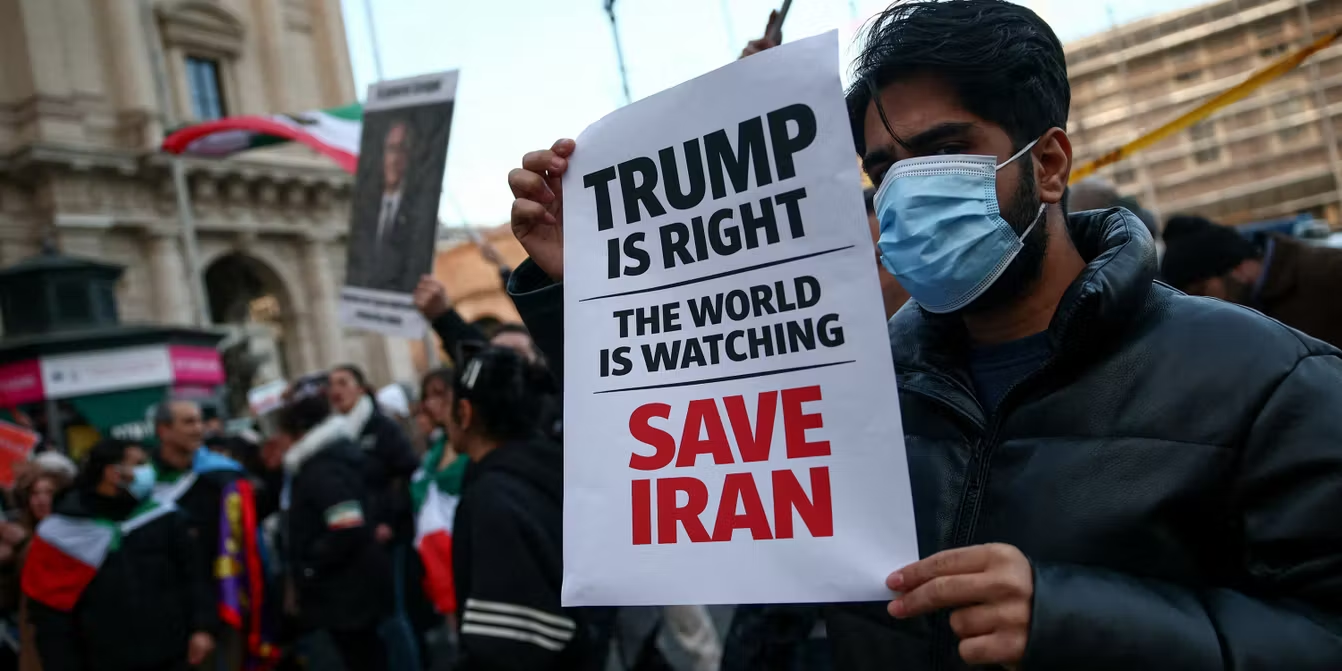
Even as outside pressure grows, the Iranian government is also facing intense anger at home. Nationwide protests tied to the economy, currency decline, and long-running frustration with repression have reportedly met a harsh response. Human rights groups, medical sources, and opposition media describe security forces, including the Islamic Revolutionary Guard Corps (IRGC) and Basij units, using extreme force to shut down demonstrations.
Because of censorship, internet shutdowns, and limits on reporting, death toll estimates vary widely. Iran International has cited internal documents that claim more than 36,500 people were killed during a two-day crackdown in early January 2026, calling it one of the deadliest civilian protest crackdowns ever reported.
Time magazine has published accounts attributed to senior health ministry officials that suggest up to 30,000 deaths in similar clashes, with morgues and burial systems pushed past capacity. Other trackers, including HRANA, have confirmed more than 6,000 deaths, with many more cases still being reviewed, including reports involving children and other non-combatants.
Rising Global Anger and Isolation Around the Islamic Republic
These claims build on a pattern seen during earlier unrest, including the 2022 Women, Life, Freedom protests after Mahsa Amini died in morality police custody. Critics say the government is using live fire, aimed shots to the head and torso, and mass arrests to end dissent. Families of victims also report disappearances, torture, and attempts to hide the scale of the killings, including alleged mass burials.
Outside Iran, patience with the Islamic Republic appears to be wearing thin. Years of support for proxy forces, missile work, and ongoing nuclear disputes have left the country isolated in many forums.
The current crackdown, paired with warnings of regional conflict if Iran is attacked, has added to the outrage from human rights groups and many governments. Many observers now describe the regime as weaker than it looks, held together more by force than broad public support.
With US forces positioned for possible action and protests continuing inside Iran, reports of Khamenei living underground have become a symbol of a leadership under pressure on two fronts. Whether this leads to a wider confrontation or pushes new concessions is still unclear, but the moment is tense for Iran and for the region.

Related news:
Trump Positions U.S. Military Assets Closer to Iran Amid Deadly Crackdown
News
Minnesota Lawmakers Push for Federal Subpoena of Ilhan Omar in $250 Million Fraud Probe
ST. PAUL, Minnesota — The investigation into the nation’s largest pandemic-era fraud scheme has taken a sharp turn toward Washington. This week, the Minnesota House Fraud Prevention and State Agency Oversight Policy Committee formally requested that Congress issue a subpoena to U.S. Representative Ilhan Omar (D-MN).
The GOP-led committee is seeking records of past correspondence between the congresswoman’s office and the leadership of Feeding Our Future, the now-defunct nonprofit at the center of a massive federal investigation. Lawmakers say the move is necessary after Omar reportedly refused to voluntarily hand over documents related to the organization.
The Feeding Our Future scandal remains one of the most significant cases of COVID-19 relief theft in U.S. history. Federal prosecutors allege that a network of individuals stole more than $250 million intended to feed hungry children during the pandemic.
While dozens of people have already been charged and convicted for their roles in the scheme, state lawmakers believe there is more to the story. They are specifically interested in the relationship between Rep. Omar and Aimee Bock, the founder of Feeding Our Future.
The committee’s concerns focus on several key points:
- Targeted Outreach: The fraud primarily involved the misappropriation of funds through the Federal Child Nutrition Program, with many of the implicated sites located within Omar’s congressional district.
- Constituent Ties: The scheme involved a large number of Somali immigrants. GOP lawmakers argue that the congresswoman’s office likely had frequent contact with the organizers under the guise of community support.
- Transparency Issues: Members of the oversight committee claim that Omar’s office has been “uncooperative” in providing a clear timeline of their interactions with the nonprofit’s ringleaders.
State Representative Isaac Schultz, who chairs the oversight committee, argues that the public deserves to know if political influence played a role in allowing the fraud to go undetected for so long.
“We are talking about a quarter of a billion dollars that was meant for hungry children,” Schultz said during a recent hearing. “If there were communications that emboldened these fraudsters or shielded them from earlier scrutiny, the taxpayers have a right to see them.”
The committee’s request for a federal subpoena is a rare and aggressive move. Because Omar is a federal official, the state-level committee lacks the direct authority to compel her to testify or produce records. By appealing to Congress, they are hoping to use federal oversight powers to break the deadlock.
Rep. Omar’s Office Responds
Rep. Omar has consistently denied any wrongdoing or improper connection to the fraud. Her office has previously characterized the investigation as a “politically motivated witch hunt” led by state Republicans.
In past statements, Omar’s representatives have pointed out that the congresswoman has advocated for strong oversight of pandemic funds and that her office’s interactions with local nonprofits are a standard part of constituent services.
However, the refusal to release specific emails and meeting logs has only fueled the GOP’s determination. Critics argue that if the correspondence is as routine as she claims, there should be no reason to withhold it from investigators.
The Scale of the Theft
The Feeding Our Future case has already seen significant milestones in the justice system. To date, the Department of Justice has:
- Charged over 70 individuals in connection with the Minnesota scheme.
- Recovered approximately $50 million in seized assets, including luxury cars and real estate.
- Secured dozens of guilty pleas from those who admitted to creating “ghost” children to claim reimbursement funds.
Despite these wins, the question of administrative negligence or political complicity remains a hot-button issue in Minnesota. The state’s Department of Education has also come under fire for its perceived failure to stop the payments even after red flags were raised.
The request now sits with the U.S. House of Representatives. Given the current political divide in Washington, it is unclear if a subpoena will be issued. Republican leaders in the U.S. House have expressed interest in pandemic fraud oversight, suggesting that the Minnesota committee’s request may find a receptive audience.
If a subpoena is granted, it could force the release of years of internal communications, potentially shedding new light on how one of the biggest frauds in American history managed to flourish in the heart of the Twin Cities.
Trending News:
Ilhan Omar Refuses to Turn Over Documents to Minnesota Fraud Committee
Ilhan Omar’s Husband Dissolves California Winery Amid Congressional Probe
News
Did AOC Really Say She Wants to ‘Take From Americans’ to Fund Illegal Migrant
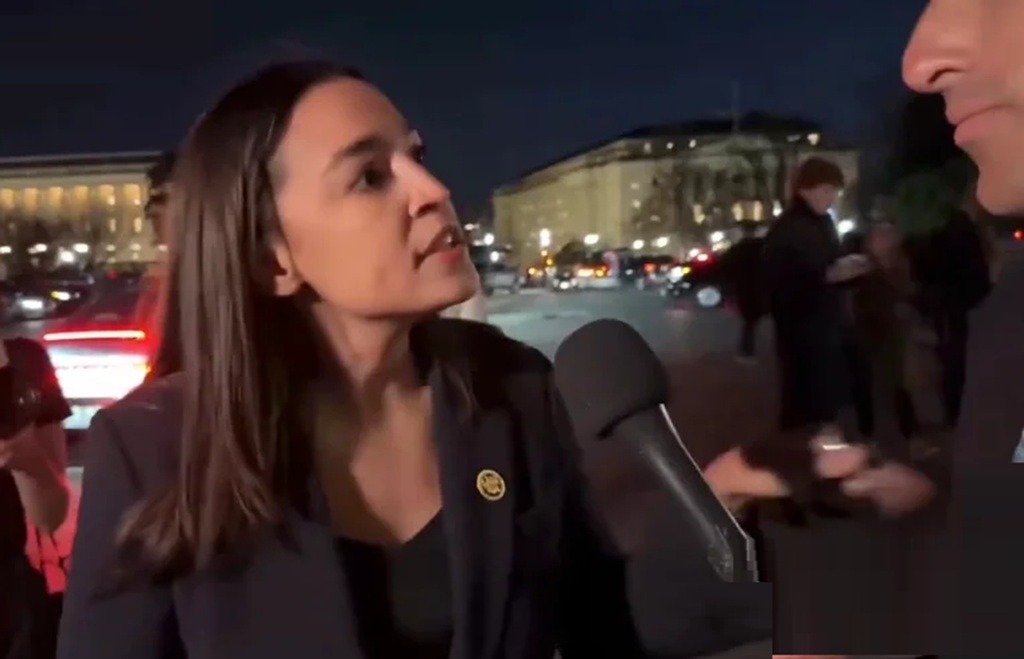
WASHINGTON, D.C. – In today’s hyper-polarized political climate, a single soundbite can travel around the world before the truth even has a chance to put its boots on. Recently, a fiery claim has circulated across social media and conservative news outlets: Representative Alexandria Ocasio-Cortez (AOC) is allegedly in “favor” of “taking from Americans to pay for illegals.”
But in the fast-paced world of political journalism, it is crucial to separate partisan framing from actual policy. Did the progressive firebrand actually say those exact words? And more importantly, what is the real debate surrounding taxpayer dollars and the ongoing migrant crisis in the United States?
This article breaks down the origins of this rhetoric, the reality of the immigration funding crisis, and what political leaders are actually proposing.
The Origin of the Outrage
To understand this controversy, we first have to look at how political messaging works. The specific phrase—”taking from Americans to pay for illegals”—is not a direct, verbatim quote from Congresswoman Ocasio-Cortez. Instead, it is a highly charged summary created by her political critics.
Conservative commentators and rival politicians frequently use this language to describe progressive immigration policies. When progressive lawmakers, including AOC, advocate for using government funds to provide shelter, healthcare, and legal representation for undocumented immigrants and asylum seekers, critics frame this as a direct theft from American taxpayers.
The logic of the critics is straightforward: government budgets are finite. Therefore, any dollar spent on a non-citizen is a dollar taken away from services meant for American citizens. While AOC did not utter the viral quote, the phrasing perfectly captures the core conservative argument against her platform.
The Reality of the New York City Budget Crisis
To understand AOC’s actual stance, we have to look at her home turf. New York City is currently the epicenter of a massive migrant crisis. Over the past two years, more than 150,000 migrants and asylum seekers have arrived in the city, stretching local resources to their absolute breaking point.
Democratic Mayor Eric Adams has repeatedly warned that the crisis will cost the city an estimated $12 billion over three years. Consequently, the city has been forced to announce budget cuts to critical public services, including:
- Public Safety: Reduced funding for the NYPD and delayed recruitment classes.
- Education: Cuts to universal pre-kindergarten programs and public library operating hours.
- Sanitation: Reductions in public litter basket collections.
This local crisis is exactly what fuels the narrative that politicians are “taking from Americans.” When a local library closes on Sundays to help balance a budget strained by the migrant shelter system, working-class Americans feel the sting directly.
What AOC Actually Advocates For
So, where does Representative Ocasio-Cortez stand on this issue?
Rather than advocating for local budget cuts, AOC has consistently placed the blame on the federal government. She argues that immigration is a federal issue and, therefore, the financial burden should not fall on the shoulders of local New York taxpayers.
Her actual policy proposals focus on a few key areas:
- Federal Reimbursement: AOC has demanded that the federal government step in to reimburse cities like New York, Chicago, and Denver for the money they have spent housing migrants.
- Expedited Work Permits: She is a vocal advocate for allowing asylum seekers to work legally as soon as possible. She argues that if migrants can work and pay taxes, they will not need to rely on taxpayer-funded city shelters.
- Comprehensive Immigration Reform: She supports creating a humane pathway to citizenship, arguing that integrating immigrants into the formal economy benefits all Americans in the long run.
In her view, the current crisis is a failure of bureaucratic processing, not a reason to abandon vulnerable people. She argues that framing the issue as “us versus them” distracts from the government’s failure to build a functional immigration system.
The Core Arguments: Progressive vs. Conservative
The debate over funding migrant services highlights a massive ideological divide in American politics. Here is a breakdown of the two primary viewpoints:
The Progressive View (AOC and Allies):
- Human Rights: Providing basic shelter and food is a moral imperative, regardless of a person’s legal status.
- Economic Investment: Immigrants have historically revitalized cities, started businesses, and paid taxes. Short-term support leads to long-term economic growth.
- Federal Responsibility: The federal government must fund local cities to prevent cuts to public services used by American citizens.
The Conservative View (Critics of AOC):
- Taxpayer Fairness: Hardworking Americans should not be forced to subsidize the living expenses of individuals who crossed the border illegally.
- Incentivizing Illegal Crossings: Providing free housing, healthcare, and debit cards only encourages more illegal immigration, worsening the crisis.
- America First: The government’s primary duty is to its own citizens, particularly vulnerable populations like homeless veterans and low-income families, before allocating funds to non-citizens.
Why the Language Matters
In political reporting, language is everything. The use of the word “illegals” in the viral claim is a deliberate choice. Progressive lawmakers like AOC strictly use terms like “undocumented immigrants” or “asylum seekers,” arguing that these terms respect human dignity. Conversely, critics use “illegal aliens” or “illegals” to emphasize that the law was broken and to argue that these individuals are not entitled to taxpayer-funded benefits.
Furthermore, the phrase “taking from Americans” is designed to evoke an emotional response. It taps into very real anxieties about inflation, the rising cost of living, and the shrinking middle class. When families are struggling to pay for groceries, the idea that their tax dollars are going to non-citizens is a highly effective political wedge issue.
The Bottom Line
Did Alexandria Ocasio-Cortez say she is in favor of “taking from Americans to pay for illegals”? No. That quote is a partisan framing of her policies, not a factual statement she made.
However, the debate behind the quote is very real. AOC undeniably supports using federal government funds to manage the migrant crisis and provide basic services to asylum seekers. For her, it is a matter of basic human rights and federal responsibility. For her critics, it is an unacceptable misuse of taxpayer money during an era of economic strain.
As the 2024 election cycle heats up, this clash over resources, compassion, and the rule of law will only become more intense. Voters will ultimately have to decide which vision of American responsibility they agree with at the ballot box.
Trending News:
AOC Clueless Says Billionaires Never Earned Their Money
AOC Says the US May Have Already Had a Gay President, Obama, Buchanan?
News
Mamdani Drops Property Tax Hike as Gov. Hochul Delivers $4 Billion Bailout
NEW YORK – Property owners and renters can finally breathe a massive sigh of relief. Mayor Zohran Mamdani has officially abandoned his highly debated plan to raise property taxes across the five boroughs.
This sudden reversal comes after Governor Kathy Hochul announced a massive $4 billion state bailout to close the city’s glaring budget gap. The deal, finalized late Tuesday evening, completely reshapes the financial future of the city and avoids placing a heavy financial burden on everyday New Yorkers.
For weeks, the city has been locked in a tense debate over how to fund essential services while facing a historic financial shortfall. Now, thanks to the state’s intervention, the city can balance its books without asking residents to dig deeper into their pockets.
A Major Shift in City Hall Strategy
When Mayor Mamdani first took office, he faced an uphill battle. The city was staring down a multi-billion-dollar deficit. This massive gap was caused by a perfect storm of expiring federal COVID-19 relief funds, rising inflation, and the ongoing costs of housing new arrivals.
To solve the crisis, Mamdani originally proposed a broad property tax increase. He argued that the city needed permanent, reliable revenue to keep streets clean, schools funded, and public transit running. However, the proposal faced immediate and fierce pushback.
Homeowners in Queens and Staten Island argued the tax hike would price them out of their neighborhoods. Meanwhile, tenant advocacy groups warned that landlords would simply pass the extra costs down to renters, driving up the already sky-high cost of living in the city.
Faced with mounting pressure from the New York City Council and his own political base, the Mayor sought an alternative. The solution ultimately came from the state capital in Albany.
Gov. Hochul’s $4 Billion Lifeline
Governor Kathy Hochul traveled to Manhattan to deliver the good news in person. Standing alongside Mayor Mamdani at a joint press conference at City Hall, she confirmed that the state will inject exactly $4 billion into the city’s budget over the next fiscal year.
“New York City is the economic engine of our entire state,” Governor Hochul told reporters. “We cannot allow our greatest city to fall into financial ruin, nor can we balance the budget on the backs of hardworking families. This $4 billion investment ensures that the city can thrive without punishing its residents.”
The funds will be drawn from a larger-than-expected state tax revenue surplus, as reported by the New York State Division of the Budget. Because the state collected more money than anticipated this year, Hochul was able to redirect emergency funds directly to the city’s general fund.
As a result, the city no longer needs to rely on emergency tax hikes to keep the lights on.
What This Means for Everyday New Yorkers
The elimination of the property tax hike is a huge win for city residents. But the $4 billion bailout goes far beyond just keeping taxes flat. Here is a breakdown of how this historic deal will directly impact everyday New Yorkers:
- No Property Tax Increases: Homeowners will pay the same rates as last year. Renters are also protected from the rent hikes that usually follow property tax increases.
- Protection for Essential Services: There will be no cuts to the city’s sanitation department. Trash pickups will remain on their normal schedule, keeping the streets clean.
- School Funding Security: Public schools will not lose their after-school programs. The state money fully restores the funding cuts that were previously threatened.
- Public Safety Maintained: Funding for emergency responders, including the FDNY and EMTs, will be completely preserved, ensuring fast response times across the city.
- Library Doors Stay Open: Public libraries, which were bracing for reduced weekend hours, will continue to operate on their full, normal schedules.
The Politics of the Compromise
This budget deal represents a significant moment of compromise between a progressive Mayor and a moderate Governor. Mayor Mamdani, who built his campaign on holding the wealthy accountable and expanding public services, had to pivot away from a core revenue strategy.
However, political analysts say this is a massive victory for his administration. By securing state funding, Mamdani avoids the political damage of raising taxes while still delivering on his promise to protect city services.
“This is exactly what cooperative government looks like,” Mayor Mamdani said during the announcement. “We looked at the numbers, we listened to the fears of working-class New Yorkers, and we worked with the Governor to find a better way. Today, we are keeping our city running without making life harder for the people who live here.”
Governor Hochul also benefits greatly from the deal. By playing the role of the savior, she boosts her popularity among downstate voters and proves that the state government can step in effectively during a local crisis.
Looking Ahead to Mamdani’s Final Budget
While the major hurdle has been cleared, the work is not entirely over. The Mayor and the City Council must now officially draft and vote on the final city budget before the July 1st deadline.
Given the massive infusion of state cash, the vote is expected to pass smoothly. Local council members, who previously threatened to vote against the Mayor’s budget because of the property tax issue, are now openly praising the agreement.
Furthermore, financial watchdogs are urging the city to use this bailout as a lesson. Civic groups are already advising the Mayor’s office to build stronger cash reserves and reduce unnecessary spending, so the city does not have to rely on a state bailout the next time revenues fall short. Check the latest city financial reports directly at the NYC Comptroller’s Office to see how the city plans to manage the new funds.
For now, though, the crisis is averted. The city’s financial gap is closed, public services are fully funded, and property taxes are staying exactly where they are.
Related News:
New York’s Wall Street Exodus: Investors Flee Mamdani’s Communism
Mamdani Wants $229M From New York Employee Retirement Fund
-
Politics3 months agoIlhan Omar’s Connections to Convicted Somali Fraudsters Surface
-
Politics2 months agoRep. Ilhan Omar Faces Heat as Minnesota Voters Seek Change
-
Politics3 months agoCalls Mount to Expel Rep. Ilhan Omar from Congress
-
Politics3 months agoAOC’s Critique of Rubio’s Speech Turns into an Huge Embarrassment
-
Crime3 months agoErika Kirk Faces Renewed Grooming Allegations Over 2014 Messages
-
News3 months agoAustin Tucker Martin Who Was He And Why Was He at Mar-a-Lago?
-
Business3 months agoCNN Ratings Collapse As Cable Giants Face Extinction
-
News2 months agoIlhan Omar Accused of Leaking U.S. Strike Plans to Iran as Tensions Rise