Politics
The SAVE Act: Are Senate Holdouts Choosing Donors Over Election Security?
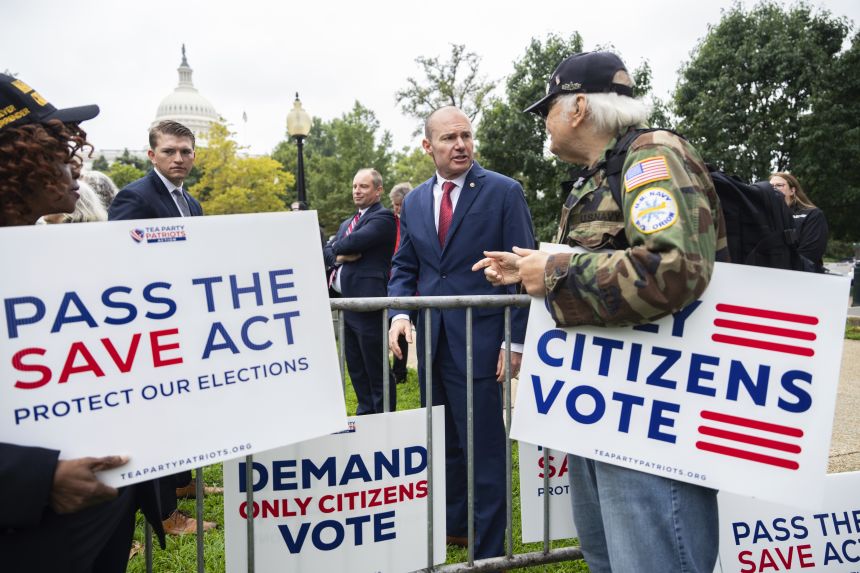
WASHINGTON, D.C. – Trust in American elections is at a breaking point. Millions of voters want stronger rules to protect the ballot box. Because of this, lawmakers in the House of Representatives passed the Safeguard American Voter Eligibility (SAVE) Act. This bill has a very simple goal: to make sure only American citizens vote in federal elections.
However, the bill has hit a massive brick wall in the U.S. Senate.
Despite strong support from everyday voters, the legislation is completely stalled. Many Americans are now asking a frustrating question. Are their elected officials more focused on pleasing wealthy donors than protecting the voting process? Furthermore, a growing group of frustrated voters is pointing fingers at members of their own party. They are labeling certain Senate Republicans as “traitors” for not fighting hard enough to pass the law.
Here is a deep look into why the SAVE Act is stuck, the role of big money in politics, and the lawmakers standing in the way of election security.
What is the SAVE Act?
Before looking at the roadblocks, we must understand the bill itself. The SAVE Act is a piece of federal legislation designed to close loopholes in the voter registration process.
Currently, federal law makes it illegal for non-citizens to vote in national elections. However, the system relies mostly on the “honor system.” When people register to vote, they simply check a box claiming they are citizens. They rarely have to prove it with actual documents.
The SAVE Act changes this by requiring real proof. If passed, the law would demand the following:
- Proof of Citizenship: Voters must show a passport, a birth certificate, or another approved document to register.
- State Requirements: States must remove non-citizens from their current voter rolls.
- Penalties: The bill creates new penalties for officials who knowingly register non-citizens to vote.
The House of Representatives passed the bill successfully. Supporters cheered, thinking the U.S. was one step closer to secure elections. Then, the bill went to the Senate, where it stopped moving completely.
The Senate Roadblock: Politics Over Policy
Why is the Senate ignoring a bill that so many voters want? The answer comes down to political games and the fear of losing power.
First, the Senate is highly divided. Passing almost any major law requires 60 votes to overcome a filibuster. This means Republicans and Democrats must work together. However, most Senate Democrats strongly oppose the SAVE Act. They argue that the bill is unnecessary. They claim it will make it too hard for legal citizens, especially minorities, to vote.
Because of this heavy opposition, the only way to force the bill through was to attach it to a “must-pass” funding bill. In late 2024, conservative lawmakers tried to do exactly this. They attached the SAVE Act to the government budget. The plan was simple: pass the SAVE Act, or the government shuts down.
This is where the plan fell apart. And it did not just fall apart because of the Democrats. It fell apart because several key Republicans refused to fight for it.
Are Donors Calling the Shots?
To understand why some politicians walked away from the SAVE Act, you have to follow the money. Running for the U.S. Senate is incredibly expensive. Campaigns cost tens of millions of dollars. As a result, Senators spend a lot of time talking to wealthy donors and corporate groups.
Many political experts and grassroots activists argue that these big donors are the real reason the SAVE Act is failing.
Corporate donors hate government shutdowns. When the government closes, the stock market gets nervous. Federal contracts freeze. Consumer spending drops. For a CEO or a major Wall Street investor, a government shutdown is bad for business. Therefore, these wealthy donors put massive pressure on politicians to keep the government open, no matter what.
Furthermore, some major corporate donors prefer open-border policies. A steady flow of immigrants provides cheap labor for big businesses. These corporations do not want massive fights over citizenship and voting rights taking the spotlight. They want quiet, predictable politics.
Consequently, when grassroots voters demanded that Senators shut down the government to pass the SAVE Act, the donors pushed back. They told the politicians to drop the election security fight and pass the budget. Ultimately, it appears the politicians listened to the donors.
Naming Names: The “Republican Traitors”
This brings us to the most heated part of the debate. Supporters of the SAVE Act are furious with Senate Democrats for opposing the bill. However, they are even more angry at members of the Republican Party who refused to draw a hard line.
Conservative activists and grassroots voters have started using a harsh label for these lawmakers: “traitors.” They feel betrayed. They believe these Republicans promised to protect elections but folded as soon as the pressure got high.
Who are the politicians facing this heavy backlash?
- Senator Mitch McConnell: As the Senate Republican Leader, McConnell holds a lot of power. However, he publicly stated that shutting down the government over the SAVE Act was a bad idea. He argued that shutdowns always hurt the Republican Party politically. Grassroots voters immediately accused him of being weak and protecting his corporate donors instead of American elections.
- Senator Susan Collins: Representing Maine, Collins is a moderate. She frequently works with Democrats to pass funding bills. She opposed the strategy of attaching the SAVE Act to the budget. Critics claim she cares more about her reputation in Washington than the integrity of the ballot box.
- Senator Lisa Murkowski: Similar to Collins, the Senator from Alaska is known for crossing party lines. She refused to support a shutdown fight for the SAVE Act. Activists argue she is totally out of touch with the concerns of everyday voters.
- Senator Mitt Romney: The Utah Senator has often clashed with the populist wing of his party. He did not support the aggressive tactics needed to force the SAVE Act through the Senate. Many conservative voters view his lack of action as a direct betrayal of election security efforts.
These Senators argue they are just being practical. They claim that a shutdown would not have forced Democrats to accept the SAVE Act anyway. Instead, it would have just angered the public.
However, voters are not buying that excuse. To the average citizen, it looks like these lawmakers surrendered before the fight even started.
The Impact on American Trust
When politicians choose donor happiness over election security, the damage is severe. Trust is a very fragile thing. According to recent polls by Gallup, public confidence in the honesty of elections remains dangerously low.
Voters need to believe their vote counts. They need to believe the system is fair. The SAVE Act was a chance to rebuild some of that lost trust. It was a common-sense measure. Proving who you are before you vote is a standard practice in many modern democracies around the world.
When Senators block this kind of law, they send a terrible message. They tell the public that the rules do not matter. Moreover, they prove that the concerns of everyday people are less important than the concerns of billionaires and corporate executives.
This creates a cycle of anger. Voters feel ignored. They stop trusting their leaders. As a result, they begin to view the entire political system as corrupt.
Why Simple Language Matters in Politics
One of the biggest tricks politicians use to avoid accountability is confusing language. When defending their choices on the SAVE Act, they use insider jargon. They talk about “cloture votes,” “continuing resolutions,” and “procedural maneuvers.”
This is done on purpose. Lawmakers use complex words to confuse the public. If voters do not understand how the Senate works, they will not know who to blame.
But the reality is very simple. A bill was written to require proof of citizenship to vote. The House passed it. The Senate blocked it. Some Republicans refused to use their power to force the issue. They did this because big donors hate budget fights.
There is no need to make it more complicated than that.
What Happens Next for the SAVE Act?
Is the SAVE Act dead forever? Not necessarily.
The future of the bill depends entirely on the upcoming elections. If voters elect a Congress that is heavily focused on election integrity, the bill will return. However, this requires voters to hold their current politicians accountable.
Grassroots organizations are already making plans. They are promising to challenge the “holdout” Senators in future primary elections. They want to replace politicians who listen to corporate donors with leaders who will actually fight for secure elections.
Meanwhile, some states are trying to take matters into their own hands. Because the federal government refuses to act, individual states are passing their own proof-of-citizenship laws. This creates a messy, patchwork system across the country. But for many governors, doing something is better than doing nothing.
The Bottom Line
The story of the SAVE Act is a classic Washington tale. It is a story about a good idea being destroyed by big money and weak politicians.
Protecting American elections should not be a controversial topic. Asking voters to prove they are citizens is a basic, logical step. Yet, in the U.S. Senate, logic often loses to donor pressure.
Until lawmakers decide that the American voter is more important than the wealthy donor, bills like the SAVE Act will continue to gather dust. The American people deserve a voting system they can trust. Now, it is up to the voters to demand it.
Trending News:
Virginia Supreme Court Throws Out New Election Maps
Musk’s Chilling Warning to Senate About the SAVE Act Goes Viral
Democrats Push Back on the SAVE Act Despite 85% of Voters Backing Voter ID
Politics
The Last of the Real Democrats? How John Fetterman is Bucking the Progressive Tide
WASHINGTON, D.C. – When you picture a modern politician for the Democrats, you probably imagine a tailored suit, a rehearsed smile, and carefully tested talking points. Senator John Fetterman of Pennsylvania is none of those things.
Standing at six-foot-eight, usually dressed in gym shorts and an oversized hoodie, Fetterman looks more like a guy waiting in line at a local hardware store than a United States Senator. But his clothes are not the only thing setting him apart from his colleagues in Washington.
Recently, Fetterman has made headlines for doing something almost unheard of in today’s Democratic Party: he is actively rejecting the “progressive” label. Instead, he simply calls himself a regular Democrat.
For a long time, the Democratic Party was seen as the party of the working class. It was the political home for factory workers, union members, and middle-of-the-road liberals. Today, a growing number of political observers and everyday voters are asking a tough question. Have progressives hijacked the once moderate Democratic Party? And if so, is John Fetterman one of the last “real” Democrats left?
The Rise of the Working-Class Democrat
To understand Fetterman, you have to understand where he comes from. He served as the mayor of Braddock, a small, working-class steel town in western Pennsylvania. Braddock is a town that saw hard times when the factories closed down. Fetterman spent his time there trying to rebuild the community, attract jobs, and reduce crime. He did not do this with high-level academic theories. He did it with practical, everyday solutions.
When Fetterman ran for the Senate in 2022, he ran on a platform that appealed directly to blue-collar workers. He talked about creating jobs, protecting unions, and making healthcare affordable. He also supported things that made the far-left nervous, like the local fracking industry, which provides thousands of jobs in Pennsylvania.
For a while, many in the media called him a progressive champion simply because he supported things like legal weed and a higher minimum wage. But as Fetterman himself pointed out, his views have always been rooted in practical, traditional Democratic values, not extreme leftist ideology.
What Happened to the Middle-of-the-Road Left?
If you look back twenty or thirty years, the Democratic Party looked very different. During the 1990s, leaders like Bill Clinton championed a “Third Way.” This was a middle-of-the-road approach. The party focused on growing the economy, balancing the budget, being tough on crime, and providing a safety net for the poor.
Even during the early years of Barack Obama’s presidency, the party largely stuck to a moderate path. They focused heavily on kitchen-table issues—the things families talk about over dinner, like the cost of healthcare, paying for college, and keeping their neighborhoods safe.
However, around 2016, things began to shift. The presidential campaign of Senator Bernie Sanders energized a new, highly vocal wing of the party. Soon after, new politicians like Representative Alexandria Ocasio-Cortez and the “Squad” arrived in Congress. The energy in the party moved to the far left. According to data from Gallup, the percentage of Democrats identifying as “liberal” or “very liberal” has risen sharply over the last decade.
How the Progressive Wing Took the Steering Wheel
Critics argue that this new progressive wing has hijacked the party’s messaging. Instead of focusing on jobs and wages, the loudest voices in the room started focusing on sweeping, radical changes.
Some of the key moments that made moderate voters feel left behind include:
- The “Defund the Police” Movement: While traditional Democrats wanted police reform, progressive activists pushed slogans about dismantling police departments. This alienated millions of voters who worry about crime in their neighborhoods.
- Energy Policy Extremes: Moderates favor a slow transition to green energy while protecting current jobs. Progressives have pushed for immediate, drastic cuts to fossil fuels, leaving workers in states like Pennsylvania and Ohio fearing for their livelihoods.
- Cultural Messaging: The language used by the progressive wing often feels rooted in elite university campuses rather than factory floors. Many working-class voters feel talked down to or misunderstood by the party’s new, highly educated base.
For a traditional, middle-of-the-road liberal, this shift has been dizzying. The party that once focused on protecting the little guy now seems hyper-focused on complex cultural debates and massive government expansions.
Why Fetterman Left the Progressive Label Behind
Over the past year, Senator Fetterman has drawn a clear line in the sand between himself and the progressive wing. He has shown a willingness to break from the left on several major issues, proving that he is not afraid to upset his own party’s base.
First, there is the issue of border security. While many progressives advocate for highly relaxed border policies, Fetterman has stated clearly that America needs a secure border. He has pointed out that wanting a safe, orderly immigration system does not make you cruel; it makes you practical.
Second, Fetterman has been unflinching in his support for Israel. While the progressive wing of the Democratic Party has become increasingly critical of Israel, and in some cases deeply hostile, Fetterman has draped himself in the Israeli flag. He has refused to back down, stating that standing by traditional American allies used to be a basic, bipartisan value.
Finally, Fetterman is a staunch defender of American energy independence. He knows that in places like Pennsylvania, the energy sector is what puts food on the table. He refuses to sacrifice those jobs to satisfy climate activists who live hundreds of miles away in big cities.
The Progressive Agenda vs. Traditional Liberalism
To understand just how much the party has shifted, it helps to look at the differences between the new progressive agenda and traditional liberalism. Here is how the two sides differ:
- Economic Focus: Traditional Democrats focus on raising the minimum wage, protecting unions, and ensuring fair trade. Progressives focus on concepts like universal basic income, student loan forgiveness (which often benefits higher earners), and massive taxation overhauls.
- Foreign Policy: Traditional liberals believe in strong global alliances and backing democratic nations. The progressive wing has grown increasingly skeptical of American military power and traditional allies.
- Social Issues: Moderates believe in equality of opportunity and protecting civil rights. The progressive wing often pushes for “equity” (equality of outcome) and places a heavy focus on identity politics.
- Tone and Approach: The old-school Democrat tries to build a big tent, welcoming people who might disagree on a few issues. The modern progressive movement is often seen as demanding purity, quickly turning on anyone who steps out of line.
Are Centrist Democrats Becoming a Thing of the Past?
As the progressive wing gains more influence in media and online spaces, politicians like John Fetterman seem to be an endangered species. Many moderate Democrats in Congress keep their heads down. They are afraid of being attacked on social media or facing a primary challenge from a far-left candidate.
But Fetterman’s approach might just be the blueprint for saving the Democratic Party in the American heartland. By refusing to bow to the progressive left, he is speaking to the “silent majority” of Democratic voters. These are people who want good roads, safe streets, fair wages, and a government that works. They are not interested in endless culture wars or radical experiments.
Fetterman’s popularity among average voters suggests that there is still a massive appetite for normal, common-sense politics. People respect a leader who tells the truth as he sees it, even if it makes his own party angry.
A Crossroads for the Democratic Party
The Democratic Party is currently standing at a crossroads. Down one path is the progressive vision: a party focused on sweeping cultural changes, rapid environmental mandates, and highly left-wing social policies. Down the other path is the traditional liberal vision: a party grounded in the economic realities of the working class, strong national defense, and practical, step-by-step progress.
John Fetterman has made it crystal clear which path he is walking. By shedding the progressive label, he is sending a message to the rest of the country. He is proving that you can support unions, defend reproductive rights, and fight for the middle class without adopting extreme far-left views.
Is John Fetterman the last of the real Democrats? Perhaps not the absolute last. But right now, he is certainly the loudest voice reminding the party of its roots. If the Democratic Party wants to keep winning elections in places like the Rust Belt and the Midwest, it might need to spend a little less time listening to the progressive activists on Twitter and a little more time listening to the guy in the hoodie.
Trending News:
Democrats May Be Moving to Rig the System as They Lose the Majority
Far Left Socialist Democrats Have Taken Control of the Entire Party
Politics
Democrats May Be Moving to Rig the System as They Lose the Majority
Are demographic changes and new legal battles creating an uphill climb for the Democratic Party? Here is a look at the forces reshaping the House of Representatives.
WASHINGTON, D.C. – The political landscape of the United States is literally on the move, especially for the Democrats. Over the past few years, a steady stream of Americans has relocated from traditionally liberal, or “blue,” states to more conservative, “red” states.
While people move for many reasons—like finding cheaper housing, lower taxes, or warmer weather—this massive shift in population is creating a complex challenge for the Democratic Party.
As the map changes, the balance of power in Washington, D.C., is changing with it. Because political power in the House of Representatives is tied directly to population, these moves are fundamentally altering the electoral math. Combined with recent legal battles over voting districts and changing birth rates, political experts are pointing to a potential long-term hurdle for the current liberal coalition.
Here is a closer look at the key factors driving this shift and how political leaders are responding.
The Great Migration: Moving South and West
To understand the current political challenge, you have to look at the numbers. Every ten years, the U.S. Census Bureau counts the population. Based on those numbers, the 435 seats in the House of Representatives are divided among the states.
Recently, states like California, New York, and Illinois have seen their populations drop or grow much more slowly than the rest of the country. At the same time, states like Texas, Florida, and North Carolina have boomed.
When a state loses population compared to others, it loses seats in the House. When it gains population, it gains seats.
- Blue State Losses: Following the 2020 Census, states that typically vote Democratic lost political representation.
- Red State Gains: States with conservative majorities picked up those lost seats, giving them more voting power in Congress.
This means that before a single vote is even cast in an election, the baseline map has already tilted slightly away from states that traditionally support Democratic candidates.
The Redistricting Threat: An “All-Out War” Scenario
Once states know how many House seats they have, they must draw the map to create voting districts. This process is called redistricting. When politicians draw these lines in a way that gives their own party an unfair advantage, it is known as gerrymandering.
Currently, Republicans control more state legislatures than Democrats. This gives them more power over how these district lines are drawn across the country. Some political analysts have warned that if both parties decided to push the rules to the absolute limit, the Democratic Party would be at a severe disadvantage.
Highlighting this exact risk, a recent political commentary noted the extreme potential of this imbalance:
“There were some recent studies by various pollsters about what would happen if all of the states decided to engage in redistricting, gerrymandering, based on the relative control of the state legislatures. And it came up with a very surprising result: If the Republican red states, or purple states that have Republican majorities, decided to redistrict and Democrats did spirit the same, an all-out war, there would be about 262 Republicans and only 173 Democratic seats.”
While this is a worst-case scenario rather than the current reality, the numbers show just how fragile the balance of power truly is.
Legal Rulings and Changing Demographics
Beyond state lines, the rules about how districts can be drawn are also changing. In recent years, the courts have issued complex rulings regarding racial gerrymandering. For decades, the Voting Rights Act has been used to ensure minority voters have the ability to elect candidates of their choice, which often benefited the Democratic coalition.
However, recent legal challenges and Supreme Court decisions have made it harder to use race as a primary factor when drawing voting maps. Some political analysts argue that these legal shifts restrict the ability of Democrats to group reliable voting blocs together, further threatening their electoral math.
At the same time, experts point to another long-term trend: declining birth rates in major cities. Progressive urban hubs, which are the core of the Democratic base, are seeing fewer births compared to more conservative rural and suburban areas. Over time, a lower fertility rate means slower population growth. In a system where political power relies heavily on headcounts, this slow growth limits the party’s future expansion.
The Push for Structural Reform
Facing a map that seems to be tilting away from them, some Democratic leaders and progressive activists are looking beyond traditional campaigns. If the current rules make it hard to win a secure majority, many are arguing that the rules themselves need to change.
To maintain influence and counter these demographic disadvantages, there is a growing push within the party for major structural changes to the American governing system. Some of these proposals include:
- Abolishing the Filibuster: Removing the rule in the Senate that requires 60 votes to pass most laws. This would allow a narrow majority to pass sweeping national voting rights protections.
- Expanding the Supreme Court: Adding more justices to the highest court to balance out the current conservative majority, which could change future rulings on gerrymandering.
- Statehood for D.C. and Puerto Rico: Making Washington, D.C., and Puerto Rico official states, which would likely add reliable Democratic seats to both the House and the Senate.
- Ending the Electoral College: Moving to a system where the president is chosen by a simple national popular vote, bypassing the state-by-state map entirely.
Supporters of these ideas say they are necessary updates to make American democracy fairer and more reflective of the national popular vote. Critics, however, view these proposals as radical attempts to rewrite the rules of government simply to hold onto political power.
Looking Ahead: A Divided Future
The American political system is designed to handle population shifts, but the speed of the current changes is creating heavy friction. As Americans continue to pack up moving trucks and head to new states, the political map will keep changing.
For the Democratic Party, the challenge is clear. Relying purely on traditional campaign strategies in their usual strongholds may no longer be enough to secure a lasting majority. Whether the party can win over voters in these growing red states, or whether they will succeed in changing the structural rules of the game, remains one of the biggest political questions of the decade.
Trending News:
Supreme Court Crushes Democrats’ Racial Gerrymandering in 6-3 Decision
Democrats Push Back on the SAVE Act Despite 85% of Voters Backing Voter ID

Politics
AOC Says the US May Have Already Had a Gay President, Obama, Buchanan?
WASHINGTON, D.C. – In the fast-paced world of modern politics, rumors fly quickly. A single quote can spark a massive internet debate in a matter of minutes. Recently, Representative Alexandria Ocasio-Cortez (often referred to as AOC) made a comment that caught fire online. During an interview, she suggested that the United States might have already had a gay president.
This short statement instantly got people talking. Who could she mean? Some people immediately jumped to former President Barack Obama. This jump in logic was fueled by a highly controversial interview hosted by conservative commentator Tucker Carlson. Carlson recently spoke with a man named Larry Sinclair, who made shocking claims about a past relationship with Obama.
But how do these pieces actually fit together? Let’s break down the facts, separate real history from internet rumors, and look at the true story like responsible news readers.
AOC’s Viral Comment: What Did She Actually Say?
During a recent discussion about the future of American politics, AOC was asked about the possibility of a gay or female president taking office in the future. Her response was simple but thought-provoking. She stated that there are good chances the United States has already had a gay president.
She did not name any specific names. She did not point fingers at any modern leaders. She simply stated a fact that many historians have debated for decades.
When a high-profile politician says something like this, the internet goes wild. People naturally try to fill in the blanks. Because AOC did not specify a president, imaginations ran free. However, to understand her comment properly, we have to look at history, not modern conspiracy theories. She was bringing up a well-known historical debate, not dropping a secret about a living leader.
Was AOC Referring to Barack Obama?
The short, factual answer is no. There is absolutely zero evidence to suggest Alexandria Ocasio-Cortez was talking about Barack Obama.
Why did people make this connection? In today’s fast-paced media world, unrelated stories often get mashed together. Because AOC’s comment went viral around the same time certain rumors about Obama resurfaced on social media, some people incorrectly assumed they were connected.
They were not. AOC, a progressive Democrat, has a strong working relationship with the Obama network. Furthermore, the rumors surrounding Obama are widely considered by serious journalists to be baseless political attacks.
If she was not talking about Obama, then who? Before we answer the real historical question, we need to address the modern rumor mill. We need to look at exactly where the Obama rumors came from and why they made headlines again.
The Tucker Carlson and Larry Sinclair Interview
To understand the Obama rumors, we have to look back at a broadcast from September 2023. Former Fox News host Tucker Carlson aired an interview on the social media platform X (formerly known as Twitter). His guest was a man named Larry Sinclair.
During this interview, Sinclair made incredibly extreme claims. He alleged that back in 1999, he met Barack Obama in Chicago. Sinclair claimed that the two of them bought and used illegal drugs together. He also claimed they engaged in sexual acts. These are incredibly heavy accusations to level against a former President of the United States.
Carlson presented the interview to his millions of followers. He sat and listened as Sinclair told his story. Carlson did not push back hard. He did not demand hard proof. He simply let Sinclair speak, framing the story as a dark secret that the mainstream media was hiding from the public.
For a professional journalist or a media personality, running a story like this requires a very high burden of proof. But did Sinclair actually have that proof?
Fact-Checking Larry Sinclair: Why The Claims Fall Apart
When you hear a shocking story in the news, it is crucial to look at the source. This is the foundation of media literacy and good journalism. When we look closely at Larry Sinclair, his story quickly unravels. Here are the clear facts you need to know:
- A History of Deception: Larry Sinclair is not a reliable witness. He has a long, documented criminal history. His record includes multiple convictions for fraud, forgery, and theft. He has a well-known history of conning people and making up stories for personal gain.
- No Supporting Evidence: Sinclair has been telling this same story since 2008. He originally tried to ruin Obama’s first presidential campaign with these claims. However, in over 15 years, he has never produced a single piece of hard evidence. There are no photos, no credible witnesses, and no paper trails to back up his words.
- Failed Polygraph Tests: Back when Sinclair first made these claims, he took a polygraph (lie detector) test to prove he was telling the truth. He failed it. In fact, the people who paid for the test stated that the results showed clear deception.
- Journalistic Backlash: Carlson faced heavy criticism for giving Sinclair a massive platform. Many experts and journalists pointed out that the interview was a political smear, not real news. As The Guardian reported on the interview, it seemed to be a desperate attempt for ratings, relying on a discredited conspiracy theory rather than facts.
In short, the Larry Sinclair story is widely rejected by serious journalists and historians. It is a fabricated tale from a convicted fraudster. Therefore, it is entirely safe to say AOC was absolutely not thinking of this discredited internet rumor when she made her comments.
If Not Obama, Then Who? The Story of James Buchanan
So, if AOC was not talking about Barack Obama, who was she referring to? When historians debate whether the US has already had a gay president, they almost always point to one historical figure: James Buchanan.
James Buchanan was the 15th President of the United States. He served right before Abraham Lincoln. To this day, he remains the only president in US history to remain a lifelong bachelor. He never married.
But that is not the only reason historians speculate about him. For many years, Buchanan lived closely with another male politician named William Rufus King. King was a senator from Alabama and eventually became Vice President. The two men were incredibly close. They shared a home in Washington, D.C. for over a decade.
Their relationship was an open secret in the capital. Other politicians often mocked them. They referred to them using feminine nicknames like “Miss Nancy” and “Aunt Fancy.” Some political rivals even called King the “better half” of Buchanan.
Furthermore, when King moved to France for a diplomatic mission, Buchanan wrote a very emotional letter to a friend. He wrote about how incredibly lonely he was without King. He said he had gone “wooing” to several gentlemen, but could not find anyone to replace his companion.
Looking at History Through a Modern Lens
We have to be careful when looking at the past. People in the 1800s did not use words like “gay” or “homosexual” the way we do today. Their understanding of relationships, romance, and identity was simply different. Therefore, no reputable historian will say with 100% certainty that James Buchanan was a gay man in the modern sense.
However, many historians agree that his intense, lifelong bond with William Rufus King looks very much like a same-sex partnership. This is the exact historical context AOC was likely referring to. She was acknowledging a well-documented piece of American history, not spreading a modern rumor.
There has also been some light historical speculation about other figures, including Abraham Lincoln, who shared a bed with a close male friend for years. However, bed-sharing was a common practice for men in the 1800s due to a lack of space and heating. Therefore, Buchanan remains the primary focus of this specific historical debate.
The Difference Between History and Conspiracy
This whole situation highlights a major problem in today’s media environment. It shows exactly how easily facts get twisted to fit a certain narrative.
On one hand, you have a legitimate historical conversation. Representative Ocasio-Cortez pointed out a valid, historically supported theory about the 15th president. It is a real conversation based on letters, primary documents, and academic debate.
On the other hand, you have the Larry Sinclair interview. This is a baseless rumor started by a convicted fraudster. It is designed to create anger, score political points, and get internet clicks. When media figures treat these two things as equal, it deeply confuses the public.
As readers and citizens, we must learn to tell the difference. We have to demand hard evidence. When someone makes a wild claim, we must look at their background. If a story sounds too crazy to be true, and there is absolutely no proof to back it up, it is usually a lie.
Finding the Truth in the Noise
To wrap things up, let’s review the facts clearly.
First, AOC stated that the US may have already had a gay president. She was almost certainly referring to the long-standing historical speculation surrounding President James Buchanan.
Second, she was not referring to Barack Obama. The rumors about Obama having a secret gay past are completely unfounded.
Finally, the interview between Tucker Carlson and Larry Sinclair was a revival of an old, heavily debunked smear campaign. Sinclair is a known conman with zero evidence to support his claims.
In an era where news travels at the speed of light, it is more important than ever to read past the headlines. By sticking to verifiable facts, trusting credible sources, and using simple common sense, we can safely navigate the noisy world of political news.
Trending News:
CNN Reveals Trump’s GOP Approval Tops Obama and Bush at the Same Point
Democratic Party Insiders Turning on AOC Move Against the Progressive Squad
AOC Faces Bipartisan Backlash Over Munich Security Conference Gaffes
-
Politics3 months agoIlhan Omar’s Connections to Convicted Somali Fraudsters Surface
-
Politics3 months agoTrump Approval Rating (February 2026 Poll Results, Approve vs Disapprove)
-
Politics3 months agoAOC’s Critique of Rubio’s Speech Turns into an Huge Embarrassment
-
Politics2 months agoRep. Ilhan Omar Faces Heat as Minnesota Voters Seek Change
-
Crime3 months agoErika Kirk Faces Renewed Grooming Allegations Over 2014 Messages
-
Politics2 months agoCalls Mount to Expel Rep. Ilhan Omar from Congress
-
Business3 months agoCNN Ratings Collapse As Cable Giants Face Extinction
-
News2 months agoIlhan Omar Accused of Leaking U.S. Strike Plans to Iran as Tensions Rise