Politics
Far Left Socialist Democrats Have Taken Control of the Entire Party
NEW YORK – After the bruising 2024 election, where Democrats suffered major setbacks, anxiety has spread through the party’s traditional base. Centrists and moderates, the practical voters in suburban swing seats who once powered Joe Biden, now warn of a hard-left turn.
Their worry is simple. Figures like Zohran Mamdani, the 33-year-old Democratic nominee for New York City mayor, are not outliers. They are the face of a party moving left, economically aggressive, and risky with mainstream voters.
Mamdani’s rapid rise, built on a June 2025 primary win with pledges like a 30-dollar minimum wage, rent freezes, and city-run grocery shops, has heightened those fears. Critics, from business leaders to Democrats such as Sen. John Fetterman, call him “not even a Democrat honestly,” accusing him of pushing socialist plans that could wreck city budgets and drive away working-class voters.
With Mamdani polling well against independents like former Gov. Andrew Cuomo and Mayor Eric Adams, many see more than a New York story. They see a preview of the party’s 2028 approach, where compromise gives way to ideological purity.
This panic fits a bigger storyline. The progressive wing has, in the eyes of its critics, wrested control of the party over the last decade, powered by young, media-savvy activists. What began as a fringe burst in the 2018 midterms now looks like a dominant bloc, with centrists shunted aside.
Congressional Progressive Caucus
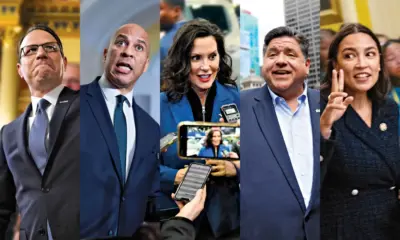
At the centre is Rep. Alexandria Ocasio-Cortez, the Bronx organiser-turned-MP whose 2018 upset over a two-decade incumbent announced the Squad’s arrival. The group includes Ilhan Omar, Rashida Tlaib, Ayanna Pressley, and, later, Cori Bush and Jamaal Bowman.
All members of the Congressional Progressive Caucus have used viral media, demands for the Green New Deal and Medicare for All, and primary threats against party stalwarts who deviate.
By 2025, that influence feels like control. AOC, now 35 and a household name, tops CNN polling as the perceived leader of the Democratic Party, ahead of figures like Barack Obama and rising MPs such as AOC and Rep. Jasmine Crockett. Crockett, a Texas lawyer-turned-congresswoman elected in 2022, captures the next wave of Squad-style politics.
Her viral clashes with Republicans made her a media star, but her past nods to “defund the police” and digs at party elders show the same insurgent streak. Together, they have shifted the party from a big tent to a vehicle for hard-left ideas, with identity politics, redistribution, and anti-capital messaging eclipsing the pocketbook focus that wins in swing territory.
The shift shows up most clearly in the pressure on moderates. In 2024 primaries, progressive groups like Justice Democrats poured millions into challenges against so-called corporate Democrats, punishing those who broke with them on Israel and economic policy.
Bad Look for Democrats
Crockett, mentioned for roles like House Oversight Committee ranking member, has mocked the party’s seniority system as stuck in the past, urging a generational handover that rewards loud reformers, not dealmakers. ESPN’s Stephen A. Smith captured the mood on HBO’s Real Time in August 2025, blasting AOC and Crockett as a “bad look” for the party.
“Republicans are having a field day,” he said, warning that elevating these figures risks electoral collapse. Post-2024 assessments in outlets like The Hill echo that view, arguing the Squad’s message, rooted in failed 2020 slogans like defunding the police, shrank the coalition and cost seats in right-leaning districts that once backed Democrats on stability and security.
Critics say this is not an accident; it is a method. The progressive left capitalised on the party’s post-Trump confusion, using grassroots power and donor cash to overpower moderates. AOC’s “Fighting Oligarchy” tour with Bernie Sanders in 2025 raised 21 million dollars.
Yet, as Crockett reportedly told The Atlantic in private, it looked like self-promotion more than party-building, showing rifts inside the left even as the faction grows. On X, conservatives mock a “Squad hijacking” as a gift to Trumpism. Users like @BullDogBorn15 question whether Mamdani’s brand of socialism unites anyone, repeating the fear that Democrats are becoming a party of big-city radicals, not national leaders.
On Reddit’s r/AskALiberal, some praise Crockett’s firebrand style. Many centrists push back, saying they would rather back a winner like Joe Manchin than lose with a candidate like Paula Jean Swearengin. The message is blunt. All-in progressivism carries a big electoral risk.
The Rise of Alexandria Ocasio-Cortez
The tension is sharpest in Congress, where AOC is seen as the power behind the curtain. Polls show her beating Senate Minority Leader Chuck Schumer in imagined 2028 New York primaries, 54 to 33 in a Data for Progress survey, with even bigger spreads elsewhere.
Republicans such as Vice President JD Vance and Sen. Markwayne Mullin blamed the October 2025 shutdown on Schumer “listening to far-left radicals,” saying he blocked clean funding bills because he feared an AOC challenge.
AOC called that “ridiculous,” and said Schumer and House Minority Leader Hakeem Jeffries were leading the fight. Reports in WIRED tell a tougher story. Schumer’s “stuck in the ’90s” style has worn thin, with insiders guessing he will retire after 2026 to avoid a showdown. Trump piled on in October 2025, saying AOC is “taking Hakeem Jeffries’ place,” a jab at her influence.
Schumer’s moves, including support for progressive asks on spending and foreign aid, look like attempts to head off revolt. During the shutdown, he rallied Democrats against a Republican continuing resolution after AOC publicly demanded added health care protections, which forced his hand. The episode split the Senate caucus.
Nine Democrats broke ranks on a 2025 Israel aid bill, lifted by Squad pressure that Schumer could not contain. TIME reported that even centrists now talk about an “AOC Senate,” with her Gaza comments and anti-oligarchy rallies exciting the base and spooking Jewish donors and moderates. Crockett ducked direct talk of a Schumer fight, but hinted at an “appetite for fresher candidates” by 2028, a sign of the left’s long-term play.
Business Owners Preparing to Flee
The policy package rattles the centre. Universal basic income pilots, cuts to police budgets, and so-called sewer socialism, the kind Mamdani backs, are untested at scale. Mamdani’s DSA links, once dismissed, now help him edge toward a possible win in November 2025, which would make him the country’s most high-profile socialist mayor.
Business leaders, according to ABC News, are in “panic mode,” coordinating with Adams to stop him, worried about tax hikes and a flight of firms and high earners. Nationally, this softer form of socialism mirrors AOC’s Green New Deal. Polls suggest it excites young voters and turns off seniors and independents, the same groups Democrats lost in 2024.
Even so, the left flank acts as if moderates belong to the past. Crockett’s MSNBC clips slam the “old ways,” and AOC’s tour with Sanders frames compromise as betrayal. On X, users call the “Squad hijacking” a slow-motion self-own, with a 2020 thread warning it cost moderate seats. Roll Call notes Republicans now cast Crockett and AOC as their preferred foils, since their viral soundbites make easy ads.
For centrists, the worry is survival. A party driven by ideologues could be locked out of power. Yahoo argues that AOC and Crockett speak to a shrinking faction of purists and that this undercuts hopes for 2028, risking a return to Trump-era irrelevance.
Mamdani’s rise, AOC’s sway over Schumer, and the push to purge moderates do not look like wins to them. They look like warnings. Unless pragmatists take back control, Democrats could become a socialist showcase, while the country’s centre drifts away.
Related News:
The Democratic Party’s Leadership Vacuum Fuels Chaos and Exodus

Politics
10 Huge Supreme Court Cases to Watch in 2026
Supreme Court rulings don’t stay in Washington. They can change how your kid’s school writes team rules, how your state runs elections, what police can demand from tech companies, and how much power a president has on day one.
This is a watchlist for the 2025-2026 Supreme Court term, with the biggest decisions expected by summer 2026. The docket can shift fast because the Court picks most cases by granting “cert” after an appeal from a lower court. Timing matters in 2026 because election rules, agency rules, and tech rules can all move quickly, and a late June decision can land like a thunderclap.
The 10 Supreme Court cases worth watching in 2026
Elections and democracy cases that could change who gets counted
1) Bost v. Illinois State Board of Elections
Big question: Can states tighten voter roll rules by sending proof of residence postcards and removing voters who don’t respond?
What could change: A ruling could reshape what “reasonable” voter list maintenance looks like, and how much process states must provide before removing a voter.
Who could feel it first: Voters who move often, college students, renters, military families, and local election offices, trying to balance accuracy with access.
2) Louisiana v. Callais (also reported as Callais v. Landry)
Big question: When does a congressional map cross the line into illegal racial gerrymandering, and how does the Voting Rights Act fit in?
What could change: The Court could clarify how states can consider race when drawing districts, and when courts must step in. That could shift the ground rules for map fights nationwide.
Who could feel it first: Voters in states with close redistricting battles, especially in places where race and party data overlap heavily.
“Voter roll cleanup” sounds simple, but it’s basically the state trying to remove old registrations so rolls aren’t full of people who moved or died. The problem is that some eligible voters look “inactive” on paper, like people who skipped a few elections or didn’t get a postcard.
“Gerrymandering” is the practice of drawing districts to favor one side. Think of it like slicing a pizza so one person gets most of the toppings, even if everyone paid the same. Small line changes can matter a lot when races are tight.
If you want a reliable running list of the term’s biggest fights, the SCOTUSblog preview of the next term is a useful checkpoint as new cases are added or renamed.
Rights and public life cases, including a major dispute involving transgender students
3) West Virginia v. B.P.J.
Big question: Can a state bar transgender girls from playing on girls’ sports teams at public schools?
What could change: The Court could set a national rule for how schools and states balance anti-discrimination principles with sex-based team categories. That would affect school policies, eligibility rules, and how challenges are handled in federal court.
Who could feel it first: Students, parents, coaches, school districts, and state athletic associations.
4) Chiles v. Salazar
Big question: Can states ban certain counseling practices (often described as “conversion therapy”) for minors without violating free speech rights?
What could change: A ruling could draw a sharper line between professional regulation (what states can ban for safety) and protected speech (what the government can’t restrict). That could ripple into rules for other licensed fields, too.
Who could feel it first: Families seeking counseling, therapists, medical boards, and state lawmakers trying to write health-related laws that survive court review.
These cases pull the Court into one of the hardest tasks it has: writing a rule that applies across fifty states and thousands of school districts. One side tends to stress equal treatment and inclusion, the other stresses safety, privacy, and competitive fairness. The legal question is not just moral or political; it’s also about which laws and constitutional protections control the outcome.
Privacy and policing cases in a world of smartphones and location tracking
5) Chatrie v. United States
Big question: Do “geofence warrants” violate the Fourth Amendment when police request location data for everyone near a crime scene?
What could change: The Court could set limits on how broad location searches can be, including what police must show to get the data and how narrowly they must define the area and time.
Who could feel it first: Anyone carrying a phone near a crime scene, police departments, and companies that store location records.
A geofence warrant is easier to grasp with an example. Imagine a robbery at a convenience store from 9:10 to 9:20 p.m. Police ask a tech company for a list of phones that were within a few hundred feet during that window, then they narrow it down later. The tradeoff is clear: it can solve crimes faster, but it can also sweep up data from lots of innocent people who were just getting gas.
6) Trump v. Illinois (national security powers and court challenges)
Big question: How much room does the executive branch have to act in the name of national security, and how easily can courts review those actions?
What could change: Depending on how the issues are framed, the Court could either strengthen limits on emergency-style actions or make it harder for challengers to get into court quickly.
Who could feel it first: People subject to enforcement actions, states bringing lawsuits, and federal agencies carrying out orders on tight timelines.
Privacy fights and national security fights often meet at the same intersection: speed. Governments want to move fast, courts move carefully, and the public usually finds out later.
Tech and speech cases that could change how the internet works
7) Cox Communications, Inc. v. Sony Music Entertainment
Big question: When does an internet service provider become legally responsible for user piracy?
What could change: A ruling could push ISPs toward stricter account termination policies, more monitoring, and higher compliance costs, or it could keep the bar high for holding providers responsible.
Who could feel it first: Households accused of repeat infringement, creators and labels chasing damages, and ISPs trying to avoid lawsuits while keeping service stable.
Even if you never download pirated music, you might feel this case in everyday ways, like how easy it is to contest a warning, whether a whole household can lose service for one user, and how transparent the ISP’s “three strikes” style process must be.
Government power cases, from independent agencies to campaign money
8) National Republican Senatorial Committee v. Federal Election Commission (NRSC v. FEC)
Big question: Can Congress limit how much political parties spend in coordination with candidates, or do those caps violate the First Amendment?
What could change: If limits fall, money could flow more freely through party committees, changing how campaigns fund ads, staffing, and turnout efforts. If limits stand, the current guardrails remain.
Who could feel it first: Candidates, party committees, outside groups, and voters flooded with more messaging.
9) Chiles v. Salazar (independent-agency firing power angle, as reported in term previews)
Big question: How much power does the president have to fire leaders of “independent” agencies?
What could change: If presidents can remove officials more easily, agencies could swing faster when administrations change. That can affect consumer protection rules, competition policy, and enforcement priorities.
Who could feel it first: Businesses regulated by federal agencies, consumers filing complaints, and agencies that rely on some insulation from politics.
An “independent agency” is a federal agency where leaders often have some protection from being fired for political reasons. The argument is that stability helps the agency do its job; the counterargument is that elected presidents should control the executive branch.
Immigration and citizenship cases with immediate real-world stakes
10) Birthright citizenship case (granted December 2025, per reporting and term dockets)
Big question: Does the Constitution guarantee citizenship to children born in the United States when their parents are not citizens, and how much can presidents change that through policy?
What could change: A ruling could redefine who gets automatic citizenship at birth and how quickly immigration policies can shift across administrations. It could also reshape how lower courts can block nationwide policies while a case is pending.
Who could feel it first: Families with mixed immigration status, hospitals and state agencies processing birth records, and federal immigration agencies.
One important reality check for 2026: as of January 2026, some heavily discussed cases are still in petition stages or tied up in emergency orders, even when headlines make them sound “set.” That’s why watching what the Court actually agrees to hear matters as much as the underlying issue.
What to watch as the term moves, the signals that a case is getting bigger
Some cases arrive quietly and leave loudly. Others look massive, then get decided on a narrow technical point. A few practical “watch signals” help you tell the difference:
- Big amicus turnout: When states, major cities, industry groups, and civil rights groups all file briefs, the stakes usually reach beyond the parties.
- Emergency orders: If the Court steps in quickly before a full hearing, it often means real-world pressure, like elections, deportations, or fast-moving regulations.
- A broad “question presented”: The wider the legal question, the more likely the decision writes a rule for the whole country.
- Oral argument themes: When several justices fixate on one detail, it can signal where the opinion will turn.
- Issue narrowing: If the Court keeps asking “Do we have to decide that?”, it may be looking for a smaller ruling.
To track changes over time, it helps to follow the Court’s calendar and case list, plus neutral case summaries. The Oyez 2025-2026 term page is also handy for plain-English case backgrounds and audio once arguments happen.
A quick guide to Court lingo, cert, merits, amicus, and the shadow docket
Cert (certiorari): The Court’s decision to take a case; without cert, the lower court ruling usually stands.
Merits: The stage where the Court decides who wins and why, after full briefing and argument.
Amicus brief: A “friend of the court” brief from people or groups not in the case, explaining broader effects.
Shadow docket: Fast decisions, often emergency stays, usually with less explanation and quicker timelines.
Timing matters because emergency orders can change the rules right now, while merits cases usually take months and end in a written opinion that guides courts for years. Also, cases can be consolidated, renamed, or narrowed, which is why today’s headline may not match June’s final decision.
How to read the tea leaves without getting fooled by hot takes
Use a simple checklist:
Separate facts from arguments. A party’s brief is advocacy, not a neutral summary.
Track what justices worry about most. The hardest question they ask is often the heart of the case.
Don’t assume tough questions equal a vote. Justices test both sides, and oral argument is not a scoreboard.
Wait for the written rule. The lasting impact is in the legal test the Court writes, not in who “wins” a news cycle.
How these decisions could hit home, what could change for voters, students, drivers, and phone users
It’s easy to treat Supreme Court news like a distant sport. It’s not. These cases can change small routines.
If voter roll rules tighten, you may need to respond to a mailing, confirm an address, or re-register after a move, especially if you’re a student or renter. If district maps change, your representative might change even if you didn’t move, and so might what issues get attention.
If schools get a single national rule on transgender athlete eligibility, districts may have less flexibility. That can mean fewer local compromises, fewer case-by-case exceptions, and more uniform policies across states.
If geofence warrants are restricted, police might need narrower requests, more proof up front, or different investigative tools. If they’re approved broadly, you may want to know what location services your phone keeps on, even if you’ve done nothing wrong.
If ISP liability expands, more households could face warnings, disconnections, or stricter “repeat infringer” systems. If the Court sides with providers, copyright holders may push harder for new laws instead.
And if the Court increases presidential control over agencies, consumer protection and business enforcement could shift more sharply after each election. That’s not abstract; it can affect credit reporting disputes, scam complaints, and antitrust investigations.
One-page impact map, who might feel each ruling first
| Case | Most affected | What could change | What to watch next |
|---|---|---|---|
| Bost v. Illinois State Board of Elections | Movers, students, local clerks | Roll removals and notice rules | How the Court defines “reasonable” safeguards |
| Louisiana v. Callais | Voters in mapped districts | Voting Rights Act map standards | Whether the Court tightens or loosens map tests |
| West Virginia v. B.P.J. | Students, schools | Eligibility rules for teams | The legal standard the Court adopts (and how broad it is) |
| Chiles v. Salazar (therapy bans) | Families, therapists | What states can restrict | Whether it’s treated as speech or medical conduct |
| Chatrie v. United States | Phone users, police | Limits on geofence warrants | How “particular” a location search must be |
| Cox v. Sony Music | Households, ISPs, creators | ISP monitoring and terminations | The line between negligence and intent |
| Trump v. Illinois | States, targets of enforcement | Access to courts, emergency power | Whether challengers can sue quickly |
| NRSC v. FEC | Parties, candidates, voters | Party spending limits | Whether coordination caps survive |
| Independent-agency firing dispute (reported) | Agencies, consumers, businesses | How stable agency leadership is | Whether “for-cause” removal protections stand |
| Birthright citizenship case | Families, agencies, states | Citizenship at birth rules | Scope of the holding and remedies nationwide |
Conclusion
The biggest Supreme Court stories of 2026 cluster around five themes: elections, public rights, privacy, tech rules, and executive power. The details will keep shifting as the docket updates, but the practical stakes are already clear. When opinions drop, read a straight summary from reliable court reporters, then look for the legal rule in the holding. Even a narrow decision can shape policy for years, and the aftershocks often show up where you least expect them.
Related News:
Bill and Hillary Clinton to Be Charged With Criminal Contempt of Congress
Politics
Tim Walz Suffers Legal Blow as Rioters Overtake Minneapolis
MINNESOTA – The U.S. Department of Justice has started an investigation into Minnesota Governor Tim Walz and Minneapolis Mayor Jacob Frey, raising tensions between the Trump administration and Democratic-run cities and states.
Federal officials say the two may have worked to slow or disrupt Immigration and Customs Enforcement (ICE) through public statements and local actions, while immigration enforcement ramps up across the Twin Cities.
The probe, first reported on January 16, 2026, focuses on whether Walz’s and Frey’s comments about the ICE operation crossed a legal line. Both have described the federal effort as chaotic, unsafe, and driven by politics. Sources familiar with the case told outlets including CBS News, CNN, and the Associated Press that investigators are reviewing possible violations tied to conspiring to impede federal officers.
No charges have been announced. As of late January 16, neither office said it had received formal notice, though reports say subpoenas are expected, and some accounts claim they have already gone out.
The investigation comes during Operation Metro Surge, which the Department of Homeland Security (DHS) has called the largest immigration enforcement action it has ever carried out. Since late 2025, nearly 3,000 federal agents have poured into the Minneapolis area. The operation targets undocumented residents, looks into alleged welfare fraud (with a focus on Minnesota’s Somali community), and includes raids that have drawn strong backlash.
Renee Nicole Good Shot Dead
Tensions grew after an ICE officer shot and killed Renee Nicole Good, a 37-year-old mother of three, during an encounter in early January 2026. DHS said the officer acted in self-defense and claimed Good tried to use her vehicle as a weapon. Local leaders and activists challenged that account, pointing to a video they say tells a different story.
Walz and Frey have repeatedly condemned the ICE deployment. Walz has called it a “federal invasion” and accused agents of using excessive force. Frey has publicly told ICE to “get out” of Minneapolis, saying the operation drains local police resources and heightens fear in many neighborhoods.
Both have urged people to protest peacefully, while also backing lawsuits with Minnesota Attorney General Keith Ellison that claim constitutional violations, including First and Tenth Amendment issues.
After news of the DOJ probe, Walz said the administration is “weaponizing the justice system against political opponents,” calling it an “authoritarian tactic” and pointing to similar actions taken against other critics. Frey said the investigation looks like a blunt effort to scare him into silence for speaking up for residents and local law enforcement.
Preliminary injunction
Federal officials and other critics say the governor and mayor helped stir unrest. DHS Secretary Kristi Noem and Deputy Attorney General Todd Blanche accused them of inflaming tensions around the raids. Blanche wrote on X that a “Minnesota insurrection” grew from their “encouraging violence against law enforcement,” and he said the administration would stop them “by whatever means necessary.”
That language has fueled claims that their words, along with policies seen as sanctuary-like (even though Minnesota disputes being a formal sanctuary state), have made ICE’s work harder.
Adding another layer, a federal judge issued a preliminary injunction on January 16, 2026, limiting how ICE can respond to demonstrators. U.S. District Judge Katherine Menendez, appointed under President Biden, ordered agents not to arrest, detain, or retaliate against people “engaging in peaceful and unobstructive protest activity,” including those who observe ICE operations.
The order, more than 80 pages long, also blocks the use of pepper spray, tear gas, and similar nonlethal tools on such people. It also limits vehicle stops unless agents have reasonable suspicion that someone is forcibly interfering.
What the Court Says Counts as “Peaceful” Protest
The injunction describes “peaceful and unobstructive” conduct as non-violent and non-threatening behavior that doesn’t forcibly block agents from doing their jobs. That includes gathering to speak or assemble, recording enforcement activity, and watching operations from a safe distance.
The judge also noted that following federal vehicles at an appropriate distance, a tactic sometimes used by community observers, can fall within protected activity. The ruling stresses that being present, criticizing ICE, or simply watching is not enough to justify arrest or force without probable cause of a crime or clear obstruction.
At the same time, the order does not protect violence or direct interference. Actions like assaulting officers, damaging property, or physically blocking enforcement are excluded. DHS pushed back on the ruling, saying it still allows officers to respond to “dangerous rioters,” and it emphasized that rioting and assault remain federal crimes.
The injunction follows similar court limits in other cities and comes from a lawsuit brought by protesters represented by the ACLU, who claim ICE used unconstitutional force, including arrests without cause and chemical irritants.
For demonstrators, the order offers short-term protection during an intense period of protests and raids. Still, it leaves room for conflict in fast-moving situations, where officers make quick calls under pressure while risking court penalties if they cross the line.
As protests continue and the DOJ investigation moves forward, the dispute underscores a widening fight over immigration enforcement, free speech, and policing tactics. Minnesota leaders say they’ll resist what they view as political retaliation, while the administration says it will enforce federal law “by whatever means necessary.”
Related News:
Articles of Impeachment Filed Against Tim Walz Over Massive Fraud
Politics
Trump Threatens Minnesota With Insurrection Act Over ICE Protests
WASHINGTON, D.C. – Tensions in Minnesota have spiked after President Donald Trump warned he may use the Insurrection Act to send U.S. military forces in response to protests tied to federal immigration enforcement.
The warning comes as Minneapolis sees clashes between demonstrators and Immigration and Customs Enforcement (ICE) agents after two widely reported shootings. At the same time, federal investigators say they are still uncovering large-scale fraud in state-run programs.
Republicans argue Democrats are pushing the ICE story to pull attention from the fraud cases, while state leaders such as Governor Tim Walz say the federal response is fueling fear and disorder. The White House, meanwhile, says local officials are letting unrest grow.
Rising Tensions in Minneapolis
The latest unrest grew after an ICE agent fatally shot 37-year-old Renee Nicole Good, a U.S. citizen and mother of three, during an immigration enforcement action in Minneapolis. Her death set off protests across the area, with critics accusing federal agents of using excessive force and overstepping their role during Trump’s immigration crackdown.
A second ICE-related shooting followed on January 14. A federal officer shot a man in the leg during an attempted arrest in north Minneapolis. The Department of Homeland Security (DHS) said the officer was attacked. Witnesses and local officials disputed that account and described the event as part of a wider pattern of aggressive enforcement.
Since then, protests have escalated into confrontations, including outside federal buildings such as the Bishop Henry Whipple Federal Building. Streets have been blocked, arrests have been reported, and some accounts describe agents using force against protesters, including smashing car windows and detaining bystanders.
Minnesota officials estimate 2,000 to 3,000 armed federal agents are now in the Twin Cities, a presence they say exceeds local police staffing. Walz called the surge a “federal invasion,” urged residents to document ICE actions for possible future legal cases, and asked people to keep protests peaceful.
White House Press Secretary Karoline Leavitt defended the operations, saying ICE is targeting “heinous criminals,” including child abusers and drug traffickers. She accused Democratic leaders, including Walz and Minneapolis Mayor Jacob Frey, of using public statements in ways that encourage violence toward federal officers. DHS officials also reported rising threats against agents, including alleged ambush attempts and interference during arrests.
Trump’s Insurrection Act Warning
On January 15, Trump posted on Truth Social that he would invoke the Insurrection Act if Minnesota’s “corrupt politicians” did not stop what he called “professional agitators and insurrectionists” from attacking ICE agents.
The Insurrection Act, passed in 1807, gives a president authority to deploy military forces inside the United States to suppress uprisings or enforce federal law when local authorities cannot or will not do so. Trump pointed to earlier uses of the law by other presidents and said federal agents are “only trying to do their job.”
Trump has raised the Insurrection Act before. He weighed it during the 2020 protests after George Floyd’s death, also in Minneapolis. Legal experts say the law has been used around 30 times in U.S. history, but using it in a modern major city could trigger major legal fights over federal power and civil rights.
Walz responded by urging Trump to lower the tension and stop what he called a “campaign of retribution.” Minnesota has also sued the Trump administration to block the federal agent surge, arguing it is creating chaos and spreading fear across communities.
Fraud Investigations Expand
While the ICE protests dominate headlines, federal investigators have kept pushing forward on fraud cases tied to Minnesota social services programs. Prosecutors estimate up to $9 billion may be fraudulent out of roughly $18 billion spent since 2018 across programs such as child care assistance, Medicaid-funded housing, and pandemic relief.
The investigations began surfacing in 2021 and include allegations that providers billed for services that never happened. Many cases have been linked to the state’s Somali community. So far, 98 defendants have been charged and 64 have been convicted, with investigators also looking into possible links to elected officials and terrorist financing.
The Trump administration has frozen $10 billion in child care funding for Minnesota and four other Democratic-led states (California, Colorado, Illinois, and New York), citing “extensive and systematic fraud.”
A viral video from influencer Nick Shirley, which accused Somali-run day cares of fraud, added fuel to the issue, though some of its claims have been debunked. Republicans in Congress have also held hearings, with House Oversight Committee Chairman James Comer calling for stronger accountability.
Under rising pressure, Walz announced on January 5 that he will not run for re-election, saying he needs to focus on the scandal instead of campaigning. He has admitted his administration had a “culture of being a little too trusting” and says new anti-fraud steps are now in place. Republicans argue that those changes came too late and claim the problem was allowed to grow for political reasons.
Distraction Claims Deepen
Republicans say Democrats, major news outlets, and Walz are giving the ICE protests outsized attention to draw focus away from the fraud findings. Rep. Greg Steube tied attacks on ICE agents to what he called Democratic “demonizing” of federal officers.
Vice President JD Vance praised Shirley’s video and suggested it provided stronger reporting than much of the protest coverage. The White House has also highlighted Minnesota fraud efforts in official messaging, implying that Democratic-led states share blame, and administration officials have pointed to immigrants as drivers of the schemes without offering evidence.
Democrats respond that the fraud investigations are serious but started well before the current ICE surge. They say the protests are driven by real anger over federal use of force. Walz has challenged the $9 billion estimate and says his administration helped spot problems early.
Major outlets, including The New York Times and CNN, have reported on both the protests and the fraud investigations, with live protest updates appearing alongside coverage of fraud hearings. Advocates say ICE actions have intensified under Trump and point to data showing more shootings involving immigration agents.
Both issues now sit at the center of a sharp political fight. Republicans frame the fraud as proof of Democratic failures in blue states. Democrats argue the ICE surge is meant to punish political opponents.
As investigations continue, Minnesota residents are demanding answers on both fronts, including independent reviews of ICE actions and stronger controls to prevent fraud. Another Insurrection Act move could push tensions even higher and test the limits of federal authority.
Minnesota may also preview Trump’s approach in other Democratic strongholds. The administration has already broadened fraud probes and funding freezes to states such as California and New York. Supporters say the pressure is needed to stop waste and abuse. Critics warn the strategy may weaken trust in public aid programs.
With Walz stepping aside, the 2026 governor’s race is now wide open, and the state’s political future looks less predictable. Community leaders continue to call for calm, with Walz warning against violence that could be used to justify more federal action. As national attention stays fixed on Minnesota, the state’s overlapping crises show how immigration policy, public spending, and political messaging can collide fast in Trump’s second term.
-
Crime3 weeks agoYouTuber Nick Shirley Exposes BILLIONS of Somali Fraud, Video Goes VIRAL
-
Politics1 month agoIlhan Omar’s Ties to Convicted Somali Fraudsters Raises Questions
-
News1 month agoWalz Tried to Dodges Blame Over $8 Billion Somali Fraud Scandal
-
Asia2 months agoAsian Development Bank (ADB) Gets Failing Mark on Transparancy
-
News3 months agoThe Democrats’ Great Betrayal, Champions of the Working Man to Handmaids of the Elite
-
Politics3 months agoThe Democratic Party’s Reckoning: From People’s Champion to Elite Enclave
-
Politics3 months agoThe Democrats Now the Party of White Voters with College Degrees
-
Politics2 months agoSouth Asian Regional Significance of Indian PM Modi’s Bhutan Visit