
News
JD Vance Claps Back at European Outrage Over US Troop Withdrawal

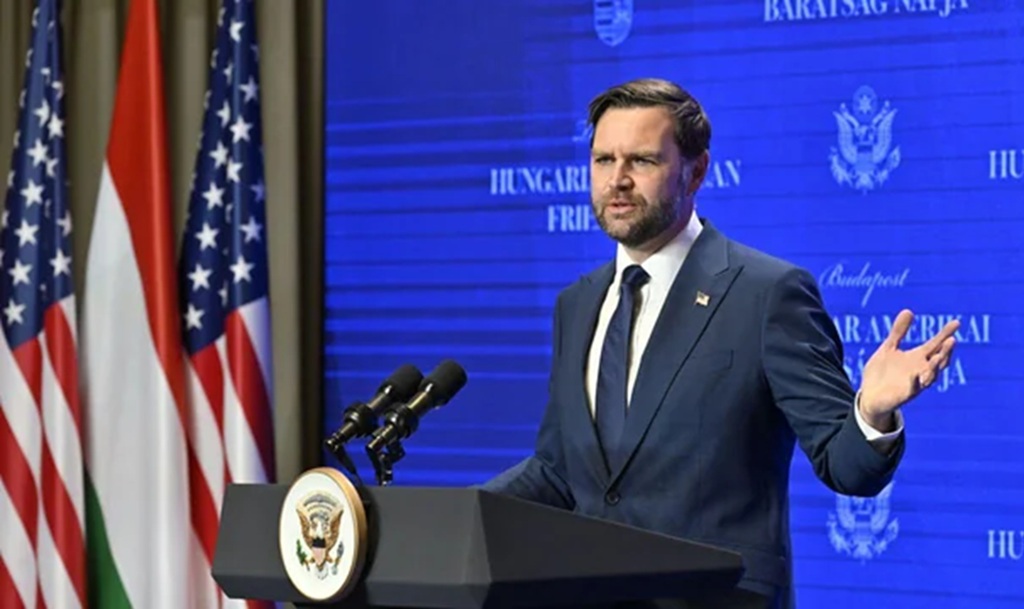
WASHINGTON, D.C. – The United States is making a massive, historic change to its military presence in Europe. Vice President JD Vance defended the move this week, offering strong words for European leaders who are furious about the decision.
President Donald Trump recently ordered the withdrawal of 5,000 troops from Germany. Following this, the Pentagon also paused a planned deployment of 4,000 troops to Poland. This pivot marks a completely new era for American and European diplomatic relations.
For decades, the European Union has relied heavily on the American military for its defense shield. Now, the Trump administration is loudly changing the rules. European capitals are struggling to process the sudden shift. Meanwhile, the White House insists that this is exactly what the American people voted for.
Vance Defends the “America First” Strategy
JD Vance spoke clearly and aggressively to reporters at the White House on Tuesday. He firmly denied that the United States is completely abandoning its international allies. Instead, he painted the controversial move as a long-overdue, necessary adjustment. He wants Europe to finally take charge of its own national security.
“The United States cannot be the policeman of the world,” Vance stated directly to the press. He noted that the dramatic decision is perfectly consistent with the president’s long-term goals. “The president has not said that he’s taken all of the troops out of Europe, but Europe has to stand on its own two feet.”
Vance did not hold back his frustration. He aimed his sharp comments directly at European politicians. Many of these leaders have openly and loudly criticized the Trump administration’s foreign policy actions. The vice president insisted that this military withdrawal is not a petty punishment. Instead, he called the pause in Poland a “standard delay in rotation” and a strategic shift of American resources.
Why Is Trump Pulling Troops Right Now?
The decision to move thousands of troops comes at an incredibly tense time in global politics. The world is watching closely. Here is a clear breakdown of what actually led to this historic policy shift:
- The War in Iran: President Trump has repeatedly criticized NATO members over the past few months. He claims they completely failed to support Washington in the recent conflict with Iran. This war, initiated by the US and Israel, caused serious friction with several European allies who preferred diplomacy.
- A Bitter Spat with Germany: German Chancellor Friedrich Merz publicly criticized the Middle East conflict. Merz claimed the US had been “humiliated” on the global stage. Soon after this public insult, Trump ordered the rapid removal of 5,000 troops from Germany.
- Italy Under Review: Trump also hinted strongly at removing military forces from Italy. This threat happened right after Italian Prime Minister Giorgia Meloni defended Pope Leo XIV against American criticism.
- Decades of Financial Demands: For many years, Trump has aggressively pushed NATO nations to spend more money on their own defense budgets. He firmly believes American taxpayers carry far too much of the financial burden for wealthy European countries.
The Immediate Impact on Poland and NATO
Poland was eagerly expecting 4,000 new American troops to arrive soon. Now, that highly anticipated deployment is on indefinite hold. The Pentagon officially paused the movement of a Texas-based brigade combat team just days before they were scheduled to deploy. This abrupt halt surprised and alarmed many top officials in Warsaw.
However, the Pentagon quickly tried to smooth things over. They publicly called Poland a “model US ally.” US Defense Secretary Pete Hegseth even made a personal phone call to the Polish Deputy Prime Minister. Hegseth desperately tried to assure Poland that the US remains fully committed to its long-term defense.
Meanwhile, NATO leaders in Brussels are trying to stay calm and project strength. NATO Supreme Allied Commander Europe, General Alexus Grynkewich, said the troop withdrawal absolutely does not harm the alliance. He confidently stated that the move does not negatively impact regional defense plans.
“As allies build up their capability, the United States is able to pull capability back and use it for other global priorities,” Grynkewich explained during a press conference. NATO chief Mark Rutte also loudly echoed this positive sentiment. He stated that the troop adjustments are a “structured” change and completely normal for a shifting global landscape.
What Happens Next for European Defense?
Europe is now facing a very harsh new reality. The struggling European Union must figure out exactly how to protect its own borders without heavy, daily American support. This massive undertaking will take immense time, vast amounts of money, and serious political willpower from divided nations.
Here are the immediate, difficult challenges the European continent faces today:
- Building Real Military Capacity: Major wealthy countries like Germany and France need to urgently invest billions of euros into their own armed forces. They can no longer easily rely on American tanks, hardware, and foot soldiers.
- Replacing US Combat Roles: The United States fully expects to shrink the pool of combat forces it offers to the NATO Force Model. Europe must quickly figure out how to fill this massive strategic gap.
- Maintaining Continental Unity: Eastern European nations, like Poland and the Baltic states, feel incredibly nervous right now. Western Europe must somehow assure them that the EU can actually provide real defense against potential threats from Russia.
A Bitter New Era of Transatlantic Relations
The historic relationship between the United States and Europe is changing incredibly fast. The cozy days of unconditional, unlimited American military support seem to be completely over. The Trump administration is now focusing heavily on the Asia-Pacific region and pressing domestic security issues.
JD Vance made it crystal clear that Washington is looking out for American citizens first. “We’re talking about shifting some resources around in a way that maximizes American security,” he proudly said. He added with a shrug, “I don’t think that’s a bad thing for Europe.”
However, many vocal critics in Washington are deeply worried. Some prominent American lawmakers strongly fear that Trump is recklessly abandoning key, historic allies. They firmly believe this sudden move could severely weaken global stability and empower bad actors. Representative Don Bacon angrily called the sudden deployment delay in Poland “a slap in the face” to loyal Baltic friends.
Despite the intense domestic and international pushback, the White House is standing firm on its decision. The aggressive message to Europe is clear, simple, and blunt: step up and pay up.
The Difficult Road Ahead
European political leaders are now frantically scrambling behind closed doors. They desperately need to find a realistic way to work with the unpredictable Trump administration while rapidly building their own independent armies. They will actively seek clarity and reassurances from US Secretary of State Marco Rubio at an upcoming, high-stakes meeting in Sweden later this week.
The upcoming NATO leadership summit in Turkey this July will be incredibly crucial for the world. Global leaders must successfully show the watching world that the historic alliance is still strong and united. They must definitively prove that Europe can actually handle its own complex security in a very dangerous world.
For right now, JD Vance and Donald Trump have successfully sent a powerful, undeniable message. The United States military will no longer willingly serve as an endless, free security blanket for the European continent. Europe must now bravely step into the spotlight and learn to defend itself. The entire world is watching closely to see if the struggling EU is truly ready for the massive challenge.
Trending News:
JD Vance Warns California and Other Blue States Over Medicaid Fraud
Vice President JD Vance Accuses Ilhan Omar of Immigration Fraud




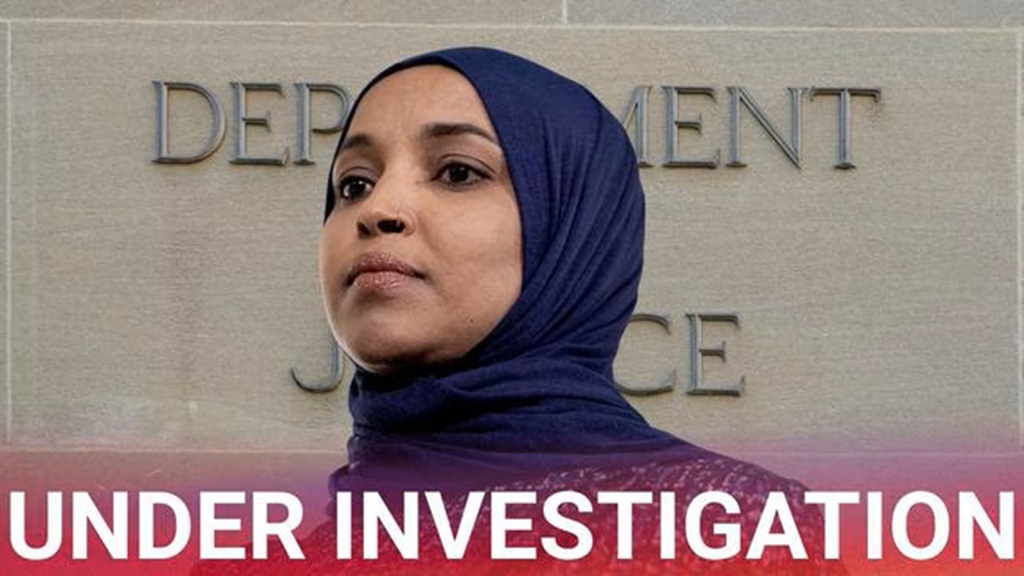
WASHINGTON D.C. — Few political figures have been subjected to the level of intense scrutiny and persistent rumors as U.S. Representative Ilhan Omar (D-MN). For years, a sensational allegation has circulated among conservative media circles and political opponents: that Omar committed immigration fraud by marrying her own brother to bypass U.S. immigration laws.
Despite aggressive demands for federal investigations and relentless social media campaigns, the core claims remain unproven. However, the controversy continues to cast a long shadow over her political career, fueled by formal complaints, right-wing legal challenges, and recent clashes with federal immigration enforcement in Minnesota.
Here is a comprehensive look at the origins of the rumor, the investigations it sparked, and the political reality surrounding one of America’s most high-profile lawmakers.
The Origins of a Sensational Rumor
The allegation that Ilhan Omar married her brother first surfaced in 2016. At the time, Omar was running for a seat in the Minnesota state legislature. The claim originated on an obscure internet forum and was quickly picked up by conservative bloggers.
The core of the allegation centers on Omar’s complex marital history:
- 1997: Omar and her family arrived in the United States as refugees from Somalia.
- 2002: Omar applied for a marriage license with Ahmed Hirsi. However, they were married only in the Muslim faith tradition, not legally. They had two children together before separating around 2008.
- 2009: Omar legally married a British citizen named Ahmed Nur Said Elmi.
- 2011: Omar and Elmi separated. She later reconciled with Hirsi, and they had a third child together in 2012.
- 2017: Omar finalized her legal divorce from Elmi and legally married Hirsi (the couple later divorced in 2019).
Critics allege that Ahmed Nur Said Elmi is actually Omar’s biological brother. They claim the 2009 marriage was a fraudulent arrangement designed to help him obtain U.S. citizenship or federal financial aid for college.
The Push for Federal Investigations
While rumors swirled online, political opponents actively attempted to escalate the issue from internet gossip to legal peril. Over the years, several conservative watchdog groups and political figures have formally requested federal investigations into Omar’s immigration and tax records.
In 2019, the conservative non-profit organization Freedom Watch petitioned the U.S. Department of Homeland Security (DHS) and U.S. Immigration and Customs Enforcement (ICE) to investigate Omar for alleged immigration fraud. When the government did not act on the petition, Freedom Watch filed a lawsuit in federal court to compel the agencies to initiate deportation proceedings. The complaint alleged that she made false statements to obtain refugee status and committed marriage fraud.
The push for an investigation was not limited to outside watchdog groups. Donald Trump frequently amplified the rumors during his presidency. He publicly suggested that Omar should be investigated for marrying her brother, using the allegations as a recurring talking point at his rallies to question her legitimacy as a U.S. citizen.
Representative Omar’s Strong Denials
Representative Omar has vehemently and repeatedly denied the allegations. She has called them “disgusting lies” rooted in Islamophobia, xenophobia, and racism. Furthermore, she has pointed out the sheer lack of documentary evidence supporting the claim that Elmi is her brother.
Her office has released statements detailing her marital timeline and explaining that her personal life has been heavily distorted for political gain.
- Lack of Evidence: No definitive public records—such as birth certificates from Somalia, which lacked a functioning central government during the 1990s civil war—have been produced to prove Elmi and Omar share parents.
- Political Motivation: Omar’s defenders argue that the allegations are a calculated smear campaign designed to delegitimize one of the first Muslim women elected to Congress.
- Targeted Harassment: The intense focus on her immigration history is seen by many as a broader attack on refugees and immigrants of color.
How Media and Watchdogs Have Handled the Claims
Journalistic investigations by major news outlets have attempted to uncover the truth behind the allegations. Reporters from local Minnesota newspapers to national investigative teams have spent years digging into public records, social media archives, and court documents.
While journalists uncovered that Omar did file joint tax returns with Ahmed Hirsi while still legally married to Ahmed Nur Said Elmi—a tax error for which she was fined and subsequently corrected—they have consistently come up empty-handed regarding the incestuous marriage claim. Independent fact-checking organizations have repeatedly evaluated the claims, concluding that there is no definitive proof to support the rumor that Elmi is her brother.
Despite this, the ecosystem of hyper-partisan media operates on a different standard of evidence. The lack of traditional documentation from war-torn Somalia creates an information vacuum. In this void, speculative theories thrive. Critics argue that Omar’s refusal to release certain private family records is an admission of guilt. Conversely, her supporters maintain that no elected official should be forced to prove a negative based on a racially charged conspiracy theory.
The Political Landscape and Ongoing Immigration Clashes
The controversy over Omar’s immigration status cannot be divorced from the broader political battles over immigration enforcement in her home state. The political climate in Minnesota has remained incredibly tense regarding federal immigration policies.
Recently, aggressive operations involving the deployment of federal immigration agents to the Twin Cities by the Department of Homeland Security have sparked massive pushback. Local officials, including the Minnesota Attorney General, have filed lawsuits to halt such operations, arguing they reflect retaliatory actions designed to target Somali and Latino communities.
For Omar, the heavy federal presence in her district is deeply intertwined with the years of rhetoric questioning her own immigration legitimacy. The allegations against her have served as a foundational narrative for hardline immigration policies that disproportionately impact her constituents. When high-level politicians legitimize internet rumors about a sitting congresswoman, it sets a precedent for how federal agencies engage with the immigrant communities she represents.
The Anatomy of Political Misinformation
The ongoing saga of Ilhan Omar’s alleged marriage to her brother serves as a powerful case study in modern political communication. It demonstrates exactly how unverified claims can migrate from obscure message boards straight to the halls of Congress.
While no federal law enforcement agency has ever publicly charged Omar with immigration fraud, the demand for an investigation has become a powerful political tool in itself. In the digital age, an allegation does not need to be proven in a court of law to be effective; it only needs to be repeated enough times to cast doubt.
As the political divide in the United States continues to widen, the scrutiny over Ilhan Omar’s past is unlikely to fade. However, separating fact from partisan fiction remains essential for an informed electorate. Until concrete, legal evidence is presented by a credible investigative body, the claim that Representative Omar committed immigration fraud by marrying her brother remains an unverified, albeit highly publicized, political attack.
Related News:
Ilhan Omar Allegedly in Hiding Amid Minnesota Fraud Allegations
Ilhan Omar Refuses to Turn Over Documents to Minnesota Fraud Committee
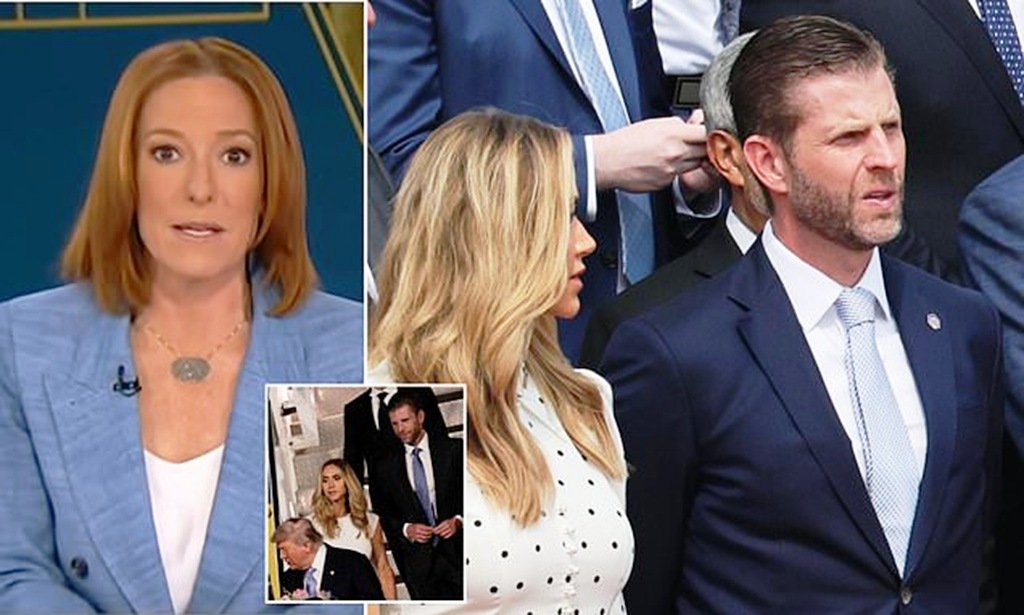
FLORIDA – A fierce public battle has erupted between Eric Trump and former White House press secretary Jen Psaki. The son of President Donald Trump has officially threatened to sue Psaki and her network, MS NOW (formerly known as MSNBC). He claims they spread false information about his business ties in China. Ultimately, the clash highlights ongoing debates about family business conflicts of interest in the political world.
The drama started on Wednesday during Psaki’s television show, The Briefing With Jen Psaki. During her opening monologue, Psaki questioned whether Eric Trump’s recent trip to China with his father crossed a major ethical line.
To back up her claims, Psaki referenced a recent report from the Financial Times. The report noted that Eric Trump traveled with his father on an official state visit to China. At the same time, a financial tech company called ALT5 Sigma—which has deep ties to the Trump family’s cryptocurrency business, World Liberty Financial—was reportedly exploring a major corporate deal.
According to the news segment, ALT5 Sigma was looking into partnering with a Chinese computer chip maker named Nano Labs. Their goal was to build artificial intelligence data centers. Psaki argued that since Eric Trump took over the family business to avoid conflicts of interest while his father is in the White House, his presence on this trip was highly questionable. She told her viewers that he is supposed to be fully separated from any U.S. government activities.
Eric Trump’s Threat of Legal Action
Eric Trump did not take these claims lightly. On Friday, he took to the social media platform X to announce his plans to file a lawsuit against both Psaki and MS NOW. He directly shared the video clip of Psaki’s monologue and strongly denied every claim she made.
In his post, Eric outlined a few key defenses:
- No Board Seat: He stated that he has never been on the board of ALT5 Sigma, calling Psaki’s statements “blatant lies.”
- No China Business: He insisted he has absolutely zero business interests, investments, or properties in China.
- A Family Visit: He explained that he only went on the trip as a “loving son” who wanted to support his father during a historic moment.
- Sightseeing: He added that he and his wife, Lara Trump, spent their time safely visiting the Great Wall of China while the official political meetings took place.
Eric also pointed out that any person with access to a simple internet search could look at the company’s annual reports to see that he was not running the business. An earlier report by Bloomberg noted that his name had been removed from the ALT5 leadership webpage late last month.
Jen Psaki Fires Back with Receipts
If Eric Trump thought his threat of a lawsuit would quiet the MS NOW host, he was mistaken. Later that same Friday, Psaki dedicated another segment of her show to addressing his comments directly.
Instead of backing down, Psaki brought what she called the “receipts.” She played a video clip from last summer showing Eric Trump at the Nasdaq stock exchange. In the video, he was formally introduced to the crowd as an ALT5 Sigma “board member” and “director” as the company rang the opening bell.
Psaki then walked her viewers through the complicated history of Eric’s connection to the company. She noted a few key points:
- At one point, SEC financial filings and the company’s own website clearly listed Eric as a director.
- In later documents, his title was officially changed to a board “observer.” An observer usually cannot vote at meetings, but is still allowed to attend them and gather inside information.
- ALT5 Sigma recently bought a 7.5 percent share in World Liberty Financial, the Trump family’s crypto firm, which makes the close business relationship clear.
Psaki ended her segment by casting doubt on Eric’s claim that he was simply playing the role of a supportive son on the trip, telling her audience, “I’ll let you be the judge.”
What This Means for the Trump Family Business
This public feud is more than just a disagreement between a TV host and a president’s son. Furthermore, it points to a much larger, ongoing issue in American politics. Throughout Donald Trump’s political career, his family’s massive global business empire has faced heavy scrutiny from ethics watchdogs.
Because the Trump Organization holds properties, golf courses, and licensing deals all over the world, critics constantly worry that the line between official government duties and private business deals might get blurred. When family members travel on taxpayer-funded diplomatic trips, questions about their private motives will naturally follow. In this case, Eric Trump was seen exiting the plane alongside several U.S. business executives, which only added fuel to the fire.
The recent rise of cryptocurrency has added a new layer of complexity to these financial disclosures. The Trump family’s venture into the crypto space shows that their business interests are evolving fast. As these companies enter into international agreements, the public will naturally ask questions about who ultimately benefits from the money.
For now, it remains unclear if Eric Trump will actually follow through with a formal defamation lawsuit or if this is simply a heated war of words meant to defend his public reputation.
Taking a major news network to court requires proving that the host acted with actual malice, which is often a very high legal bar to clear. However, the situation serves as a clear reminder that the media will continue to watch the Trump family’s business moves very closely.
Trending News:
Blue States Now Weighing ‘Exit Tax’ on Fleeing Residents
Trump Embarrasses CNN’s Kaitlan Collins in Brutal Swipe at The White House
WASHINGTON, D.C. – President Donald Trump recently wrapped up a high-profile, three-day visit to Beijing, China. After hours of meetings, formal dinners, and military parades, the president took to social media and public press conferences to call the trip a “tremendous success.”
During this major diplomatic event, Trump met face-to-face with Chinese President Xi Jinping. The two leaders discussed heavy topics, including global trade rules and the ongoing security issues surrounding North Korea. But what exactly happened behind closed doors, and what does this mean for everyday citizens?
Here is a clear, simple breakdown of the trip, the deals made, and what it means for the future of US-China relations.
The “State Visit-Plus”: A Grand Welcome
When the American president arrived in Beijing, the Chinese government went out of its way to roll out the red carpet. In fact, officials called it a “state visit-plus.” This meant the welcome was even bigger and grander than a normal visit from a foreign leader.
Right after landing, President Trump and First Lady Melania Trump were taken on a private tour of the Forbidden City. This massive, ancient palace was the home of Chinese emperors for hundreds of years. Having a private tour and dining inside the palace is an incredibly rare honor. It showed that President Xi wanted to build a strong personal friendship right from the start.
Key highlights from the welcome included:
- A traditional Chinese opera performance.
- A private tea ceremony inside the historic palace walls.
- A massive welcoming ceremony at the Great Hall of the People, the following morning, complete with a military marching band and cheering children.
According to reports from Reuters, this level of extreme flattery was a smart move by Beijing to keep the mood positive before diving into difficult political talks.
The $250 Billion Business Deals
One of the main reasons for the trip was to discuss money and trade. Before the visit, President Trump had often complained that the trade gap between the US and China was unfair. He wanted China to buy more American goods to balance things out.
During the visit, business leaders from both countries signed a massive pile of contracts. In total, these deals were valued at roughly $250 billion.
Here are a few of the major agreements announced:
- Aviation: China agreed to buy 300 airplanes from Boeing, a deal worth over $37 billion.
- Energy: A massive $43 billion project was announced to help develop natural gas resources in the state of Alaska.
- Technology: American companies like Qualcomm signed deals to sell billions of dollars’ worth of computer chips to Chinese phone makers.
- Agriculture: China agreed to buy more American soybeans and pork, which is good news for farmers in the American Midwest.
However, experts looking closely at the fine print noted that many of these agreements were not final contracts. Instead, they were preliminary agreements, meaning they were promises to do business in the future. As noted by Bloomberg, some of these deals were already in the works long before the trip even started. Still, the large number gave both leaders a big win to show to the public.
Talking Tough on North Korea
While trade was the biggest talking point, security was a close second. At the time of the visit, North Korea was actively testing weapons, causing alarm across the globe.
President Trump used his time in Beijing to push President Xi to do more. Because China is North Korea’s biggest trading partner and closest neighbor, the US believes China has the power to stop North Korea’s dangerous behavior.
During their joint statement, both leaders agreed that they do not want North Korea to have nuclear weapons. They promised to work together to keep the region safe. However, President Xi did not announce any strict new punishments against North Korea during the meetings. He mostly repeated his usual message that all sides need to talk peacefully.
A Focus on Personal Friendship
One of the most interesting parts of this three-day trip was the clear focus on personal friendship. Throughout the visit, both leaders constantly praised each other.
President Trump called President Xi a “highly respected and powerful representative of his people.” He even went so far as to say he did not blame China for the unfair trade gap. Instead, he blamed past American leaders for letting the rules get out of hand. This was a big change from his previous speeches, where he often spoke very harshly about China’s trade habits.
President Xi also played the role of a gracious host. He smiled warmly, walked closely with his guest, and made sure the American president felt respected at every turn.
Why does this matter? In the world of global politics, personal relationships can sometimes prevent small arguments from turning into major conflicts. By building a friendly connection, both men created a safety net for future disagreements.
Day-by-Day Breakdown of the Trip
To understand exactly how the “tremendous success” unfolded, here is a simple timeline of the three days in Beijing:
Day 1: Setting the Stage
The visit began with a focus on history and culture. The private tour of the Forbidden City allowed the two leaders to chat informally without the pressure of reporters asking tough questions. It set a relaxed and friendly tone.
Day 2: Down to Business
This was the most important day of the trip. The morning started with formal meetings between American and Chinese officials. In the afternoon, they held a joint press event to announce the $250 billion in trade deals. Notably, they did not allow reporters to ask questions, a move that surprised some American journalists but followed strict Chinese customs. The day ended with a beautiful state dinner.
Day 3: Saying Goodbye
The final morning was brief. President Trump thanked President Xi for his incredible hospitality, posted positive messages on social media, and boarded Air Force One to continue his tour of Asia. Meanwhile, First Lady Melania Trump stayed behind for a few extra hours to visit the Great Wall of China and a local zoo to see giant pandas.
Was the Trip Truly a Success?
When looking back at the three days, was it actually a tremendous success? The answer depends on who you ask.
For President Trump, the trip was exactly what he wanted. He received the respect and grand treatment he values on the world stage. He also got to announce huge financial numbers that looked great on television back home. For a leader focused on deal-making, walking away with a $250 billion headline was a major victory.
For President Xi, the visit was also a major win. He managed to keep the American president happy without making any major changes to China’s core policies. He did not have to alter his long-term plans for the Chinese economy, and he avoided any public arguments about human rights or internet freedom. As highlighted by experts at the Council on Foreign Relations, China successfully managed the visit by using flattery and grand gestures.
President Donald Trump’s three-day trip to China was a masterclass in modern diplomacy. It featured breathtaking sights, massive amounts of money, and careful political balancing. While the long-term impact of the $250 billion in trade deals remains to be seen, the trip clearly achieved its short-term goal: bringing the leaders of the US and China closer together.
By keeping the language friendly and focusing on shared goals, both Trump and Xi proved that even the biggest competitors can sit at the same table and find common ground. Whether or not that common ground lasts is a question only time will answer.
Trending News:
Democrats Panic as Trump Mobilizes Massive Election Army for Midterms
Still the Champ: Why the Political Obituary of Donald Trump Keeps Getting It Wrong


The Trump Effect: How Endorsed Candidates Are Dominating Key State Primaries

JD Vance Claps Back at European Outrage Over US Troop Withdrawal

Ilhan Omar Under New Investigation For Immigration Fraud

Thomas Massie Prepares to Face Angry MEGA Primary Voters

Ilhan Omar Allegedly in Hiding Amid Minnesota Fraud Allegations

Eric Trump Vows to Sue Jen Psaki and MS NOW Over False China Trip Allegations

Virginia Attorney General Jay Jones’s Fails to Restore Congressional Map

Trump Returns to White House After “Tremendous” 3-Day Trip to China

Minnesota Lawmakers Push for Federal Subpoena of Ilhan Omar in $250 Million Fraud Probe

Still the Champ: Why the ‘Political Obituary’ of Donald Trump Keeps Getting It Wrong

Thai Billionaire Charged With Lese Majeste Over Facebook Post

Facebook Login Feature – Clash of Clans

Russia Bans Facebook, Meta Says It’ll Do “Everything” To Restore Service

4 Things you can do to take your Facebook Lead Generation to the Next Level

Zuckerberg to Allow Violent Speech on Russia After Facebook Blocked

Facebook Loses $200 Billion as Users Shift to TikTok

Downloading Facebook Videos Anonymously with High Quality Video through Snapsave app

The Best Site to Buy Real Facebook Likes and Followers in 2022

Chinese Man Arrested for Using Facebook to Dupe Cryptocurrency Investor

Google and Facebook Under Huge Pressure Over User Privacy

Jimmy Kimmel Slammed for “Vile” Melania Trump “Expectant Widow” Joke

President Trump Addresses Nation on War with Iran

Trump Warns NATO Allies: America Won’t Protect Slackers After Iran Clash

Senate Hearing on Fraud and Foreign Influence Turns Tense Over Minnesota Scandals

CNN Forced to Backtrack Its Reporting on Trump’s Iran Talks

Joe Rogan Slams Gavin Newsom for Mocking Nick Shirley

Mosque Set Ablaze in Iran a Citizens Revolt Against the Islamic Regime

AOC Accuses Jessie Watters of Fox News of Sexualizing and Harassing Her

JD Vance Exposes Walz’s Fraud and CNN’s Lies in White House Presser

Milestone Card Credit: How the Milestone MasterCard Can Transform Credit
-

 Politics2 months ago
Rep. Ilhan Omar Faces Heat as Minnesota Voters Seek Change
-

 Politics3 months ago
Calls Mount to Expel Rep. Ilhan Omar from Congress
-

 News3 months ago
Austin Tucker Martin Who Was He And Why Was He at Mar-a-Lago?
-

 News2 months ago
NATO Chief Says 22 Nations Working With US to Keep the Strait of Hormuz Open
-

 News3 months ago
Ilhan Omar Accused of Leaking U.S. Strike Plans to Iran as Tensions Rise
-

 Politics2 months ago
CNN Reveals Trump Has a Perfect 100% Approval Rating Among MAGA Voters
-

 News3 months ago
Mass Celebrations Erupt Across Iran as Crowds Topple Statue of Supreme Leader
-

 Crime2 months ago
Missing Virginia High School Coach Update, March 2026