Politics
Democrats Fascist and Nazi Rhetoric Just Isn’t Resognating With Voters


WASHINGTON, D.C — After Donald Trump’s sweeping win in 2024, a hard truth has set in for Democrats. Years of alarms about fascism, Nazis, and threats to democracy have not cut through the daily grind.
With prices high and budgets tight, many voters care more about the weekly shop and the fuel gauge than rhetoric about tyranny. The party’s shift to the left has also cost it ground with moderates. If that continues into 2026, analysts say a heavy defeat could lock in Republican strength for years.
The story has repeated since 2016. Party leaders, candidates, and surrogates cast Trump and Republicans as racists or white supremacists, and as dangers to the republic. From Hillary Clinton’s “deplorables” remark in 2016 to Kamala Harris calling Trump a “fascist” in the 2024 debates, the message barely changed.
The aim was to fire up the base and pull in independents by tying GOP policies to dark chapters of history. Polling in 2025 suggests this is falling flat. A Reuters/Ipsos survey in September showed 26% rated “political extremism or threats to democracy” the top issue.
The economy came in at 22%, and that was with Democrats heavily represented among those citing democracy. Among independents, the gap was wider. A Pew Research Center poll in October found 42% focused on rising prices and bills such as food and housing, while only 18% prioritised concerns about democratic decline.
Democrats Out of Touch
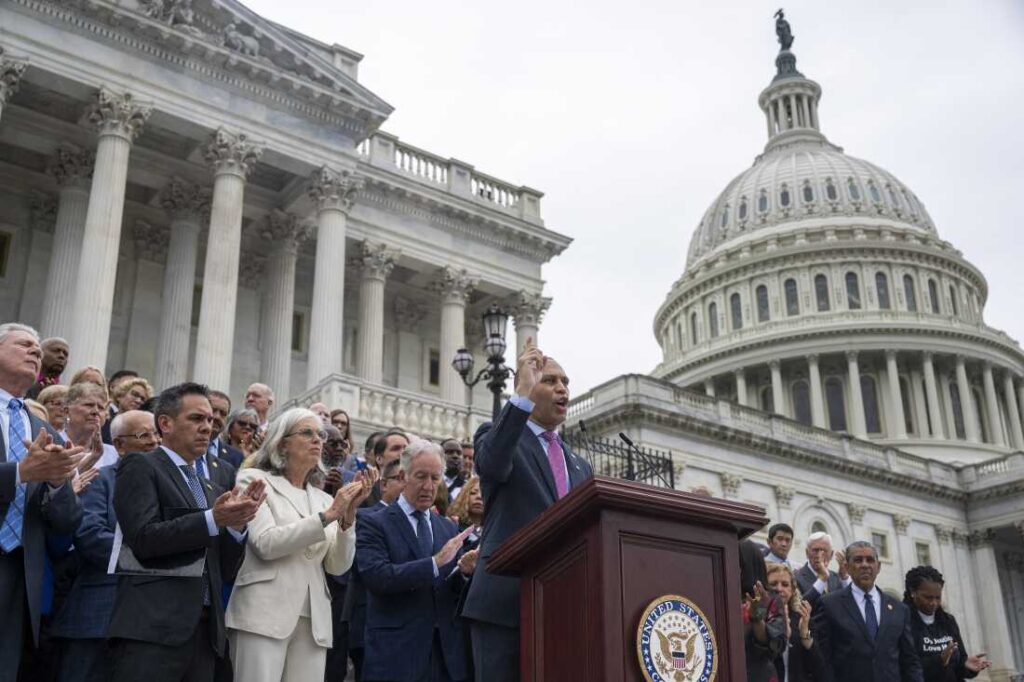
“Democrats have been shouting ‘Nazi’ for nearly a decade, but voters are not deaf, they are broke,” said Mark Penn, former Clinton pollster and CEO of the Harris Poll. In a post‑election memo in November 2024, he attacked the “politics of demonisation”, arguing that branding opponents “Hitler” or “fascist” pushed moderates away and failed to win sceptics.
“It went way over the top,” he told The Hill. He added that the labels strengthened Trump’s base and made Democrats look out of touch. Data support the point. A CBS/YouGov poll in July 2019 on Trump’s tweets about congresswomen of colour found 84% of Democrats called them “racist”, but only 34% of all Americans agreed.
Among Republicans, 70% rejected the term. By 2025, the pattern remains. On X (formerly Twitter), one Democrat wrote in October, “Ppl heard the warnings. They just didn’t care,” blaming the party’s platform for missing what voters value.
Voter fatigue has set in after years of repetition. Historian Ruth Ben-Ghiat has compared Trump’s “enemy within” lines to Mussolini’s rhetoric. She has also noted on PBS that while the parallels have merit in scholarship, they often backfire in politics because people switch off. A 2025 Times/Siena poll shows the change.
A majority, 55%, still say the United States is a democracy. Yet concern over polarisation now rivals inflation only among Democrats. Some 52% of Democrats see a crisis for democracy. Across the wider electorate, economic worries hold first place. Republicans put the economy top, followed by “Democrats” as the problem. That is a poor sign for a message built on defending democracy.

Trump Stealing Moderates
The party’s move left has added to the strain. Gallup’s 2024 figures point to a major shift in self‑identification. Some 55% of Democrats now call themselves liberal or very liberal, up from 25% in 1994. The share calling themselves moderate fell from 48% to 34% over the same period. That has electoral costs.
In 2024, Trump gained with parts of the Democratic base. Younger voters, Latinos, and Black voters shifted right on crime, immigration, and public safety, according to AP VoteCast. The drift continued after the election. High‑profile exits fed the narrative. Former White House Press Secretary Karine Jean‑Pierre left the government. Florida Senate Minority Leader Jeff Pizzo said in April that the state party was “dead”. Senator Joe Manchin, an independent in recent years, remained a symbol of the rift.
Moderates say the party lost touch with core economic concerns. Analyst Quantus wrote in a 2024 Substack that a leftward turn on culture, shaped by progressive elites, widened the gap with the median voter. Immigration and criminal justice were key points of friction. Martha Johnson of Northeastern University argued that 2024 losses grew from poor tactics.
The campaign leaned too hard on abortion, which helped Harris voters but did not move enough swing‑state independents, and it played down wages. A Brookings review reached a similar view. By 2022, 54% of Democrats called themselves liberal. Nonwhite voters, once the backbone of the coalition, were less aligned with white liberals on ideology, which fed the 2024 slippage.
The fallout shows up in brand damage. A Gallup survey in March 2025 found 45% of Democrats wanted the party to move to the centre, up sharply from 2021. Only 43% of Republicans said their party should stay as it is. A centrist meet‑up in June 2025, billed as the “CPAC of the Center”, featured figures like Rep. Tom Suozzi.
He blamed “acquiescence to liberal groups” for 2024 and urged a turn to economic populism over “hyperonline activism”. On X, analysts noted the same trend. “Moderates are leaving because the party no longer reflects their values on public safety and immigration,” one wrote in May.
Republicans Odds Rising
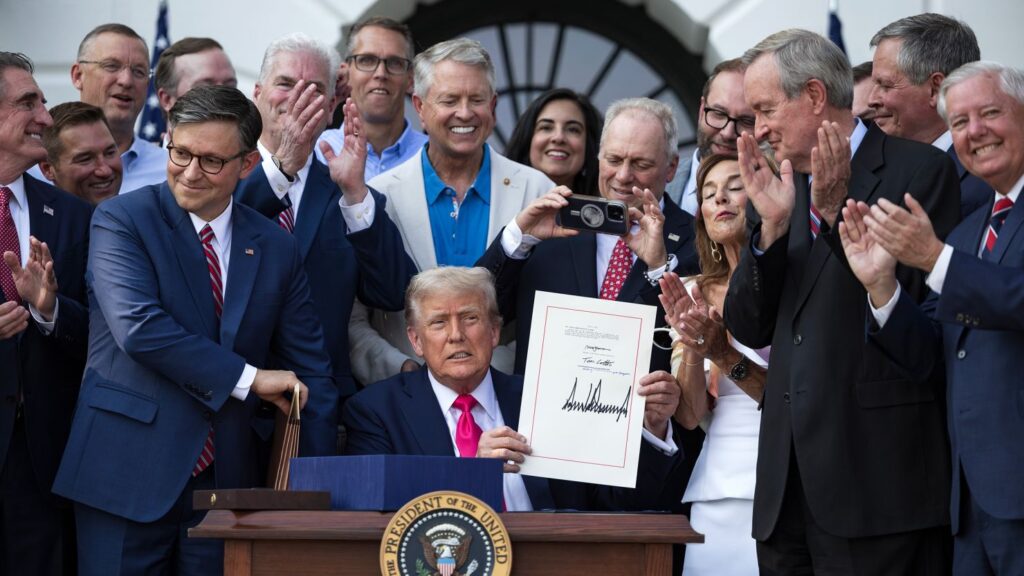
The 2026 map is unkind, yet midterm history helps the party out of power. Since 1950, the party in the White House has lost House seats in all but two midterms, with an average loss of 26. Republicans defend 22 Senate seats, including Ohio and Florida specials. Democrats need a net four to flip control.
Sabato’s Crystal Ball model gives Democrats a decent shot at taking the House, with Trump near 42% approval and inflation still above 3%. William Galston at Brookings cautions against easy assumptions. Trump’s approval, 53% in early 2025 per Reuters/Ipsos, could sink if tariffs raise prices. But internal fights could waste the “midterm loss rule” as an advantage.
Sticking with “threat to democracy” as the main theme may deepen the losses. A Newsweek poll in June 2025 showed Republican odds rising on economic pain. Yet Democrats have overperformed in some specials. They flipped Iowa’s 1st District by 4 points, showing what a reset could deliver.
An Emerson poll in August reported voters split on National Guard deployments, but were keen on practical leadership. The economy led at 33%, while democracy threats sat at 24%. The chorus on X is blunt. “No one can say they were not warned… but Americans give a crap about inflation over party ID,” a conservative posted in February.
A better route is clear. Drop the apocalyptic tone and talk about household costs. As one X user put it, “Democracy can be really stupid sometimes.” The party can still listen to moderates who are leaving and to families trimming the weekly shop. If it does, a rebound is possible. For Democrats, 2026 is not only about Trump. It is a test of identity. Ignore it, and a long spell in the wilderness awaits.
Related News:
The Democratic Party’s Leadership Vacuum Fuels Chaos and Exodus


The Fallout of the Omar Raid: Guilty Until Proven Innocent?

DOJ Guidelines on Political Investigations: Rules Explained

RCMP Raids Lion Electric Amid $500M Taxpayer Fraud Probe

Carney’s US Trade War a Failure: Cost Shoppers $100M Weekly

Food Bank Lines Surge in Canada While Carney Pushes Foreign Aid

EU Parliament Erupts Over Canada’s Associate Member Bid

David Eby Campaign Stumbles Amid Mailer Scandal

Alberta Referendum Results Shift as Vote Tally Continues

Fedeal Investigators Obtain Ilhan Omar’s DNA

Has Mass Immigration Has Destroyed Canadian Society
Opinion: Is Modern Political Empathy Really About Self-Image?
Opinion: Canada’s Combating Hate Act Threatens Free Speech
US Trade Moves Put Massive Pressure on Canada

How Progressivism Replaced Religion With A New Secular Faith
Canada Sheds 68,000 Jobs As Economic Fears Deepen

Uncovering the Truth Behind Inequality: A Bold New Vision

Pierre Poilievre Critiques Reporter Who Questions His Leadership

Opinion: What South America’s Political Shift Means for Canada

Why Alberta Separatist Leaders Say It’s Time to Leave Canada

Quebec Election 2026: Will the Province Leave Canada?

Jimmy Kimmel Slammed for “Vile” Melania Trump “Expectant Widow” Joke

President Trump Addresses Nation on War with Iran

Trump Warns NATO Allies: America Won’t Protect Slackers After Iran Clash

Senate Hearing on Fraud and Foreign Influence Turns Tense Over Minnesota Scandals

CNN Forced to Backtrack Its Reporting on Trump’s Iran Talks

Joe Rogan Slams Gavin Newsom for Mocking Nick Shirley

Mosque Set Ablaze in Iran a Citizens Revolt Against the Islamic Regime

AOC Accuses Jessie Watters of Fox News of Sexualizing and Harassing Her

JD Vance Exposes Walz’s Fraud and CNN’s Lies in White House Presser

Milestone Card Credit: How the Milestone MasterCard Can Transform Credit


-

 News9 months ago
China-Based Billionaire Singham Allegedly Funding America’s Radical Left
-
Politics10 months ago
2026 Midterms Guide: Candidates, Key Issues, and Battleground States
-
Politics8 months ago
Ilhan Omar’s Connections to Convicted Somali Fraudsters Surface
-
Politics9 months ago
CNN Delivers Stark Reality Check to Democrats Over Voter ID
-
Politics7 months ago
Rep. Ilhan Omar Faces Heat as Minnesota Voters Seek Change
-
Politics9 months ago
Trump Approval Rating (February 2026 Poll Results, Approve vs Disapprove)
-
Politics10 months ago
Who Is Leading the Democratic Party in 2026?
-
United States10 months ago
Mosque Set Ablaze in Iran a Citizens Revolt Against the Islamic Regime