Politics
Historian Victor Davis Hanson Talks on Trump’s Vision for a Safer America


LOS ANGELES – In today’s rough-and-tumble political scene, few conservative thinkers carry as much weight as Victor Davis Hanson. A leading voice in classical and military history, he offers steady analysis in a time of noise and spin. As the Martin and Illie Anderson Senior Fellow in Classics and Military History at the Hoover Institution at Stanford, he applies a lifetime of study to current events.
Born in 1953 on his family farm in Selma, California, he shares the rural traditions he often writes about. A fifth-generation farmer, he worked full-time in orchards and vineyards from 1980 to 1984, then turned to teaching.
He earned a B.A. in classics at the University of California, Santa Cruz, in 1975, followed by a Ph.D. at Stanford in 1980. He founded the classics programme at California State University, Fresno, and later became professor emeritus there.
His awards match the scale of his scholarship. In 2007, President George W. Bush presented him with the National Humanities Medal for his work on Western thought. In 2008, he won the Bradley Prize for contributions to liberty and civic life.
Other honours include the Eric Breindel Award for Opinion Journalism (2002), the Claremont Institute’s Henry Salvatori Award (2022), and the American Spirit Award from the National World War II Museum (2021).
He has held fellowships with the National Endowment for the Humanities and the Alexander Onassis Foundation, and was named alumnus of the year by UC Santa Cruz. He has written more than two dozen books.
Victor Davis Hanson Syndicated
Key titles include The Western Way of War (1989), a major study of Greek hoplite warfare, and Carnage and Culture (2001), an account of why Western militaries have often prevailed through innovation and confidence. His essays appear in National Review, The Wall Street Journal, and The New York Times, and his syndicated columns reach a wide audience each week.
What makes Hanson a touchstone for many conservatives is his mix of historical insight and frank cultural critique. He often draws lines between ancient examples and modern dilemmas, comparing the complacency of late Rome to elite detachment in America, or reading lessons from the Peloponnesian War into recent foreign policy errors.
His appeal rests not only on learning, but on connection to place. He writes as a farmer-scholar from the Central Valley, not as a coastal insider. He backs traditional ideas like merit, free speech, and deterrence, which speak to readers weary of identity politics and expanding bureaucracy.
A Hoover Institution profile called his approach “principled realism”, a stance that some see as echoing Andrew Jackson’s spirit.
Influential figures such as Rush Limbaugh and Newt Gingrich have praised his clarity. Limbaugh hailed The Case for Trump, first published in 2019 and updated in 2024, as an ideal guide to the 45th president. In an academy that leans left, his position at Hoover gives him a central role as a classicist within modern conservatism, with reach from Capitol Hill to campaign war rooms.
Hasnons Case for Trump
Hanson’s case for Donald J. Trump is central to his recent work. He presents Trump not as a wrecking ball, but as a needed counterforce to a tired and self-protective class. In the updated The Case for Trump, he argues the 2016 result was a Jacksonian revolt, not a fluke. The outsider with no prior office overcame 16 Republican rivals and a well-funded Democratic effort by tapping the anger of the heartland.
That coalition included working-class whites, some union voters, and a fifth to a third of Latino and African American voters who felt looked down on by elites. Hanson compares Trump’s rise to ancient figures who upset entrenched circles, but he says the turbulence has purpose.
In his view, the country could not endure serial presidencies as volatile as Trump’s, yet after years of drift, it needed one outsider who would take on tasks that career politicians would avoid. He argues this posture allows Trump to uproot the stale practices of globalisation, identity sorting, and bureaucratic sprawl.
At home, Hanson frames a second Trump term, beginning in January 2025, as a counterrevolution on the scale of the New Deal, only with a restorative aim. In essays such as “Can Trump Revolutionize America?” in The Free Press (March 2025), he lists early claims of progress.
He points to tougher border policy aimed at reversing what he counts as 10 million illegal crossings under Biden, sweeping deregulation to cut federal costs by trillions over time, and tax changes that put growth ahead of deficits.
Radical Revolution
He says Trump ignores corporate pressure for cheap migrant labour, channels immigration through legal points of entry, and shifts culture from grievance to pride, a trend he links to public figures who once knelt for “systemic racism” and now celebrate wins. On trade and finance, he backs tariffs as a bid for fair-dealing with China and others, guarding American industry and shoring up the dollar’s reserve status.
In society, he targets “woke” orthodoxies. He casts universities as overpriced indoctrination centres that should lose public funds if they silence speech, and calls for procurement reforms in the armed forces to sweep away DEI rules that he believes hurt recruiting and morale. Grounded in his farming past and his study of Greek citizen-soldiers, he praises a system based on merit and duty.
He says this turn would correct the “radical revolution” of the 2020s, which he describes as an Obama third term under Biden, marked by open borders, expanding entitlements, and runaway debt. He wants a reset to constitutional standards and renewed class mobility.
On foreign affairs, Hanson argues the world grows safer when America projects toughness with restraint. He highlights what he calls Trump’s “principled realism”, or a Jacksonian do-not-tread-on-us stance that deters foes without starting new conflicts.
In The Case for Trump, he credits the first term with no major new wars, record domestic energy output that undercut OPEC, and the Abraham Accords, which he says supported a calmer Middle East.
He contends the Biden years rolled back these gains. After Trump’s 2024 win, Hanson points to swift moves he endorses, such as pausing aid to Ukraine to force a negotiated end, paired with resource deals, hitting Iran’s nuclear assets with precise strikes, and leaning on Europe to meet NATO duties in the face of Russian pressure in the Baltics.
Support Isn’t Hero Worshiping
He argues Biden’s approach rewarded bad actors, citing the Afghanistan exit, Chinese balloons, and Houthis attacks in the Red Sea. Under Trump, he says, leaders like Putin and Xi would rethink their plans. He claims tariffs crimp China’s Belt and Road push, and that Israel’s actions against Hamas and Iranian-linked sites gained from stronger US backing after 7 October.
Drawing on The Second World Wars (2017), he warns that American power is finite, so friends should find no better ally and enemies no worse foe. He believes Trump follows that rule, which in his view helps avoid long slogs like the Ukraine crisis or prolonged fighting in Gaza. In a 2025 Hoover podcast, he urges a review of the UN’s New York base, calling it a spent institution like the League of Nations, out of step with real threats.
Hanson says his support is not hero worship, but a judgment shaped by history. He casts Trump as the cure for what he describes as Barack Obama’s flawed reading of demography, where affirmative action grew into tribal politics, and for Joe Biden’s careful branding of radical measures as moderate.
He claims Trump’s knack for baiting elites exposes double standards, from antisemitism on campus to legal cases timed for effect, including those brought by Jack Smith. For conservatives, his voice draws on hard work in Selma’s vineyards and long study of wars from Marathon to the Somme. It backs a picture of America that is guarded, orderly, and fair, where strength keeps the peace and common sense replaces revolution.
He also warns of obstacles. In “Reflections on the Counter-Revolution in America” (June 2025), he argues that the left’s pushback, from lawfare and media storms to sanctuary city defiance, mirrors the zeal of French radicals. He cites early 2025 moves like cancelling clearances for Biden-era officials and cutting refugee funding as early tests of resolve.
Yet he stays upbeat. He says Trump’s base now includes many former Democrats, a sign of a broader “MAGA meritocracy” with staying power. Across his X feed and podcasts, he returns to a theme from antiquity. Great powers fall when they grow soft, but they recover when leaders confront decline.
Hanson’s staying power comes from this mix of history and straight talk. For readers tired of drift, he offers not only argument, but assurance. In his view, Trump’s revolution is not chaos; it is a last push to save the republic.
In a time of wars abroad and discord at home, he says a steadier and safer world is within reach for those who restore deterrence and demand fair play. Like a farmer turning the soil, he works to prepare the ground where hope can grow.
Related News:
Trump’s Ukraine Peace Push Met with Mainstream Media Maelstrom


The Fallout of the Omar Raid: Guilty Until Proven Innocent?

DOJ Guidelines on Political Investigations: Rules Explained

RCMP Raids Lion Electric Amid $500M Taxpayer Fraud Probe

Carney’s US Trade War a Failure: Cost Shoppers $100M Weekly

Food Bank Lines Surge in Canada While Carney Pushes Foreign Aid

EU Parliament Erupts Over Canada’s Associate Member Bid

David Eby Campaign Stumbles Amid Mailer Scandal

Alberta Referendum Results Shift as Vote Tally Continues

Fedeal Investigators Obtain Ilhan Omar’s DNA

Has Mass Immigration Has Destroyed Canadian Society
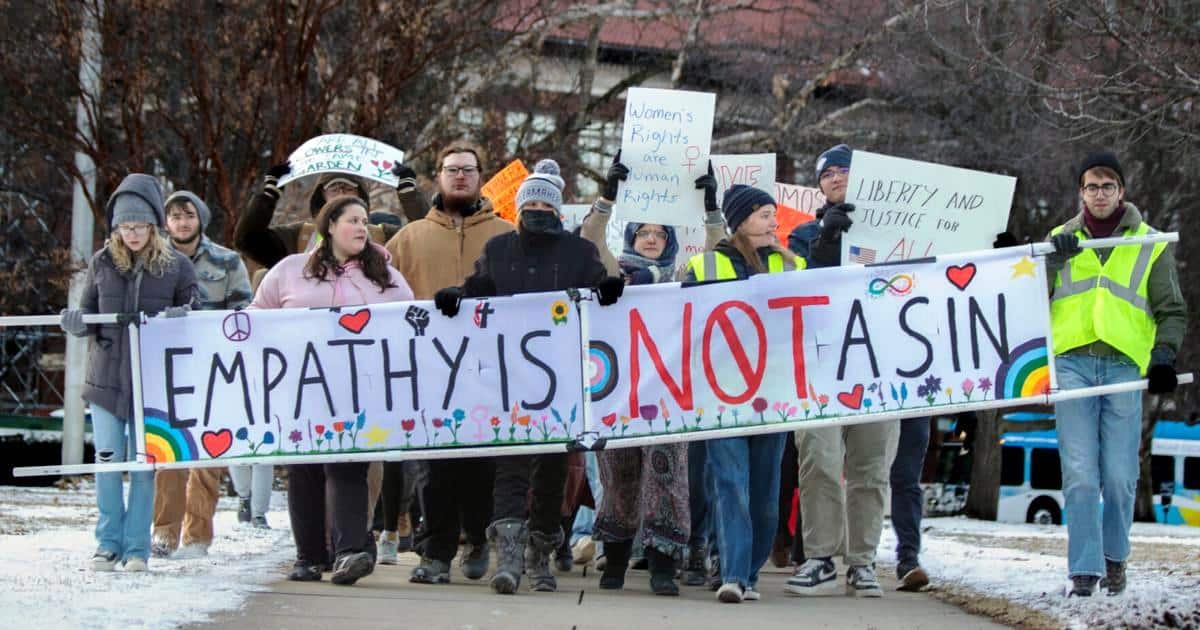
Opinion: Is Modern Political Empathy Really About Self-Image?
Opinion: Canada’s Combating Hate Act Threatens Free Speech

US Trade Moves Put Massive Pressure on Canada

How Progressivism Replaced Religion With A New Secular Faith

Canada Sheds 68,000 Jobs As Economic Fears Deepen

Uncovering the Truth Behind Inequality: A Bold New Vision
Pierre Poilievre Critiques Reporter Who Questions His Leadership

Opinion: What South America’s Political Shift Means for Canada

Why Alberta Separatist Leaders Say It’s Time to Leave Canada

Quebec Election 2026: Will the Province Leave Canada?

Jimmy Kimmel Slammed for “Vile” Melania Trump “Expectant Widow” Joke

President Trump Addresses Nation on War with Iran

Trump Warns NATO Allies: America Won’t Protect Slackers After Iran Clash

Senate Hearing on Fraud and Foreign Influence Turns Tense Over Minnesota Scandals

CNN Forced to Backtrack Its Reporting on Trump’s Iran Talks

Joe Rogan Slams Gavin Newsom for Mocking Nick Shirley

Mosque Set Ablaze in Iran a Citizens Revolt Against the Islamic Regime

AOC Accuses Jessie Watters of Fox News of Sexualizing and Harassing Her

JD Vance Exposes Walz’s Fraud and CNN’s Lies in White House Presser

Milestone Card Credit: How the Milestone MasterCard Can Transform Credit


-

 News9 months ago
China-Based Billionaire Singham Allegedly Funding America’s Radical Left
-
Politics10 months ago
2026 Midterms Guide: Candidates, Key Issues, and Battleground States
-
Politics8 months ago
Ilhan Omar’s Connections to Convicted Somali Fraudsters Surface
-
Politics9 months ago
CNN Delivers Stark Reality Check to Democrats Over Voter ID
-
Politics7 months ago
Rep. Ilhan Omar Faces Heat as Minnesota Voters Seek Change
-
Politics9 months ago
Trump Approval Rating (February 2026 Poll Results, Approve vs Disapprove)
-
Politics10 months ago
Who Is Leading the Democratic Party in 2026?
-
United States10 months ago
Mosque Set Ablaze in Iran a Citizens Revolt Against the Islamic Regime