Connect with us

News

Trump’s Ukraine Peace Push Met with Mainstram Media Maelstrom

VORNews

Published

on

Trump's Ukraine Peace Push Met with Mainstram Media Maelstrom
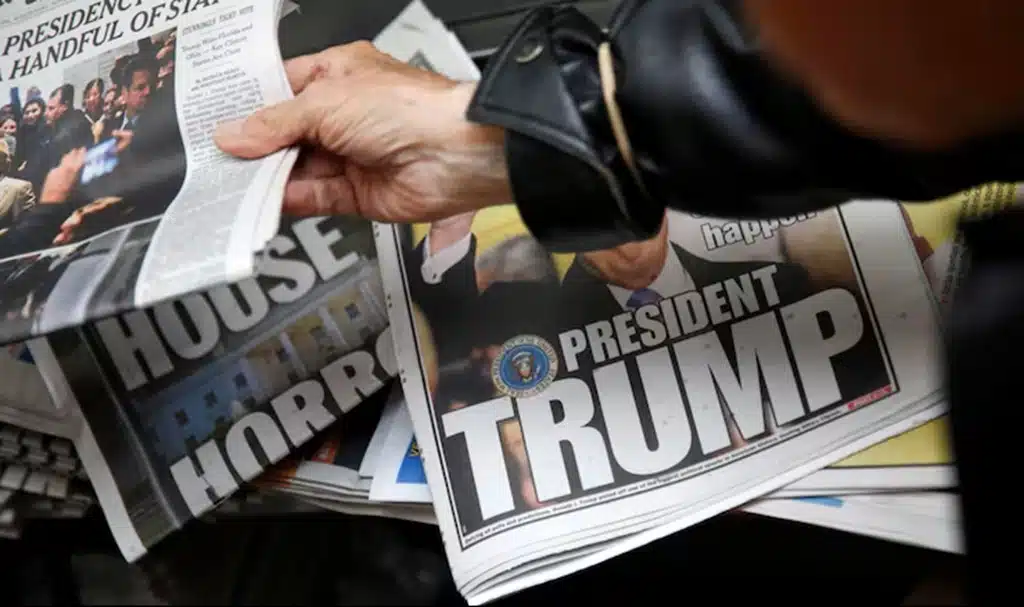
WASHINGTON, D.C. – President Donald Trump’s latest move to bring peace between Ukraine and Russia has triggered a wave of criticism from major news organizations. Many observers see this as clear evidence of long-standing media bias against the 47th president.

While Trump’s team aims to end a conflict that has left thousands dead and thrown Europe into turmoil, his peace efforts are being heavily questioned. Mainstream outlets often focus on what they see as Trump’s failings, shaping the story to fit a negative image.

Since stepping into the White House in January 2025, Trump has put ending the Ukraine war at the center of his foreign policy. He famously said he could settle it “in 24 hours.” His approach has included public meetings like the August 15 Alaska summit with Vladimir Putin, as well as direct talks with Ukraine’s President Zelenskyy.

Despite these bold steps, the news cycle has been filled with skepticism. Outlets such as The Nation, TIME and Al Jazeera have cast Trump’s diplomatic work as unskilled or slanted toward Russia. Headlines like “Trump Abandons Ukraine” and “Trump Risks Leaving Behind a Legacy of Failure in Ukraine” suggest a leader struggling to handle international challenges, even as his administration works on a broad peace treaty instead of a short-term truce.

Much of the coverage skips over the complicated nature of the war. For example, SFGate reported on Trump’s decision to move from backing a ceasefire to negotiating a full peace agreement. The story was spun as Trump reversing course to suit Putin.

Critics of the media say this misses Trump’s stated objective: a deal that sticks, not a patchwork truce “that often falls apart,” as he said online.

Tearing Down Trump

European diplomats who spoke off the record confirmed that Trump and Putin discussed stopping the fighting in places like Zaporizhzhia and Kherson. But according to Trump backers, the press gave little attention to these early signs of progress and focused instead on what hadn’t happened yet.

Personal criticism follows Trump’s steps as closely as policy criticism. TIME’s Andrey Kurkov described a White House meeting in February, claiming that Trump’s tough language with Zelenskyy “humiliated” Ukraine’s leader.

He left out that Trump’s approach often uses blunt talk to pressure both sides. The Nation, meanwhile, accused Trump of running “a war against the free press” alongside his Ukraine actions, lumping together his legal battles with his diplomatic efforts. Supporters argue that these attacks show a drive to tear down Trump regardless of what he does.

Trump’s supporters point out what they see as uneven news coverage. Social media users like @Anglojake argue that Trump’s push for a peace agreement goes beyond what most Western leaders have tried, yet attracts far more criticism.

Getting Fair Coverage

In a recent post, @Anglojake slammed the BBC for spotlighting Trump’s mistakes while ignoring the problems that come with negotiating with Putin. Another user, @gc22gc, claimed the press undermined Trump’s efforts for a “historic peace deal” by insulting Putin at every turn.

Many reports dwell on setbacks, such as an April ceasefire that quickly broke down or the lack of a binding agreement from the Alaska meeting. Al Jazeera pointed to fresh Russian attacks during an Easter truce, saying they exposed Trump’s optimism as misplaced.

Rarely do these stories highlight Putin’s ongoing demands for Ukraine to give up territory, something Trump has not agreed to, according to NBC News.

Other outlets like The Hill have talked up Trump’s “inconsistent support” because of brief pauses in military aid, but often fail to mention the $50 million aid package passed in April or the U.S. deal to sell NATO weapons for Ukraine’s defence.

Analysts believe this hostile press has roots in Trump’s rocky history with the media during both his first term and the 2024 campaign. The Nation recently linked Trump’s foreign policy to wider claims about his style, even comparing his media fights to crackdowns abroad.

Trump’s supporters say those comparisons are overblown and distract from any real analysis of his efforts.

With more talks on the horizon, including a new meeting at the White House with Zelenskyy, it looks like Trump will keep facing tough coverage. European leaders have offered measured support, according to SFGate, but U.S. media mostly keep pushing the story of failure.

To many Americans watching from home, this sparks debate about whether media reporting is based on facts or simply habit. As the Ukraine war grinds on, Trump’s backers argue the biggest challenge may not be on the battlefield or in negotiations, but in getting the media to judge his plan fairly.

News

Former Attorney General Pam Bondi Faces New Battle: A Thyroid Cancer Diagnosis

VORNews

Published

on

By

Pam Bondi Trump

WASHINGTON, D.C. – Former U.S. Attorney General Pam Bondi is facing a new, deeply personal challenge. Just weeks after stepping down from her role at the Justice Department, she was diagnosed with thyroid cancer.

The 60-year-old political figure recently underwent surgery and is currently in recovery. Despite the unexpected health hurdle, Bondi is already preparing for her next chapter in public service. She is set to join a White House advisory committee focused on artificial intelligence.

Her transition from the nation’s top law enforcement officer to a cancer survivor has surprised many. However, friends and colleagues say she is handling the situation with incredible strength.

Bondi left her position as Attorney General in early April. Shortly after her departure, she received the cancer diagnosis. According to a report first shared by Axios, she underwent treatment almost immediately.

In a recent statement to CNN, Bondi confirmed the news. She shared that she had surgery a few weeks ago but is now recovering and “doing well.” She kept the diagnosis private during the initial stages of her treatment, focusing entirely on her health and recovery.

News of her condition began to spread after Katie Miller, a former White House staffer and podcast host, posted about it on the social media platform X (formerly Twitter). Miller, who is married to White House Deputy Chief of Staff Stephen Miller, offered words of strong support.

“Pam has been quietly kicking cancer’s ass the last few weeks,” Miller wrote. She added that Bondi has “a heart of gold.”

Understanding Thyroid Cancer: Symptoms and Risks

When high-profile individuals face a health crisis, it often brings public attention to the disease. Thyroid cancer is a relatively rare condition, but it is highly treatable when caught early.

The thyroid is a small, butterfly-shaped gland located at the base of the neck. It plays a vital role in the body. It regulates metabolism, heart rate, body temperature, and digestion. When cancer develops in this gland, it can disrupt these essential functions.

According to medical experts highlighted in a recent Times of India health report, women are nearly three times more likely to be diagnosed with thyroid cancer than men. This difference is largely due to hormonal factors.

Common Signs to Watch For

Thyroid cancer is often called a “silent” disease because it rarely shows symptoms in its early stages. However, as the tumor grows, a person might notice several warning signs:

  • A painless lump or nodule in the front of the neck.
  • Unexplained swelling in the neck area.
  • Changes to the voice, especially increasing hoarseness.
  • Difficulty swallowing food or pills.
  • Trouble breathing properly.

Risk Factors You Should Know

While anyone can develop this disease, certain factors increase the risk:

  • Age and Gender: It is most common in women between their 30s and 60s.
  • Family History: Having a close relative with thyroid cancer increases the chances of developing it.
  • Radiation Exposure: Previous radiation treatments to the head and neck area can be a trigger.
  • Existing Conditions: Diseases like Hashimoto’s thyroiditis can make a person more vulnerable.

Fortunately, the outlook for most thyroid cancer patients is very positive. The most common types of the disease have a five-year survival rate of over 98%. Treatment usually involves surgery to remove part or all of the thyroid gland. Following surgery, patients often take daily hormone replacement medication to keep their bodies functioning smoothly.

A Quick Return to Public Service in AI

Despite her recent surgery, Bondi is not stepping away from her professional life. In fact, she is taking on a brand-new challenge. President Donald Trump has appointed her to the Presidential Council of Advisors on Science and Technology (PCAST).

This advisory committee focuses heavily on the future of artificial intelligence policy. The council is led by White House AI and crypto czar David Sacks, along with science adviser Michael Kratsios. In her new role, Bondi will help manage the relationship between the federal government and the top technology executives serving on the panel.

Her quick return to work has earned praise from top officials. Vice President JD Vance recently spoke highly of her continued dedication.

“Pam has been an enormously valuable asset to the president’s team,” Vance said in a statement. “I’m thrilled for her and for all of us that she’s going to remain involved in confronting some of the most important issues the administration faces.”

Looking Back at Her Time as Attorney General

Bondi’s cancer battle comes closely on the heels of a busy and highly visible period in her career. She served as U.S. Attorney General during the first year of President Trump’s second term.

During her time in office, she oversaw major initiatives aimed at reducing violent crime across the country. When she stepped down in April, President Trump publicly thanked her on his Truth Social platform. He called her “a Great American Patriot and a loyal friend.” Trump also noted that under her leadership, the country saw a massive crackdown on crime.

Following her departure, Deputy Attorney General Todd Blanche stepped up to serve as acting attorney general.

At the time of her exit, Bondi expressed deep gratitude for her role. In a social media post, she called leading the Justice Department “the honor of a lifetime.” She also made it clear that she planned to stay involved in public life.

Pam Bondi’s story is now one of resilience. Going from leading the Justice Department to fighting cancer requires a tremendous amount of strength. However, her fast recovery and new appointment show that she is not slowing down.

As she continues to heal, her experience sheds light on the reality of thyroid cancer. It reminds the public of the importance of early detection and medical care. Meanwhile, Washington will be watching closely as she brings her legal and policy experience to the rapidly changing world of artificial intelligence.

Trending News:

Socialist Seattle Mayor Retreats on Starbucks Boycott Amid Surging Tech Layoffs

Gristedes Grocery CEO Responds to Mamdani – THREATENS To Shut Down NYC Stores


Continue Reading

News

Socialist Seattle Mayor Retreats on Starbucks Boycott Amid Surging Tech Layoffs

VORNews

Published

on

By

Socialist Seattle Mayor Retreats on Starbucks Boycott

SEATTLE – In a surprising shift of tone, Seattle Mayor Katie Wilson has quietly stepped back from her controversial call to boycott Starbucks. This reversal comes just six months after her initial statement, amid a wave of corporate layoffs hitting the city’s biggest employers and a public rebuke from the coffee giant’s founder.

The story began in November 2025. Just nine days after winning the closest Seattle mayoral race in over a century, Wilson—who hadn’t even taken office yet—stood with striking baristas outside a Capitol Hill Starbucks roastery. Her words that day set the stage for her early administration: “I am not buying Starbucks and you should not either.”

Fast forward to May 2026. In an interview with The New York Times, Mayor Wilson softened her stance, stating, “Those comments were not productive in the sense that they caused more harm than good.”

This 15-word retreat is making waves far beyond Seattle. It signals a shift from confrontation to partnership, a necessary pivot as the city faces significant economic headwinds.

The Corporate Exodus: Layoffs in Seattle Hit Hard

Wilson’s change of heart didn’t happen in a vacuum. It coincides with a series of major job cuts across Seattle’s corporate landscape, creating a challenging environment for the new mayor.

Here is a breakdown of the recent job losses affecting the region:

  • Starbucks: The coffee giant has filed three rounds of corporate layoffs in Washington State since March 2026, affecting nearly 400 positions tied to its Seattle headquarters. Simultaneously, the company announced a $100 million expansion in Nashville, Tennessee, expected to bring up to 2,000 jobs to that city.
  • Amazon: The e-commerce behemoth has eliminated over 4,500 corporate roles in Washington State across two main rounds in late 2025 and early 2026, marking the largest workforce reduction in its history.
  • Microsoft: In May 2025, Microsoft laid off nearly 2,000 workers tied to its Redmond headquarters, with smaller rounds following throughout the year.
  • Boeing: The aerospace company relocated approximately 300 engineering positions from Washington to South Carolina in early 2026, following a massive 17,000-person company-wide layoff in late 2024.
  • Other Tech Giants: Companies like Oracle, Meta, Salesforce, Expedia, T-Mobile, and Zillow have also announced significant reductions affecting their Washington-based employees.

According to Challenger, Gray & Christmas, Washington State recorded the third-highest number of layoffs in the country in early 2026.

Adding pressure to the situation, former Starbucks CEO Howard Schultz recently published an opinion piece in The Wall Street Journal titled “Seattle Turns Hostile to the Great Businesses It Made.” In the essay, Schultz directly criticized Mayor Wilson, pointing to her boycott comment and arguing that the city’s relationship with its largest employers had severely deteriorated.

Schultz’s op-ed, published the same week as Starbucks’ Nashville announcement, highlighted the growing tension between Seattle’s leadership and its corporate anchors.

A Shift in Tone, But What About Policy?

While Mayor Wilson has changed her rhetoric, her policy goals remain largely intact. She campaigned on expanding the “jumpstart” payroll tax for large employers and creating a local capital gains tax. The city is also facing a projected $140 million budget shortfall heading into 2027, with downtown office vacancy hovering around 35%.

The mayor’s office emphasizes that they are in regular communication with corporate leaders regarding shared priorities like homelessness, public safety, and affordability. However, the fundamental question remains: Will a softer tone be enough to stem the tide of corporate departures and job losses?

Seattle is no stranger to economic shifts. The city survived the Boeing downturn of the 1970s and has spent the last decade diversifying its economy. Yet, the scale and speed of the current layoffs are unprecedented in recent history.

The coming months will be crucial. Will the recent “WARN” filings (Worker Adjustment and Retraining Notifications) slow down? Will companies choose to invest their growth dollars in Seattle or look elsewhere?

Mayor Wilson has adjusted her public stance, but the real test lies in whether she can rebuild trust with the business community while still addressing the city’s pressing challenges. As Schultz pointedly asked, what will replace these companies as engines of Seattle’s job and revenue growth? It’s a question that Wilson and the city of Seattle must now answer.

Trending News:

Stephen Colbert Has Meltdown On-Air in Final Broadcast on CBS

Karen Bass Faces Furious Voters Over Her Claim NON-CITIZENS Should VOTE


Continue Reading

News

JD Vance Claps Back at European Outrage Over US Troop Withdrawal

VORNews

Published

on

By

JD Vance europe

WASHINGTON, D.C. – The United States is making a massive, historic change to its military presence in Europe. Vice President JD Vance defended the move this week, offering strong words for European leaders who are furious about the decision.

President Donald Trump recently ordered the withdrawal of 5,000 troops from Germany. Following this, the Pentagon also paused a planned deployment of 4,000 troops to Poland. This pivot marks a completely new era for American and European diplomatic relations.

For decades, the European Union has relied heavily on the American military for its defense shield. Now, the Trump administration is loudly changing the rules. European capitals are struggling to process the sudden shift. Meanwhile, the White House insists that this is exactly what the American people voted for.

Vance Defends the “America First” Strategy

JD Vance spoke clearly and aggressively to reporters at the White House on Tuesday. He firmly denied that the United States is completely abandoning its international allies. Instead, he painted the controversial move as a long-overdue, necessary adjustment. He wants Europe to finally take charge of its own national security.

“The United States cannot be the policeman of the world,” Vance stated directly to the press. He noted that the dramatic decision is perfectly consistent with the president’s long-term goals. “The president has not said that he’s taken all of the troops out of Europe, but Europe has to stand on its own two feet.”

Vance did not hold back his frustration. He aimed his sharp comments directly at European politicians. Many of these leaders have openly and loudly criticized the Trump administration’s foreign policy actions. The vice president insisted that this military withdrawal is not a petty punishment. Instead, he called the pause in Poland a “standard delay in rotation” and a strategic shift of American resources.

Why Is Trump Pulling Troops Right Now?

The decision to move thousands of troops comes at an incredibly tense time in global politics. The world is watching closely. Here is a clear breakdown of what actually led to this historic policy shift:

  • The War in Iran: President Trump has repeatedly criticized NATO members over the past few months. He claims they completely failed to support Washington in the recent conflict with Iran. This war, initiated by the US and Israel, caused serious friction with several European allies who preferred diplomacy.
  • A Bitter Spat with Germany: German Chancellor Friedrich Merz publicly criticized the Middle East conflict. Merz claimed the US had been “humiliated” on the global stage. Soon after this public insult, Trump ordered the rapid removal of 5,000 troops from Germany.
  • Italy Under Review: Trump also hinted strongly at removing military forces from Italy. This threat happened right after Italian Prime Minister Giorgia Meloni defended Pope Leo XIV against American criticism.
  • Decades of Financial Demands: For many years, Trump has aggressively pushed NATO nations to spend more money on their own defense budgets. He firmly believes American taxpayers carry far too much of the financial burden for wealthy European countries.

The Immediate Impact on Poland and NATO

Poland was eagerly expecting 4,000 new American troops to arrive soon. Now, that highly anticipated deployment is on indefinite hold. The Pentagon officially paused the movement of a Texas-based brigade combat team just days before they were scheduled to deploy. This abrupt halt surprised and alarmed many top officials in Warsaw.

However, the Pentagon quickly tried to smooth things over. They publicly called Poland a “model US ally.” US Defense Secretary Pete Hegseth even made a personal phone call to the Polish Deputy Prime Minister. Hegseth desperately tried to assure Poland that the US remains fully committed to its long-term defense.

Meanwhile, NATO leaders in Brussels are trying to stay calm and project strength. NATO Supreme Allied Commander Europe, General Alexus Grynkewich, said the troop withdrawal absolutely does not harm the alliance. He confidently stated that the move does not negatively impact regional defense plans.

“As allies build up their capability, the United States is able to pull capability back and use it for other global priorities,” Grynkewich explained during a press conference. NATO chief Mark Rutte also loudly echoed this positive sentiment. He stated that the troop adjustments are a “structured” change and completely normal for a shifting global landscape.

What Happens Next for European Defense?

Europe is now facing a very harsh new reality. The struggling European Union must figure out exactly how to protect its own borders without heavy, daily American support. This massive undertaking will take immense time, vast amounts of money, and serious political willpower from divided nations.

Here are the immediate, difficult challenges the European continent faces today:

  • Building Real Military Capacity: Major wealthy countries like Germany and France need to urgently invest billions of euros into their own armed forces. They can no longer easily rely on American tanks, hardware, and foot soldiers.
  • Replacing US Combat Roles: The United States fully expects to shrink the pool of combat forces it offers to the NATO Force Model. Europe must quickly figure out how to fill this massive strategic gap.
  • Maintaining Continental Unity: Eastern European nations, like Poland and the Baltic states, feel incredibly nervous right now. Western Europe must somehow assure them that the EU can actually provide real defense against potential threats from Russia.

A Bitter New Era of Transatlantic Relations

The historic relationship between the United States and Europe is changing incredibly fast. The cozy days of unconditional, unlimited American military support seem to be completely over. The Trump administration is now focusing heavily on the Asia-Pacific region and pressing domestic security issues.

JD Vance made it crystal clear that Washington is looking out for American citizens first. “We’re talking about shifting some resources around in a way that maximizes American security,” he proudly said. He added with a shrug, “I don’t think that’s a bad thing for Europe.”

However, many vocal critics in Washington are deeply worried. Some prominent American lawmakers strongly fear that Trump is recklessly abandoning key, historic allies. They firmly believe this sudden move could severely weaken global stability and empower bad actors. Representative Don Bacon angrily called the sudden deployment delay in Poland “a slap in the face” to loyal Baltic friends.

Despite the intense domestic and international pushback, the White House is standing firm on its decision. The aggressive message to Europe is clear, simple, and blunt: step up and pay up.

The Difficult Road Ahead

European political leaders are now frantically scrambling behind closed doors. They desperately need to find a realistic way to work with the unpredictable Trump administration while rapidly building their own independent armies. They will actively seek clarity and reassurances from US Secretary of State Marco Rubio at an upcoming, high-stakes meeting in Sweden later this week.

The upcoming NATO leadership summit in Turkey this July will be incredibly crucial for the world. Global leaders must successfully show the watching world that the historic alliance is still strong and united. They must definitively prove that Europe can actually handle its own complex security in a very dangerous world.

For right now, JD Vance and Donald Trump have successfully sent a powerful, undeniable message. The United States military will no longer willingly serve as an endless, free security blanket for the European continent. Europe must now bravely step into the spotlight and learn to defend itself. The entire world is watching closely to see if the struggling EU is truly ready for the massive challenge.

Trending News:

JD Vance Warns California and Other Blue States Over Medicaid Fraud

Vice President JD Vance Accuses Ilhan Omar of Immigration Fraud


Continue Reading

Get 30 Days Free

Express VPN

Create Super Content

rightblogger

Flight Buddies Needed

Flight Volunteers Wanted

Trending