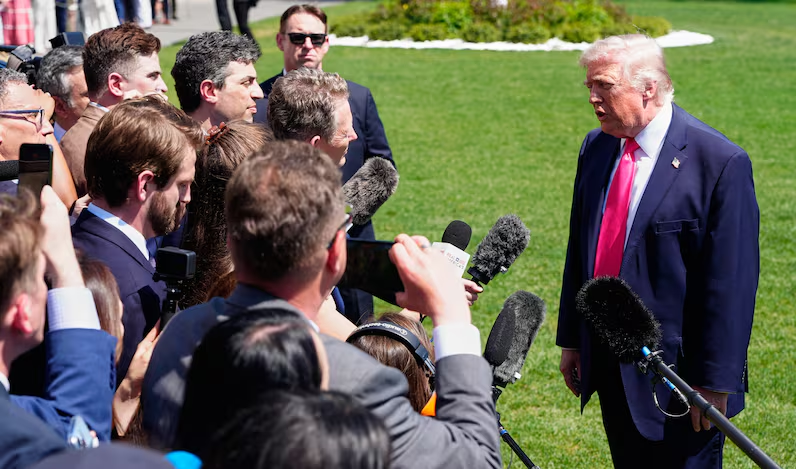


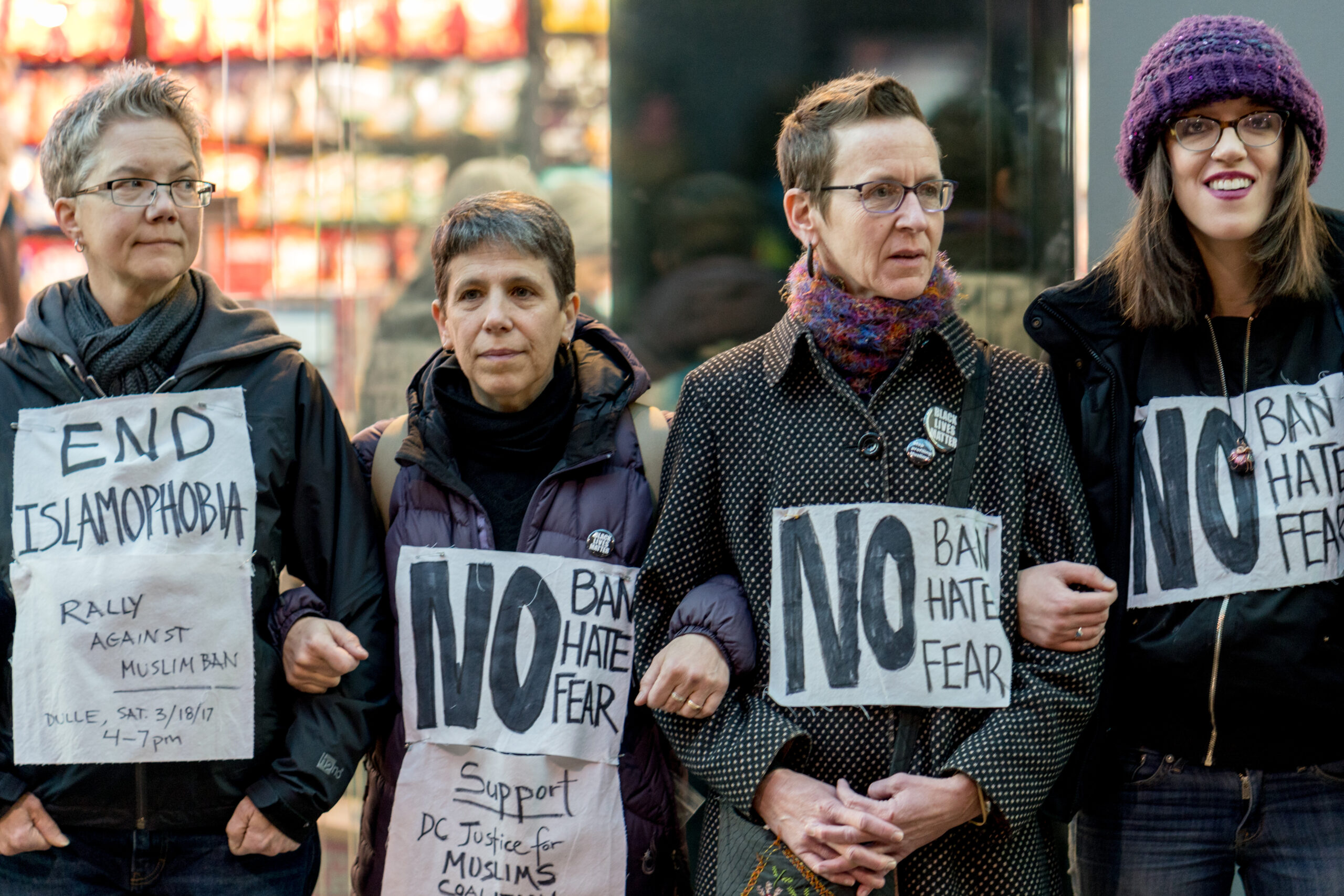


For years, the radical left across the West has styled itself as a defender of inclusion and multicultural ideals. It has often aligned with Islam and groups seen as standing against established power. Among these, support for Islam, especially its conservative strands, has grown into a puzzling and risky project.
This bond is built on shared opposition to Western traditions and claims of imperialism. Yet it masks a clear clash. Core left-wing blocs, such as LGBTQ campaigners, feminists, and supporters of gender fluidity, disagree with key tenets of orthodox Islamic doctrine and Sharia.
At the same time, relaxed migration policies have helped create segregated pockets that reject mainstream norms, driving conflict with the very values the left promotes.
This piece outlines why the left’s alignment with conservative Islam could weaken its base, fracture its message, and strengthen groups that resist integration and reject progressive priorities.
Fragile Allies and a Contradictory Pact
In Western Europe and North America, the radical left champions those it views as marginalised. That includes LGBTQ people, women pushing for fair treatment, and those who reject fixed gender roles.
These movements have worked for decades to shift laws and culture. Yet the left’s support for Islam as a foil to Western conservatism has created a clear contradiction. Conservative Islamic teaching often rejects the ideals that these groups hold dear.
Traditional readings of the Quran and Hadith, and systems based on Sharia in several Muslim-majority states, condemn homosexual acts, uphold strict gender roles, and do not recognise gender fluidity. In places such as Saudi Arabia and Iran, same-sex relations can bring prison, lashings, or death.
Women face limits on dress, movement, and autonomy that clash with feminist aims. Ideas like non-binary identities or self-selected pronouns do not appear in classical Islamic theology, which rests on a binary view rooted in biological sex.
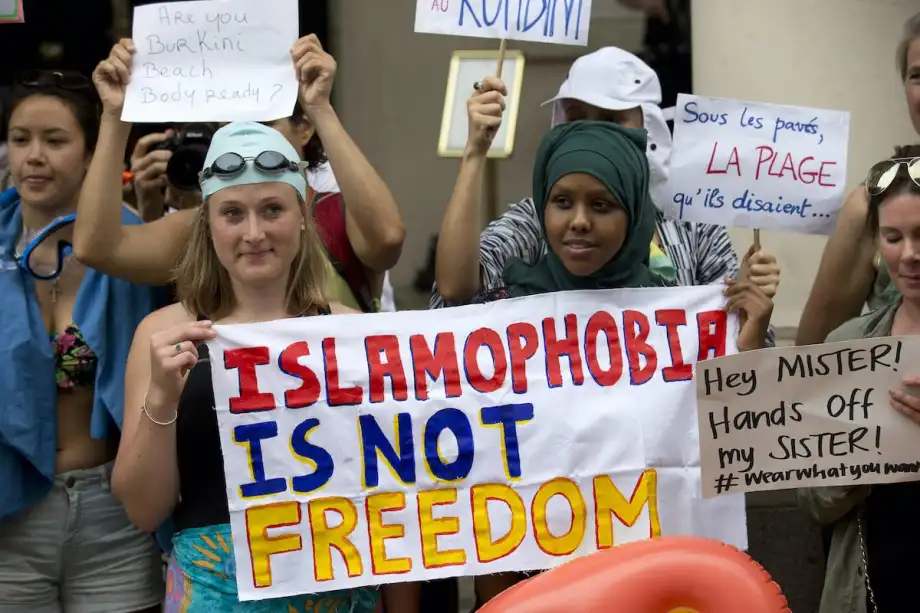
Even so, many on the radical left frame Muslim communities as targets of bias who need protection from what they call Islamophobia. The argument leans on a shared stance against Western hegemony, capitalism, and Judeo-Christian norms.
Supporters claim Muslims in the West face systemic unfairness and belong in the same camp as other disadvantaged groups. This ignores a hard truth. Many conservative Muslim migrants do not share progressive ideals. They often arrive with beliefs and customs that sit at odds with a liberal, egalitarian vision.
Open Borders, Parallel Lives
A major outcome of these policies has been the growth of segregated Muslim areas, especially in parts of Europe. In the name of multiculturalism, leaders on the left backed large-scale migration from Muslim-majority countries with little insistence on integration. Sweden, Germany, France, and the United Kingdom each saw districts where Islamic norms prevail and mainstream expectations lose ground.
Sweden, once seen as a model for progressive rule, is a case often cited. Reports refer to “no-go zones” in cities like Malmö and Stockholm. These districts, with heavy migration from the Middle East and North Africa, are portrayed as hard to police and resistant to state authority.
Commentators link higher rates of violent crime and sexual assault to poor integration and cultural divides. In 2023, Sweden was reported to have seen a 30% rise in violent crime in migrant-heavy areas compared with a decade earlier, sparking anger over border and policing policy.
France’s banlieues tell a similar story. The 2005 riots after the deaths of two teenagers exposed deep fractures between the state and immigrant districts. Later attacks on police and public buildings reinforced concerns about cohesion.
In the UK, parts of London, such as Tower Hamlets, and areas of Birmingham, have seen the growth of Sharia councils. These bodies issue guidance on family matters that can conflict with British law.
These divides did not appear by chance. They followed policies that put cultural relativism ahead of shared norms. Nervous about accusations of racism, officials often ignored practices that conflict with liberal values. Forced marriage, so-called honour crimes, and strict dress rules for women each sit in that category. By failing to demand integration, the left has boosted groups that resist the freedoms it claims to defend.
Turning Away from Western Norms
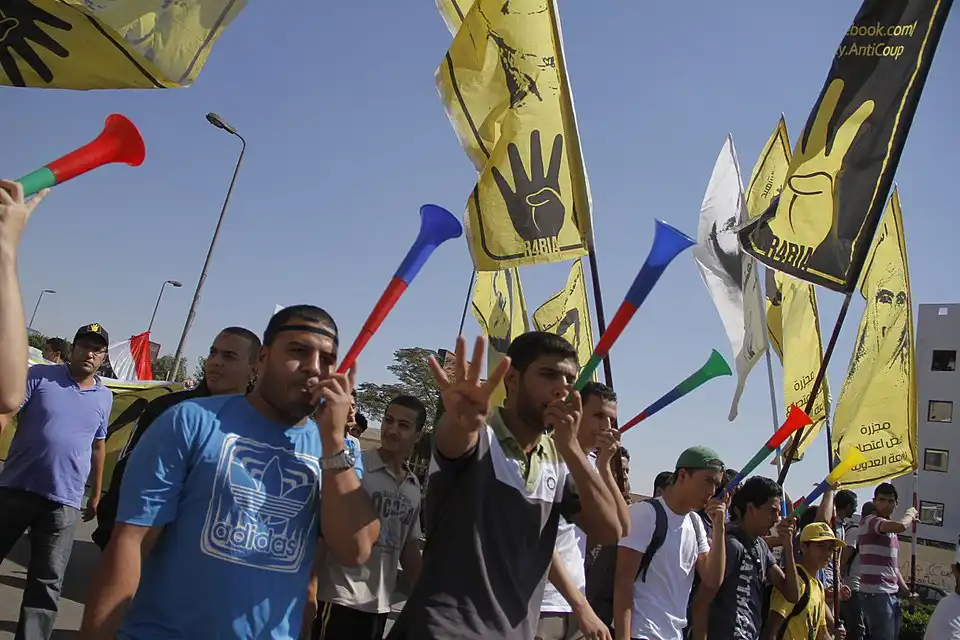
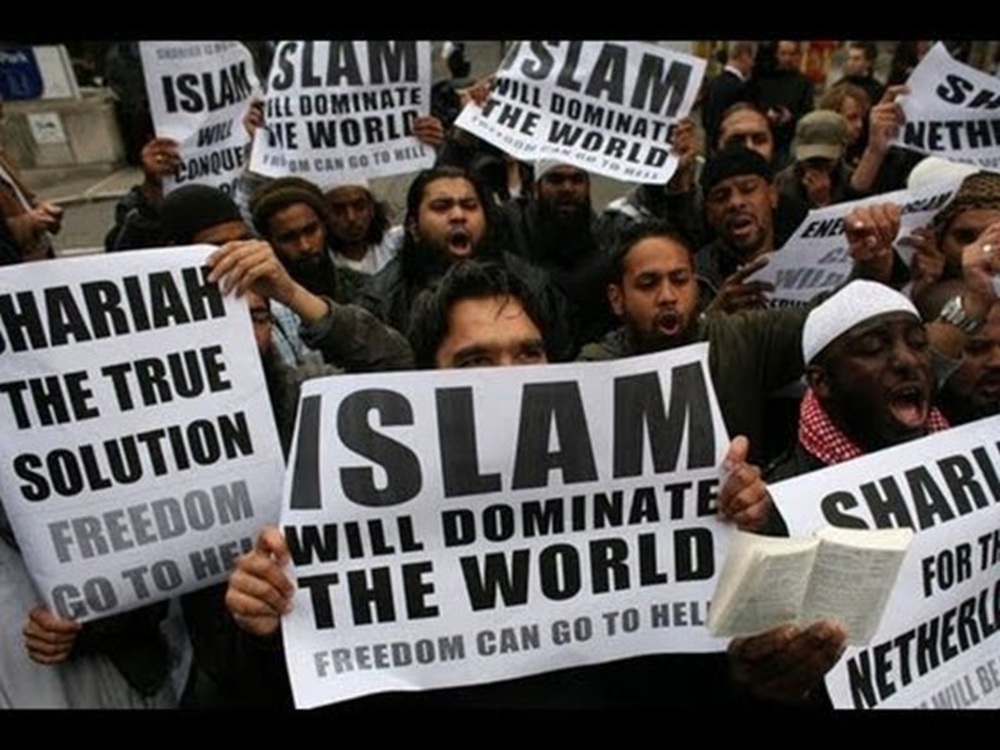
In many of these enclaves, leaders push not for integration but for the spread of Islamic standards. Sharia’s influence has grown in some places, with calls for its use in family and civil disputes. In the UK, Sharia councils have issued rulings on divorce, custody, and inheritance. Critics say these rulings sideline women’s rights and clash with British legal principles.
Cultural resistance reaches beyond the courts. Pew Research surveys in Germany in 2022 found that many first-generation Muslim migrants view Islamic values as superior to Western ones.
Around 40% of Muslim respondents said Sharia should outrank secular law on family and moral issues. Similar views appear in France, Belgium, and the Netherlands, where large Muslim populations express distrust of free speech protections and gender equality as liberal ideals.
This resistance shows up in daily life. Some newcomers avoid the local language and set up separate institutions. Islamic schools and mosques sometimes promote conservative teaching and limited contact with wider society.
In Sweden, critics accused certain Islamic schools of separating girls and boys, discouraging ties with non-Muslims, and favouring religious instruction over secular study. Such practices deepen isolation and lock in division across generations.
A Blind Spot that Weakens the Message
The left’s support for conservative Islamic communities exposes a deep inconsistency. By branding Muslims as an oppressed bloc, activists sidestep issues where traditional Islamic norms collide with progressive aims. Feminists who attack patriarchy in Western culture often avoid criticizing similar structures in conservative Islamic teaching.
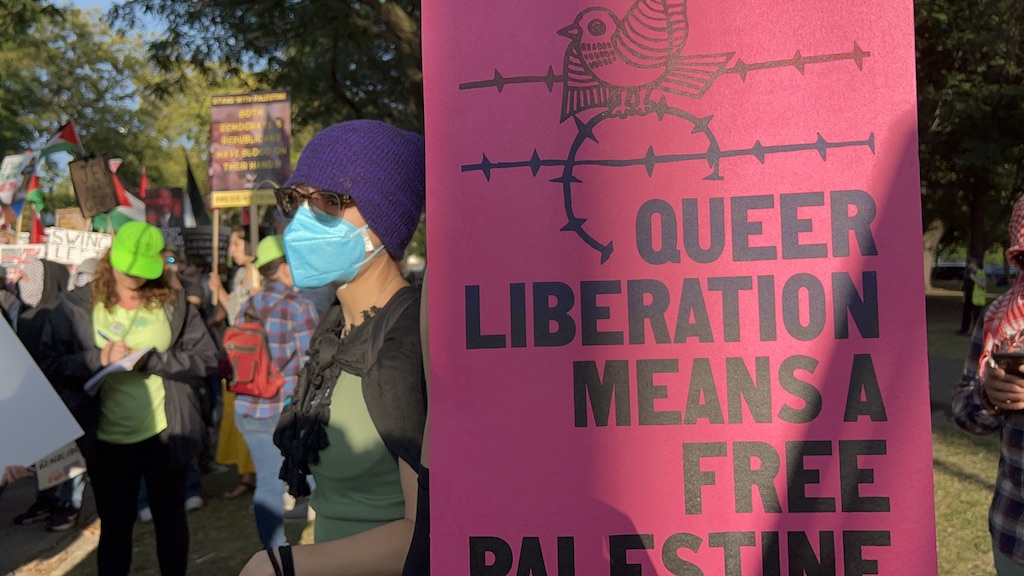
LGBTQ groups that demand acceptance for non-binary people rarely address the danger faced by queer Muslims in both Muslim-majority countries and conservative Western communities.
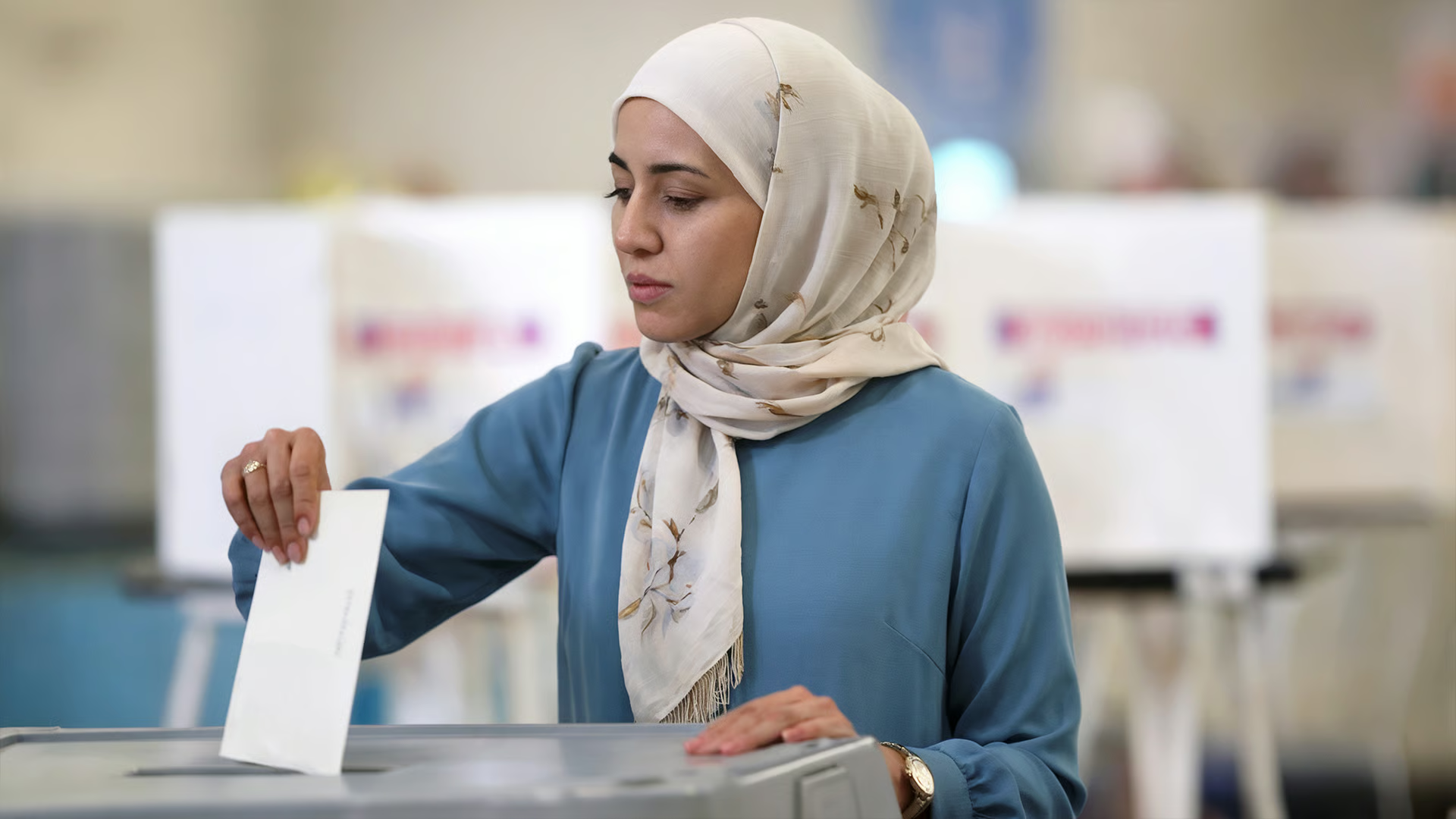
This selective concern erodes trust. When leaders defend the hijab as a pure choice, they often ignore social pressure. A 2021 European Network Against Racism study reported that 60% of hijab-wearing Muslim women in France felt pushed by family or community to wear it. Yet critics of compulsory veiling are often dismissed as Islamophobic, closing debate and splitting the feminist movement.
The same pattern appears on LGBTQ issues. In 2019, protests by Muslim parents in Birmingham against LGBTQ-inclusive lessons showed the conflict between progressive goals and traditional beliefs. Many on the left chose to avoid the fight, putting a fragile alliance ahead of commitments to equality in education.
The Electoral Cost
The political bill for this strategy is growing. A focus on multiculturalism over integration has alienated parts of the working class. Many feel their culture, safety, and economic prospects are being ignored. Across Europe, this has fed populist and nationalist parties that promise to fix border control and restore order. Alternatives for Germany, France’s National Rally, and the Sweden Democrats have all grown by speaking to these concerns.
In the United States, the pattern is subtler but present. Figures such as Ilhan Omar and Rashida Tlaib speak for Muslim inclusion, yet face criticism for downplaying rights abuses in some Muslim-majority states. That double standard puts off moderate voters who want a consistent defence of liberal values.
The trend showed in the 2024 European Parliament elections. Parties on the right made major gains as migration and identity led the debate. Marine Le Pen’s National Rally took around 30% of the vote in France. AfD rose to second place in several German states. Voters signalled that they see the left’s priorities as distant from their own.
A Movement at Risk of Undoing Itself
The radical left’s alliance with conservative Islam may prove self-defeating. Backing groups that reject progressive norms risk losing feminists, LGBTQ activists, and gender nonconformists who fear a rollback of rights. Its refusal to confront the social strains caused by parallel communities has handed a narrative to opponents who promise security and cohesion.
There is an irony here. In seeking to dismantle Western traditions, the left has empowered a force that can weaken its own agenda. Without an honest reckoning with the clash between progressive ideals and conservative Islamic doctrine, the movement will keep bleeding support. Segregation will deepen, culture wars will harden, and populist rivals will grow stronger.
To survive, the left must match its talk of diversity with a clear defence of liberal principles. It must insist on integration, equal rights under one law, and open debate on coercive practices. Anything less risks ceding ground to opponents and losing the trust of the very people it claims to represent.