Connect with us

Politics

AOC’s Critique of Rubio’s Speech Turns into an Huge Embarrassment

VORNews

Published

on

AOC's Critique of Rubio's Speech

MUNICH, Germany – At the Munich Security Conference in 2026, every line mattered. U.S. Secretary of State Marco Rubio delivered a speech that drew heavy applause and ended with a standing ovation. He framed the United States as steady and committed to its allies.

Rep. Alexandria Ocasio-Cortez (D-N.Y.) tried to push back with a pointed critique. Instead, her comments came out uneven and sparked fresh questions about her command of foreign policy. The moment also showed a wider split in how each party wants the US to act on the world stage.

Rubio’s keynote focused on reassurance. He spoke to European leaders who have worried about US politics and long-term reliability. He promised a “new century of prosperity” built with partners, not apart from them.

He told the room, “America is charting the path for a new century of prosperity and that once again, we want to do it together with you, our cherished allies and our oldest friends.”

The crowd responded with frequent applause that built to a standing ovation. Rubio also urged European countries to guard their sovereignty, defend their “Christian heritage,” and turn away from what he called “self-destructive” choices. He pointed to issues like unchecked migration and deindustrialization. Even critics described the tone as calming, especially for attendees who feared a new strain across the Atlantic.
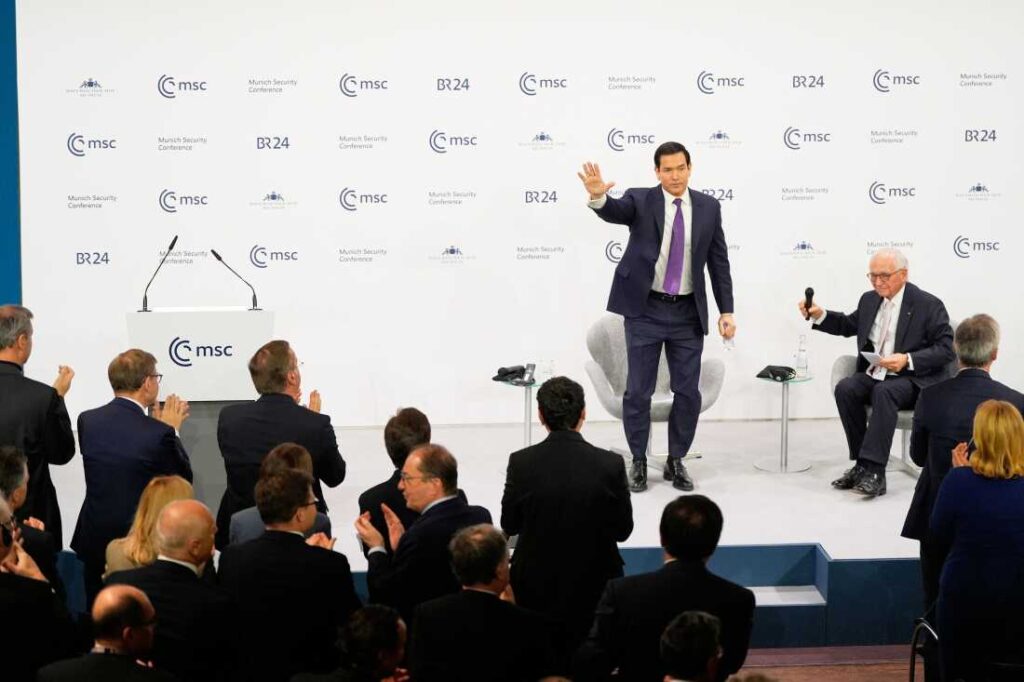
U.S. Secretary of State Marco Rubio

Key takeaways from Rubio’s address included:

  • Backing alliances: Rubio said the US has “no interest in being polite caretakers of the West’s managed decline,” and he cast America as a leader with a clear direction.
  • Shared culture and history: He used historical links, including the roots of American cowboy culture, to underline common ties.
  • Border and economic themes: Stronger borders and renewed industry earned nods from leaders facing similar pressures at home.

With that performance, Rubio strengthened his position as a central voice in the administration’s foreign policy, mixing MAGA-style themes with older conservative ideas.
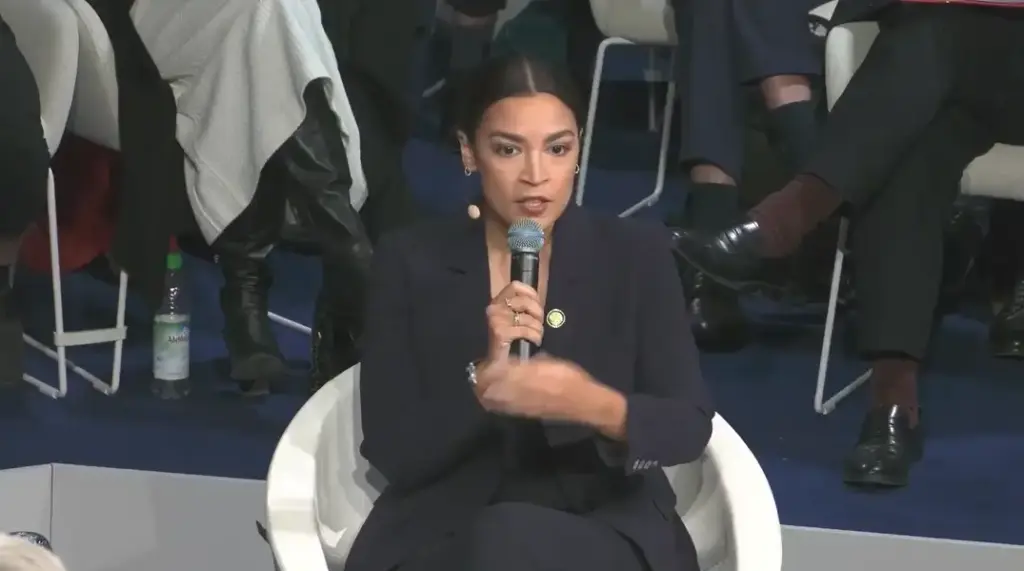
AOC-in-Munich

AOC’s Response: Big Expectations, Uneven Delivery

Ocasio-Cortez, often discussed as a possible 2028 contender, appeared on a panel focused on populism and inequality. When a moderator joked about her presidential future, she moved past it and steered toward domestic themes.

She called for a wealth tax and argued that rising inequality can feed authoritarian politics.

However, when she turned to Rubio’s speech, her critique stumbled. Viewers noticed long pauses, repeated filler words, and moments where she seemed unsure of key details. That contrast stood out because she usually sounds sharper in her online messaging.

The clip that traveled fastest came from her response to Rubio’s cowboy reference. Ocasio-Cortez said, “My favorite part was when he said that American cowboys came from Spain,” then added, “And I believe the Mexicans and descendants of African enslaved peoples would like to have a word on that.”

Her point aimed at inclusion, and it spoke to real parts of the story. Still, historians noted that Rubio’s core claim lines up with the record. The roots of cowboy culture trace to Spanish vaqueros, including Indigenous Mesoamericans trained by Spanish colonizers after their arrival in Mexico in 1519.

The word “vaquero” ties to the Spanish “vaca” (cow). In addition, common tools and terms carry Spanish origins, including lassoing (from “lazo”) and chaps (from “chaparreras”).

Ocasio-Cortez focused on later chapters of that history, not the starting point. After Texas’s independence and US annexation, Anglo settlers adopted many vaquero traditions.

Black cowboys also played a major role, with some estimates placing them at up to one-fourth of the workforce in the 19th century. Over time, Hollywood often pushed a whiter version of the cowboy story. Even so, Rubio’s reference centered on early European influence.

Online, the debate split quickly. Some praised her for highlighting groups often erased. Others called it a preventable error that exposed weak preparation on cultural history, a topic that often matters in diplomacy.
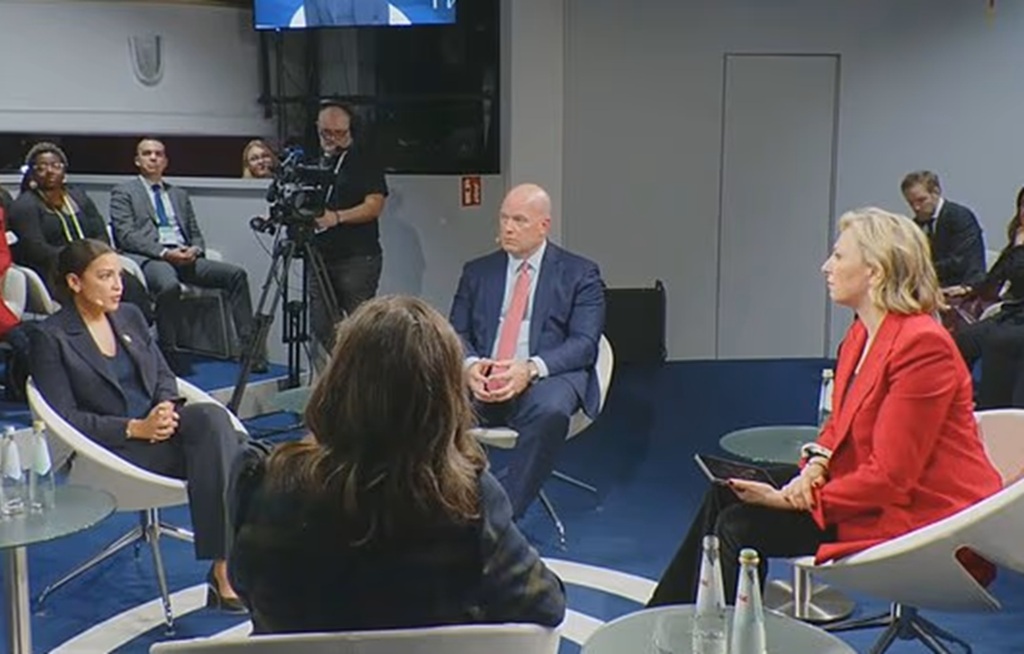
 

Ocasio-Cortez faced another tough moment

Taiwan Question: Halting Answer, Fast Backlash

Ocasio-Cortez faced another tough moment when asked about the US commitment to defending Taiwan. Her response came out broken up and uncertain: “You know… I think that this is such a, you know, I think that this is a, this is of course a very long-standing policy of the United States.” She expressed hope for peace, but she didn’t offer a clear position.

Clips spread quickly, and critics compared the answer to a pageant-style response. The House Foreign Affairs Committee posted a sharp message, saying she “sounded like a third-grader in class attempting to give a report on a book she never read.”

A few reasons the Taiwan exchange landed poorly:

  • Choppy pacing: Repeated “you know” and “I think” interrupted her point.
  • Thin detail: She leaned on “long-standing policy” without explaining what it requires or where it draws lines.
  • Instant memes: Social users pushed nicknames like “Mumble in Munich,” which kept the clip alive.

Across her panel, Ocasio-Cortez kept her focus on inequality. She argued that economic pain can drive populism, and she promoted global ideas like wealth taxes. She also connected Rubio’s themes to Vice President JD Vance’s earlier speech, calling both rooted in “cultural nostalgia.” In her view, the administration risks “tearing apart the transatlantic partnership” and treating the world as a “personal sandbox.”

Still, her broader argument got buried under the stumbles. While Rubio drew loud approval, her session received a quieter response. Some attendees also said she didn’t address specific flashpoints in enough depth, including Iran and Ukraine.

What People Said Afterward

Reaction came fast from all sides:

  • Republicans cheered Rubio: Many GOP voices framed his remarks as proof of leadership and used the moment to boost his 2028 image.
  • Democrats defended Ocasio-Cortez: Supporters said the coverage fixated on delivery, not her values or her critique of inequality.
  • Media replayed the contrast: Outlets, including Fox News, highlighted the back-and-forth and treated it as a test of global credibility.
  • Historians weighed in on cowboys: Scholars, including Pablo A. Rangel, pointed to how cowboy myths became romanticized and racialized over time. They supported her inclusion point while still affirming her Spanish origins.

Former Bush-era official Michael Allen also commented on the split visions, with tensions involving Iran hanging over the broader discussion.

What It Could Mean for US Politics and 2028

The Munich episode captured a shifting fight over US foreign policy. Rubio presented a forceful, heritage-focused approach. Ocasio-Cortez pushed an equity-first view tied to economic reform.

For Ocasio-Cortez, the clips may feed an “unready for the world stage” storyline, especially with early polling that shows her competing well against possible rivals such as Vance in hypothetical matchups. Meanwhile, European leaders left Munich still watching for signs of steadiness from Washington. Rubio’s reception suggested his message landed. Her rough moments may pressure her team to tighten her international talking points.

With 2028 getting closer, appearances like this can shape how voters and allies judge a candidate’s global credibility. Ocasio-Cortez has shown strength in domestic fights, but Munich highlighted how different the foreign policy spotlight can be.

Munich offered a clear contrast. Rubio delivered a speech that lifted the room and signaled renewed commitment to allies. Ocasio-Cortez tried to challenge that message, but pauses and a disputed history critique pulled attention away from her larger argument.

Whether the moment sticks as a lasting gaffe or fades into a learning step depends on what comes next. On the international stage, preparation shows fast, and so do mistakes.

Related News:

Rubio Slaps Visa Ban on 5 Europeans Over US Tech Censorship

Continue Reading

Politics

Karen Bass Faces Furious Voters Over Her Claim NON-CITIZENS Should VOTE

VORNews

Published

on

By

Karen Bass Faces Furious Voters

Los Angeles is no stranger to political drama, but the lead-up to the June 2026 mayoral primary has created a perfect storm of controversy, voter frustration, and high-stakes campaigning. At the center of the current media frenzy is a highly polarizing proposal regarding noncitizen voting in local elections.

While sensational rumors have circulated claiming that Mayor Karen Bass is demanding noncitizens should vote, the reality of the situation is more complex—and deeply tied to the broader battle for the future of Los Angeles.

First and foremost, it is vital to separate fact from political fiction. The current push to allow noncitizens to participate in city elections did not originate from the mayor’s desk. Instead, the motion was introduced in late April 2026 by L.A. City Councilmember Hugo Soto-Martinez.

Soto-Martinez hopes to get the measure on the November ballot, arguing that tax-paying noncitizen residents should have a voice in local governance. This proposal has generated intense debate across the city.

  • The Legal Landscape: Federal law strictly prohibits noncitizens from voting in national elections. However, municipalities have some leeway when it comes to local races.
  • The Precedent: Several U.S. cities, including some in California and the District of Columbia, currently allow limited forms of noncitizen voting in local school board or city council races. Conversely, eighteen states have enacted outright bans on the practice.
  • The Backlash: The proposal immediately drew sharp criticism from conservative groups and moderate voters who argue that voting is a fundamental right strictly reserved for U.S. citizens.

While Bass did not author the proposal, as the incumbent mayor, she is inevitably forced to navigate the political fallout. Voters are highly polarized, and any controversial city council action naturally ripples into the mayoral race.

A Fiercely Competitive Mayoral Primary

Even without the noncitizen voting debate dominating the news cycle, Karen Bass is facing a much tougher re-election campaign than many political analysts predicted a year ago. Early in her term, Bass appeared poised for a relatively smooth path to a second term. However, the political landscape shifted dramatically.

Currently, Bass is fighting off challenges from multiple fronts. The most significant threat comes from within her own party’s progressive wing. City Councilmember Nithya Raman, a former ally who previously endorsed Bass, made a dramatic, last-minute entry into the race. Raman is actively challenging the mayor’s record on housing, municipal finances, and homelessness.

The Challengers Shaking Up the Race

The field of candidates hoping to unseat Bass is incredibly diverse, reflecting a fractured electorate.

  • Nithya Raman: Appealing strongly to the city’s younger and more left-leaning demographic, Raman argues that the current administration has been too slow to enact meaningful rent control and tenant protections.
  • Spencer Pratt: In a surprising twist, reality TV star Spencer Pratt has emerged as a disruptive candidate. He is utilizing his massive social media savvy to capture the attention of disillusioned voters who are tired of traditional politicians.
  • Business and Activist Outsiders: Housing activist Rae Huang and tech entrepreneur Adam Miller are also in the mix. Miller is focusing heavily on municipal efficiency and business-friendly policies, ensuring that the incumbent faces attacks from the left, right, and center.

To understand the current voter sentiment, one must look at the highs and lows of Bass’s first term. When she defeated billionaire developer Rick Caruso in 2022, she made tackling the homelessness crisis her central promise.

Her signature initiative, the “Inside Safe” program, has made measurable progress. The administration reports moving thousands of unsheltered individuals indoors and clearing over a hundred street encampments.

However, despite progress on homelessness, Bass suffered a significant blow to her approval ratings in January 2025. During the devastating Palisades and Eaton wildfires, the mayor was on a diplomatic trip to Ghana. A viral video showing her ignoring a reporter’s questions at the airport upon her return sparked immense public outrage. The handling of the fires severely damaged voter trust, leaving a stain on her record that challengers are eager to exploit.

What L.A. Voters Are Really Saying

If you speak to residents on the streets of Los Angeles, you will hear a consistent theme: exhaustion. Voters are simply tired of the soaring cost of living, persistent public safety concerns, and endless political gridlock.

Public forums and neighborhood council meetings have seen record attendance in recent weeks. Many constituents feel that basic city services—like pothole repairs, sanitation, and public transit safety—are taking a back seat to highly publicized ideological battles.

The noncitizen voting proposal, regardless of who authored it, acts as a lightning rod for this underlying frustration. Voters who feel their tax dollars are mismanaged view this proposal as a step too far, adding fuel to the fire in an already volatile election season. Because voters often view the mayor as the ultimate face of city leadership, Bass is bearing the brunt of this collective anger.

As the June 2, 2026, primary approaches, the stakes could not be higher. Los Angeles utilizes a top-two primary system. If no candidate secures more than 50% of the vote in June, the top two vote-getters will face off in a high-stakes general election in November.

With voting already underway, candidates are scrambling to define their platforms. Bass must convince voters that her administration has laid the groundwork for a safer, more affordable city. Her challengers must prove they are capable of governing a massive, complex metropolis rather than simply pointing out the city’s flaws.

Ultimately, the narrative that Karen Bass is “bracing for a massive loss” is premature. Incumbency carries significant weight, and she remains a formidable political force with strong union backing. However, the anger over city council proposals, combined with the lingering resentment from past controversies, guarantees that this election will be a grueling fight to the finish.

In the chaotic world of local politics, it is easy for facts to get lost in sensationalism. The debate over noncitizen voting is real, and it is highly contentious. But attributing the proposal directly to Mayor Bass misrepresents the mechanics of L.A. city government.

As voters head to the polls, they must sift through the noise to evaluate the actual records and policies of the candidates. Whether Karen Bass secures a second term or falls to a challenger will depend on who can best address the everyday realities of Angelenos—not just the flashy headlines.

Trending News:

Democrat Mayors Reject Trump’s Help as Crime Explodes in Blue Cities

ICE Arrests Late Iranian General Qasem Soleimani’s Niece in Los Angeles

Continue Reading

Politics

The Red Wave is Confirmed: Why It’s Actually Bigger Than Anyone Thought

VORNews

Published

on

By

Red Wave

WASHINGTON, D.C. – Early voting, shifting demographics, and economic frustrations are pointing to a massive political shift that pollsters completely missed. The political world is buzzing right now. For months, experts have debated whether a so-called “Red Wave” was actually coming.

Some political analysts said it was just a myth. Others predicted it would only be a small ripple. But as new data pours in from across the country, a very different story is taking shape. The Red Wave is not just real—it is officially confirmed. More importantly, it is actually bigger than anyone thought.

When we talk about a “Red Wave,” we mean a major election cycle where Republican candidates win a large number of seats. It means voters are pushing back against the current party in power. We saw whispers of this in past elections, but many people felt let down when the massive wave did not happen right away. Now, the tide has turned. Voters are highly motivated, and the numbers show a huge shift in how Americans are choosing to cast their ballots.

Why is this happening now? The answer is simple. People are tired. They are tired of high prices, crime in their neighborhoods, and political leaders who do not seem to listen. This frustration is not just a talking point on the evening news. It is translating directly into votes. And it is catching the traditional media and political pollsters completely off guard.

Early Voting Numbers Tell a New Story

If you want to know what is really happening in an election, you have to look at early voting data. Polls can be wrong, but actual ballots cast tell the truth. Right now, early voting numbers are shocking the political establishment. In places where no one expected a fight, Republicans are showing up in massive numbers.

Take California, for example. It is widely known as a deep blue state. But recent reports show a surprising trend. Even with Democrats having a huge advantage in voter registration, Republicans are outperforming them in early voting.

According to a recent update from the California Rifle & Pistol Association, Republican turnout in key primary areas has been significantly higher than expected. In some counties, conservative turnout is nearly double the rate of liberal turnout.

When you see a surge like this in a heavily liberal state, it is a massive warning sign for the party in power. It shows that the Red Wave is not just happening in traditional conservative states like Texas or Florida.

It is happening everywhere. Voters from coast to coast are motivated to make a change. They are not waiting for Election Day. They are banking their votes early, and this is giving Republicans a massive head start that Democrats are struggling to catch up with.

Why the Pollsters Missed the Mark Again

You might be wondering: “If this wave is so big, why didn’t the polls show it?” This is a great question. The truth is, political polling has been broken for a long time. Time and time again, we see polls underestimating conservative voters.

There are a few simple reasons for this:

  • The Shy Voter Effect: Many conservative voters simply do not want to talk to pollsters. They feel that the media is biased against them. Because of this, they hang up the phone or ignore text messages from polling companies. When pollsters cannot reach these voters, their data is wrong.
  • Outdated Methods: Many polls rely on old methods of predicting who will actually show up to vote. They base their models on past elections. But this election cycle is different. New voters are energized, and old models simply cannot capture this new energy.
  • Echo Chambers: Many political analysts live in big cities and talk to people who think just like them. They often miss the real concerns of everyday Americans living in small towns and suburbs.

Because of these mistakes, the media built a narrative that the election would be close. But the actual voting data is tearing that narrative apart. The Red Wave was hiding in plain sight, and the experts just refused to look closely enough.

Key Factors Driving the Massive Red Wave

What is actually driving millions of Americans to vote for a change? It is not just one thing. It is a perfect storm of issues that impact everyday life. Voters are not focused on complex political theories. They are focused on their daily struggles.

Here are the main reasons why the Red Wave is surging:

  • The High Cost of Living: This is the number one issue for most Americans. Groceries are too expensive. Gas prices are a constant pain. Rent and housing costs are out of reach for many families. When people look at their bank accounts, they feel poorer. They blame the leaders currently in charge and are voting for a change in economic policy.
  • Public Safety and Crime: In many cities, crime rates have become a major concern. People want to feel safe when they walk down the street or go to the store. They are frustrated with policies that seem to protect criminals rather than law-abiding citizens. Republican candidates have hammered home a message of “law and order,” and it is resonating deeply with voters.
  • Education and Parental Rights: The battle over education has energized a completely new group of voters: parents. After the pandemic, parents got a closer look at what their children were learning. Many did not like what they saw. From school board meetings to the governor’s mansion, parents are demanding more control over their children’s education. This issue alone has flipped many moderate voters to the Republican side.
  • Border Security: The situation at the national border remains a major crisis. Millions of voters see illegal immigration as a failure of current leadership. They are demanding secure borders and strict enforcement of the law.

These issues are simple, clear, and highly emotional. They cross party lines. They are pushing independents and even some frustrated Democrats to vote for conservative candidates.

A Historic Shift in Voter Demographics

One of the most shocking parts of this confirmed Red Wave is exactly who is riding it. The Republican Party is changing. It is no longer just the party of older or wealthy voters. It is quickly becoming the party of the working class.

For decades, Democrats relied on strong support from minority communities and blue-collar workers. But that wall is crumbling. We are seeing a historic shift among Hispanic voters. Many Hispanic Americans are deeply religious, family-focused, and hardworking.

They are increasingly finding that their personal values align much better with the conservative platform. They care about a strong economy and safe neighborhoods, and they are moving to the right in record numbers.

Working-class voters of all backgrounds are also making a switch. They feel abandoned by politicians who seem more focused on elite, cultural issues than on bringing back good-paying jobs. This demographic shift is exactly why the Red Wave is bigger than expected. Republicans are building a new, diverse coalition that is completely reshaping the political map.

What This Means for the Future of the Country

If this massive Red Wave continues exactly as the data suggests, the impact will be huge. It will completely change how the country is run.

First, a large victory will give Republicans strong control over Congress. This means they can stop the current administration’s agenda in its tracks. They will have the power to block tax increases, change spending habits, and investigate government agencies.

Second, it will lead to major changes at the state level. Governors and local leaders have a direct impact on our daily lives. A Red Wave means more conservative governors, which usually leads to lower state taxes, fewer business regulations, and more school choice for parents.

Finally, a massive victory sends a clear message. It tells the political elites that everyday Americans are taking their country back. It is a demand for common sense. When the voters speak this loudly, Washington has no choice but to listen.

How the Opposition is Reacting

Panic is starting to set in among Democratic leaders. For a long time, they believed they had a solid grip on the upcoming elections. Now, they are seeing the same early voting numbers and demographic shifts that we are.

In response, we are seeing a massive rush to change the narrative. Millions of dollars are being poured into last-minute ads. Politicians are trying to quickly pivot to the center, acting as if they were tough on crime and focused on the economy all along. But voters are smart. They have lived through the past few years, and they are not easily fooled by election-season promises.

In some states, leaders are even trying to change election rules at the last minute to save themselves. But it might be too late. The momentum is already built. When a wave this big starts crashing, it is very hard to build a wall to stop it.

The media can spin the story however they want. The pollsters can tweak their models until the math looks better. But the reality on the ground is crystal clear. The Red Wave is not a theory. It is a confirmed reality.

Voters are highly motivated by the simple desire for a better, safer, and more affordable life. They are showing up early, they are bringing their friends, and they are voting for change. This election cycle will be remembered as the moment the political earth shifted. The Red Wave is here, and it is actually bigger than anyone thought.

Trending News:

The Real Wins and Hidden Costs of the Trump-Xi China Summit

The Trump Effect: How Endorsed Candidates Are Dominating Key State Primaries


Continue Reading

Politics

The Trump Effect: How Endorsed Candidates Are Dominating Key State Primaries

From Kentucky to Louisiana, the former president’s backing proves to be the ultimate political currency for Republican hopefuls.

VORNews

Published

on

By

trump

WASHINGTON, D.C. – In the fast-paced world of American politics, one rule remains clear for the Republican Party: the endorsement of Donald Trump is a massive game-changer. As primary election results roll in from across the country, a distinct pattern has taken shape. Candidates backed by the former president are winning their races, often by large margins. Meanwhile, politicians who have openly opposed him are finding it incredibly hard to survive the primary season.

This trend was on full display in the recent primary elections in Kentucky, Georgia, and Louisiana. In these key states, the power of the “Trump bump” was put to the test. The results show that his influence over the party’s voter base is as strong as ever.

The Power of a Single Endorsement

To understand why these primaries matter, we have to look at how modern elections work. Primary elections often have lower voter turnout than general elections. Because fewer people vote, the voters who do show up tend to be the most dedicated and passionate members of the party.

For the Republican base, Donald Trump remains a highly popular figure. When he gives his stamp of approval to a candidate, it sends a clear signal to these dedicated voters. Political analysts call this the “Trump bump.” A single post on social media or a shoutout at a rally can turn an unknown candidate into a frontrunner overnight. It also helps candidates raise money quickly. According to reports from the Federal Election Commission, candidates who secure this highly sought-after endorsement often see an immediate spike in small-dollar donations from everyday Americans.

Kentucky, Georgia, and Louisiana: A Clean Sweep

The recent races in Kentucky, Georgia, and Louisiana provided a perfect testing ground for this political theory. In all three states, the battle lines were drawn between candidates loyal to the “America First” agenda and those who favored a more traditional, establishment approach.

The Kentucky Showdown

In Kentucky, the primary races were closely watched by the national media. Several candidates who had previously criticized the former president found themselves facing tough challenges. Trump threw his weight behind a slate of conservative challengers, urging his supporters to vote out his critics. The strategy worked. His endorsed candidates secured key victories, leaving his political enemies on the outside looking in. The message from Kentucky voters was simple: loyalty matters.

Georgia’s Ongoing Battleground

Georgia has been the center of political attention for several years. It is a state where the divide between different wings of the Republican Party is very visible. During the primaries, Trump-backed candidates traveled across the state, hosting rallies and promising to stick to his policies. Despite millions of dollars spent by their opponents, the endorsed candidates won their primary races. They successfully energized rural voters, proving that you cannot win a Republican primary in Georgia without the support of the grassroots base.

Louisiana’s Conservative Stronghold

Down south in Louisiana, the political climate is deeply conservative. Here, a Trump endorsement acts like a gold seal of approval. Candidates proudly displayed their names on their yard signs and in their television commercials. Voters in Louisiana responded strongly, rewarding endorsed candidates with easy victories. Politicians who tried to distance themselves from his agenda struggled to gain any traction at the polls.

Key Takeaways from the Primary Season

When we look at the results from these three states, several clear trends emerge for the Republican Party:

  • Grassroots Energy Wins: Endorsed candidates are highly successful at getting everyday voters excited and involved in the campaign process.
  • Fundraising Power: The endorsement brings a massive wave of campaign cash. This money is used to run TV ads and send out mailers, overwhelming political opponents.
  • Establishment Struggles: Traditional politicians who do not align with the modern, populist wing of the party are losing their primary races at a high rate.
  • High Name Recognition: In crowded races with many candidates, having the backing of the former president makes a candidate instantly recognizable to the average voter.

Why the Base Stays Loyal

You might wonder why this specific endorsement carries so much weight. The answer lies in voter trust. Many Republican voters feel that traditional politicians make promises they do not keep. However, they view Donald Trump as a fighter who stands up for their core values.

When he tells his supporters that a candidate is a “true conservative,” they believe him. This trust is hard to build and even harder to break. For a deep dive into how voter trust shapes elections, you can look at recent polling data from the Pew Research Center, which highlights the deep bond between the former president and his core supporters.

Furthermore, voters use the endorsement as a shortcut. Politics can be confusing, and voters do not always have the time to research every single candidate on a long ballot. The endorsement serves as a quick and easy guide for voters who want to support a specific political agenda.

Looking Ahead to the General Election

Winning the primary is only the first step. The real test will come in the general election, where these candidates will face off against Democratic opponents.

Some political experts wonder if the candidates who won these hard-fought primaries will be able to appeal to independent and moderate voters. While a strong populist message works perfectly in a Republican primary, the general election often requires a broader appeal. However, the primary winners are confident. They believe that the same energy and high voter turnout that won them the primary will carry them to victory in the fall.

The results from Kentucky, Georgia, and Louisiana make one thing certain. The Republican Party has shifted. The old rules of political campaigning no longer apply. If a candidate wants to win a Republican primary today, they need the support of the grassroots base. And right now, the fastest way to get that support is to secure the backing of the party’s most famous leader.

As we move closer to the general election, all eyes will be on these candidates to see if the momentum continues. But for now, the primary season has delivered a clear verdict. The power of the endorsement is real, and it is reshaping the future of the party.

Trending News:

Democrats Panic as Trump Mobilizes Massive Election Army for Midterms

Trump Returns to White House After Tremendous 3-Day Trip to China

Continue Reading

Get 30 Days Free

Express VPN

Create Super Content

rightblogger

Flight Buddies Needed

Flight Volunteers Wanted

Trending