

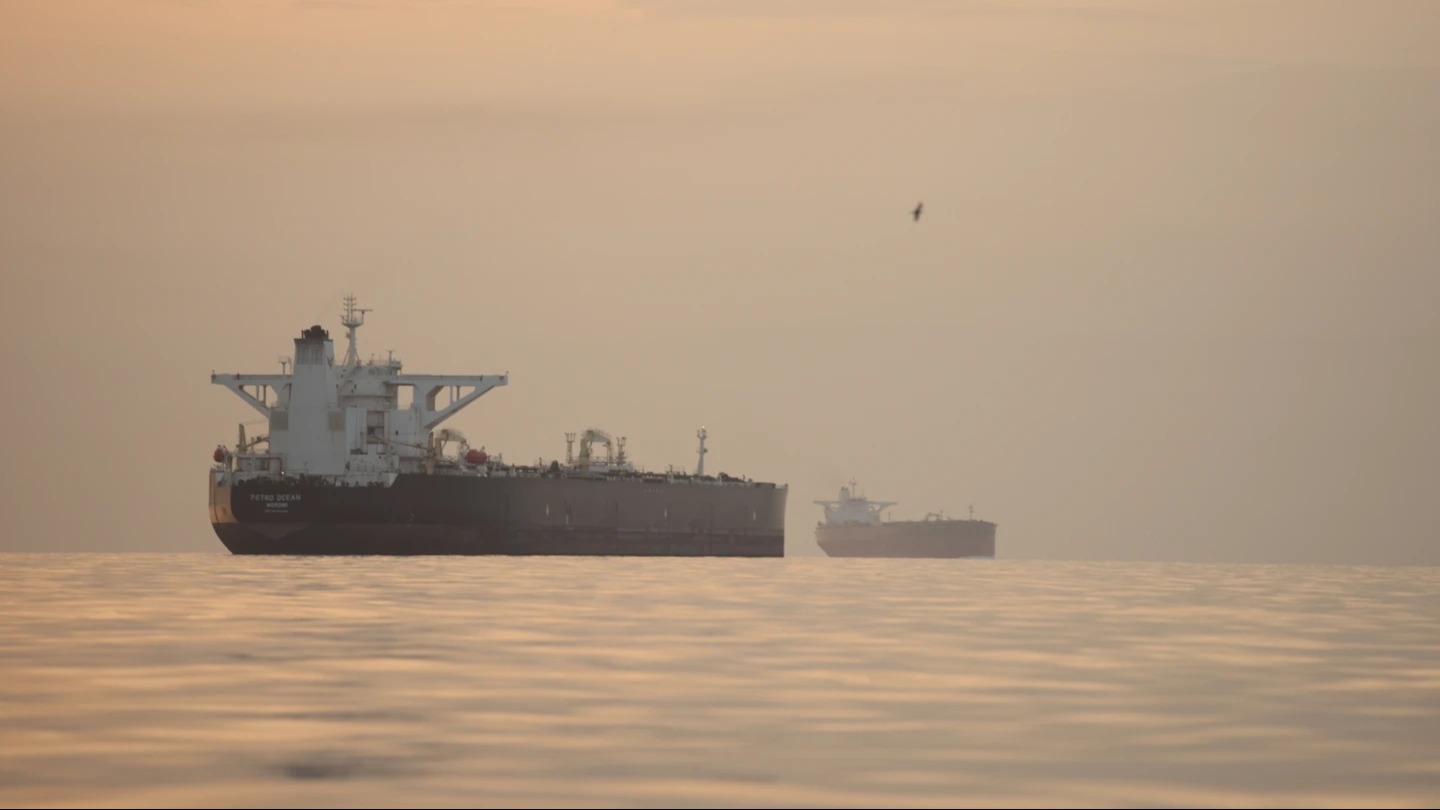

TERRAN – The Strait of Hormuz, a vital chokepoint for the world’s oil supply, has once again become a flashpoint of international conflict. Less than 24 hours after a brief reopening, forces from Iran have reportedly fired on commercial vessels and reinstated strict passage restrictions.
Global energy stability took a hit on Saturday as Iran reversed its decision to reopen the Strait of Hormuz. This sudden U-turn comes after Iranian Revolutionary Guard Corps (IRGC) gunboats allegedly opened fire on a commercial tanker, forcing several other ships to abort their transit. The escalation has reignited fears of a deepening energy crisis and potential military conflict between Tehran and Washington.
According to reports from the United Kingdom Maritime Trade Operations (UKMTO), the incident occurred roughly 20 nautical miles northeast of Oman. Two Iranian gunboats reportedly approached a tanker and opened fire without any radio contact. While the tanker and its crew were reported safe, the psychological impact on the shipping industry was immediate.
Industry monitors, including TankerTrackers.com, noted that several vessels—including a supertanker flagged in India—were forced to turn around. In a separate report, a container ship was also allegedly struck by an unknown projectile, causing damage to cargo but no injuries.
The Sudden Reversal By Iran
The decision to close the strait follows a period of intense diplomatic tension. Just Friday, Tehran had announced that commercial vessels could pass through the waterway. However, the mood soured after U.S. President Donald Trump stated that a U.S. blockade of Iranian ports would remain “in full force” until a new nuclear and security deal is reached.
Iran’s joint military command responded by declaring that control of the strait has returned to its “previous state” under the strict management of its armed forces. Tehran has been clear: as long as Iranian ports are blocked, the world’s most important oil corridor will remain restricted.
Key Takeaways from the Escalation:
- Vital Chokepoint: Roughly 20% of the world’s oil passes through this narrow strait.
- Military Action: IRGC gunboats used small arms fire against commercial tankers to enforce the closure.
- Geopolitical Standoff: Iran demands the lifting of U.S. blockades; the U.S. demands a comprehensive new deal.
- Global Impact: Oil prices are expected to rise as supply chains are disrupted once again.
Impact on Global Energy and Trade
The Strait of Hormuz is often called the “world’s jugular vein” for energy. With approximately one-fifth of global oil consumption transiting the area, even a temporary closure sends shockwaves through the market.
The current situation is particularly fragile because it coincides with a 10-day truce between Israel and Hezbollah. While mediators from Pakistan and other nations are still hopeful that a peace deal can be reached by the April 22 deadline, the return to hostilities in the water suggests that the path to peace is anything but smooth.
The Human and Economic Cost
Beyond the oil prices, the human toll of the wider conflict continues to mount. Recent fighting has claimed thousands of lives across the region:
- Iran: At least 3,000 fatalities reported during recent hostilities.
- Lebanon: Nearly 2,300 deaths.
- Israel: At least 23 people killed.
For the shipping industry, the risk is becoming untenable. Insurance premiums for vessels in the Persian Gulf have skyrocketed, and some shipping lines are considering longer, more expensive routes around Africa to avoid the Middle East entirely.
All eyes are now on the upcoming diplomatic meetings. If a deal is not reached by Wednesday, many fear the temporary ceasefire between the U.S. and Iran could expire, leading to an even larger military presence in the region.
For now, the Strait of Hormuz remains a “no-go” zone for many commercial operators, and the world waits to see if diplomacy can win out over the sound of gunfire.
Trending News:
No Way Out: Four More Protesters Sentenced to Death in Iran
Satellite Imagery Shows Iran Clearing Bombed Missile Tunnels During Ceasefire