


LONDON – The white cliffs of Dover have long stood as a symbol of British defiance, a natural fortress against those who would threaten the realm. But this week, those cliffs bore witness to a sight that many military experts are calling a national humiliation of the Royal Navy.
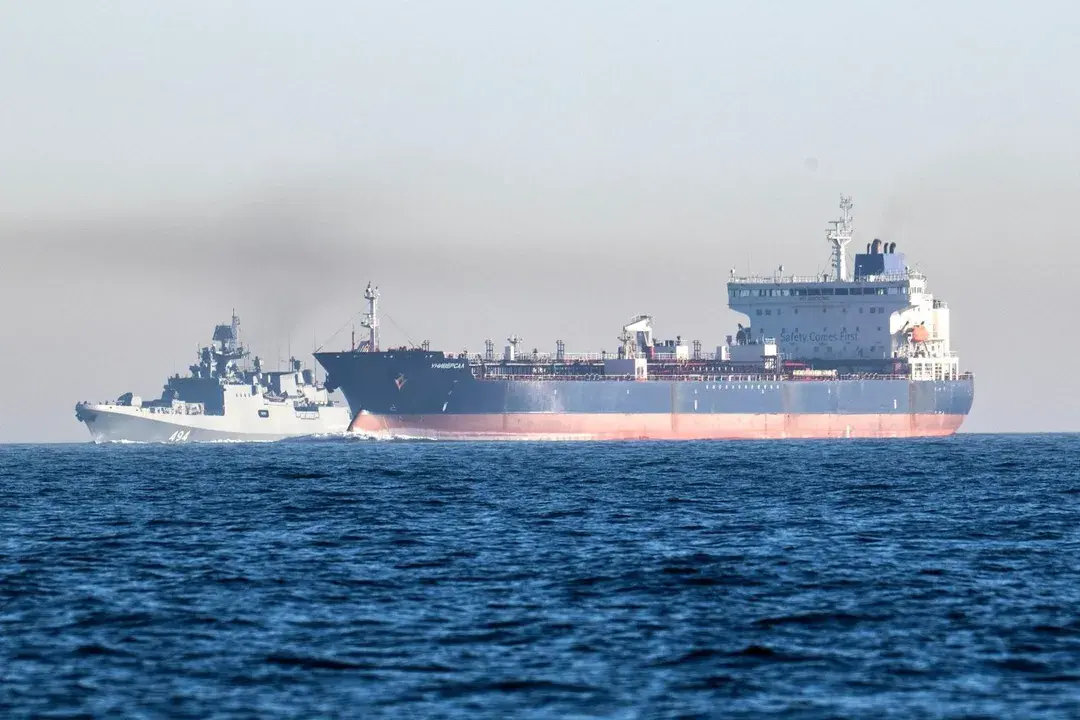
A Russian guided-missile frigate, accompanied by a sanctioned “shadow fleet” oil tanker, glided through the English Channel—Britain’s own backyard—completely unchallenged. There were no Royal Navy escorts. There was no show of force. There was only the empty horizon of a nation that had let its guard down.
The incident began early Tuesday morning when maritime tracking systems identified the Russian vessel Admiral Gorshkov entering the Dover Strait. Trailing behind was an aging tanker suspected of carrying sanctioned Russian crude oil, destined for international markets to fund the ongoing war in Ukraine.
In years past, such a move would have been met with an immediate shadow operation. A British Type 23 frigate or a Type 45 destroyer would have been “on the hip” of the Russian vessel from the moment it entered the North Sea.
This time, the Russian flag flew high and solo. According to defense sources, the Royal Navy simply did not have a single major surface combatant ready to put to sea on short notice.
The Navy Fleet That Can’t Float
The silence from the Ministry of Defence (MoD) has been deafening, but the reasons behind the lack of response are no secret to those within the halls of Whitehall. The Royal Navy is currently facing a “perfect storm” of mechanical failure, recruitment crises, and aging infrastructure.
The statistics are sobering:
- The Destroyer Dilemma: Out of the six Type 45 destroyers—Britain’s premier air-defense ships—four are currently in port for repairs or major “Power Improvement Plan” overhauls to fix propulsion issues.
- Frigate Fatigue: The Type 23 frigates, the workhorses of the fleet, are being pushed decades past their intended lifespan. Structural cracks and engine failures have become the norm, not the exception.
- Manning the Rails: Even if the ships were fixed, there aren’t enough sailors to crew them. Recruitment has plummeted, leaving the Navy with more hulls than it has hands.
“We are essentially a ‘picket-fence’ Navy with most of the pickets missing,” said one retired Admiral, speaking on the condition of anonymity. “The Russians know it. They aren’t just passing through; they are testing us. And right now, we are failing the test.”
Was Trump Right About NATO?
This maritime failure brings a sharp focus back to the controversial comments made by Donald Trump during his presidency and subsequent campaigns. He famously lambasted European allies, specifically the United Kingdom, for failing to meet their NATO spending obligations and for becoming “paper tigers.”
While his tone was often criticized as abrasive, the sight of a Russian frigate sailing past Kent unchallenged suggests his assessment may have been uncomfortably accurate.
The NATO Reality Check
- Funding Gaps: Despite promises to raise defense spending to 2.5% of GDP, the UK’s budget has been swallowed by inflation and the high cost of maintaining a shrinking nuclear deterrent.
- Resource Overstretch: Britain has sent much of its land-based hardware to Ukraine. While noble, it has left the domestic cupboard bare.
- The “Special Relationship”: The US has long looked to the UK as its primary maritime partner in the North Atlantic. If London cannot secure the English Channel, Washington will start looking elsewhere for reliable allies.
The reality is that NATO is a collective defense pact. If the “junior partner” in the world’s most powerful alliance cannot patrol its own territorial waters, the integrity of the entire alliance is called into question.
A Nation Incapable of Self-Defense?
The implications of this week’s events go beyond mere embarrassment. They point to a fundamental shift in the UK’s status as a global power. For centuries, the mantra “Britannia Rules the Waves” was a statement of fact. Today, it feels like a sarcastic taunt.
The inability to stop—or even shadow—a sanctioned tanker is a direct hit to Britain’s economic and security policy. We are telling the world that our laws and our sanctions are toothless because we lack the physical means to enforce them.
What Happens Next?
If the UK cannot secure the Channel, it cannot secure its trade routes. Most of the UK’s food and energy supplies pass through these narrow waters. A Navy that is “broken down and unfit for service” isn’t just a military problem; it’s a national security emergency.
To fix this, experts suggest several immediate, though painful, steps:
- Emergency Maintenance Funding: Bypassing standard procurement red tape to get the Type 45 fleet back at sea.
- Private Sector Crewing: Potentially using civilian contractors for non-combat roles to free up sailors for front-line duties.
- Strategic Realism: Admitting that the UK can no longer project power globally if it cannot protect its own shores.
The Russian warship is now long gone, likely heading for the warmer waters of the Mediterranean. But the wake it left behind in the English Channel should serve as a wake-up call for the British government.
Defense is not a luxury. It is the primary duty of the state. As the Russian “shadow fleet” continues to smuggle oil and its warships continue to probe our weaknesses, the UK must decide if it wants to be a player on the world stage or a spectator in its own waters.
As it stands, the message sent to Moscow this week was loud and clear: The door is open, and there is no one guarding the house.
Related News:
Starmer Now Blames Trump and Putin for UK’s Energy Prices Not NetZero