


WASHINGTON, D.C. – In a series of landmark 6-3 rulings that have reshaped the American electoral landscape, the Supreme Court of the United States has delivered significant legal victories to Republican-led legislatures.
The Court’s recent decisions, particularly in cases involving South Carolina and Louisiana, have effectively raised the bar for challengers who argue that voting maps are racially discriminatory.
These rulings signal a shift in how the judiciary handles the messy intersection of race and politics. By emphasizing that partisan gerrymandering is a political issue beyond the reach of federal courts, the justices have provided a robust legal shield for mapmakers who claim their goal was to gain a party advantage rather than to target voters based on their race.
The South Carolina Decision: A Shield for Partisanship
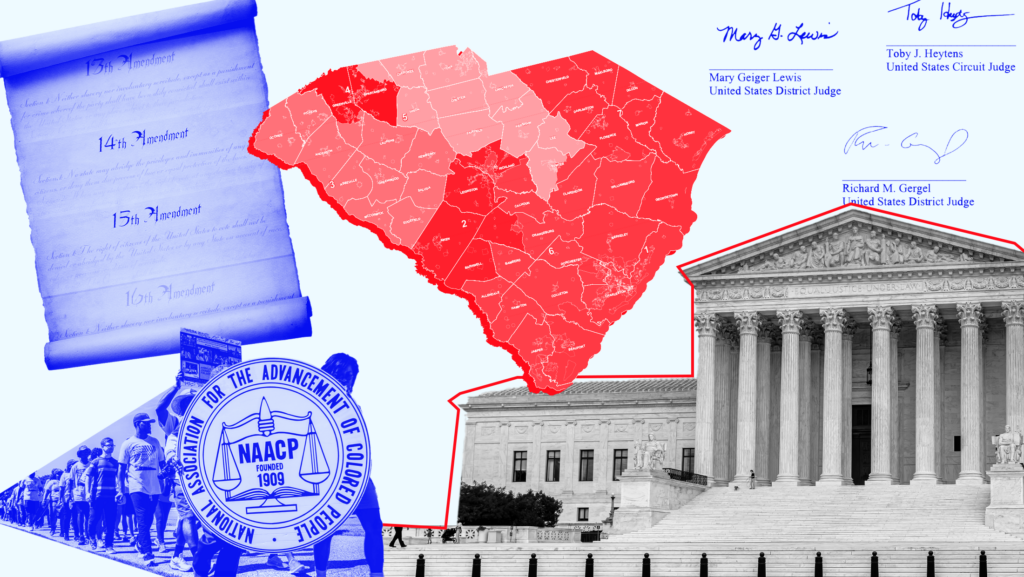
In Alexander v. South Carolina State Conference of the NAACP, the Supreme Court reversed a lower court’s finding that South Carolina’s 1st Congressional District was an unconstitutional racial gerrymander. The case centered on the movement of tens of thousands of Black voters out of a swing district to make it “safely Republican.”
Writing for the 6-3 majority, Justice Samuel Alito argued that the lower court failed to provide sufficient evidence that race—rather than party loyalty—was the “predominant factor” in the map’s design. The Court emphasized several key points that now serve as a roadmap for future redistricting:
- Presumption of Good Faith: Courts must start with the assumption that state legislatures act in good faith when drawing lines.
- The “Alternative Map” Requirement: Challengers are now largely expected to produce an alternative map that achieves the same partisan goals without the same racial results to prove their case.
- Correlation vs. Causation: Because race and party affiliation often overlap, the Court ruled that a map that looks like it targets race might actually just be targeting Democrats or Republicans.
Louisiana and the Narrowing of the Voting Rights Act
The legal momentum continued into 2026 with the Court’s intervention in Louisiana’s redistricting battle. In a 6-3 decision, the Court struck down a map that would have created a second majority-Black district in the state.
The justices ruled that the state’s use of race to create the new district constituted an unconstitutional racial gerrymander. This decision is particularly striking because the map had originally been drawn to comply with Section 2 of the Voting Rights Act (VRA). By striking it down, the Court has signaled that the VRA does not give states a “blank check” to prioritize race over traditional districting principles, such as keeping communities together or following geographic boundaries.
Key Takeaways from Recent Rulings
- Federal Oversight Recedes: Federal courts are now less likely to intervene in redistricting unless there is “smoking gun” evidence of intentional racial bias.
- Partisan Advantage is Permissible: Following the precedent set in Rucho v. Common Cause, the Court maintains that drawing maps for partisan gain is a “non-justiciable” political question.
- Higher Burden of Proof: Civil rights groups face a much steeper climb in proving that a legislature used race as a proxy for party.
The National Impact: A “Gerrymandering Arms Race”
These decisions have triggered what analysts call a nationwide “gerrymandering arms race.” With the legal guardrails loosened, both parties are looking to solidify their power through mid-decade redistricting.
- Republican Strategy: In states like Alabama and Florida, GOP lawmakers are emboldened to maintain or create maps that maximize their seat count, confident that “partisan intent” will serve as a valid legal defense.
- Democratic Response: While the rulings have been seen as a blow to Democratic interests in the South, some blue states are looking to use the same logic to protect their own majorities, though they often face different state-level constitutional restrictions.
- Voter Impact: The primary losers in this legal tug-of-war are often minority communities whose voting power can be diluted or “packed” into single districts under the guise of political strategy.
The shift in the High Court’s approach suggests a “post-racial” view of the law that prioritizes the constitutional authority of state legislatures. Justice Elena Kagan, in her dissenting opinions, has warned that these rulings “greenlight” the systematic dilution of minority voting power.
As the 2026 midterm elections approach, these maps will play a decisive role in determining which party controls the U.S. House of Representatives. For now, the Supreme Court has made one thing clear: in the eyes of the law, “playing politics” with maps is perfectly legal, even if it changes the racial makeup of a district in the process.
Related News:
Trump Tariffs Supreme Court Ruling, What Changed in 2026
Supreme Court Orders CNN to Respond in High-Stakes Defamation Case