

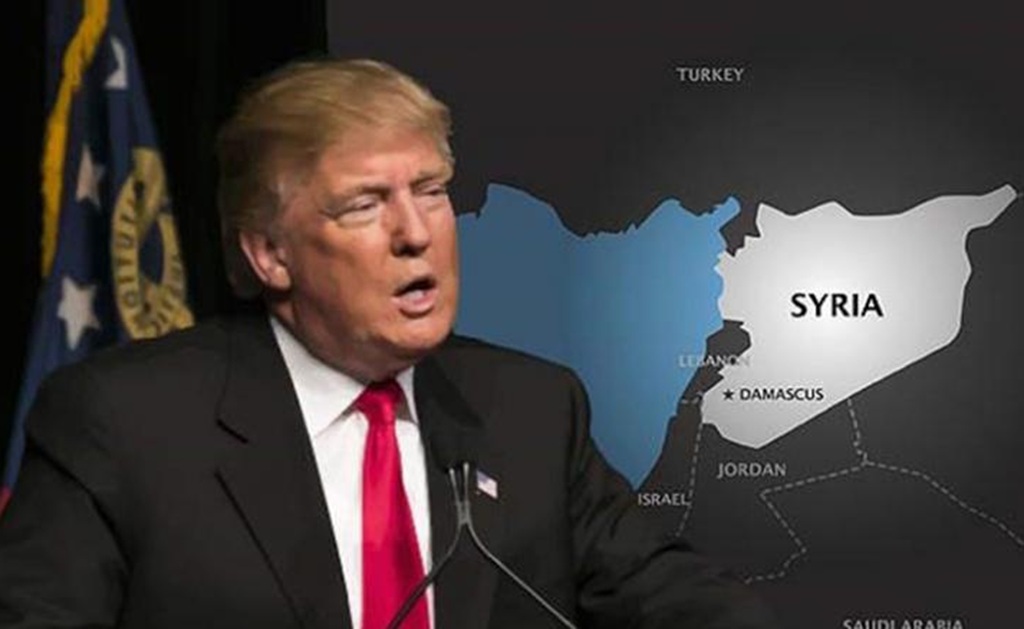

WASHINGTON, D.C. – President Donald Trump has directed a complete pullout of about 1,000 US troops from Syria within two months. The White House points to a reduced ISIS threat and a larger counterterror role for the Syrian government. At the same time, the administration is sending more US naval and air power into the Middle East to pressure Iran.
Multiple outlets, including Sky News Australia, Fox News, The Wall Street Journal, and Reuters, reported the decision. It closes out a US mission that began about a decade ago as part of the campaign against the Islamic State (ISIS).
This order follows a steady drawdown over recent months. For example, US forces have recently left key sites such as al-Tanf in southeastern Syria near the Jordan and Iraq borders, and al-Shaddadi in the northeast. In addition, several positions have already shifted to Syrian government control, which signals a planned handoff.
Key details on the Syria withdrawal
- Troop levels and schedule: About 1,000 US personnel are expected to leave within two months, ending the remaining US presence.
- How the mission began: The US entered Syria in 2014 under the Obama administration. It later expanded under Trump’s first term, including cooperation with the Kurdish-led Syrian Democratic Forces (SDF) against ISIS control.
- Why the administration says it’s leaving: Trump officials point to improved security, a weakened ISIS threat, and the Syrian government’s increased willingness to lead counterterror work inside Syria. One senior official said the United States no longer needs a large on-the-ground footprint. Still, officials say the US can respond from outside Syria if terrorist threats return.
- A shift consistent with Trump’s past stance: Trump has long argued that extended ground deployments cost too much and bring limited returns. Earlier pullback efforts in 2018 and 2019 ran into internal pushback and ended in partial moves. This time, the administration appears to be moving forward without the same obstacles.
Officials describe the withdrawal as conditions-based and say it is not tied to other events in the region. Even so, it arrives as tensions rise elsewhere in the Middle East, especially around Iran.
Trump builds a larger military posture aimed at Iran
While reducing US ground forces in Syria, the Trump administration is boosting American naval and air power across the Middle East. The buildup comes as the US watches Iran’s nuclear program, ballistic missile work, and support for regional proxy groups.
According to reports from The New York Times, New York Post, BBC, Reuters, and CNN, the posture includes:
- Another aircraft carrier, the USS Gerald R. Ford, is moving into the region, joining or nearing the USS Abraham Lincoln strike group already operating in the Arabian Sea or Gulf area.
- Dozens of fighter aircraft are heading forward, including F-35 Lightning II stealth fighters, F-22 Raptors, F-16s, and others, shifting from US bases to sites in Europe and the Middle East.
- Support forces such as aerial refueling tankers, guided-missile destroyers, and other warships, building a force that can sustain operations.
This increase comes as indirect talks with Iran continue through third-party channels, including Oman, aimed at a new nuclear agreement. Trump has called for tight limits on Iran’s uranium enrichment and related activity.
He has also warned that a failure to reach a deal could lead to military action. Administration sources say the force posture keeps options open, including strikes on Iranian nuclear facilities, missile sites, or Islamic Revolutionary Guard Corps (IRGC) targets if talks break down.
The USS Gerald R. Ford can carry more than 75 aircraft, including F-35C variants, which increases carrier strike capacity. At the same time, USS Abraham Lincoln’s air wing includes F-35s, F/A-18 Super Hornets, and electronic warfare aircraft. Together, the groups give the US strong air-power choices in the theater.
What this could mean for the region and US policy
The approach is two-tracked. The US is leaving Syria, while also building pressure on Iran. This matches Trump’s America First message, with fewer long-term ground missions but a heavy force where the administration sees core risks.
Possible effects include:
- Inside Syria: Turning sites over to Syrian forces under interim leadership may support domestic efforts against ISIS. However, it also raises concerns about Kurdish partners and the chance of new gaps in control.
- Counterterrorism going forward: US officials say they will rely on over-the-horizon tools, including intelligence support and drone strikes, to help prevent an ISIS comeback.
- Iran tensions: The military buildup may strengthen the US hand in talks. At the same time, it can increase the risk of mistakes or escalation, with Iran reportedly preparing for possible US or joint US-Israeli strikes.
- Across the Middle East: Some allies, including Israel and Gulf states, may welcome a stronger Iran-focused posture. Critics, however, warn that it could pull the US deeper into regional conflict again.
The Syria withdrawal tracks with a familiar Trump promise to bring troops home and point to progress against ISIS. Yet the parallel buildup aimed at Iran shows the administration’s narrower focus. It is stepping away from long-term ground commitments, while keeping strong air and sea power ready for threats tied to Tehran.
Over the next two months, the shift will become clearer on the ground. For now, the message from the White House is straightforward: a lighter footprint in Syria, and a heavier presence at sea and in the air where the administration sees the biggest risks.