


WASHINGTON, D.C. – The United States is now in a direct conflict with Iran. At the same time, President Donald Trump is also fighting a political battle with long-time NATO partners. That clash is growing sharper by the day.
This week, tensions spilled into public view after Trump criticized NATO for refusing to back US action in the Iran war. He framed the moment as a major test for the alliance. But while American forces responded to Iranian threats, especially near the Strait of Hormuz, most allies chose not to join in.
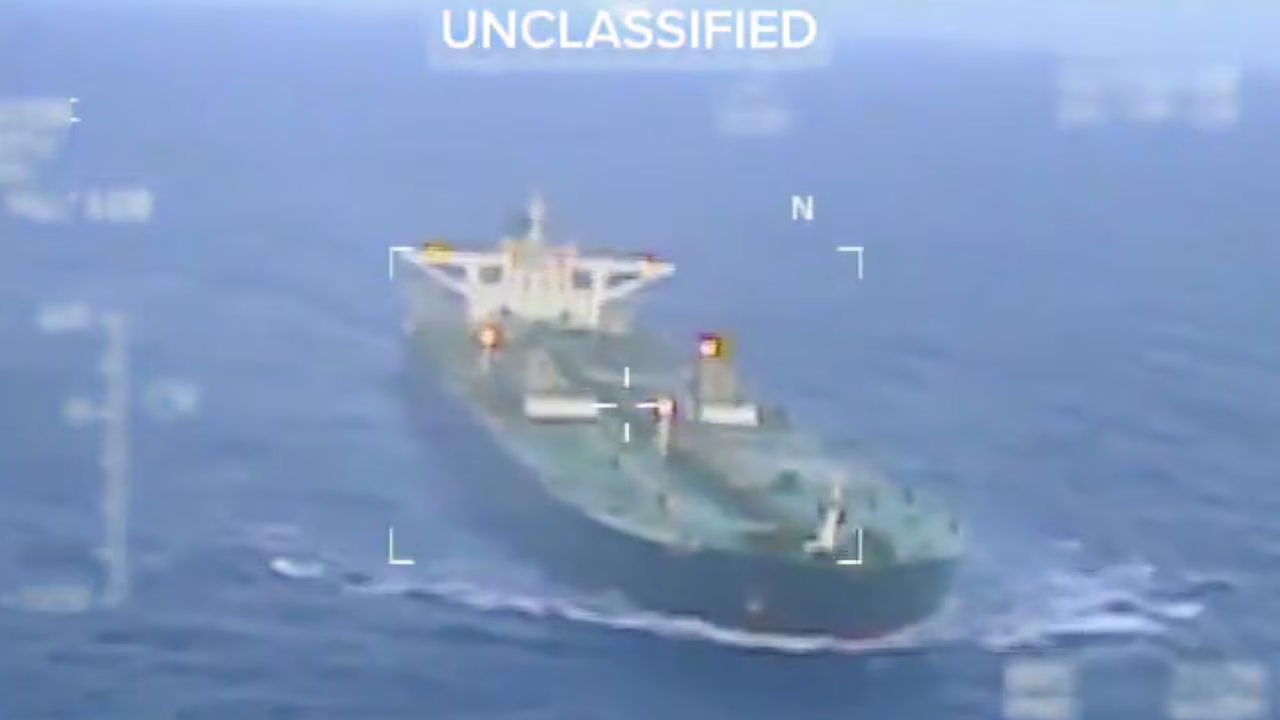
The latest break came after the US launched military operations against Iran during rising tensions over Tehran’s nuclear program and regional attacks. Iran then moved to disrupt shipping through the Strait of Hormuz, a narrow passage that handles roughly 20% of global oil shipments. Trump asked NATO members to help protect the route and share the risk.
Most European governments declined. They argued that the conflict did not fall under NATO’s main defense role, which they see as focused on threats closer to Europe, such as Russia. Some officials said flatly that this was “not a NATO matter.”
Trump responded with sharp criticism. In a recent Cabinet meeting, he said, “We’re very disappointed with NATO because NATO has done absolutely nothing.” He also said the US would “remember” how allies reacted.
Trump’s Message, and Why It Matters
In posts on Truth Social and in public remarks, Trump called NATO a “one-way street.” His argument was simple: the US protects Europe, yet many allies step back when Washington asks for help.
He also warned that the alliance faces a “very bad future” if that pattern continues. Some reports say he is even weighing whether the US should scale back parts of its NATO commitment.
This anger did not appear overnight. Trump has spent years criticizing NATO members over defense spending. Still, the Iran war pushed that frustration to a new level. While he praised support from regional partners such as Bahrain, Kuwait, and Turkey, he blasted European allies for staying out.
How NATO Countries Responded
European leaders answered with caution. Finland’s president acknowledged a real “split” inside the Western alliance, though he tried to play down the long-term damage. Germany took a firmer line and said the Iran war had nothing to do with NATO.
NATO Secretary General Mark Rutte urged both sides to show restraint. He defended the limited talks by pointing to operational security, but he also called for unity. A few nations offered small signs of support, for example, France sending warships. Still, no major ally agreed to take on the dangerous task of escorting oil tankers through the strait.
Analysts say that reluctance comes from several concerns. Many European governments are tired of war. Domestic politics also play a big part. In addition, leaders fear being pulled into a wider Middle East fight. Europe is also worried that a long closure of the strait could send energy prices much higher.
- Main concerns in Europe:
- A wider war with Iran
- Greater focus on Russia and Ukraine
- Limited naval strength in the Gulf
- Political pressure at home
A Look at the US-Iran Conflict
The current fighting has been building for years. Tensions grew over Iran’s nuclear work, proxy attacks, and threats aimed at Israel and Gulf states. US and Israeli strikes hit Iranian military targets, nuclear sites, and energy facilities.
Trump has highlighted what he calls major US gains, saying Iranian forces have been badly weakened. Yet the war is still going on, and Iran says the US broke the pauses tied to some strikes. Meanwhile, the disruption in the Strait of Hormuz has slowed global oil flows, lifted prices, and added pressure to economies around the world.
US officials say keeping the waterway open is not just an American interest. They argue it protects world trade, including Europe’s energy supply. For that reason, Trump’s request carried extra weight, and the lack of support hit a nerve.
Why This Matters for Global Security
NATO has anchored Western defense since 1949. If trust starts to fade now, the damage could stretch far beyond this conflict.
Some experts warn that Russia and China may see an opening. If the bond between the US and Europe weakens, rival powers may feel more confident in testing the alliance. Others say NATO has survived major disputes before, including earlier fights over spending during Trump’s first term.
Still, this moment feels more serious to many observers. Trump is not only asking for more money or military spending. He is openly questioning whether allies are loyal during an active war.
What Happens Next With Trump and NATO
Behind the scenes, diplomacy is still moving. US Secretary of State Marco Rubio met with G7 officials in an effort to calm tensions. Some NATO countries have quietly suggested they may help with maritime security later, as long as they avoid direct combat roles.
Trump also extended a pause on certain strikes tied to Iran’s energy sector into early April, which may leave space for talks. At the same time, he warned Tehran to “get serious soon” or face tougher action.
For NATO, the next few months could shape the future of the alliance. Some members may offer more support in the Gulf. Others may keep their distance, which would deepen the divide.
European diplomats have admitted in private that the strain is serious. One senior EU official reportedly said Trump has already made NATO “defunct in practice” in relation to this conflict.
What Past Crises Tell Us
History shows that alliances usually weaken in stages, not all at once. During the Cold War, NATO members clashed over Vietnam and other major issues. More recently, debates over burden-sharing dominated summit meetings.
Trump’s style is blunt and personal. He sees strong leadership as naming free-riders and forcing action. Supporters say that pressure gets results. Critics say it risks leaving America more isolated when unity matters most.
People on both sides of the Atlantic are paying close attention. Many Europeans still value the US security shield. Many Americans think allies should carry more of the load after decades of US support.
The Human Cost and the Wider Fallout
Beyond the politics, the war is affecting real lives. Sailors and service members face danger in the Gulf. Families across the region live with fear and instability. Higher oil prices also hit workers, drivers, and businesses far from the battlefield.
If these alliance cracks keep growing, future threats from Iran, Russia, or others may become harder to manage together.
Trump’s warning was clear: the US will remember who stood with it. Now the pressure is on NATO leaders to decide how they respond.
This fast-moving crisis shows how a single war can expose old tensions inside long-standing partnerships. As the Iran conflict drags on, NATO’s future looks more uncertain than it has in years.