
Connect with us

Politics

Trump Signs New Taiwan Law Amid Heightening Tensions With China

VORNews

Published

on

Trump Signs New Taiwan Law

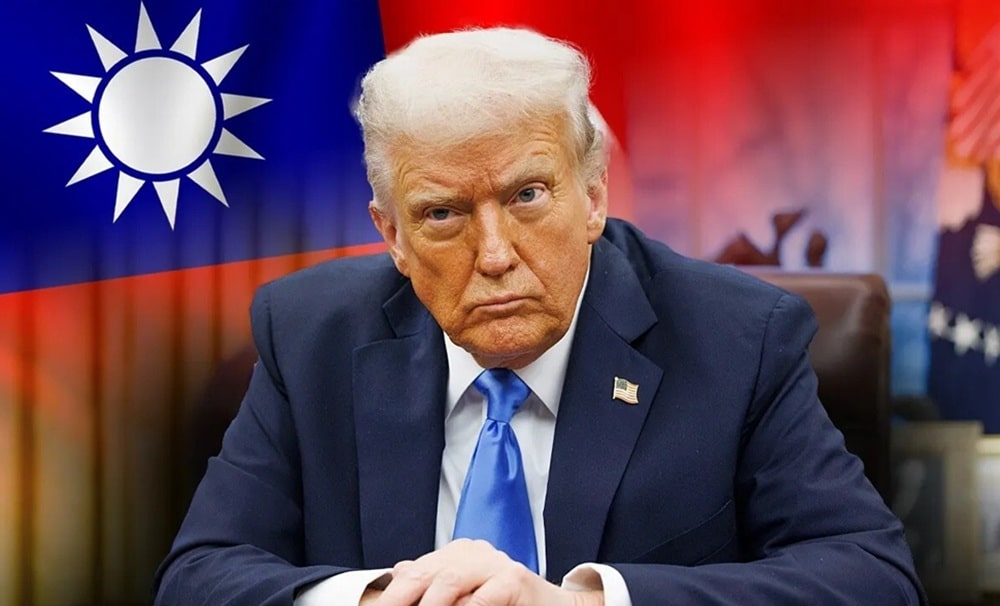
WASHINGTON, D.C. – In a move that signals a stronger, more structured backing for Taipei, U.S. President Donald Trump has signed the Taiwan Assurance Implementation Act into law. The measure requires ongoing, formal reviews of how American officials deal with the self-governed island, deepening the institutional framework around U.S.-Taiwan ties.

The legislation passed with rare, solid bipartisan support and drew an immediate and harsh response from Beijing. The reaction highlights how Taiwan remains one of the most sensitive flashpoints in the Indo-Pacific region.

This new law, described by analysts as both practical and symbolic, is viewed as the first major pro-Taiwan measure of Trump’s second term. It reinforces Washington’s long-term backing for Taiwan’s democracy, which China claims as part of its own territory.

The act targets decades-old, self-imposed limits on senior-level contact between U.S. and Taiwanese officials. Critics of those restrictions say they no longer fit U.S. strategic interests, especially as Beijing ramps up pressure and coercion against the island.

What the Taiwan Assurance Implementation Act Changes

The Taiwan Assurance Implementation Act builds on and amends the Taiwan Assurance Act of 2020. Its most important change is the new requirement for the U.S. Department of State to carry out a regular, structured re-examination of its internal rules for official dealings with Taiwan.

Under the 2020 act, the State Department only had to conduct a single review of its guidelines on interaction with Taipei. The new implementation law turns that one-off exercise into a recurring process. It orders the department to perform a full review and send an updated report to the foreign affairs committees of both the Senate and the House “not less than every five years.”

Once each review is done, the updated report must be delivered within 90 days.

This recurring review system is meant to keep U.S. engagement with Taiwan aligned with current conditions in the region. It is intended to prevent policy from being locked into outdated rules that were created after Washington shifted diplomatic recognition to the People’s Republic of China (PRC) in 1979. By locking in regular updates, the law seeks to reduce sudden policy swings and reinforce the image of the United States as a steady and dependable partner for Taiwan.

The bill’s backers, including Representatives Ann Wagner (R) and the late Gerry Connolly (D), stressed that building these reviews into law will support a more forward-leaning U.S. policy towards Taiwan across different administrations. They argue that this will make American support less vulnerable to changing political moods in Washington.

Taipei Hails a “Major Step Forward”

Taiwan’s government quickly welcomed the signing of the act. Both the Presidential Office and the Ministry of Foreign Affairs (MOFA) issued statements expressing deep thanks to President Trump and the U.S. Congress for their strong bipartisan support.

Foreign Minister Lin Chia-lung called the new law a “major step forward in U.S.-Taiwan relations.” He said that more frequent reviews and updates would let officials from both sides interact more fully. In practice, this could mean more Taiwanese officials visiting U.S. federal agencies for high-level discussions on security, trade, and other key issues.

For Taipei, the law sends a strong message about the value Washington places on close ties with Taiwan. Officials also see it as a sign of shared values, including democracy, freedom, and respect for human rights.

Presidential Office Spokeswoman Karen Kuo stressed that a strong U.S.-Taiwan partnership is seen as a cornerstone for maintaining peace and stability in the Indo-Pacific region. The timing is also important. The law follows Taiwan’s own approval of an eight-year, US$40 billion supplementary defence budget. This spending package is meant to boost Taiwan’s asymmetric defence capabilities as pressure from the PRC continues to grow.

Beijing Issues “Red Line” Warning

As expected, Beijing reacted with anger to the new U.S. law. The PRC views any official contact between Washington and Taipei as a challenge to its “one-China principle,” which it says is the foundation of China-U.S. relations.

Chinese Foreign Ministry spokesman Lin Jian issued a sharp warning, stating that the “Taiwan question is at the core of China’s core interests and is the first red line that must not be crossed in China-U.S. relations.” Beijing has long opposed any move that might raise Taiwan’s status on the global stage or hint at recognition of its separate governance. Chinese officials repeat that such actions could fuel tension in the already-strained Taiwan Strait.

The timing adds to the sensitivity. The law comes only months after high-level talks between American and Chinese leaders, including a meeting between President Trump and President Xi Jinping in South Korea. While the U.S. still formally follows a “one-China policy,” critics in Beijing argue that a series of U.S. laws, such as the Taiwan Travel Act, the Taiwan Assurance Act, and now the implementation act, reveal a clear shift. They see a pattern of building a deeper, more structured, though still officially “unofficial,” relationship with Taiwan.

Regional and Global Watchfulness

Governments across East Asia and beyond are paying close attention to these developments. The rising level of U.S.-Taiwan cooperation comes as Taiwan faces near-daily incursions by the People’s Liberation Army (PLA) into its Air Defense Identification Zone (ADIZ).

Recent U.S. steps have included the approval of an arms sale sustainment package for Taiwan’s air force, aimed at keeping existing systems effective for longer. With the new law, channels for political dialogue and defence cooperation are set to become more consistent and predictable. Supporters say this can strengthen deterrence against possible Chinese military action.

The Taiwan Assurance Implementation Act not only tightens the bureaucratic framework that guides U.S.-Taiwan relations, but it also adds another source of stress to already fraught China-U.S. ties. Taiwan sits squarely at the centre of this strategic contest in the Indo-Pacific, and this law further cements its role as a key test of future relations between Washington and Beijing.


Related News:

Trump’s Narco-Takedown is Sqeezing Global Finance’s Dirty Secrets

Politics

Tim Walz Exposed For Faking Financial Records In State Audit

VORNews

Published

on

By

Tim Walz Exposed

MINNESOTA – A new report from Minnesota’s nonpartisan Office of the Legislative Auditor (OLA) is putting Governor Tim Walz’s administration under fresh pressure.  The audit, released earlier this month, reviewed the Department of Human Services (DHS) Behavioral Health Administration (BHA) and found that state staff created and backdated documents during the audit process.

Auditors say the records appear to have been made to cover for weak oversight and questionable grant payments tied to more than $425 million in taxpayer funds.

The report adds to a growing list of concerns around fraud and waste in Minnesota social services. Walz announced on January 5, 2026, that he will not run for re-election. Many critics link that decision to the string of scandals and investigations that have followed his administration.

Major Problems With Grant Oversight

The OLA report runs about 70 pages and focuses on behavioral health grants paid out from July 2022 through December 2024. Auditors listed 13 key findings, including several problems flagged in earlier reviews. The report described repeated breakdowns, such as:

  • Missing required progress reports from grantees
  • Payments were approved even when the paperwork was late or incomplete
  • Weak monitoring, including site visits that were not done or not documented
  • Heavy use of non-competitive single-source grants without clear support for the decision

Over the period reviewed, BHA awarded more than $425 million to about 830 organizations, mostly outside government. The money was meant to support mental health care and substance use disorder services. Auditors said BHA lacked basic internal controls to track performance and confirm proper use of funds, which increased the risk of fraud and misuse.

One example in the audit drew sharp criticism. A grant manager approved a payment of nearly $680,000 to a single grantee for one month of work, and the file did not show proof that the services were delivered. The employee left state service days later and took a consulting job with the same organization. That sequence raised serious conflict-of-interest concerns.

Audit Says Walz Staff Fabricated and Backdated Documents

The most serious finding involved the audit itself. Legislative Auditor Judy Randall said the office saw signs of a “systemic effort” to alter the record, something she described as unheard of during her 27 years with OLA.

Auditors found cases where records were created after the audit began and then dated to look older. In one example, documents claimed monitoring visits happened in May 2024, October 2024, and January 2025. Auditors concluded those records were actually created in February 2025, after the audit was already underway and information requests were out.

Randall called the practice unacceptable and said it damaged trust in the review process. The report suggests the altered paperwork was used to make long-running oversight problems look fixed after the fact, instead of addressing them in real time.

Part of a Larger Wave of Fraud Claims

The DHS audit lands during a broader crackdown on alleged fraud in Minnesota’s public programs. Federal and state investigators have been looking into suspected wrongdoing that could add up to billions of dollars across Medicaid, child care, housing stabilization, and nutrition assistance programs. More than 1,000 current and former workers have come forward as whistleblowers, alleging retaliation, deleted data, and pressure to stay quiet about fraud reports.

Congress has also taken an interest. The U.S. House Committee on Oversight and Government Reform, led by Rep. James Comer (R-Ky.), has expanded its review of Minnesota’s handling of these programs. Comer has publicly blamed Walz for ignoring warning signs and has called on Walz and Attorney General Keith Ellison to testify in February 2026. He has also pushed for cooperation with document requests.

Minnesota Republicans, including Rep. Kristin Robbins, say the state ignored auditor warnings and whistleblower complaints for years, with some concerns dating back to 2009.

DHS Response and Growing Calls for Accountability

Acting DHS Commissioner Shireen Gandhi said she was alarmed by the findings about backdated records and promised a full internal review. She also said DHS plans to tighten training, supervision, and internal controls.

Critics say those steps should have happened long ago. House Speaker DeMuth described the report as proof of a culture marked by fraud, negligence, and deception, and called for immediate reforms and possible prosecutions. Some federal lawmakers have warned that funding could be at risk if the state cannot show stronger accountability.

Walz has defended his administration in past disputes by pointing to third-party audits, paused payments in higher-risk areas, and new anti-fraud efforts. Still, the latest audit raises hard issues about who knew what, who allowed weak controls to continue, and whether anyone will face criminal charges for falsifying public records.

What This Means for Public Trust

This audit is not just about paperwork problems. It goes to public trust in the state government. The grants were meant to help Minnesotans dealing with mental illness and addiction. Auditors say the funds went out without strong safeguards, and when oversight finally arrived, staff allegedly tried to recreate a paper trail to show compliance.

With investigations still active at the state and federal levels, the fallout could shape the final chapter of Walz’s time as governor. For many Minnesotans, the biggest issue is simple: they want clear answers, real consequences, and proof that taxpayer dollars will be protected going forward.

Related News:

JD Vance Exposes Walz’s Fraud and CNN’s Lies in White House Presser

Continue Reading

Politics

Sen. Joni Ernst Targets Minnesota Nonprofit Amid Fraud Scandal

VORNews

Published

on

By

Sen. Joni Ernst Targets Minnesota Nonprofit

WASHINGTON, D.C. –  Sen. Joni Ernst, a Republican from Iowa, is moving to stop more than $1 million in federal funding set aside for a Minnesota addiction recovery nonprofit. She says the earmark raises red flags tied to Minnesota’s widening nonprofit fraud scandals.

The group, Generation Hope MN, is Somali-led and has drawn attention for listing the same address as a Somali restaurant and for links to well-known Democratic lawmakers.

Ernst plans to offer a Senate amendment that would shift the money away from the nonprofit and send it to fraud detection and enforcement instead. Her move adds to a growing GOP push for tighter controls on federal spending, especially in Minnesota, where investigators say major social service programs have been exploited for large sums.

Ernst Moves to Re-route the Money

“The amount of fraud coming out of Minnesota is shocking, and I’m worried we’re only seeing part of it,” Ernst said in a statement. “Congress should fix the problem, not keep feeding the same system that let it happen.”

The funding totals $1,031,000 for Generation Hope’s “Justice Empowerment Initiative.” The program is described as offering substance use recovery support, mental health services, job training, and educational help for East African residents in the Twin Cities. Rep. Ilhan Omar (D-Minn.) requested the earmark, and Minnesota Sens. Amy Klobuchar and Tina Smith backed it in the Senate.

Generation Hope MN started in 2019 as a 501(c)(3). On its website, it says its mission is to build “a better, safer, and more connected community” for people dealing with addiction within the broader East African community.

Recent reports, though, have raised concerns about its setup. Those reports point to the nonprofit’s registered address above a Minneapolis Somali restaurant and claim that several leaders share the same home address.

No charges have been filed against Generation Hope. Still, Ernst and other critics say the group’s profile looks similar to patterns seen in Minnesota’s fraud cases, where some nonprofits have been accused of abusing federal and state programs.

Political Connections Add More Attention

Omar, Klobuchar, and Smith have supported programs tailored to immigrant communities across Minnesota, including the state’s large Somali-American population. Omar’s office has promoted the earmark as part of efforts to address opioid addiction in her district.

Critics say the request lands at a sensitive time. Minnesota remains under heavy scrutiny after major federal investigations into nonprofit fraud. The best-known case involves Feeding Our Future, a now-closed organization accused of taking $250 million from a federal child nutrition program during the COVID-19 pandemic. Prosecutors have charged more than 70 people in that case. They say the losses reach into the hundreds of millions of dollars.

Other probes have focused on Medicaid-funded autism services, housing stabilization programs, and childcare-related spending. Together, alleged misuse across programs could exceed $1 billion. Many defendants in these cases are Somali, though prosecutors say the schemes involve people from many backgrounds.

Ernst’s staff says they found the Generation Hope earmark while reviewing a broader spending package. She argues that putting the money into Department of Justice enforcement work would do more for taxpayers than sending it to an organization now facing questions.

ACLJ Files FOIA Requests for Records

The dispute escalated after conservative attorney Jay Sekulow said the American Center for Law and Justice (ACLJ) filed several Freedom of Information Act (FOIA) requests tied to Minnesota grant programs.

On his radio show and social media, Sekulow called it a “major FOIA” push to “gather intel” on what he described as large-scale fraud being uncovered in the state. The requests went to agencies that include the Department of Health and Human Services, the Minnesota Attorney General’s Office, and the Governor’s Office. They seek documents tied to grant oversight and investigations, including alleged fraud connected to daycare and other social service programs.

The filings reflect a wider demand from conservative groups for more public records and clearer oversight. Sekulow has criticized what he calls weak guardrails, saying, “That’s not compassion. That’s corruption,” in recent broadcasts.

What This Means for Minnesota Nonprofits

The fraud cases have put Minnesota in the national spotlight. They have also led to congressional hearings and pauses on some federal payments. The Small Business Administration has opened probes into Somali-linked organizations, and Senate Republicans, led by Ernst, have asked for detailed reports on which programs were hit.

Supporters of community-based funding say these programs serve people who often struggle to access help, including immigrants facing language and cultural barriers. Generation Hope has not been named in any active prosecution. Offices for Omar, Klobuchar, and Smith have not responded to requests for comment on Ernst’s amendment.

As Congress works through the spending bill, Ernst’s proposal could slow the larger package and force a fight over earmarks and oversight. With fraud estimates rising and politics heating up ahead of the midterms, the battle over Generation Hope’s funding has become part of a bigger debate about how federal dollars should flow to nonprofits.

For taxpayers, the focus remains on whether new safeguards will stop future abuse or whether more cases are still waiting to surface.

Related News:

Mainstream Media Spins Minnesota ICE Shooting to Stoke Outrage

Fraud Under Tim Walz May Have Handed Minnesota State to the Republicans

Continue Reading

Politics

Iran’s Exiled Crown Prince Urges Khamenei’s Removal

Jeffrey Thomas

Published

on

Iran's Exiled Crown Prince Urges Khamenei’s Removal

TEHRAN, Iran – A new wave of nationwide protests is putting heavy pressure on the Islamic Republic, in what many describe as the biggest challenge since the 2022 Mahsa Amini demonstrations.

Crowds in cities across Iran have marched for 11 straight days, chanting against Supreme Leader Ayatollah Ali Khamenei and calling out the name of exiled Crown Prince Reza Pahlavi as a sign of change. The unrest has reached more than 21 provinces, fueled by a sharp economic crisis and growing public anger.

The current protests began on December 28, 2025. They first centered on rising prices, a falling rial, and shortages of everyday goods. Early scenes from Tehran’s Grand Bazaar showed people rallying over the cost of living. Within days, many demonstrations shifted into direct demands to end the current system of rule.

Human rights groups that have reviewed and verified videos say chants have been heard in cities including Isfahan, Mashhad, and Ilam. Protesters have shouted “Death to the dictator,” aimed at the 86-year-old Khamenei, along with “Reza Shah, bless your soul,” a slogan that recalls the founder of the Pahlavi dynasty.

In Tehran, clashes have been intense. Riot police on motorcycles have pursued demonstrators through city streets, using tear gas and live ammunition, according to reports and video shared by monitors. On Tuesday, confrontations near the main market reportedly left several people wounded as shopkeepers joined in. Western Iran and smaller towns have also seen strong turnout, with security forces struggling to slow the pace of protests.

Rights groups, including Iran-based monitors, say at least 36 people have been killed since the unrest began. Hundreds more have been injured, and thousands have been arrested. Khamenei has publicly acknowledged economic complaints, but he has also described the demonstrations as “riots” pushed by foreign enemies.

Reza Pahlavi’s Message From Exile Gains Traction

Reza Pahlavi, 65, the son of Iran’s last shah, has become a key figure for many protesters. Speaking from the United States, he released a video message in Farsi this week that spread widely online. He urged people inside Iran to unite around disciplined, large-scale action. He also called for coordinated chants at set times and said change should not depend on foreign military involvement.

“I am more ready than ever to return to Iran and lead the transition to democracy,” Pahlavi said, while stressing that any shift must be driven by Iranians themselves.

In several cities, pro-monarchy chants have returned, including “Javid Shah” (Long live the king) and “This is the final battle; Pahlavi will return.” The slogans have been heard from Arak to Rasht, pointing to renewed interest among some groups in secular and nationalist options against clerical rule.

Pahlavi has spoken positively about recent U.S. actions abroad while continuing to frame change in Iran as an internal effort. His comments have also boosted activity among the Iranian diaspora, with rallies reported in cities such as London and Paris, as international leaders watch events unfold.

Security Crackdown Intensifies as the Death Toll Rises

Iranian security forces, including the Basij militia and the Revolutionary Guards, have responded with harsher tactics. Verified footage shared by activists shows officers beating protesters and firing into crowds. There have also been reports of night raids and internet blackouts in provinces such as Chaharmahal and Bakhtiari and Ilam, steps that appear aimed at disrupting coordination.

Activists have documented at least 36 deaths, while warning that the real figure could be higher. In one reported incident, a police colonel was killed during clashes in Tehran. Kurdish and Baloch opposition groups have issued threats of retaliation, with one coalition claiming responsibility for targeting a law enforcement officer.

In his first comments last week, Khamenei promised to “put rioters in their place.” He also signaled limited openness to discussing economic problems, similar to his approach during the 2022 unrest. That has not eased the anger. Judiciary officials have also warned that there will be no leniency for people accused of “helping the enemy.”

Iran’s crisis has gained extra attention because of major news out of Venezuela. On January 4, U.S. forces under President Donald Trump captured Venezuelan leader Nicolás Maduro in an operation that led to his detention in New York on drug charges, according to reports. Trump has publicly praised the move, saying he plans to “run” Venezuela’s oil resources and warning other authoritarian governments.

Some protesters in Iran have responded by calling on Trump directly. Videos show crowds chanting pleas such as “Don’t let them kill us,” and some clips show streets being renamed after Trump. Signs have also appeared with messages like, “Trump, help us like you helped Venezuela,” reflecting fear of a violent crackdown and hope for outside backing.

Trump said last week that if Tehran “violently kills peaceful protesters,” the U.S. “will come to their rescue.” Iranian officials have condemned the Venezuela operation as a breach of sovereignty, and the comments have increased anxiety inside the regime about foreign action.

Reports Claim Khamenei Has a Backup Plan to Flee to Russia

As protests continue, Western media outlets have cited intelligence reports claiming Khamenei has a fallback plan to leave Iran for Moscow if security forces lose control. The plan reportedly includes travel with up to 20 relatives and aides, with support from Russia. If true, it highlights how much Tehran depends on close ties with Russian President Vladimir Putin.

There have also been unverified claims that Iraqi militias could enter Iran to help with a crackdown. Similar rumors have circulated during past protest waves. At the same time, internet disruptions and heavy security deployments in Tehran point to a government under strain and trying to regain control.

In Tehran today, the mood remains tense and unsettled. Demonstrations have continued despite large security deployments, with 19 protests in the capital reported since Monday. At night, chants of “Don’t be afraid, we are all together” have echoed from neighborhoods, while bazaar merchants and students keep pushing back against pressure to stay home.

Kurdish political groups have backed calls for a nationwide general strike on Thursday, which could raise the stakes even more. With inflation climbing and water shortages looming in some areas, many people say daily life is becoming harder by the week.

No one can say for sure whether this movement will force real change or face another brutal crackdown. But for many Iranians taking the risk to protest, the message is direct: they don’t want decades more of unchecked theocratic rule.

Related News:

The Radical Left’s Courtship of Islam is a Road to Self-Defeat

Continue Reading

Get 30 Days Free

Express VPN

Create Super Content

rightblogger

Flight Buddies Needed

Flight Volunteers Wanted

Trending