
Connect with us

Politics

Trump’s Narco-Takedown is Sqeezing Global Finance’s Dirty Secrets

Jeffrey Thomas

Published

on

Trump's Narco-Takedown

WASHINGTON, D.CIn the heavy Caribbean heat, U.S. Navy jets slice across the night sky, their missiles slamming into fast-moving boats far below. What started as quiet, unacknowledged strikes on suspected trafficking vessels has grown into President Donald Trump’s boldest move yet, a broad military and financial campaign against what he brands Venezuela’s narco-state.

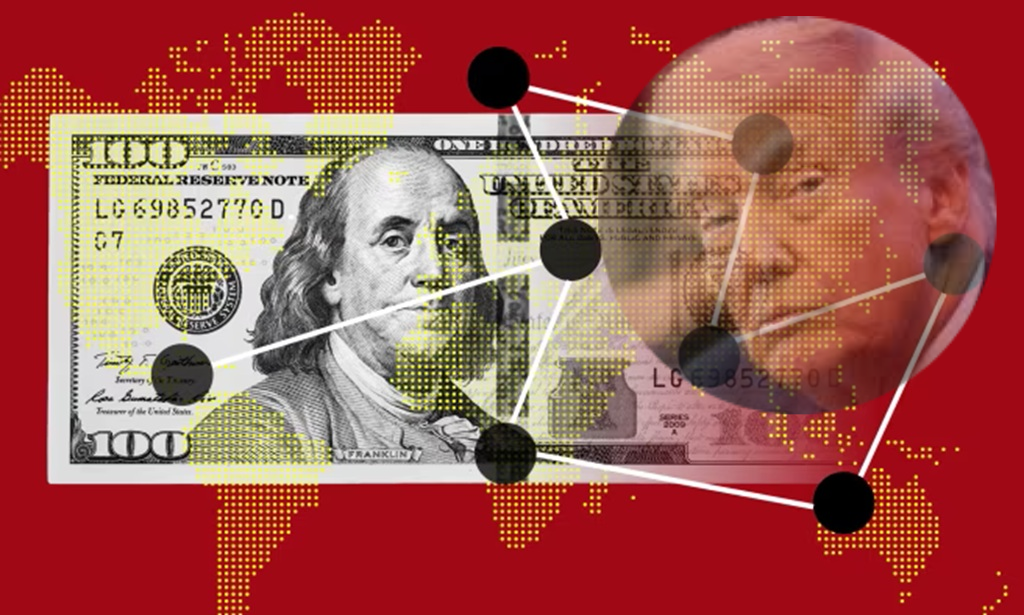
Called “Operation Southern Spear”, the mission has sunk more than two dozen boats and killed at least 87 suspected traffickers, according to U.S. officials. The shockwaves are shaking drug networks across the region. Yet behind the dramatic footage of explosions at sea, another target is feeling the squeeze, the global financial system that has long fed off cartel profits.

From the misty lanes around London’s Square Mile to the skyscrapers of Wall Street, top-tier bankers have, for years, helped recycle cartel cash into respectable assets. That pipeline is now under heavy pressure. Trump’s mix of sanctions, asset freezes, and terrorism designations is cutting into the flow of dirty money, triggering a frantic response from many of the same global power-brokers who once mocked him as a loud, unserious populist.

Trump has not softened his language. “We’re going to start doing those strikes on land, too,” he said at a White House cabinet meeting this week. “You know, the land is much easier… We know where the bad ones live.”

As in his first term, he casts Venezuela’s president, Nicolás Maduro, as the boss of a “narco-terrorist” empire. He accuses Maduro and his allies of pumping fentanyl-laced drugs into U.S. communities while amassing huge personal fortunes. The Cartel de los Soles, a murky group of senior Venezuelan officers named for the sun badges on their uniforms, has just been labelled a foreign terrorist organisation.

That move opened the floodgates for aggressive U.S. Treasury sanctions. Tren de Aragua, the vicious Venezuelan gang that has spread across Latin America and beyond, is expected to receive the same terrorism label, turning its leaders into internationally hunted fugitives.

The policy is not just bluster. Since September, U.S. aircraft and ships have destroyed 22 boats in the Caribbean and eastern Pacific. Pentagon briefings claim those hits have cut sea-based drug traffic in the region by about 85 per cent. Many of the strikes have been carried out by F/A-18 Super Hornets flying from the USS Gerald R. Ford.

The campaign has sparked anger abroad. Venezuela accuses Washington of “extrajudicial killings”, and human rights groups complain that the U.S. offers little proof that those killed were traffickers or combatants.

Trump, however, sees it as a straightforward calculation. Every destroyed go-fast boat, he argues, weakens Maduro’s grip on power. Every seized account, in his view, cuts deeper into the global money-laundering networks that keep narco fortunes safe.

The Venezuelan Pipeline: From Jungle Coca Fields to Global Bank Vaults

Venezuela has long sat on a key smuggling route. Its coastline and borders make it a natural path for Colombian cocaine heading north to the United States. Under Maduro’s rule, Washington says that role has shifted from transit corridor to something far darker, a state-backed criminal enterprise.

The Cartel de los Soles, according to U.S. indictments and intelligence assessments, includes generals and officials who swapped military uniforms for gold watches and luxury homes. They are accused of controlling coca processing in areas like the Orinoco Basin and running smuggling corridors across the Caribbean and into Central America.

The U.S. Justice Department indicted Maduro himself in 2020 as a “drug kingpin”. Court documents portray a vast network allegedly responsible for sending tonnes of cocaine to the United States, earning billions in illegal revenue for loyalists, officers, and their business partners.

That money does not sit in jungle hideouts. It surges north in waves of bundled banknotes and complex transfers, in search of clean entry points into mainstream finance. At that point, the street dealers step aside, and the respectable players appear. Not payday lenders or backstreet money shops, but well-dressed bankers in London, New York, Miami, and beyond.

These institutions build and maintain the plumbing that turns blood-stained cash into apparently honest capital. Offshore shell companies, trade-invoicing tricks, trust structures, and layers of international accounts help dirty bolivars and pesos re-emerge as crisp dollars, pounds, and euros.

The FinCEN Files, a major leak published in 2020 by the International Consortium of Investigative Journalists, highlighted how banking giants like JPMorgan Chase and Standard Chartered processed huge amounts of suspicious Venezuelan transactions. Some of that money came from PDVSA, the state oil company that has sat under U.S. sanctions since 2019 and has long been plagued by corruption claims.

The stories behind the figures are stark. The Ceballos family, members of Venezuela’s elite, allegedly stole more than 100 million dollars from anti-poverty schemes such as Misión Che Guevara. Their money moved through a shell company registered in London before arriving at Banco Espírito Santo in Portugal. That bank was later shut down by regulators following money-laundering scandals.

Another case involves Raúl Gorrín, the owner of the TV channel Globovisión. He was indicted in 2018 for allegedly bribing Venezuelan and U.S. officials while moving around 1.2 billion dollars from PDVSA fraud through Florida property deals and Miami bank accounts.

These are not isolated stories of a few corrupt clients slipping past sleepy compliance officers. They reflect a wider pattern in which “boligarchs” (wealthy Chavista insiders) exploit Venezuela’s warped currency markets and weak institutions. Western banks and professionals provide the tools that help them shift their gains abroad.

The numbers are huge. A 2025 United Nations report estimates that drug trafficking worldwide generates about 1.6 trillion dollars in laundered funds each year, with Venezuela accounting for a significant share. Much of this passes through London, often described as the “money-laundering capital of the world”.

A 2020 Politico investigation showed how UK money service businesses, including simple remittance shops on high streets like Oxford Street, have become channels for cartel funds. Those shops move cash into crypto or disguise it as regular transfers, then send it on to banks. This cycle feeds gang violence and drug markets in Britain itself.

In the United States, financial giants have their own scandals. HSBC paid a 1.9 billion fine in 2012 after U.S. authorities said it had laundered money for Mexico’s Sinaloa cartel through local exchange houses. Wachovia, later absorbed by Wells Fargo, was caught processing about 378 billion dollars in suspicious Mexican transfers between 2004 and 2007, much of it linked to drug routes.

Banks and brokers do not simply sit and accept deposits. They help design the routes. Chinese underground banking groups, now central to fentanyl laundering, often rely on U.S. accounts as temporary waystations.

They split deposits into sums below 10,000 dollars, known as structuring, to dodge reporting rules. In 2022, a single bust in San Gabriel, California, uncovered about 50 million dollars in cartel profits channelled through Chinese brokers and American banks.

For many international financiers, from Davos regulars to IMF insiders, this river of illicit money has acted as a hidden support for global markets. During the 2008 financial crisis, former UN drugs chief Antonio Maria Costa remarked that cartel cash had helped keep some banks afloat by feeding their liquidity at a moment of stress.

The Trump Squeeze: Sanctions as Financial Pressure Point

Trump’s offensive against Venezuela runs on two tracks: military action and financial warfare. While jets and warships target physical routes, the U.S. Treasury is targeting the money itself.

Since Trump entered office again, the Office of Foreign Assets Control (OFAC) has put more than 300 Venezuelan-related individuals and entities on its blacklist. Those on the list see their U.S.-based assets frozen, and American citizens and companies are barred from dealing with them.

PDVSA is at the centre of the pressure. Sanctions that Joe Biden eased in 2023 were slapped back on in April, according to administration officials. Venezuela’s oil revenue, which stood at about 4.8 billion dollars in 2018, dropped to just 477 million dollars last year.

The Central Bank of Venezuela, blacklisted in 2019, lost access to dollar clearing. Maduro has since tried to keep the country afloat through barter deals with Russia, Iran, and other partners outside the Western system.

The noose is tightening around the networks that process cartel and corruption funds. OFAC’s December sanctions against Tren de Aragua associates went beyond gang leaders and gunmen. Targets included Venezuelan influencer “Rosita” and her links to nightclubs accused of funnelling drug money through entertainment projects. These measures hit the front companies used to disguise millions in proceeds.

Foreign banks that assist blacklisted individuals or firms now risk “secondary sanctions”. These penalties can cut them off from U.S. markets, dollar clearing, and correspondent banking services. That threat is powerful. Standard Chartered, already hammered in past cases over Iranian and Venezuelan transactions, has closed several high-risk accounts. JPMorgan has tightened screening for any transfers with even a faint Venezuelan link.

In Britain, money service businesses that once moved cash for cartel-linked clients are facing raids and shutdowns. Under “Operation Destabilise”, the National Crime Agency has seized about 25 million pounds in crypto and cash tied to Venezuelan-linked flows.

There are signs of strain on the cartels’ financial arrangements. U.S. intelligence and regulatory reports suggest that long-standing fentanyl routes, which relied on Venezuelan nodes and Chinese chemical suppliers, are being disrupted.

A FinCEN advisory notes that U.S. banks are now “overwhelming” the system with suspicious activity reports related to cartel money, flooding traffickers with extra obstacles and higher costs. Some groups are shifting back to bulk cash smuggling and local laundering, which is slower, less efficient, and easier to detect.

Many of the global elite who push free trade and light-touch regulation spent years arguing that harsh sanctions hurt ordinary people. They warned against isolating PDVSA or freezing Venezuelan gold sales.

Now they are watching as banks in places like the Cayman Islands and Dubai pay growing fines for fraud, misreporting, and sanctions breaches. Wall Street Exchange in Dubai, for example, recently accepted a 9 million penalty over financial misconduct.

Banker Backlash: Global Finance Fights for the Flow

The financial sector is not taking this pressure lying down. In Canary Wharf boardrooms and New York conference rooms, protests and lobbying are quietly picking up pace.

Executives complain to regulators that sanctions have gone too far. The Bank of England and the U.S. Federal Reserve have received repeated warnings that “overcompliance” is strangling legitimate Venezuelan trade. Some banks are so fearful of OFAC punishment that they block even authorised humanitarian transactions, deepening shortages of food, medicine, and fuel.

A leaked memo from a London hedge fund branded Trump’s approach “economic warfare” and blamed it for volatility in emerging market bonds. The firm warned clients that heavy U.S. sanctions on Venezuela could ripple across Latin America and hit commodities, shipping, and regional banks.

In Washington, the U.S. Chamber of Commerce has joined the resistance. The powerful business group, often aligned with globalist interests, lobbied Congress last month to re-examine secondary sanctions. It cited estimates of about 200 billion dollars in lost or disrupted trade linked to U.S. measures on Venezuela, Iran, and Russia.

European institutions are also pushing back. Banks stung by EU-aligned sanctions regimes have launched legal challenges against OFAC, arguing that Washington is reaching beyond its legal powers. Lawyers for one group of lenders claim that blocking Venezuelan gold sales, which they value at around 2 billion dollars a year, has hit diaspora communities and refugees harder than cartel bosses.

Political tensions mirror these arguments. In the U.S. Senate, Democrats such as Tim Kaine have condemned Trump’s recent pardon of former Honduran president Juan Orlando Hernández. Hernández is a convicted trafficker accused of allowing Venezuelan and Colombian coke flights to cross his territory. Kaine called the pardon “unconscionable hypocrisy,” given Trump’s rhetoric on drugs.

Republicans like Marco Rubio, by contrast, have embraced the new escalation. Rubio links Maduro’s alleged narco activities directly to the U.S. migration crisis. “Maduro’s narcos fund the invasion at our gates,” he declared on Fox News, without mentioning that banks sanctioned in past years for handling cartel money, such as HSBC, profited from those same flows.

For critics of both Trump and the financial elite, this is the real battlefield. It is less about one Latin American strongman and more about the powerful institutions that profit from instability and smuggling.

“The strikes are theatre,” says Dr Laura Grayson, a Georgetown University economist who studies illicit finance. “The sanctions are the scalpel, cutting out the bankers’ share.”

Grayson cites a 2025 Government Accountability Office report that reviewed U.S. cases of Venezuelan money laundering. The review found 35 convictions over several years, but only after billions had already moved through the system.

A London trader, speaking anonymously, put it in blunt terms. “Trump is not draining the swamp,” he said. “He is dragging our filth into the light and throwing it back at us.”

Collateral Damage: A Region on Edge

The consequences go far beyond executive suites and trading floors. Across Venezuela, sanctions and economic collapse have driven the humanitarian disaster even deeper.

Roughly 7.9 million people now need food or medical aid, according to aid groups. Inflation sits around 200 per cent. Fuel shortages have crippled transport and public services. Hospitals struggle to secure basic supplies.

Maduro, facing both internal dissent and external pressure, has responded with defiance. His government courts Russian and Iranian support and has hinted at seeking advanced missile systems as a deterrent. Officials in Caracas brand the U.S. campaign an “imperialist blockade” and blame it for all of Venezuela’s troubles, ignoring years of mismanagement and corruption.

Nearby Caribbean states feel exposed. Countries like Jamaica, Trinidad and Tobago, and Curaçao brace for more refugee arrivals as Venezuelans take to the sea in unsafe boats. Local economies that relied on trade with Venezuela or PDVSA-linked activity are scrambling to adjust.

In the United States, the stakes are measured in lives lost to synthetic drugs. Fentanyl overdoses killed around 100,000 Americans last year. Investigators trace a growing share of the supply chain back to networks that pass through Venezuela and link up with Chinese chemical brokers and Mexican cartels.

If the naval strikes and sanctions keep biting, the volume of poison entering the country may fall. That is the hope among some law enforcement officials and community leaders in struggling areas, from small towns in Ohio to city districts in Los Angeles. Yet no one expects the cartels to give up easily. They constantly test new routes, new chemicals, and new financial workarounds.

As the USS Gerald R. Ford prepares for more sorties and OFAC lawyers draft fresh designation lists, one uncomfortable fact remains. In the global drug economy, the most powerful cartels often sit in corner offices, not jungle camps.

Trump’s offensive may weaken Maduro or even contribute to a change of regime in Caracas. Any lasting shift, however, will depend on whether regulators and prosecutors are willing to hit the financiers who made fortunes from laundering narco profits.

If that happens, the biggest losers in this phase of the drug war may not be the street-level traffickers or even the generals in Caracas. It may be the bankers and brokers who assumed they could profit from dirty money forever, with no real consequences.

Related News:

Hegseth Calls WaPo Report on Venezuela Drug Boat Complete “Fake News”

Politics

Tim Walz Exposed For Faking Financial Records In State Audit

VORNews

Published

on

By

Tim Walz Exposed

MINNESOTA – A new report from Minnesota’s nonpartisan Office of the Legislative Auditor (OLA) is putting Governor Tim Walz’s administration under fresh pressure.  The audit, released earlier this month, reviewed the Department of Human Services (DHS) Behavioral Health Administration (BHA) and found that state staff created and backdated documents during the audit process.

Auditors say the records appear to have been made to cover for weak oversight and questionable grant payments tied to more than $425 million in taxpayer funds.

The report adds to a growing list of concerns around fraud and waste in Minnesota social services. Walz announced on January 5, 2026, that he will not run for re-election. Many critics link that decision to the string of scandals and investigations that have followed his administration.

Major Problems With Grant Oversight

The OLA report runs about 70 pages and focuses on behavioral health grants paid out from July 2022 through December 2024. Auditors listed 13 key findings, including several problems flagged in earlier reviews. The report described repeated breakdowns, such as:

  • Missing required progress reports from grantees
  • Payments were approved even when the paperwork was late or incomplete
  • Weak monitoring, including site visits that were not done or not documented
  • Heavy use of non-competitive single-source grants without clear support for the decision

Over the period reviewed, BHA awarded more than $425 million to about 830 organizations, mostly outside government. The money was meant to support mental health care and substance use disorder services. Auditors said BHA lacked basic internal controls to track performance and confirm proper use of funds, which increased the risk of fraud and misuse.

One example in the audit drew sharp criticism. A grant manager approved a payment of nearly $680,000 to a single grantee for one month of work, and the file did not show proof that the services were delivered. The employee left state service days later and took a consulting job with the same organization. That sequence raised serious conflict-of-interest concerns.

Audit Says Walz Staff Fabricated and Backdated Documents

The most serious finding involved the audit itself. Legislative Auditor Judy Randall said the office saw signs of a “systemic effort” to alter the record, something she described as unheard of during her 27 years with OLA.

Auditors found cases where records were created after the audit began and then dated to look older. In one example, documents claimed monitoring visits happened in May 2024, October 2024, and January 2025. Auditors concluded those records were actually created in February 2025, after the audit was already underway and information requests were out.

Randall called the practice unacceptable and said it damaged trust in the review process. The report suggests the altered paperwork was used to make long-running oversight problems look fixed after the fact, instead of addressing them in real time.

Part of a Larger Wave of Fraud Claims

The DHS audit lands during a broader crackdown on alleged fraud in Minnesota’s public programs. Federal and state investigators have been looking into suspected wrongdoing that could add up to billions of dollars across Medicaid, child care, housing stabilization, and nutrition assistance programs. More than 1,000 current and former workers have come forward as whistleblowers, alleging retaliation, deleted data, and pressure to stay quiet about fraud reports.

Congress has also taken an interest. The U.S. House Committee on Oversight and Government Reform, led by Rep. James Comer (R-Ky.), has expanded its review of Minnesota’s handling of these programs. Comer has publicly blamed Walz for ignoring warning signs and has called on Walz and Attorney General Keith Ellison to testify in February 2026. He has also pushed for cooperation with document requests.

Minnesota Republicans, including Rep. Kristin Robbins, say the state ignored auditor warnings and whistleblower complaints for years, with some concerns dating back to 2009.

DHS Response and Growing Calls for Accountability

Acting DHS Commissioner Shireen Gandhi said she was alarmed by the findings about backdated records and promised a full internal review. She also said DHS plans to tighten training, supervision, and internal controls.

Critics say those steps should have happened long ago. House Speaker DeMuth described the report as proof of a culture marked by fraud, negligence, and deception, and called for immediate reforms and possible prosecutions. Some federal lawmakers have warned that funding could be at risk if the state cannot show stronger accountability.

Walz has defended his administration in past disputes by pointing to third-party audits, paused payments in higher-risk areas, and new anti-fraud efforts. Still, the latest audit raises hard issues about who knew what, who allowed weak controls to continue, and whether anyone will face criminal charges for falsifying public records.

What This Means for Public Trust

This audit is not just about paperwork problems. It goes to public trust in the state government. The grants were meant to help Minnesotans dealing with mental illness and addiction. Auditors say the funds went out without strong safeguards, and when oversight finally arrived, staff allegedly tried to recreate a paper trail to show compliance.

With investigations still active at the state and federal levels, the fallout could shape the final chapter of Walz’s time as governor. For many Minnesotans, the biggest issue is simple: they want clear answers, real consequences, and proof that taxpayer dollars will be protected going forward.

Related News:

JD Vance Exposes Walz’s Fraud and CNN’s Lies in White House Presser

Continue Reading

Politics

Sen. Joni Ernst Targets Minnesota Nonprofit Amid Fraud Scandal

VORNews

Published

on

By

Sen. Joni Ernst Targets Minnesota Nonprofit

WASHINGTON, D.C. –  Sen. Joni Ernst, a Republican from Iowa, is moving to stop more than $1 million in federal funding set aside for a Minnesota addiction recovery nonprofit. She says the earmark raises red flags tied to Minnesota’s widening nonprofit fraud scandals.

The group, Generation Hope MN, is Somali-led and has drawn attention for listing the same address as a Somali restaurant and for links to well-known Democratic lawmakers.

Ernst plans to offer a Senate amendment that would shift the money away from the nonprofit and send it to fraud detection and enforcement instead. Her move adds to a growing GOP push for tighter controls on federal spending, especially in Minnesota, where investigators say major social service programs have been exploited for large sums.

Ernst Moves to Re-route the Money

“The amount of fraud coming out of Minnesota is shocking, and I’m worried we’re only seeing part of it,” Ernst said in a statement. “Congress should fix the problem, not keep feeding the same system that let it happen.”

The funding totals $1,031,000 for Generation Hope’s “Justice Empowerment Initiative.” The program is described as offering substance use recovery support, mental health services, job training, and educational help for East African residents in the Twin Cities. Rep. Ilhan Omar (D-Minn.) requested the earmark, and Minnesota Sens. Amy Klobuchar and Tina Smith backed it in the Senate.

Generation Hope MN started in 2019 as a 501(c)(3). On its website, it says its mission is to build “a better, safer, and more connected community” for people dealing with addiction within the broader East African community.

Recent reports, though, have raised concerns about its setup. Those reports point to the nonprofit’s registered address above a Minneapolis Somali restaurant and claim that several leaders share the same home address.

No charges have been filed against Generation Hope. Still, Ernst and other critics say the group’s profile looks similar to patterns seen in Minnesota’s fraud cases, where some nonprofits have been accused of abusing federal and state programs.

Political Connections Add More Attention

Omar, Klobuchar, and Smith have supported programs tailored to immigrant communities across Minnesota, including the state’s large Somali-American population. Omar’s office has promoted the earmark as part of efforts to address opioid addiction in her district.

Critics say the request lands at a sensitive time. Minnesota remains under heavy scrutiny after major federal investigations into nonprofit fraud. The best-known case involves Feeding Our Future, a now-closed organization accused of taking $250 million from a federal child nutrition program during the COVID-19 pandemic. Prosecutors have charged more than 70 people in that case. They say the losses reach into the hundreds of millions of dollars.

Other probes have focused on Medicaid-funded autism services, housing stabilization programs, and childcare-related spending. Together, alleged misuse across programs could exceed $1 billion. Many defendants in these cases are Somali, though prosecutors say the schemes involve people from many backgrounds.

Ernst’s staff says they found the Generation Hope earmark while reviewing a broader spending package. She argues that putting the money into Department of Justice enforcement work would do more for taxpayers than sending it to an organization now facing questions.

ACLJ Files FOIA Requests for Records

The dispute escalated after conservative attorney Jay Sekulow said the American Center for Law and Justice (ACLJ) filed several Freedom of Information Act (FOIA) requests tied to Minnesota grant programs.

On his radio show and social media, Sekulow called it a “major FOIA” push to “gather intel” on what he described as large-scale fraud being uncovered in the state. The requests went to agencies that include the Department of Health and Human Services, the Minnesota Attorney General’s Office, and the Governor’s Office. They seek documents tied to grant oversight and investigations, including alleged fraud connected to daycare and other social service programs.

The filings reflect a wider demand from conservative groups for more public records and clearer oversight. Sekulow has criticized what he calls weak guardrails, saying, “That’s not compassion. That’s corruption,” in recent broadcasts.

What This Means for Minnesota Nonprofits

The fraud cases have put Minnesota in the national spotlight. They have also led to congressional hearings and pauses on some federal payments. The Small Business Administration has opened probes into Somali-linked organizations, and Senate Republicans, led by Ernst, have asked for detailed reports on which programs were hit.

Supporters of community-based funding say these programs serve people who often struggle to access help, including immigrants facing language and cultural barriers. Generation Hope has not been named in any active prosecution. Offices for Omar, Klobuchar, and Smith have not responded to requests for comment on Ernst’s amendment.

As Congress works through the spending bill, Ernst’s proposal could slow the larger package and force a fight over earmarks and oversight. With fraud estimates rising and politics heating up ahead of the midterms, the battle over Generation Hope’s funding has become part of a bigger debate about how federal dollars should flow to nonprofits.

For taxpayers, the focus remains on whether new safeguards will stop future abuse or whether more cases are still waiting to surface.

Related News:

Mainstream Media Spins Minnesota ICE Shooting to Stoke Outrage

Fraud Under Tim Walz May Have Handed Minnesota State to the Republicans

Continue Reading

Politics

Iran’s Exiled Crown Prince Urges Khamenei’s Removal

Jeffrey Thomas

Published

on

Iran's Exiled Crown Prince Urges Khamenei’s Removal

TEHRAN, Iran – A new wave of nationwide protests is putting heavy pressure on the Islamic Republic, in what many describe as the biggest challenge since the 2022 Mahsa Amini demonstrations.

Crowds in cities across Iran have marched for 11 straight days, chanting against Supreme Leader Ayatollah Ali Khamenei and calling out the name of exiled Crown Prince Reza Pahlavi as a sign of change. The unrest has reached more than 21 provinces, fueled by a sharp economic crisis and growing public anger.

The current protests began on December 28, 2025. They first centered on rising prices, a falling rial, and shortages of everyday goods. Early scenes from Tehran’s Grand Bazaar showed people rallying over the cost of living. Within days, many demonstrations shifted into direct demands to end the current system of rule.

Human rights groups that have reviewed and verified videos say chants have been heard in cities including Isfahan, Mashhad, and Ilam. Protesters have shouted “Death to the dictator,” aimed at the 86-year-old Khamenei, along with “Reza Shah, bless your soul,” a slogan that recalls the founder of the Pahlavi dynasty.

In Tehran, clashes have been intense. Riot police on motorcycles have pursued demonstrators through city streets, using tear gas and live ammunition, according to reports and video shared by monitors. On Tuesday, confrontations near the main market reportedly left several people wounded as shopkeepers joined in. Western Iran and smaller towns have also seen strong turnout, with security forces struggling to slow the pace of protests.

Rights groups, including Iran-based monitors, say at least 36 people have been killed since the unrest began. Hundreds more have been injured, and thousands have been arrested. Khamenei has publicly acknowledged economic complaints, but he has also described the demonstrations as “riots” pushed by foreign enemies.

Reza Pahlavi’s Message From Exile Gains Traction

Reza Pahlavi, 65, the son of Iran’s last shah, has become a key figure for many protesters. Speaking from the United States, he released a video message in Farsi this week that spread widely online. He urged people inside Iran to unite around disciplined, large-scale action. He also called for coordinated chants at set times and said change should not depend on foreign military involvement.

“I am more ready than ever to return to Iran and lead the transition to democracy,” Pahlavi said, while stressing that any shift must be driven by Iranians themselves.

In several cities, pro-monarchy chants have returned, including “Javid Shah” (Long live the king) and “This is the final battle; Pahlavi will return.” The slogans have been heard from Arak to Rasht, pointing to renewed interest among some groups in secular and nationalist options against clerical rule.

Pahlavi has spoken positively about recent U.S. actions abroad while continuing to frame change in Iran as an internal effort. His comments have also boosted activity among the Iranian diaspora, with rallies reported in cities such as London and Paris, as international leaders watch events unfold.

Security Crackdown Intensifies as the Death Toll Rises

Iranian security forces, including the Basij militia and the Revolutionary Guards, have responded with harsher tactics. Verified footage shared by activists shows officers beating protesters and firing into crowds. There have also been reports of night raids and internet blackouts in provinces such as Chaharmahal and Bakhtiari and Ilam, steps that appear aimed at disrupting coordination.

Activists have documented at least 36 deaths, while warning that the real figure could be higher. In one reported incident, a police colonel was killed during clashes in Tehran. Kurdish and Baloch opposition groups have issued threats of retaliation, with one coalition claiming responsibility for targeting a law enforcement officer.

In his first comments last week, Khamenei promised to “put rioters in their place.” He also signaled limited openness to discussing economic problems, similar to his approach during the 2022 unrest. That has not eased the anger. Judiciary officials have also warned that there will be no leniency for people accused of “helping the enemy.”

Iran’s crisis has gained extra attention because of major news out of Venezuela. On January 4, U.S. forces under President Donald Trump captured Venezuelan leader Nicolás Maduro in an operation that led to his detention in New York on drug charges, according to reports. Trump has publicly praised the move, saying he plans to “run” Venezuela’s oil resources and warning other authoritarian governments.

Some protesters in Iran have responded by calling on Trump directly. Videos show crowds chanting pleas such as “Don’t let them kill us,” and some clips show streets being renamed after Trump. Signs have also appeared with messages like, “Trump, help us like you helped Venezuela,” reflecting fear of a violent crackdown and hope for outside backing.

Trump said last week that if Tehran “violently kills peaceful protesters,” the U.S. “will come to their rescue.” Iranian officials have condemned the Venezuela operation as a breach of sovereignty, and the comments have increased anxiety inside the regime about foreign action.

Reports Claim Khamenei Has a Backup Plan to Flee to Russia

As protests continue, Western media outlets have cited intelligence reports claiming Khamenei has a fallback plan to leave Iran for Moscow if security forces lose control. The plan reportedly includes travel with up to 20 relatives and aides, with support from Russia. If true, it highlights how much Tehran depends on close ties with Russian President Vladimir Putin.

There have also been unverified claims that Iraqi militias could enter Iran to help with a crackdown. Similar rumors have circulated during past protest waves. At the same time, internet disruptions and heavy security deployments in Tehran point to a government under strain and trying to regain control.

In Tehran today, the mood remains tense and unsettled. Demonstrations have continued despite large security deployments, with 19 protests in the capital reported since Monday. At night, chants of “Don’t be afraid, we are all together” have echoed from neighborhoods, while bazaar merchants and students keep pushing back against pressure to stay home.

Kurdish political groups have backed calls for a nationwide general strike on Thursday, which could raise the stakes even more. With inflation climbing and water shortages looming in some areas, many people say daily life is becoming harder by the week.

No one can say for sure whether this movement will force real change or face another brutal crackdown. But for many Iranians taking the risk to protest, the message is direct: they don’t want decades more of unchecked theocratic rule.

Related News:

The Radical Left’s Courtship of Islam is a Road to Self-Defeat

Continue Reading

Get 30 Days Free

Express VPN

Create Super Content

rightblogger

Flight Buddies Needed

Flight Volunteers Wanted

Trending