

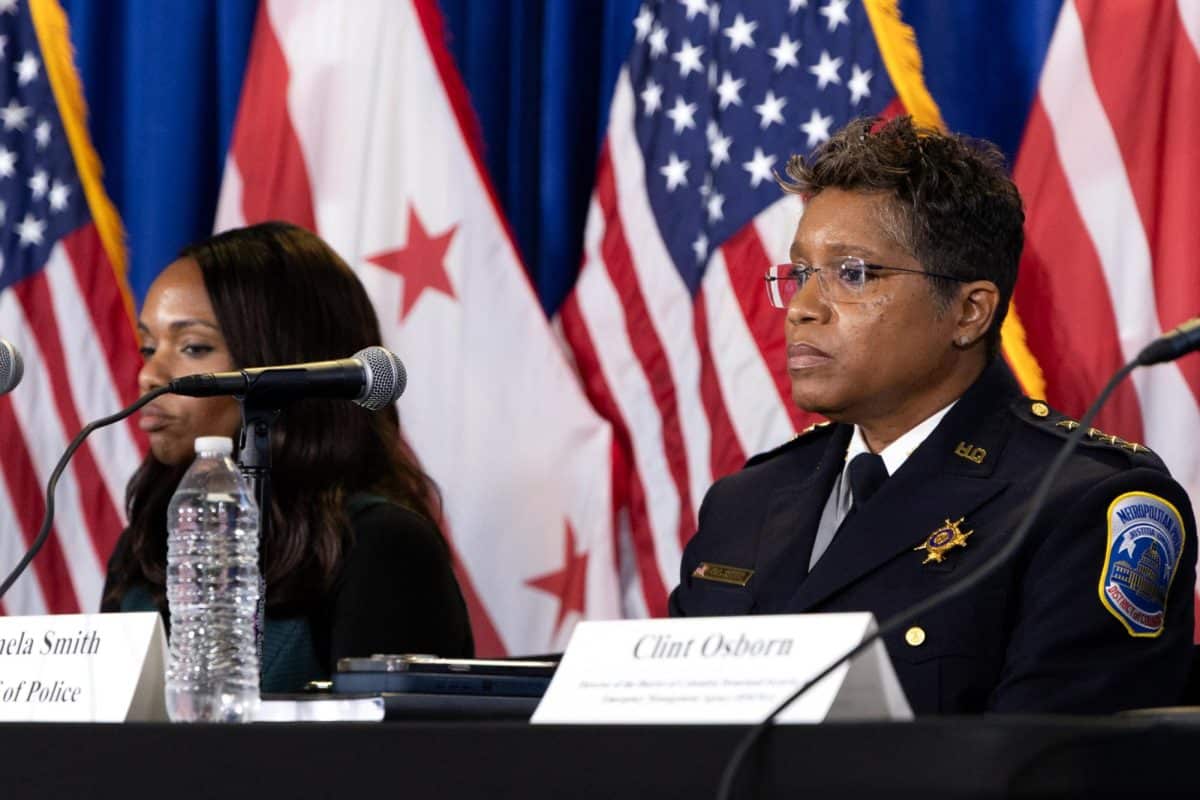

WASHINGTON, D.C. – Metropolitan Police Department (MPD) Chief Pamela A. Smith will resign effective December 31. Her exit comes days after a House Oversight Committee report said she led a broad push to alter crime data.
The report draws from testimony by MPD whistleblowers and commanders. It describes a leadership style focused on good headlines, not safer streets. It also claims the goal was simple: make crime look lower in a Democrat-run city that has struggled with public safety for years.
On December 14, the House Committee on Oversight and Government Reform, led by Rep. James Comer (R-KY), released an interim report titled “Leadership Breakdown: How D.C.’s Police Chief Undermined Crime Data Accuracy.” The report is based on transcribed interviews with commanders from all seven patrol districts, plus one former commander who was suspended.
The committee’s main conclusion is blunt. It says Smith “pressured and at times directed commanders to manipulate crime data in order to maintain the appearance of low crime in the nation’s capital.”
Commanders told investigators the department ran on “fear, intimidation, threats, and retaliation.” Several said they were punished when they reported real spikes in crime. One commander described being embarrassed in front of peers during briefings. Others said they were transferred or pushed aside when they refused to re-label serious incidents.
The report describes briefings where commanders were scolded so harshly that some felt blamed if they had committed the crimes themselves. Over time, that kind of pressure sends a clear message: protect the numbers or pay the price.
How Crimes Were Reclassified to Reduce the Public Count
The report also lays out examples of how crimes were allegedly downgraded. Commanders said assaults with dangerous weapons, including shootings where no one was hurt, were sometimes changed to lesser charges such as “endangerment with a firearm.” They also said burglaries could become “unlawful entry and theft.”
Those changes mattered because they could keep incidents out of daily public crime reports. That means residents might see “improvement” on paper while offenders still stay active on the street.
The committee report frames this as a top-down effort, not a few bad calls. It says Smith pushed “lowering publicly reported crime numbers over reducing actual crime,” and it describes “intense pressure” on commanders to produce low numbers “by any means necessary.”
Whistleblowers, Old Allegations, and a New Investigation
The Oversight investigation began in August 2025 after whistleblower claims and allegations that reached back years. The report also references a lawsuit tied to similar claims that was settled.
The issue gained more attention after President Trump declared a crime emergency and sent federal help, including the National Guard. The report’s findings give weight to those concerns and suggest the public didn’t get a straight picture of what was happening in D.C.
Chairman Comer summed up the committee’s view: “Testimony from experienced and courageous MPD commanders has exposed the truth: Chief Pamela Smith coerced staff to report artificially low crime data and cultivated a culture of fear to achieve her agenda.” He said her resignation was overdue and urged her to leave sooner.
Washington City Hall Pushback and Smith’s Denial
D.C. leaders defended Smith. Mayor Muriel Bowser praised her for what she called a sharp drop in crime tied to Smith’s leadership, and she treated the probe as politics.
Smith denied wrongdoing and said her departure was a personal choice, not linked to the report. Still, her December 8 announcement landed soon after committee interviews wrapped up, and that timing is hard to ignore.
Some news coverage focused on reported drops in violent crime (28% year-to-date, based on MPD data). The report warns that those figures could still be “at risk of manipulation” even after Smith, since crime classification can be bent if leadership allows it.
This is not just about stats. It’s about safety. When leaders push staff to “fix” the numbers, residents lose the truth they need to protect their families and neighborhoods. Visitors and tourists also lose a clear sense of risk in the nation’s capital.
Critics say the alleged cover-up protected soft-on-crime politics, from defund-the-police messaging to weak prosecution and revolving-door justice. When the public sees lower numbers, pressure for real change fades. That is the point, and it’s why the allegations are so serious.
The report also raises doubts about the story of a clean turnaround after the city’s recent crime spikes. Many still remember 2023, with a record 274 homicides and close to 1,000 carjackings. Those numbers drove reforms like the Secure D.C. Act. Now the report suggests later “declines” may have been boosted by re-labeling and selective reporting.
Commanders told the committee that federal support helped add resources. The report argues that the focus on optics pulled attention away from core policing and hurt morale. It also says experienced officers left while trust in leadership sank.
What Comes Next: Oversight, Transparency, and Leadership Changes
The committee recommends that Bowser appoint an independent chief who will commit to accurate reporting and end retaliation. A separate Justice Department review raised similar concerns. It described a “coercive culture of fear” that encouraged manipulation, though it did not go as far as criminal charges.
Comer said the stakes are simple: “Every single person who lives, works, or visits the District of Columbia deserves a safe city, yet it’s now clear the American people were deliberately kept in the dark.”
Smith’s resignation may close one chapter, but it doesn’t fix the underlying problem. If the allegations are true, the city needs more than a new name on the door. It needs a clean break from number-policing, real accountability for anyone who joined in, and a system that makes accurate reporting non-negotiable.
Interim chief Jeffery Carroll now steps into the spotlight. The department’s next moves will show whether D.C. chooses honest crime reporting and real public safety, or more political cover.