

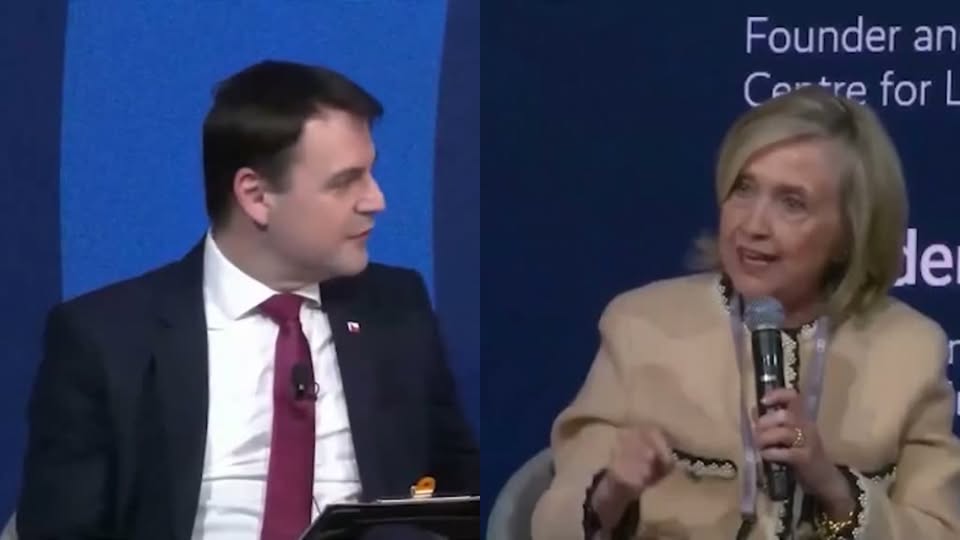

MUNICH, Germany, February 15, 2026, a panel meant to focus on Western unity at the Munich Security Conference turned tense on Saturday. Czech Deputy Prime Minister and Foreign Minister Petr Macinka confronted former U.S. Secretary of State Hillary Clinton after she sharply criticized U.S. President Donald Trump and touched on wider culture and values debates.
The exchange took place during a session titled “The West-West Divide: What Remains of Common Values.” It put a spotlight on growing stress inside the transatlantic alliance. Populism, cultural policy fights, and continued support for Ukraine all sat at the center of the dispute.
Macinka, speaking for a view heard more often in Central Europe, pushed for more respectful talk. At the same time, he pushed back on what he called reckless name-calling in politics.
What Set It Off: Clinton Targets Trump
Clinton opened with a strong warning about Trump’s approach to foreign policy. She said his actions weaken core Western values, human rights, NATO, and the broader transatlantic partnership. In her view, his style of leadership risks copying systems built on unchecked power. She also argued that it could undercut shared security efforts, including steady support for Ukraine as it fights Russia.
She framed Ukraine’s defense as bigger than borders. According to Clinton, the war also tests democratic principles that Western countries claim to share. She also tied cultural disputes at home to bigger security stakes abroad. Because of that, she rejected the idea that internal disagreements should lead to reduced aid for Kyiv.
Macinka Fires Back With His Own Argument
Macinka answered by defending parts of Trump’s agenda as a real response to public frustration. He said many voters see some elite policies as far removed from everyday life. In his view, that gap helped drive Trump’s rise.
He also attacked what he called the “woke revolution.” Along the way, he criticized parts of the “gender revolution” and what he described as “climate alarmism.” Macinka took a strict line on biology, saying there are “male and female.”
He also questioned why these topics get so much attention while security threats keep growing.
As Clinton pressed him on what “gender” rights he meant, and whether those debates could ever justify pulling back from Ukraine, Macinka insisted on finishing his point. “Can I finish my point? I’m sorry it makes you nervous,” he said, pointing to interruptions he felt blocked open discussion.
Macinka also called out Clinton’s obvious dislike of Trump, saying, “I think you really don’t like him.” Clinton agreed without hesitation. “That is absolutely true,” she replied, then added that she opposed him because she believes his actions harm the United States and global stability.
A Push for Cooler Heads and Less Name-Calling
One of the loudest moments came when Macinka urged Western leaders, including those in Europe, to lower the temperature. He argued that political rivals should not be treated like “public enemies.” Instead, he called for calmer, more useful conversation.
He also criticized how quickly people toss around labels like “fascism” and “Nazism.” Those terms, he said, belong to a brutal history that ended decades ago. In his view, using them loosely weakens their meaning and poisons debate.
Accounts from the room say Macinka kept pressing for real listening, not shouting matches. In a clip that spread quickly online, he reportedly told Clinton or the panel, “First Learn How To Talk.” The line summed up his frustration and served as a public call for basic civility in high-pressure forums.
With global security leaders watching, the panel showed the “West-West divide” in plain view. On one side sit liberal internationalists who stress shared democratic norms and alliances. On the other hand are populist-leaning voices who distrust unchecked globalization, identity politics, and large foreign commitments.
Macinka’s approach matches a rising mood in parts of Central and Eastern Europe. Many leaders there stay firmly anti-Russian, yet they also resist what they see as Western cultural pressure. His defense of some Trump-style ideas also reflected a hard-nosed belief that only tough U.S. pressure might force Moscow to shift on Ukraine.
Clinton pushed back by linking culture and foreign policy. In her view, abandoning Ukraine would betray the freedoms the West claims to defend, including basic rights that also come up in domestic debates.
Fallout and What It Could Mean
The confrontation spread fast online, with short clips drawing strong reactions. Supporters praised Macinka for speaking plainly and defending what they see as common sense. Critics said he brushed off progressive concerns and sounded too friendly toward Trump.
At the 2026 Munich Security Conference, the clash became a clear sign of wider transatlantic strain. NATO still faces hard questions about burden sharing, Ukraine aid fatigue, and cultural rifts. Because of that, moments like this show how hard unity can be when politics turns personal.
For Petr Macinka, the exchange raised his profile beyond Czech politics, placing him as a louder voice for pragmatic conservatism in European diplomacy. Whether it helps close gaps or deepens them is still unknown. Even so, the Munich confrontation already stands out as a defining scene from the conference.
As leaders continue talks in Bavaria, one point sits in plain view. Shared threats are not enough on their own. Western cohesion also depends on the calmer, more respectful dialogue Macinka demanded.