



BEIJING – In a striking setback for regional diplomacy, Iran stopped two large Chinese container ships from leaving the Persian Gulf through the Strait of Hormuz on March 27, 2026. The vessels changed course suddenly near Iranian waters, even though Tehran had said ships from friendly countries, including China, could pass safely.
The episode adds new concern over maritime security in one of the busiest sea routes on earth. It also puts fresh strain on Beijing’s efforts to protect its trade interests as tensions linked to the U.S.-Israeli conflict with Iran continue to rise.
The ships, CSCL Indian Ocean and CSCL Arctic Ocean, are operated by a unit of China’s state-owned COSCO Shipping Group. Both sail under the Hong Kong flag and have Chinese crews. Early Friday, at about 3:50 a.m. GMT, they moved toward the strait but soon turned back near Larak Island, close to Iran’s port of Bandar Abbas.
Tracking services such as MarineTraffic and Kpler showed the sharp change in route. The ships had traveled northeast from waters near Dubai, then paused and reversed direction into the Gulf. Later, they dropped anchor off the UAE coast.
Reports also said a third China-linked vessel ran into similar trouble that same day. Iranian Revolutionary Guard Corps, or IRGC, naval units reportedly issued warnings that forced the ships to pull back.
Why Did Iran Stop Ships From a Friendly Country?
Iran has tightened its grip on the Strait of Hormuz since the conflict worsened in late February 2026. The waterway handles about 20% of the world’s oil trade, so any disruption there quickly draws global attention.
Only days earlier, Iranian Foreign Minister Abbas Araghchi had said ships from friendly states, including China, Russia, India, Iraq, and Pakistan, would be allowed through. Still, the Chinese vessels were turned away.
Analysts called the move unusual because China has long been one of Iran’s key oil buyers. Some observers also pointed to reports of an informal “toll booth” system tied to Iranian forces, where even pre-approved ships may face added checks or fees.
Later, the IRGC said the strait was effectively closed and blamed outside pressure, including remarks from U.S. President Donald Trump. That message clashed with earlier signs that some countries might still get limited access.
China’s Push to Protect Its Shipping
Chinese officials had reportedly spoken with Iranian counterparts to secure safe passage for Chinese vessels. That matters because Beijing depends heavily on energy from the Middle East. Up to 40% of China’s oil, along with large LNG volumes, moves through Hormuz.
COSCO had restarted some Gulf bookings only days before the incident. Its customer advisory suggested the company believed transit would be possible. Friday’s events showed otherwise.
The setback followed reports of talks between China and Iran focused on protecting oil and gas shipments. Even so, the failed transit made one thing clear, close ties on paper don’t always lead to safe movement at sea during wartime.
Impact on Global Shipping and Trade
The Strait of Hormuz remains a major route for world trade. When traffic slows there, oil prices can jump, shipments can stall, and supply chains can feel the strain far beyond the Gulf.
- Ships remain stuck: Many vessels, including these Chinese ships, have been unable to leave the Gulf since late February.
- A high-risk move by COSCO: This was the first major attempt by a large shipping operator to exit the area since the war began.
- Wider warnings: Iranian forces reportedly turned back ships from several countries after issuing alerts that day.
Kpler analysts said the incident showed that “safe passage could not be guaranteed,” even for ships that appeared to have prior approval. Because of that, shipping companies may suspend routes or choose longer alternatives, which would drive up costs.
China’s factories could feel the pressure if fuel supplies grow more costly or less reliable. At the same time, consumers in many countries may end up paying more for energy and imported products.
Background on the U.S.-Israeli Conflict With Iran
The current shipping limits stem from the broader war that intensified on February 28, 2026. Iran has used the strait as a pressure point, slowing or restricting transit while still allowing much of its own trade to move.
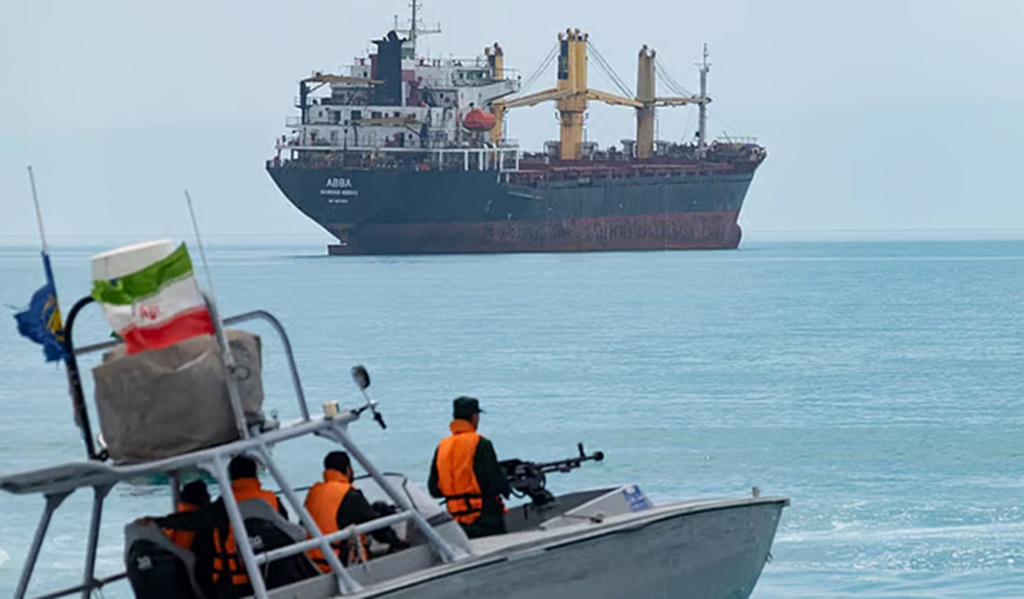
The IRGC Navy has taken the lead in enforcing these controls. It patrols the area with fast boats, drones, and coastal surveillance along Iran’s shoreline near the strait.
President Trump has said talks with Tehran showed signs of progress, and he has claimed Iran let some ships pass as a signal. Iranian officials, however, have described the route as either closed or tightly controlled.
What This Means for China-Iran Relations
China and Iran often present their relationship as close and strategic. Beijing continues to buy Iranian crude despite sanctions, and the two countries work together in several areas.
Still, this case showed the limits of that partnership. Iran appears ready to control access to the strait on its own terms, even when friendly nations are affected. For China, the incident is another reminder of the risk that comes with relying on a narrow and unstable shipping route.
Some analysts expect Beijing to step up diplomacy. Others think China may put more focus on backup options, such as overland pipelines or a broader group of suppliers. Either way, the episode showed that even strong partnerships can come under stress when regional conflict deepens.
What Comes Next for Shipping in Hormuz
Shipping companies and energy traders are now watching for Iran’s next move. If restrictions stay in place, uncertainty will keep hanging over global trade.
- Oil prices may stay jumpy: A longer disruption could push energy costs higher.
- Carriers may seek other routes: Some firms could choose longer, more expensive paths around Africa or through different corridors.
- Diplomatic talks may grow: China, India, and other affected countries may increase private talks to reopen transit.
For now, the two COSCO-linked ships remain in safer Gulf waters. Their cargo is still undelivered, and their crews are waiting for clearer direction.
The message from this incident is hard to miss. In a tense region, even close partners can be blocked without warning, and the shock can spread quickly through trade, energy markets, and global shipping.