

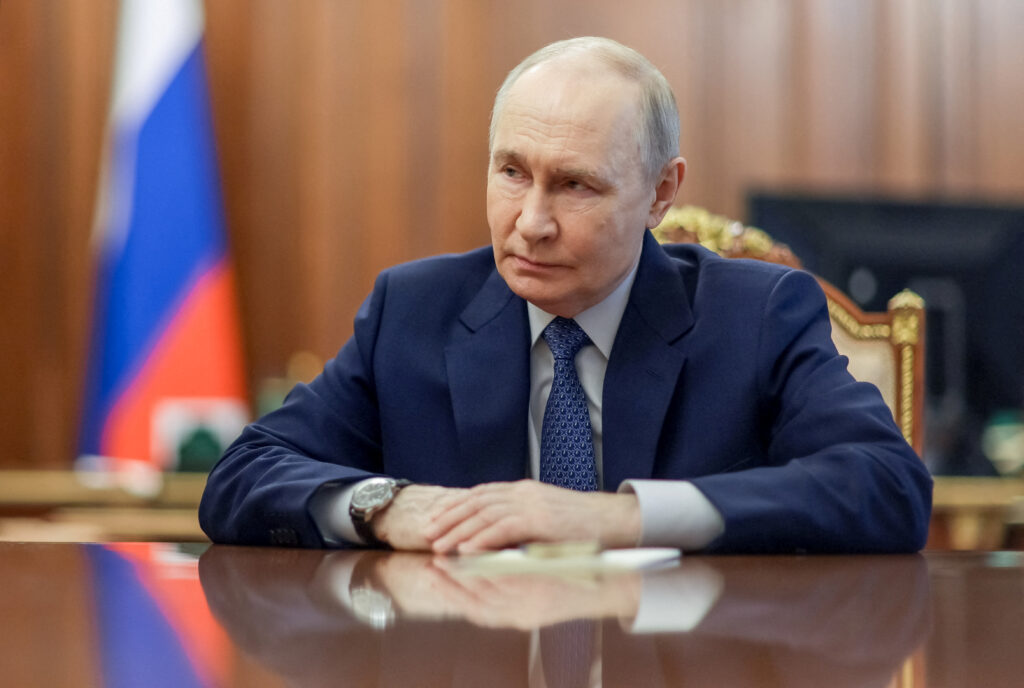

MOSCOW – Russia has publicly urged Iran to stop military action at once and move toward negotiations in its war with the United States and Israel. Kremlin officials said the region is now “catastrophically tense” and warned that more fighting could make the crisis much worse.
The statement comes as Washington and Tehran send mixed messages about possible talks. U.S. President Donald Trump says discussions have been productive, while Iranian officials say no direct contact has taken place. Since the war began on February 28, 2026, it has shaken oil markets and raised fears of a broader conflict across the region.
How the Iran War Started
The conflict began when U.S. and Israeli forces carried out surprise airstrikes on Iranian targets. Those strikes hit military bases, nuclear sites, and leadership compounds. Reports said the goal was to slow Iran’s nuclear work and ballistic missile program. Senior Iranian figures were killed, including former Supreme Leader Ali Khamenei.
Iran answered with missile and drone attacks on Israeli cities and on U.S. allies in the region. It also moved to shut down the Strait of Hormuz, one of the world’s most important oil routes. As a result, energy prices jumped and global shipping faced major delays.
- Main trigger: U.S. and Israeli strikes launched on February 28, 2026.
- Iran’s response: Missile attacks, strikes on regional bases, and a blockade of the Strait of Hormuz.
- Casualties: Reports suggest thousands have been killed or hurt on both sides, including civilians in Tehran and other cities.
- Economic impact: Oil prices surged, and shipping in the Persian Gulf was disrupted.
Satellite images have underlined the importance of the Strait of Hormuz, where Iran has blocked major shipping lanes and affected roughly one-fifth of global petroleum trade.
Russia Issues a Sharp Warning
Russian Foreign Minister Sergei Lavrov spoke with Iranian Foreign Minister Abbas Araghchi in a call requested by Tehran. During that conversation, Lavrov pressed for an immediate end to the fighting and called for a political and diplomatic solution that protects the legitimate interests of all sides, especially Iran.
Kremlin spokesman Dmitry Peskov repeated that message during a briefing.
“The situation should have transitioned to a political and diplomatic settlement. This is the only thing that can effectively contribute to defusing the catastrophically tense situation that has now developed in the region.”
Peskov also said diplomacy should have begun “yesterday” if the goal was to stop the crisis from getting worse.
Russia has another major concern, Bushehr nuclear power plant, which it helped build in Iran. Last week, the UN nuclear watchdog said a projectile struck near the facility. Because of that, Moscow has spoken out strongly about the danger of attacks near nuclear infrastructure.
“We consider strikes on nuclear facilities to be potentially extremely dangerous and fraught with, perhaps even irreversible, consequences.”
Peskov said continued strikes near such sites create a very serious security risk.
The Bushehr plant, built with Russian support, has become a key flashpoint as fears grow over possible radiation hazards.
Trump’s Claims Clash With Iran’s Denials
President Trump has sounded hopeful in recent days. He said the United States and Iran had “very good and productive conversations” focused on a “complete and total resolution of our hostilities.” He also delayed threatened strikes on Iranian energy sites and pushed back an ultimatum demanding that Iran reopen the Strait of Hormuz.
Trump said his administration had made meaningful progress and had reached common ground on several issues. He even hinted at political change inside Iran. Still, Iranian officials have flatly denied that any direct talks have taken place. Some in Tehran have called those claims “fake news” or an attempt to sway markets.
- Trump’s moves: Paused strikes on power-related targets and held off attacks on energy infrastructure.
- Iran’s position: No direct talks confirmed, while missile retaliation continues.
- Current fighting: Strikes on Tehran and Iranian missile attacks have continued despite talk of diplomacy.
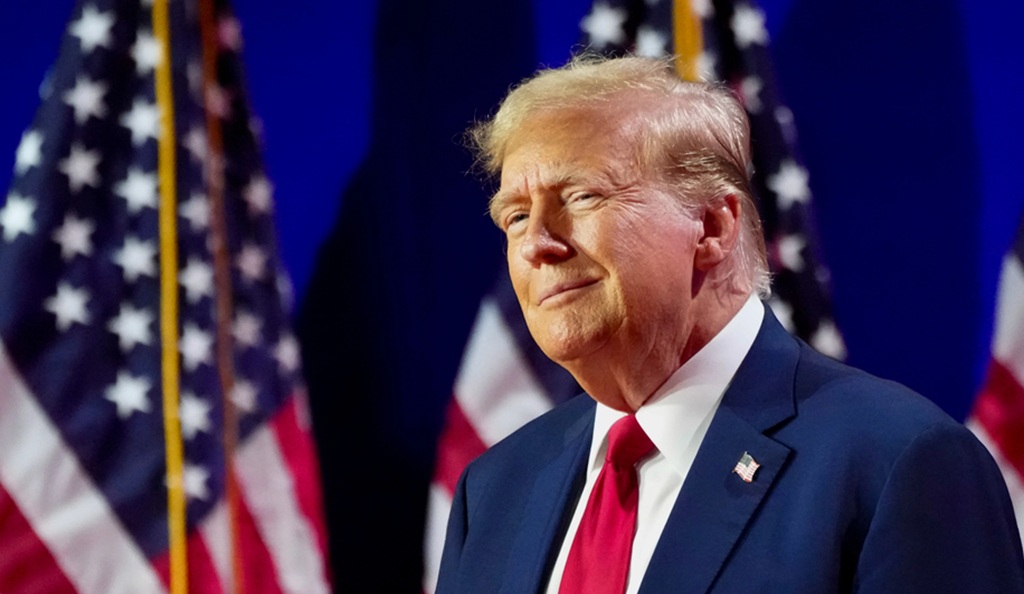
President Donald Trump has repeatedly spoken about the Iran war, mixing military pressure with public calls for a deal.
Why Russia’s Role Matters
Russia remains one of Iran’s closest partners, with long-running military and technical ties. Even so, Moscow has not stepped directly into the war. It has condemned the U.S. and Israeli strikes as “unprovoked aggression,” but at the same time it has pushed hard for de-escalation.
Several factors help explain Russia’s stance:
- National interest: More turmoil in the Middle East could send energy markets into further chaos and affect Russia’s own oil trade.
- Nuclear fears: Because Russia helped develop Iran’s nuclear program, it worries that damage at Bushehr could trigger an environmental crisis or raise new nuclear risks.
- Regional stability: A wider war could pull in more countries and unsettle nearby areas, including the Caspian region, which Russia and Iran also discussed.
- Diplomatic influence: Moscow wants to present itself as a stabilizing voice while keeping its ties with Tehran intact.
So far, Russia has not announced any public military support for Iran in this war. Instead, it has focused on calls for a settlement that also protects Iranian interests.
What Could Happen Next
Analysts say the situation remains highly unstable. If the Strait of Hormuz stays closed, the global economy could take a harder hit. At the same time, any direct strike on a nuclear site could trigger severe environmental and public health damage.
Several outcomes are now in play:
- Short-term ceasefire talks, likely with outside mediators.
- Pressure on Iran to reopen shipping lanes in return for sanctions relief or security promises.
- A wider war if talks collapse or more regional actors get involved.
Even with diplomatic channels opening, both sides are still fighting. Reports say U.S. Marines are moving into the Gulf, while Iranian missiles have targeted parts of Israel in recent days.
International Response
- United States: The Trump administration says it wants a deal, but it is keeping military options on the table.
- Israel: Israeli forces continue to strike Iranian military targets.
- Iran: Tehran denies direct talks, though some reports say it may consider “sustainable” proposals.
- Global community: Concern is growing over oil prices, civilian deaths, and nuclear safety.
Russia’s warning shows that even a close partnership has limits. It also reflects how urgent the need for de-escalation has become in a region close to a much larger disaster.
As this “catastrophically tense” crisis continues, the next few days may decide whether diplomacy can take hold or whether the war spreads even further, with effects far beyond the Middle East.