

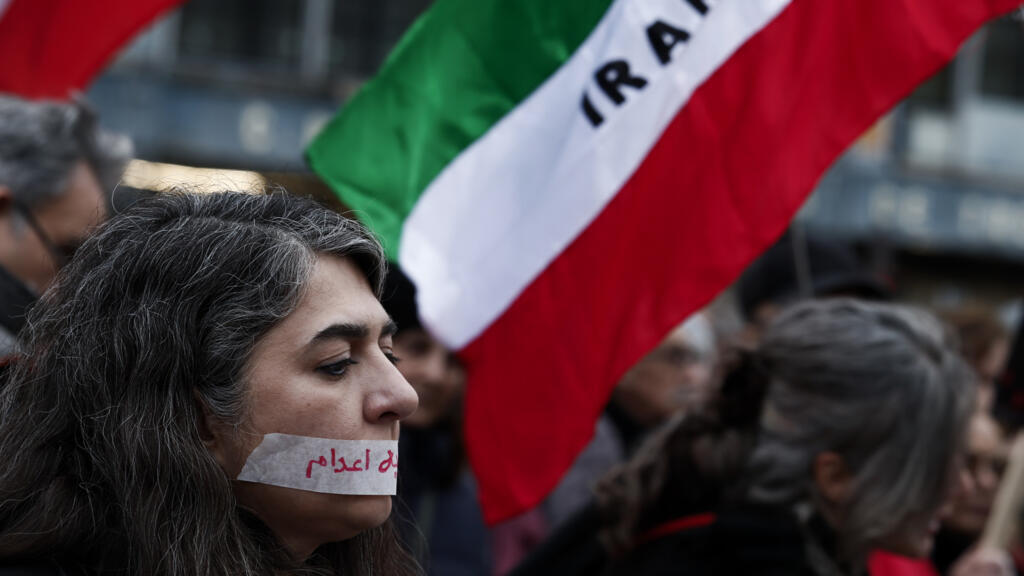

TEHRAN – In a move that human rights monitors describe as a “desperate attempt to instill terror,” the Iranian judiciary has sentenced four more individuals to death following the massive nationwide protests that rocked the regime in January 2026. Among those condemned to the gallows is a woman, believed to be the first female protester to receive a capital sentence in connection with this year’s specific wave of unrest.
The verdicts, handed down by the notorious Branch 26 of the Tehran Revolutionary Court, underscore a sharp escalation in the Islamic Republic’s use of the death penalty. Observers say the regime is fast-tracking executions to silence a population still simmering with anger over economic collapse and social repression.
A Building Targeted: The Condemned Four
The four defendants were identified as Mohammadreza Majidi-Asl, 34, and his wife Bita Hemmati, along with their neighbors Behrouz Zamaninejad and Kourosh Zamaninejad. According to reports from the Abdorrahman Boroumand Center and Iran Human Rights (IHR), all four lived in the same apartment complex in Tehran.
The group was arrested during the height of the January uprising. Their trial has been criticized by international legal experts as a “sham” proceeding. Judge Iman Afshari, known for presiding over high-profile political cases with a heavy hand, oversaw the sentencing.
The charges against them include:
- Using explosives and weapons against security forces.
- Throwing concrete blocks and incendiary materials from the roofs of buildings.
- “Harming stationed forces” during the protests.
- Collusion against national security and links to “hostile groups.”
In addition to the death penalty, the court ordered the total confiscation of all their personal property, a move activists say is designed to financially ruin the families of dissidents. A fifth relative, Amir Ali-Hemmati, was sentenced to over five years in prison in the same case.
A First for Female Protesters
Bita Hemmati’s sentence has drawn particular concern. Rights groups, including the National Council of Resistance of Iran (NCRI), report that she is likely the first woman sentenced to death for participating in the 2026 uprising.
Earlier this year, a video broadcast on state television showed a woman—believed to be Hemmati—being personally interrogated by Judiciary Chief Gholamhossein Mohseni Ejei. Rights advocates argue that such broadcasts are “forced confessions” extracted under physical and psychological torture, a common tactic used by the regime to justify harsh sentences.
The “Execution Machine” Gains Speed
The January 2026 protests were among the largest and most violent the regime has faced in decades. While the government successfully quelled the initial street demonstrations through a combination of live ammunition and internet blackouts, the judicial aftermath has been even more lethal.
According to a joint report by Amnesty International and other monitors, the regime has already executed seven people related to the January protests. These include Saleh Mohammadi, a 19-year-old wrestler who was hanged in Qom just weeks ago.
The Current Statistics of the Crackdown:
- 7 Protesters Executed: Already carried out since March 2026.
- 26+ Sentenced to Death: Individuals currently awaiting execution for protest-related charges.
- Hundreds Facing Capital Charges: Many more are in the middle of fast-tracked, “torture-tainted” trials.
- Over 1,600 Executions in 2025: Highlighting a long-term trend of increasing state-sanctioned killings.
Experts suggest the timing of these sentences is no coincidence. Iran is currently navigating a period of extreme vulnerability. Between ongoing tensions with Israel and the United States and a crumbling domestic economy, the clerical leadership views any sign of dissent as an existential threat.
“The regime is terrified of the volcano of public anger,” said a spokesperson for HRANA. “By executing young protesters and seizing their homes, they hope to preempt the next inevitable revolt. It is not about justice; it is about survival through terror.”
The United Nations Special Rapporteur on Iran has recently warned that the “spiral of impunity” in the country has reached a crisis point. Human rights defenders are calling for immediate international intervention to save the lives of the “Tehran Four” before they are transferred to solitary confinement for execution.
The common thread in all these cases is a total lack of due process. Families report that the defendants were denied access to independent lawyers and were kept in unofficial detention centers where torture is systematic.
In many instances, the only evidence presented in court is a “confession” signed after days of beatings. When defendants try to tell the judge that they were tortured, their claims are routinely dismissed.
How the International Community is Responding
While the regime remains defiant, the international community is ramping up pressure. There are growing calls for:
- Targeted Sanctions: Specifically against judges like Iman Afshari and judiciary officials involved in these sentences.
- Diplomatic Missions: Demanding access to prisoners and the presence of international observers at trials.
- UN Investigation: A formal inquiry into the mass killings of protesters in January and the subsequent “judicial murder” of detainees.
As the families of Mohammadreza, Bita, Behrouz, and Kourosh wait in agony, the world’s eyes remain fixed on Tehran. For many Iranians, these death sentences are not just a legal matter—they are the latest battle in a long, bloody war for the future of the country.
Trending News:
Trump Warns China as Vance Leads Peace Talks with Iran
Starmer Bizarrely Tries to Take Credit for the US- Iran Ceasefire