
Connect with us

News

Trump Follows Biden’s Early Travel Schedule, But With More Sports and Golf.

VORNews

Published

on

Trump

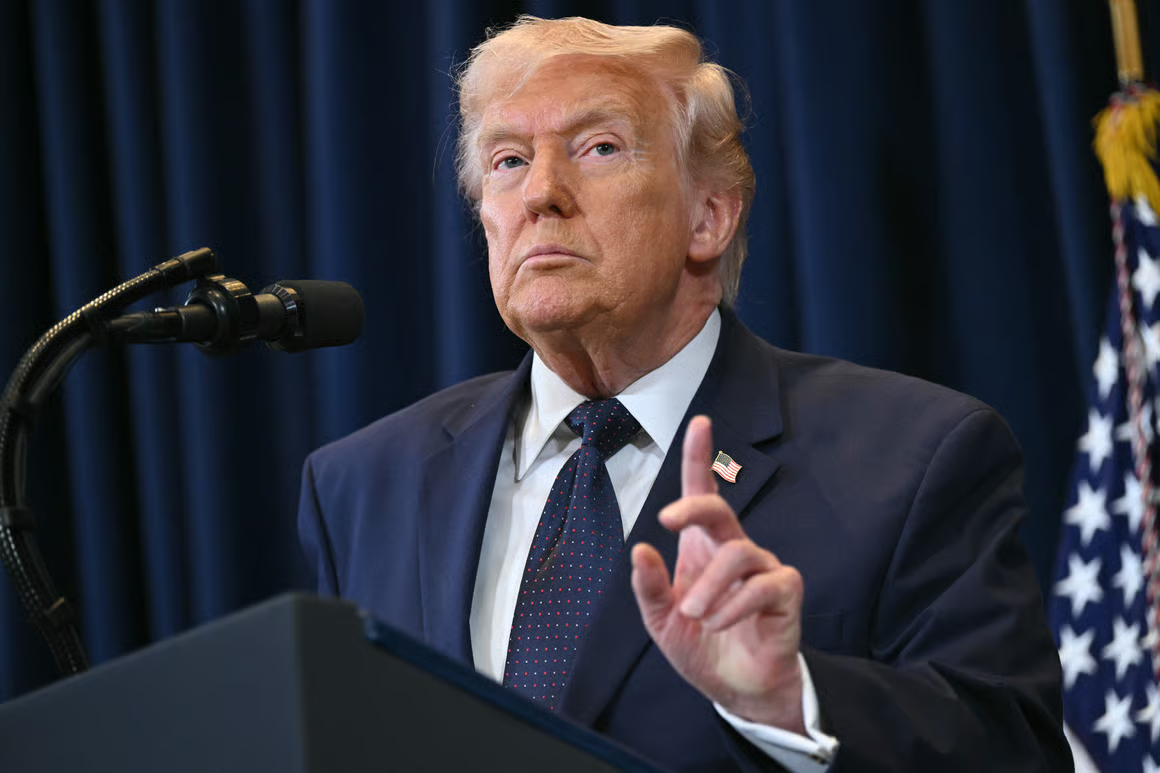
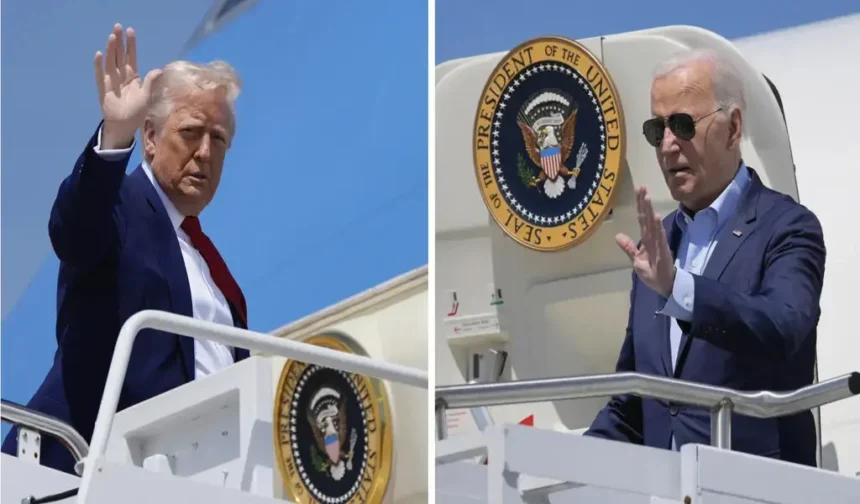
(VOR News) – In the White House, “moving at the speed of Trump” means rapid administrative changes. Trump’s early second-term travel tempo resembles Biden’s.

Trump focused on weekend golf and sports in 14 states and 7 nations during his six months in office. Saturday. Biden visited 17 states and three countries 45 times in the first half of 2021 during COVID-19.

Democrats in Delaware eschewed golf and attended church on weekends. He went on more political and official excursions than his Republican successor.

Trump visited fewer US locales in his second term.

From January 20 to July 20, 2017, he visited 21 states and 8 countries 48 times. The White House says Trump is most successful in the Oval Office, where he executes executive orders, chats to lawmakers and foreign leaders, and answers phones.

Netanyahu and Rutte were among 25 foreign leaders visited at the White House. He outnumbered Biden with 165 executive acts and 6 Cabinet sessions.

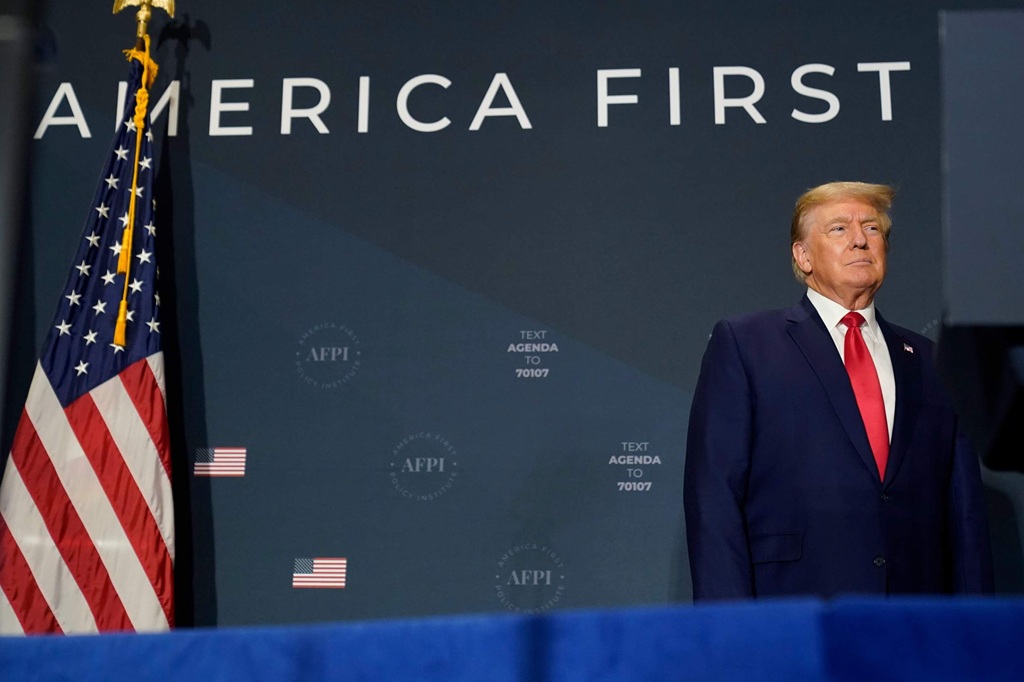
White House spokesperson Taylor Rogers says “travel reflects his America First agenda—he is meeting the American people where they are and representing their best interests.”

He said he “will persist in his efforts to provide the American people with the most favorable deals, whether from the Oval Office, across the country, or around the world.”

How far Trump has come:

Weekend sports and golf

Trump frequently golfs in Palm Beach, Bedminster, and Sterling. These locations are near Dulles International Airport and accessible by motorcade from the White House.

The president has visited Florida 14 times, Virginia 13 times, and New Jersey eight times. He prefers summer day visits to Sterling or Bedminster to Mar-a-Lago. Early in his presidency, Biden spent weekends in Wilmington. He rarely golfed but attended Mass on weekends.

Biden traveled extensively to promote his projects. He visited Smith Flooring in Chester, Pennsylvania, a small business he said was benefiting from the $1.9 trillion COVID-19 rescue package.

Domestic non-golf excursion is sports-focused. The president attended the Daytona 500 and Super Bowl in Florida and New Orleans. He attended the NCAA wrestling championships in Philadelphia, the FIFA Club World Cup final in East Rutherford, and UFC fights in Miami and Newark.

Political rallies, graduations

President Trump has only held three major rallies since returning. In his first 100 days, he visited Pittsburgh to announce a U.S. Steel-Nippon Steel agreement and Des Moines to launch America’s 250th birthday celebration.

The president gave an economic speech in Las Vegas during his second term’s first weekend. In February, he addressed the Conservative Political Action Conference in Oxon Hill, Maryland, outside Washington.

Biden traveled more for politics early. He honored the 11th anniversary of the Obama administration’s health care reform in Columbus, Ohio, attended a CNN town hall in Wisconsin, and toasted his first 100 days in office at an Atlanta drive-in. Trump addressed West Point and Alabama grads.

During his first months in office, Biden addressed the Coast Guard graduation ceremony in Connecticut, despite the COVID-19 regulations.

Trump travels abroad more than Biden. He visited Saudi Arabia, the UAE, and Qatar after visiting Pope Francis’ mausoleum in Rome before heading to Canada for the Group of Seven and NATO meeting in the Netherlands.

Biden attended the G7 in the UK, Belgium, and Switzerland in June 2021. The pandemic peaked.

Exploring natural disaster locations

Trump began his second term by visiting Biden’s disaster-stricken Western North Carolina and Southern California. Visited Texas after the huge floods.

Trump overlooked tornado-ravaged Missouri and Kentucky. Indiana, Pennsylvania, Texas, and Oklahoma flooded. He avoided those regions. He missed the Mississippi and Arkansas spring tornadoes.

In February 2021, Biden surveyed Houston cyclone damage. He missed natural disaster sites throughout his first six months. After a Surfside building collapse killed 98, he traveled to Florida. Where hasn’t gone despite promises In early February, Trump remarked, “I love Israel.” “I will also visit Gaza.” Neither Israel nor Gaza was on his May Middle East itinerary.

Suggested Elon Musk, his government-slashing wizard, would check Fort Knox gold reserves. He advocated joining Musk. Musk quit the Trump administration and vocally opposes him, making it unlikely.

Apparently, the president plans to visit Africa later. Trump declined Narendra Modi’s September invitation to the Quad meeting, which includes the US, India, Japan, and Australia.

Trump plays two Scottish golf courses next week. An October official visit to England is scheduled. Britain’s Prime Minister Keir Starmer submitted King Charles’ letter inviting Trump to his kingdom for a second state visit to the White House in February.

“This has never occurred before,” Starmer added. Trump agreed shortly.

SOURCE: AP

SEE ALSO:

Parents Are Alarmed By An Immigration Arrest Outside Of An Oregon Preschool.

The Potential for Trump to Dismiss Fed Chair Powell Through a Building Renovation.

Continue Reading

News

FBI Investigates Who’s Funding and Coordinating ICE Protests and Attacks

Hidden Funding and the Rise of Anti-ICE Protests, Coordination, Dark Money, and Federal Scrutiny

Leyna Wong

Published

on

FBI Investigates Who's Funding and Coordinating ICE Protests and Attacks

MINNESOTA – FBI Director Kash Patel has said they are investigating the money behind the protests against U.S. Immigration and Customs Enforcement (ICE) that have picked up across the United States.

Minneapolis and Los Angeles have drawn the most attention, along with other large cities. Some rallies have turned into standoffs with federal agents, and the size and staying power of the protests have raised new questions about who is paying for them.

Conservative outlets and some federal officials say the movement is being boosted by a mix of left-wing nonprofits, donor networks that hide sources, and ideologically driven donors. They also point to groups loosely tied to Antifa as a visible presence during on-the-ground actions.

This wave of protests followed increased ICE activity under the current administration, including raids aimed at undocumented immigrants. Events in Minneapolis, including confrontations where Renee Nicole Good and others were killed, intensified public anger and helped drive larger crowds. Protesters have blocked facilities, shared agent locations through encrypted apps like Signal, and used tactics authorities describe as disruptive and at times violent.

How the Protests Look Organized, Not Spontaneous

One thing many observers keep coming back to is structure. Actions often pop up in multiple cities at once. Signs look professionally made, turnout rises fast after posts hit social media, and organizers share updates through messaging apps. Support systems also show up quickly, including legal hotlines, bail funds, rides, and other logistics.

Taken together, these details suggest more than a sudden wave of local outrage. Critics describe it as a well-supported campaign, with planning and resources that help protests keep going for weeks instead of days.

In Minnesota, Indivisible Twin Cities, a local chapter connected to the national Indivisible Project, has been active in organizing. The Indivisible Project, known for pushing back on conservative policy, reportedly received $7.8 million from George Soros’ Open Society Foundations between 2018 and 2023.

Other groups mentioned in reporting and public commentary include the Council on American-Islamic Relations (CAIR) Minnesota chapter, along with socialist-leaning organizations such as the Party for Socialism and Liberation (PSL), The People’s Forum, CodePink, and BreakThrough News.

Watchdog groups describe these relationships as part of a wider “protest industrial complex,” where money can move through donor-advised funds and pass-through organizations that make the original funding source harder to trace. In Los Angeles and other areas, some protest messaging has called for broad shutdowns, though turnout has differed by location.

Street-Level Escalation and Claims of Antifa Involvement

Antifa, a loose anti-fascist movement without a central leadership structure, has been tied to parts of the anti-ICE protest activity in media reports and statements from officials. Some accounts describe Antifa-aligned activists blending into crowds, sharing personal information about ICE employees (including doxxing claims), and pushing conflicts toward physical confrontations.

Authorities have pointed to incidents where protesters allegedly followed agents to their homes, leading to criminal charges in some cases. The Trump administration labeled Antifa a domestic terrorist organization in 2025, pointing to violence aimed at law enforcement.

Even without a formal hierarchy, critics argue that Antifa-style tactics show up across cities and benefit from the same broader funding and support systems that help large protest movements run smoothly.

FBI Focus on Funding and Coordination

The FBI, led by Director Kash Patel, has said it is investigating the financial support behind the unrest. Patel has publicly claimed the bureau has made major progress in identifying funders connected to anti-ICE protests in Minnesota and other locations. He has also argued the protests are “not organic,” pointing to what the bureau views as coordinated support.

Investigators are looking at whether money and planning helped enable crimes such as blocking federal officers or organizing activity that crosses legal lines. A 2025 executive order on countering domestic terrorism directs Joint Terrorism Task Forces to examine institutional and individual support linked to political violence.

Federal agencies named in that effort include the Treasury Department and the IRS, with the stated goal of disrupting funding networks and checking whether tax-exempt groups are staying within the law.

On Capitol Hill, the House Ways and Means Committee has referred certain nonprofits, including The People’s Forum, to the Treasury Department for review over allegations tied to extremism promotion and fraud. These referrals can lead to deeper financial scrutiny, including whether an organization’s tax-exempt status should be challenged or revoked.

Legal Risks for Funding or Organizing Protests

Funding and organizing protests is not illegal on its own. The legal risk rises when money or coordination is tied to violence, threats, or obstruction. In those cases, authorities may pursue serious charges, depending on the facts.

Potential charges discussed by officials and commentators include conspiracy to deprive rights under civil rights laws (including Section 241, which has historical ties to anti-KKK enforcement), aiding and abetting assaults on federal officers, and racketeering if prosecutors claim a pattern of coordinated wrongdoing.

Related enforcement actions have included terrorism charges against people described as Antifa-linked in attacks on ICE facilities. Felony charges can also come from obstructing federal law enforcement or doxxing agents. If funding is connected to violent acts, investigators may consider material support for terrorism or money laundering, especially where foreign ties are alleged.

Treasury reviews can also bring financial penalties, asset freezes, or tax consequences for organizations accused of misusing funds. Officials have warned that supporting designated groups such as Antifa could bring severe legal exposure.

These investigations sit at the center of a long-running conflict over how to protect the right to protest while also protecting law enforcement and public safety. Critics of the probes say heavy scrutiny can chill free speech and political activity. Supporters say it is a needed response to organized efforts that cross into intimidation or violence.

As ICE operations continue, anti-ICE protests also continue. At the same time, federal scrutiny of nonprofit funding, donor pipelines, and protest coordination is increasing. How these investigations end could shape not only immigration enforcement, but also how activism is funded and monitored in the years ahead.

Related News:

FBI Seizes 2020 Election Records in Fulton County, Georgia, Under Renewed Scrutiny

Continue Reading

News

United Nations on the Verge of “Imminent Financial Collapse”

VORNews

Published

on

By

United Nations, UN

NEW YORK –  United Nations Secretary-General António Guterres says the UN is heading toward an “imminent financial collapse” unless countries pay what they owe and agree to update budget rules that no longer work.

In a January 28 letter to United Nations ambassadors, he said the situation is getting worse fast, putting programs at risk and threatening the United Nations basic ability to operate.

“The crisis is deepening, threatening programme delivery and risking financial collapse. And the situation will deteriorate further in the near future,” Guterres wrote. He warned that if payments don’t arrive on time, and if major fixes aren’t made, the United Nations could burn through its remaining cash by mid-2026. That could trigger deep cuts and disrupt key operations, including functions tied to the New York headquarters.

The warning lands during one of the United Nations toughest liquidity crunches in years. Late payments, rigid funding rules, and shifting politics among major donors have all tightened the squeeze.

What’s Driving It: Unpaid Dues at an All-Time High

By the end of 2025, unpaid assessments reached a record $1.568 billion, more than twice the prior year, based on Guterres’ letter and UN financial updates. The United Nations collected only about 76.7% of assessed contributions for the year. Even with aggressive cost controls, that gap left the organization short on cash.

One rule makes the problem worse. The UN must return “unspent” balances to member states at year’s end, even when some of that money was never paid in the first place. Guterres described this as a “Kafkaesque cycle.” He pointed to a recent example where the United Nations issued $227 million in credits tied to funds it never actually received. That practice drains cash that’s already scarce and keeps the liquidity crisis going.

The United Nations 2026 regular budget, set at about $3.45 billion, has been cut by roughly 7% in response to the crunch. Guterres said the cuts won’t be enough if member states don’t pay in full and on time, because the UN still may not have the cash needed to carry out the plan.

US Pullbacks and a Wider Shift Among Donors

The shortfall has grown sharper as the United States, the UN’s biggest donor, reduces support. The US covers about 22% of the regular budget and also contributes heavily to peacekeeping and voluntary programs.

Under President Donald Trump’s administration, the US has reduced voluntary funding to several UN agencies and has withheld or delayed some required payments. In early 2026, the US also said it would leave dozens of UN-linked bodies and other international groups it views as misaligned with US interests, including organizations focused on climate, health, and human rights. Those moves cut funding directly and signal a broader move away from multilateral commitments.

The US also holds the largest share of arrears, about $1.5 billion in regular budget assessments alone, including unpaid 2025 dues and older amounts. There are also gaps in peacekeeping funding, since US payments are capped at 25% even when its assessed share is higher. Combined with reduced voluntary support for agencies such as the World Food Programme, UNICEF, and WHO, the result is a deeper cash shortage for the United Nations.

Other large contributors have also fallen behind, though not at the same scale. Still, the US role draws the most attention, since it comes alongside sharp criticism from Washington about the United Nations performance and calls for reform.

Countries With Large Outstanding Balances

Guterres did not name countries in his letter. Still, United Nations financial data and reporting point to these major debtors by late 2025 or early 2026 (amounts are approximate and may include older arrears):

  • United States: about $1.5 billion (by far the largest, including regular budget and peacekeeping gaps)
  • China: about $192 million to $597 million (reports vary, delays appear across some assessments)
  • Russia: about $72 million
  • Venezuela: about $38 million (triggering loss of voting rights under Article 19)
  • Mexico: about $20 million to $38 million
  • Argentina: about $16 million
  • Saudi Arabia: about $42 million (based on earlier figures)

Other arrears have been tied to countries such as Iran, Libya, Brazil, and several smaller states. By late 2025, only about 145 to 148 of the UN’s 193 member states had fully paid their 2025 dues. Some faced Article 19 pressure that can suspend voting rights, including Afghanistan, Bolivia, São Tomé and Príncipe, and Venezuela.

Rising Doubts About the United Nations’s Value

The UN’s money troubles are also feeding a bigger debate about trust, purpose, and performance. In many countries, public confidence in large institutions has weakened, and the United Nations often gets pulled into those same doubts.

A 2025 Pew Research Center survey reported broad frustration with how democracy works in many places. Many respondents said political leaders feel corrupt and out of touch, and those views can carry over to global bodies. In the United States, surveys often show corruption in government ranks among top concerns for more than 65% of Americans, tied to distrust of systems seen as bureaucratic or influenced by special interests.

Critics say theUnited Nations has grown too large, too political, and too slow to respond to war, climate pressure, and development needs. Some point to past scandals involving peacekeeping and claims of weak oversight in aid programs as signs of mismanagement.

There is no single global poll from 2025 to 2026 that measures how many people believe the United Nations “has lost its purpose and become corrupt.” Still, anecdotal reporting and regional polling suggest a growing minority, sometimes estimated at 40% to 60% in parts of the West, hold negative views, fueled by geopolitical conflict and fights over funding.

Guterres has said he hears those concerns and wants reforms that improve trust and efficiency. He also argues the United Nations remains a core forum for global cooperation.

Guterres urged countries to pay their assessments in full, on time, and to change rules that force the UN to return credits tied to unpaid money. Without action, he warned of a “race to bankruptcy” that could weaken peacekeeping, humanitarian relief, and sustainable development work.

As the UN reaches its 80th anniversary in 2026, the cash crisis is a major stress test. With reserves that could run dry by July, the next few months will decide whether the United Nations stabilizes its finances or faces major disruption and restructuring.

Related News:

UN Warns That US Cuts to HIV Aid Could Result In 4 Million Deaths

Continue Reading

News

Trump Files $10 Billion Lawsuit Against IRS and Treasury

VORNews

Published

on

By

Trump Files $10 Billion Lawsuit Against IRS and Treasury

MIAMI, Florida –  President Donald Trump, joined by Donald Trump Jr., Eric Trump, and the Trump Organization, filed a civil lawsuit Thursday in federal court in Miami against the Internal Revenue Service (IRS) and the U.S. Department of the Treasury.

The complaint asks for at least $10 billion in damages and accuses the agencies of failing to protect confidential tax records that were exposed years ago. The case focuses on disclosures from 2019 and 2020.

The lawsuit says former IRS contractor Charles “Chaz” Littlejohn gained access to the plaintiffs’ tax returns and related files, then shared that information without permission.

Littlejohn pleaded guilty in 2023 to the unlawful disclosure of tax information and later received a prison sentence. News outlets, including The New York Times and ProPublica, published reports based on the leaked materials, describing Trump’s tax history and what he paid, or didn’t pay, in certain years before and during his first term.

Background of the Trump Tax Return Fight

Trump has pushed back for years against releasing his tax returns, breaking a long-running norm for presidential candidates and presidents. During the 2016 campaign and throughout his first term, he pointed to ongoing audits as his reason for keeping them private. The leaked documents, though, fueled public debate about his tax approach.

Reports said he paid $750 in federal income taxes in 2016 and again in 2017, used large reported losses to reduce taxable income in other years, and paid no federal income tax in 10 of the 15 years before his first election.

Those reports sparked political backlash, congressional interest, and fresh scrutiny of possible conflicts connected to his business holdings. Trump and his supporters have repeatedly said the coverage was driven by politics, and they’ve described the outlets involved as biased.

The new lawsuit brings that argument back to the center. It claims the IRS and Treasury are responsible for the breach because they failed to follow required safeguards.

The complaint says the agencies ignored “mandatory precautions” that should have blocked improper access. It points to federal protections for taxpayer privacy and references Section 7433 of the Internal Revenue Code, which allows damage claims when officials recklessly or intentionally disregard rules tied to tax administration and privacy.

Claims of Negligence and Damage

The plaintiffs say the leak caused serious and lasting harm. They list reputational damage, financial losses, public embarrassment, and harm to business standing. They also argue tthat he released information casts them in a misleading light andhurtst how the public views them.

A key point in the filing is access. The complaint claims Littlejohn had what amounted to staff-level access to sensitive tax records, and it argues the government did not reduce that risk.

Legal analysts have noted that federal law can allow claims over wrongful tax data disclosures, but they also say proving $10 billion in damages will be difficult. In past cases, payouts for unauthorized disclosures have usually been far smaller, often in the thousands or low millions. The large number may be meant to send a message and apply pressure, not reflect a detailed accounting of losses.

The IRS and Treasury did not immediately comment on the lawsuit. The timing, early in Trump’s second term, is also drawing attention, as it arrives during renewed debate about how federal agencies operate and whether they treat certain public figures unfairly.

Political and Legal Backdrop

The lawsuit lands during a period of tension between the administration and parts of the federal workforce. Trump has often attacked what he calls the “deep state” and has promised changes at agencies such as the IRS. This case could become a high-profile test of whether government agencies can be held financially responsible for internal failures that expose private records.

Critics, though, have called the $10 billion demand over the top and politically motivated, since the leaks happened during Trump’s first administration,n and the person who took and shared the data has already been convicted and sentenced.

Others say the lawsuit could be aimed at discouraging future leaks and shifting attention away from what the returns showed, focusing instead on how they were obtained and released.

The case was filed in the Southern District of Florida, a court that has handled several Trump-related matters in recent years. The litigation is expected to move slowly. The government may try to dismiss it, including arguments tied to sovereign immunity and other defenses.

What it Means for Taxpayer Privacy

Beyond the Trump name, the lawsuit puts a spotlight on a bigger issue: use, taxpayer privacy, and the security of IRS systems. Littlejohn’s case raised concerns about how contractors are monitored and how access is controlled. After the incident, the Treasury canceled contracts with Booz Allen Hamilton, the firm that employed Littlejohn, signaling an effort to reduce similar risks.

For everyday taxpayers, the episode is a reminder that the IRS holds extremely personal financial data. When that data leaks, it can weaken trust in the tax system, even as the agency handles millions of returns each year. Privacy advocates have long warned that breaches, especially high-profile ones, can make people less confident that their information is safe.

As the lawsuit gets underway, it reopens a story many assumed had ended. Whether the case leads to a major judgment, a settlement, or a dismissal, it keeps Trump’s tax returns and the government’s duty to protect private records in the public spotlight.

Trending News:

Trump Targets Minneapolis Mayor Say He’s Playing with Fire 

Continue Reading

Get 30 Days Free

Express VPN

Create Super Content

rightblogger

Flight Buddies Needed

Flight Volunteers Wanted

Trending