


Connect with us

News

The Potential for Trump to Dismiss Fed Chair Powell Through a Building Renovation.

VORNews

Published

on

Trump

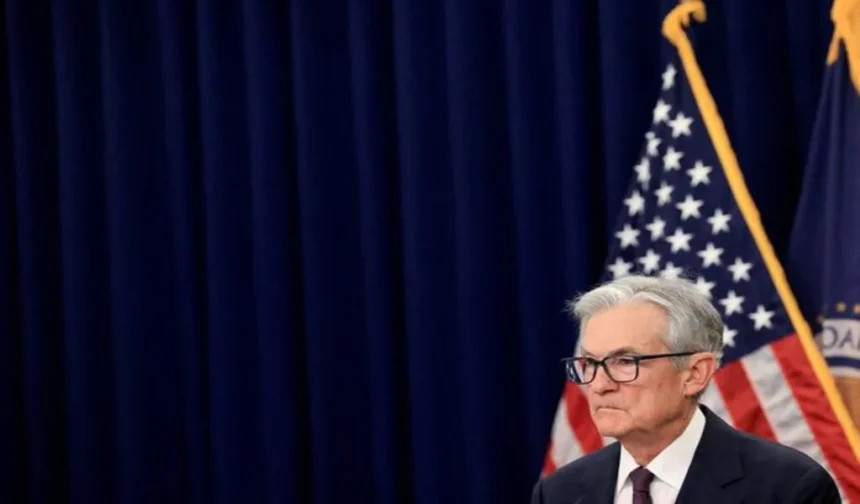
(VOR News) – Trump suggested Fed Chair Jerome Powell might be fired for mismanaging the $2.5 billion restoration project. Trump has threatened to fire Powell, but his fate is unknown.

Trump sought months to replace the politically independent central banker who resisted his interest rate cuts owing to tariffs causing inflation. Trump said Tuesday that Powell’s handling of a massive reconstruction project at two Washington Federal buildings could warrant his dismissal, an extraordinary and potentially illegal move.

“I believe it is somewhat accurate,” Trump remarked. He adds “I believe it is truly disgraceful to spend $2.5 billion on a renovation.” He disputed the Fed chief needed a “palace.”

The project began during Trump’s first term.

White House discovered it recently. Trump thinks Fed rate cuts will slash government borrowing costs, while Powell argues early cuts could raise inflation and rates.

Giving up political independence might hurt US stocks and hike interest rates.

Important info:

Powell’s exit may worry investors.

Fed chair has made it hard for Trump to take over.

Powell and his board must promote stable prices and employment, which may necessitate politically difficult inflation-fighting interest rate increases. The Fed can prioritize economics over politics by remaining independent of the White House (except for Fed nominees).

If Powell were fired before May 2026, inflation, interest rates, and the economy would worsen and the Fed’s independence from politics would be threatened.

A recent Supreme Court rule bars Trump from firing Powell over interest rate discrepancies. He can do so legally if there is “cause,” such as negligence or malfeasance.

Trump sacked Powell because congressional hearings misrepresented restoration and boosted costs.

The Federal Reserve headquarters is nearly 90 years old.

From the 1930s, the Marriner S. Eccles Federal Reserve Building needed electrical, plumbing, and HVAC modifications. The restoration process will remove asbestos, lead, and other hazards and create a new electrical and communication infrastructure.

The H-shaped edifice, named after a 1930s and 1940s Federal Reserve chair, is one of Washington’s most recognizable sights due to its classical architecture, marble, and masonry. An adjacent 2018 acquisition is being renovated by the central bank.

Following periodic maintenance, the Fed considers this the first “comprehensive renovation.”

Renovations cost more.

Trump administration officials slammed the Fed for the project’s $2.5 billion, $600 million above budget. The Fed lists reasons including a distressed homeowner facing greater remodeling costs. Building materials and labor prices climbed in 2021 and 2022 due to inflation.

We had to remove more asbestos than projected. Washington height restrictions made underground development more expensive. Rising costs delayed Fed third facility developments in 2024. Fed claims “gradual reduction” in spending by merging 3,000 Washington workers and renting less space.

The White House budget director labels the upgrades “ostentatious.” Powell was told by senior budget advisor Russ Vought that Trump is “extremely troubled” by the Fed’s “ostentatious overhaul” of facilities

Last Monday, Vought said the Fed refurbished “rooftop terrace gardens, VIP private dining rooms and elevators, water features, premium marble, and much more.”

A March 2025 Mercatus Center booklet distributed at George Mason University refutes the claims. The paper was written by Dartmouth College economist and former Fed employee Andrew Levin.

Powell told the Senate Banking Committee last month there is no VIP dining room. The marble is depleted. Unspecialized lifts. No new water features. Roof terrace gardens don’t exist.”

Fed claimed 2021 development procedures reduced such traits.

The White House concerns about Fed refurbishing cost cuts.

The White House claims the Fed changed construction plans without local planning commission consent.

NCPC commends Fed for “fully engaging partner federal agencies.” September 2021 assignment done. After the Fed changed course, the administration asked the commission.

Powell is accused by White House officials of unethically lowering the restoration to save money and mismanaging federal financing owing to its high cost.

Trump appointed White House deputy chief of staff James Blair to the commission. Blair wrote on X that Powell’s June congressional testimony “leads me to conclude the project is not in alignment with plans submitted to & approved by the National Capital Planning Commission in 2021.”

Blair told the planning panel last Thursday he would inspect the building site, review Fed documentation on 2021 refurbishment plan adjustments, and notify Fed authorities to inform his colleagues.

Fed values independent project reviews.

Central bank is “not subject to the direction” of commission and freely accepts its directives, according to its website’s FAQs.

The Fed maintains its independent inspector general reports to the Senate and House, not the White House. Powell requested an IG renovation cost audit.

SOURCE: AP

SEE ALSO:

VinFast Advances Ecosystem and EV Strategies in Philippines

Candace Owens Champions Conservative Christian Values for Women
Continue Reading

News

Trump and Israels Critics Cheer on Iran’s Revolutionary Guard

VORNews

Published

on

By

Trump and Israels Critics Cheer on Iran's Revolutionary Guard

TERRAN – The Islamic Republic of Iran stands at a dangerous crossroads. For over 47 years, the regime has maintained its grip through a combination of internal suppression and external proxy warfare. Today, however, the stakes have shifted from regional instability to a global nuclear threat.

Despite years of international warnings and sanctions, the Islamic Revolutionary Guard Corps (IRGC) has successfully accelerated Iran’s nuclear capabilities. Recent reports from the International Atomic Energy Agency (IAEA) confirm that the regime has enriched uranium to 60% purity. While the regime claims its intentions are peaceful, nuclear experts agree that 60% enrichment is a short technical step from the 90% “weapons-grade” level required for a nuclear warhead.

A History of Domestic Brutality

The IRGC’s survival has often depended on the violent suppression of its own citizens. Since the 1979 Revolution, the regime has systematically dismantled dissent. The most recent wave of unrest, sparked by the death of Mahsa Amini in 2022, saw the IRGC and its Basij militia engage in what human rights groups describe as a “slaughter.”

  • Casualty Counts: Estimates suggest that during various uprisings over the last decade, thousands of unarmed protestors—including women and children—have been killed by security forces.
  • Systemic Torture: Reports from Amnesty International highlight a pattern of arbitrary arrests and the use of torture in prisons like Evin to extract forced confessions.
  • Decades of Control: For 47 years, the regime has prioritized the survival of its ideology over the welfare of its people, leading to a crippled economy and a desperate population.

The Global Terror Network

The IRGC is not merely a domestic police force; it is the primary exporter of Iranian influence through its Quds Force. By funding and training proxies, the regime has created a “Shiite Crescent” of instability.

  1. Hezbollah in Lebanon: Acting as a de facto army on Israel’s border.
  2. Hamas in Gaza: Using Iranian funding to conduct operations against Israeli civilians.
  3. Houthi Rebels in Yemen: Disrupting global trade by attacking shipping lanes in the Red Sea.
  4. Militias in Iraq and Syria: Consistently targeting U.S. personnel and regional allies.

The Political Divide in Washington

As the conflict between the U.S., Israel, and Iran intensifies in 2026, a deep political rift has formed within the United States. While the Trump administration and its supporters advocate for “maximum pressure” and military strikes to degrade the IRGC’s capabilities, many in the Democratic Party and mainstream media outlets have expressed sharp opposition.

Critics of the current administration argue that military action is an “illegal war” and an “endless conflict” that puts American lives at risk. However, supporters of the intervention point out that many of these same voices seem strangely silent regarding the IRGC’s atrocities. There are growing concerns that some political factions and media personalities are being influenced—directly or indirectly—by the massive amounts of wealth moved by Iran and its proxies.

“The key distinction will be between those who recognize that Iran is a murderous regime… and those who treat it as a legitimate partner in diplomacy,” noted one political analyst during a recent congressional hearing.

Abandoned by Allies?

One of the most striking developments in the 2026 crisis is the shift in traditional alliances. While the U.S. and Israel have historically relied on a united front with Europe and NATO, many allies have recently distanced themselves.

  • European Hesitancy: Leaders in the UK and France have expressed concerns about “regime change from the skies,” preferring diplomatic stalemates over decisive military action.
  • The Funding Factor: Critics suggest that the economic ties between European corporations and Iranian markets have created a conflict of interest, making these nations unwilling to fully support efforts to dismantle the IRGC.
  • Media Echo Chambers: Major media outlets have been accused of laundering IRGC propaganda, focusing on the “instability” caused by U.S. strikes rather than the 60% uranium enrichment that necessitated the strikes in the first place.

Conclusion: The Nuclear Clock is Ticking

The IRGC has shown that it is willing to sacrifice its people and its economy to achieve nuclear status. With enough 60% enriched uranium to potentially fuel multiple bombs, the window for a non-military solution is closing.

As the world watches the escalating strikes in the Strait of Hormuz and the internal collapse of the Iranian economy, the question remains: will the global community unite to stop a terrorist state from going nuclear, or will political infighting and economic interests allow the IRGC to finish what it started 47 years ago?

Related News:

Trump Supporters Tell Pope to ‘Stay in His Lane’ as Tensions Rise Over Iran Conflict

Trump Axes Starmer’s Chagos Deal: Calls It An Act of Great Stupidity 


Continue Reading

News

Trump Supporters Tell Pope to ‘Stay in His Lane’ as Tensions Rise Over Iran Conflict

VORNews

Published

on

By

Trump Supporters Tell Pope to ‘Stay in His Lane’

VATICAN CITY — A sharp divide has opened between the White House and the Holy See, as supporters of President Donald Trump increasingly call for Pope Leo XIV to “stay in his lane.” The friction follows the Pope’s outspoken criticism of the U.S.-led military operations in Iran, which began on February 28, 2026.

Critics within the MAGA movement argue that the pontiff—the first-ever American-born pope—is overstepping his spiritual authority by meddling in complex geopolitical security matters. Many supporters claim his appeals for peace inadvertently favor Islamic interests over the safety and strategic goals of the Christian West.

The tension reached a boiling point this month after Pope Leo XIV described the ongoing conflict as a “spiral of violence” and an “irreparable abyss.” In response, President Trump took to social media to label the Pope as “weak on crime” and “terrible for foreign policy.”

For many Trump supporters, the issue isn’t just about the war itself, but about what they perceive as a double standard in the Vatican’s advocacy.

  • Geopolitical Meddling: Supporters argue the Pope does not understand the necessity of “Operation Epic Fury,” the joint U.S.-Israeli campaign aimed at dismantling Iran’s nuclear capabilities.
  • National Sovereignty: There is a growing sentiment that the Vatican should focus on the souls of the faithful rather than attempting to dictate the military strategy of a sovereign superpower.
  • Safety Concerns: Critics point out that while the Pope calls for dialogue, Iran’s leadership has historically posed a direct threat to both Christian and Jewish communities in the Middle East.

Claims of Favoritism: Is the Pope “More Concerned with Muslims”?

One of the most controversial narratives emerging from the American right is the idea that the Pope’s humanitarian focus is skewed. Some high-profile supporters have voiced concerns that the Pope’s rhetoric seems more protective of Iranian interests than the American soldiers and Middle Eastern Christians caught in the crossfire.

This sentiment stems from several key points of contention:

  1. Condemning Civilization Threats: Pope Leo XIV recently called Trump’s warnings against Iranian infrastructure “unacceptable,” leading some to argue he is shielding a regime that actively persecutes religious minorities.
  2. Focus on Migration: Before the war, the Pope’s criticism of mass deportation efforts had already soured his relationship with the Trump administration.
  3. Diplomatic Outreach: The Vatican’s long history of “cautious engagement” with Tehran is seen by hardliners not as diplomacy, but as a dangerous softening toward an adversary.

The Vatican’s Defense: The Gospel Above Politics

Despite the mounting pressure, the Vatican remains firm. Speaking from the papal plane, Pope Leo XIV stated he has “no fear” of the Trump administration. He maintains that his calls for peace are not political maneuvers but are rooted strictly in the Gospel.

“We are not politicians,” the Pope told reporters. “I will continue to speak out strongly against war, seeking to promote peace and dialogue. Too many innocent people have been killed, and someone must stand up and say there is a better way.”

Church officials, including Msgr. Peter Vaccari of the Catholic Near East Welfare Association has echoed this, stressing that the Church’s role is to protect all human life, regardless of borders or religion.

A Fragmented Faithful

The dispute is forcing American Catholics to choose sides. While many defend the Pope as the “Vicar of Christ,” others find themselves more aligned with the President’s “America First” doctrine.

Conservative commentators have noted that this is not a typical theological debate. It is a clash between two worldviews: one that prioritizes national security and the preservation of Western values, and another that views global peace through a lens of universal humanitarianism.

Summary of Key Criticisms from Trump Supporters

  • Strategic Naivety: Claiming the Pope’s call for a ceasefire allows Iran to regroup and continue its nuclear ambitions.
  • Silence on Persecution: Arguing the Pope is more vocal about U.S. airstrikes than he is about the long-term persecution of Christians within Islamic republics.
  • Interference: Viewing the Pope’s direct appeals to Congress and the public to “stop the violence” as an inappropriate intrusion into American domestic and foreign policy.

As the two-week ceasefire remains fragile, the war of words between Washington and the Vatican shows no signs of cooling down. For now, the “lane” the Pope occupies remains a contested territory in the hearts and minds of the American electorate.

Trending News:

Victory for Trump as Appeals Court Shuts Down Boasberg

Trump Warns China as Vance Leads Peace Talks with Iran

Tulsi Gabbard Sends Criminal Referral to DOJ Over 2019 Trump Impeachment


Continue Reading

News

Kash Patel Vows Defamation Lawsuit Over Bombshell ‘Drinking and Paranoia’ Report

VORNews

Published

on

By

FBI Director Kash Patel Defends Georgia Election Probe

WASHINGTON, D.C. — FBI Director Kash Patel has ignited a legal firestorm, threatening to sue a major national magazine after it published an explosive profile alleging he has struggled with alcohol abuse and crippling paranoia during his time leading the nation’s top law enforcement agency.

The report, published Friday by The Atlantic, relies on accounts from over two dozen current and former officials. These sources paint a picture of a director who is often absent from headquarters, prone to “freak-outs” over his job security, and frequently intoxicated to the point of being unreachable by his own security detail.

Patel, 46, wasted no time hitting back. In a fiery post on X (formerly Twitter), the director labeled the article “fake news” and suggested the reporting met the legal standard for actual malice. “See you and your entire entourage of false reporting in court,” Patel wrote, calling the potential lawsuit a “legal layup.”

The Allegations: Drinking and “Breaching Equipment”

The most startling claims in the report involve Patel’s alleged personal conduct. According to sources cited in the exposé, Patel is a frequent guest at high-end clubs in Washington, D.C., and Las Vegas, where he is reportedly known for “conspicuous inebriation.”

The report details several specific incidents:

  • Morning Disruptions: Meetings and morning briefings were allegedly rescheduled to the afternoon to accommodate Patel’s recovery from late-night drinking.
  • Security Concerns: In one instance, Justice Department officials claimed Patel’s security detail had such difficulty waking him behind a locked door that they requested “breaching equipment”—tools typically reserved for tactical raids—to ensure his safety.
  • National Security Gaps: Current FBI officials expressed fear that the director’s behavior leaves him vulnerable to exploitation or unable to lead during a sudden national crisis.

A Technical Glitch Sparks a “Freak-Out”

Beyond the drinking allegations, the report describes a climate of extreme paranoia within the FBI. Sources told journalists that Patel is “obsessed” with the idea that he might be fired by the White House, especially following the recent removal of former Attorney General Pam Bondi.

A key example provided in the article occurred on April 10, 2026. Patel reportedly encountered a technical glitch while trying to log into an internal FBI computer system. Believing he had been locked out of the building and fired, he allegedly entered a “frantic” state, calling allies and aides to announce his dismissal.

The issue turned out to be a simple IT error, but the “freak-out”—as witnesses called it—reportedly sent ripples of alarm through the administration.

Patel and the FBI Fire Back

The FBI’s communications office has moved quickly to debunk the claims. Benjamin Williamson, a top spokesperson for the bureau, issued a statement calling the article “completely false at a nearly 100 percent clip.”

Patel’s attorney, Jesse Binnall, shared a letter sent to the magazine before publication, arguing that the story relied on “vague, unattributed sourcing” and did not give the director enough time to provide a meaningful response.

Despite the controversy, the White House has publicly stood by the director. White House spokesperson Karoline Leavitt stated that Patel “remains a critical player” on the administration’s team, highlighting that crime rates have dropped during his tenure.

Why This Matters for the FBI

The timing of these allegations is particularly sensitive. The United States is currently involved in high-stakes military operations against Iran, a situation that many argue requires a steady and present hand at the FBI.

“That’s what keeps me up at night,” one unnamed official told reporters, referring to the possibility of a domestic terror threat occurring while leadership is distracted or incapacitated.

As Patel prepares for a potential legal battle, the rift between the FBI’s leadership and its career staff appears to be widening. Whether the director follows through on his threat to sue remains to be seen, but the “boozy” profile has already become a major flashpoint in the ongoing debate over the agency’s future.

Trending News:

FBI Investigates Who’s Funding and Coordinating ICE Protests and Attacks

FBI Director Kash Patel Defends Georgia Election Probe, Points to Probable Cause


Continue Reading

Get 30 Days Free

Express VPN

Create Super Content

rightblogger

Flight Buddies Needed

Flight Volunteers Wanted

Trending