

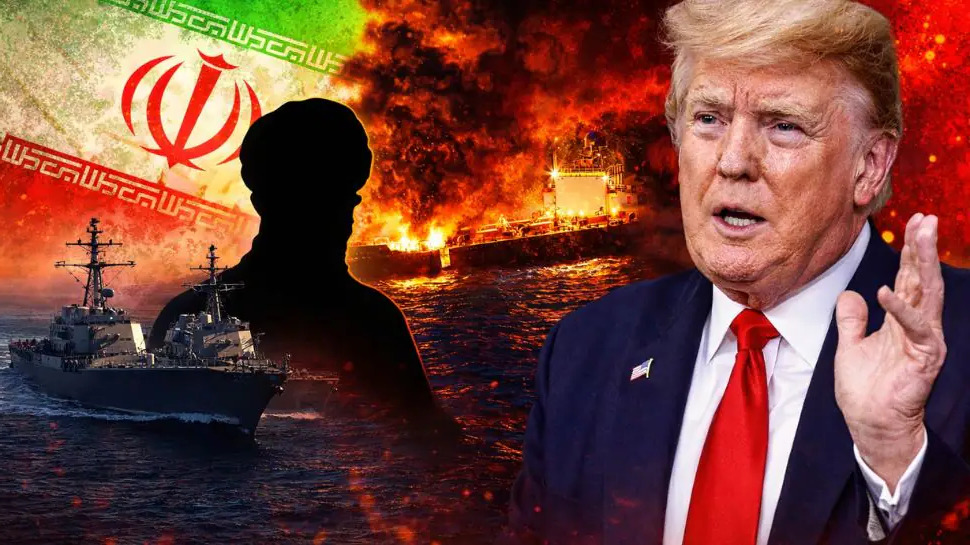

WASHINGTON, D.C. – In a major military move that shook energy markets, President Donald Trump ordered U.S. forces to hit key military targets on Iran’s Kharg Island. Supporters of the operation say the strike stripped away what they call Iran’s long-running “oil terror premium.”
U.S. forces targeted naval mine depots, missile bunkers, and other military sites, while leaving the island’s oil export facilities untouched. Instead of triggering an oil supply disaster, backers say the attack exposed years of fear-driven pricing tied to petrodollar trading and repeated threats from Tehran.
Warnings about soaring oil prices and global shortages quickly lost steam. Treasury Secretary Scott Bessent moved to calm investors and shippers, saying the Strait of Hormuz remains open and free of mines. He said the recent jump in prices came from speculation, not from any real break in supply. At the same time, Lloyd’s of London began working through new terms, while the U.S. introduced its own vessel insurance backstop to keep tankers moving.
Supporters say this is not just another flashpoint in the Middle East. In their view, it marks the start of the end for a system built on fear, market panic, and pressure tied to oil transit.
The Kharg Island Strike: A Focused Hit, Not a Broad Attack
Kharg Island is central to Iran’s oil trade. The small island in the Persian Gulf handles as much as 90 percent of Iran’s crude exports. For years, it stood as a symbol of Tehran’s ability to threaten global energy flows.
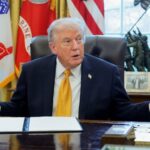
On March 14, President Trump said the U.S. had “totally obliterated” military assets on the island. Footage released by the White House showed precise strikes hitting missile bunkers and mine storage areas. Oil terminals were left alone.
“We hit only military targets,” Trump said. “The oil stays for now, out of decency. But if they close the Strait, everything changes.”
U.S. Central Command said the mission destroyed more than 90 targets and did not damage civilian sites or oil infrastructure. Iranian officials confirmed the strikes but tried to minimize them. Still, the signal was hard to miss: the U.S. could remove military threats without sending the global economy into shock.
The operation came after weeks of rising tension. Iran had warned it could shut the Strait of Hormuz, the narrow waterway that carries about one-fifth of the world’s oil. Yet Bessent later said no mines had been placed there. Shipping traffic continues.
Scott Bessent Pushes Back on Oil Crisis Claims: “Not Mined, Not a Crisis”
Treasury Secretary Scott Bessent went on CNBC and addressed the growing panic head-on. “The Strait of Hormuz has not been mined,” he said. “We’ve seen more and more tankers moving through. Iranian ships are getting out. We’re fine with that, we want the world well-supplied.”
He also said some media outlets were trying to turn the moment into a crisis when the facts did not support that view. Oil prices rose for a short time because traders reacted to uncertainty, but the basic supply picture stayed strong.
According to Bessent and other officials, the bigger problem came from London’s insurance market. War-risk premiums for tankers in the Gulf jumped two to five times almost overnight. Spot traders added to the pressure. As a result, some ships paused not because Iran had blocked traffic, but because insurance costs had shot up.
The U.S. response came quickly. The Development Finance Corporation launched a $20 billion government-backed reinsurance program. Bessent and DFC officials rolled it out under Trump’s direction. The plan offers political-risk coverage for both hull and cargo at lower rates.
Meanwhile, Lloyd’s of London, the biggest name in maritime insurance, entered talks with U.S. officials. Market sources say the discussions focus on how the two systems can work together. The U.S. program is meant to fill the gap where London pricing became too expensive. As rates stabilize, more ships are returning to normal routes, and oil shipments are moving again.
Backers of the policy say that the response shows the real issue was financial, not physical. In their view, the disruption came from pricing pressure in insurance markets, not from any actual shutdown at sea.
The Iran Terror Premium: A Hidden Cost on Every Barrel
Behind the military headlines is a broader claim about oil prices. For years, analysts close to the Trump camp have argued that Iran’s threats added a hidden premium to crude.
Peter Navarro, Trump’s senior trade and manufacturing adviser, laid out that case in a recent report. He said tension around the Strait of Hormuz added between $5 and $15 per barrel to oil prices. In his view, that put crude 7 to 21 percent above levels justified by normal supply and demand.
Over the last 25 years, Navarro argued, that extra cost drained about $10 trillion from global GDP. He said families, companies, and governments all paid the price, while speculators and petrodollar systems benefited, especially in London and other finance centers.
Navarro called the premium a “parasite” on the world economy. Because Iran sits next to one of the most important oil routes on earth, every missile test, proxy strike, or threat against shipping could push up futures prices and insurance costs.
Supporters of the Kharg Island operation argue that Trump’s strike changed that pattern in a lasting way.
Barbara Boyd: A Blow Against a 50-Year Financial System
Barbara Boyd, speaking for Promethean Action, says the Kharg Island strike was much more than a military operation. In her piece, “Trump’s Kharg Island Strike Ends Iran’s Oil Terror Premium,” she describes it as a controlled takedown of a 50-year-old financial system.
Boyd argues that the operation was aimed at more than Iran’s weapons sites. In her view, it also challenged what she calls London’s Iran oil scam. She ties together the petrodollar structure, oil speculation, and the terror premium, saying they formed a network that enriched financiers while putting the burden on ordinary people.
She points to several parts of the response. Trump chose not to hit the oil terminals. The U.S. rolled out an insurance backstop almost at once. Bessent publicly pushed back against panic as events unfolded.
Boyd says the strike was not a spur-of-the-moment move. She describes it as part of a larger strategy, one meant to replace an old system of fear-based oil pricing with a different model.
In her telling, Trump recognized the problem years ago. The premium, she argues, came not only from Iranian threats but also from a market structure that rewarded panic and speculation.
America’s Preparations: Energy Output, Alliances, and Long-Term Planning
Boyd also says the strike did not happen in isolation. She points to four major conditions that, in her view, made the operation workable and reduced the risk of a wider oil shock.
- U.S. energy independence: The United States now produces oil at very high levels. Expanded shale output and new drilling, she argues, reduced America’s exposure to foreign pressure. That domestic supply gives the market a buffer during short-term disruptions.
- Russian oil positioning: She says strategic purchases and deals involving Russia helped support alternative supply lines. In her view, that kept global markets steadier as Gulf tensions rose.
- The Abraham Accords: Normalized ties between Israel and several Arab states created a stronger regional front against Iran. Those agreements, she argues, turned former rivals into security and energy partners.
- U.S.-Saudi civil nuclear cooperation agreement: Boyd says this agreement, signed under Trump, points the Gulf toward a future that relies less on oil alone. Saudi Arabia would gain civilian nuclear technology for power generation and desalination, opening a path beyond the old oil-only model.
Taken together, she presents these moves as part of a larger plan for a nuclear-focused development path in the Middle East.
Boyd calls that vision “Trump’s Mideast Nuclear Century.” In her view, Gulf states would expand nuclear power for electricity and water, while oil would remain a stable export rather than a political weapon. Under that model, Iran’s threat to world energy markets would lose much of its force.
What May Come Next: Lower Oil Prices and a Different Energy Market
Markets have already started to respond. Oil futures eased after Bessent’s public remarks. Some analysts now say the so-called terror premium could disappear over time, which would lower prices by $5 to $15 per barrel in the long run.
If that happens, the effects would be broad. Drivers would pay less for fuel. Companies would face lower shipping and input costs. Governments could gain breathing room in their budgets.
Trump also warned Iran that more strikes could follow if needed, even saying they could come “just for fun.” Even so, the current focus appears to be on preserving oil infrastructure for what supporters describe as a post-terror phase in the region.
Analysts such as Boyd see the Kharg Island operation as the start of a much larger shift. In their view, the old petrodollar order is weakening, while a new system built around U.S. energy strength, regional alliances, and nuclear development begins to take shape.
Their message is simple: no more fear premium, no more market panic driven by threats, and a more secure energy supply for the global economy.
From that perspective, the Kharg Island strike did not start an oil war. It brought one long-running chapter closer to an end, one that supporters say had quietly drained the world economy for decades.