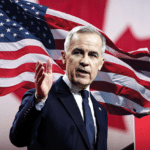


U.S.-Canada trade talks broke down in August 2026, leaving President Donald Trump’s new 50% tariffs on roughly $20 billion to $28 billion in Canadian goods set to take effect. The duties cover products such as wine, hockey equipment, cement, clothing, dairy items, and other consumer and manufactured goods, while Canadian Prime Minister Mark Carney has promised dollar-for-dollar retaliation.
The central question is whether the tariff list is only an economic response to trade barriers or also a way to pressure industries and regions that matter to Carney’s political coalition. Ontario’s auto and manufacturing base, Quebec’s dairy, beverage, and consumer industries, British Columbia’s forestry and fishing sectors, and the Prairie provinces’ agriculture and agri-food businesses face different forms of exposure. This analysis separates confirmed tariff details from political interpretation, beginning with Canada-U.S. trade terms explained.
Key Takeaways
- Trump’s 50% tariffs affect about $20 billion in Canadian imports, including wine, dairy products, cement, clothing, and hockey equipment.
- The duties cover only a small share of total trade, but consumer-focused tariff targets could hit small businesses quickly.
- Ontario, Quebec, British Columbia, and the Prairie provinces face different risks based on their manufacturing, food, forestry, and agricultural industries.
- Mark Carney has promised a dollar-for-dollar response, raising costs on selected U.S. goods.
- The tariff list may pressure industries tied to Carney’s political coalition, although its economic purpose remains Washington’s stated focus.
How Trump’s Tariffs Target Carney’s Political Strongholds
The 50% U.S. tariffs that took effect at 12:01 a.m. ET on August 22, 2026, followed the collapse of three days of Canada-U.S. negotiations in Washington. The package covers about $20 billion in goods, or roughly 5% of Canadian exports to the United States, but its limited size does not make it politically minor.
The duties focus on products that are easy for businesses, workers, and voters to see. They include wine, furniture, dairy, clothing, electronics, industrial machinery, cement, fishing rods, hockey equipment, and other consumer and industrial goods. PBS NewsHour’s tariff breakdown also places the affected exports at about 5% of Canada’s annual shipments to the U.S.
Why a narrow tariff list can create broad political pressure
Carney’s support base depends heavily on voters and industries in Ontario, Quebec, and British Columbia. Those provinces have large manufacturing, consumer-goods, food-processing, forestry, beverage, and sporting-equipment sectors. A tariff that reaches only a small share of national exports can still land hard in communities where one factory, mill, winery, or distributor supports many local jobs.
Ontario faces pressure through manufactured goods, machinery, vehicles and parts, beverages, and cement. Quebec’s dairy producers, furniture makers, clothing companies, and sporting-goods businesses have more direct exposure. In British Columbia, wood products, wine, and other consumer goods connect the trade dispute to industries that already depend on reliable cross-border sales.
The immediate risks are practical. Importers may pay more, retailers may raise prices, and manufacturers may delay orders or search for replacement suppliers. Smaller firms have less cash to absorb a 50% duty, so provincial governments may face demands for tax relief, emergency financing, or sector-specific aid.
The political damage comes from concentration, not just scale. A tariff touching a few exposed towns can generate more pressure than a larger duty spread across the whole economy.
The partisan question remains unproven
Available reporting does not establish that every tariff was selected to weaken Carney politically. Washington says the duties respond to Canadian restrictions on U.S. alcohol, autos, dairy, and other products. Ottawa disputes the U.S. account, and Carney has promised a dollar-for-dollar retaliation.
Still, geography gives the policy a strong political dimension. The list places economic strain on several provinces central to Carney’s coalition, while exemptions for energy, potash, fish, and critical minerals reduce exposure in parts of Alberta, Saskatchewan, and Atlantic Canada. That pattern may increase pressure on Carney even if partisan intent cannot be proven.
Which Canadian regions and industries feel the pressure first?
The tariff dispute will not affect every province in the same way. Exposure depends on what each region sells to the United States, how easily companies can find new buyers, and whether provincial leaders support Ottawa’s response.
Ontario’s industrial belt turns tariffs into a national political test
Ontario is Canada’s largest provincial economy and its manufacturing center. Its factories connect steel mills, appliance producers, vehicle plants, parts suppliers, and agricultural-equipment makers across the same trade network. A tariff on one product can therefore affect several businesses before it reaches the customer.
Vehicles and some metals already face separate U.S. tariff measures, so they are not all part of this new 50% round. However, Ontario’s auto-related supply chain remains exposed to any longer dispute over market access. Manufacturers may delay orders, while farmers could pay more for tractors and equipment if retaliatory duties raise input costs.
Premier Doug Ford’s call for dollar-for-dollar retaliation puts added pressure on Carney. Ford must defend Ontario workers and manufacturers, while Carney must show that a national response protects the province without creating more costs. That tension could push small businesses and unions to demand faster relief. Canada-U.S. tariff negotiations have become an Ontario political test, not only a dispute between two governments.
Quebec and British Columbia face different kinds of export risk
Quebec’s exposure runs through electronics, industrial production, pulp and paper, and dairy. A tariff on electronics or machinery can affect Montreal-area manufacturers and smaller suppliers. Dairy duties also reach processors and farms tied to Quebec’s domestic food economy. Paper and pulp face a separate concern: even when a product avoids the newest tariff, a prolonged dispute can weaken orders and complicate cross-border contracts.
British Columbia has a different mix. Its mining and resource companies depend on predictable access for copper, zinc, and aluminum, while manufacturers and forest-product firms face their own trade risks. Existing U.S. measures already cover some metals, so those commodities may offer Ottawa bargaining power in a wider conflict rather than immediate protection from the new list. The Canada West Foundation’s provincial tariff analysis places B.C. among the provinces facing the heaviest relative exposure.
Both premiers may support firm action, but their requests differ. Quebec may seek help for processors and manufacturers. B.C. may want export exemptions, mining protections, and new buyers for resource products.
The Prairies show why economic exposure does not always produce political unity
Alberta depends heavily on U.S. buyers for crude oil, while Saskatchewan relies on American demand and transport links for potash. Both products are exempt from this specific 50% tariff round, yet neither province is safe if the dispute expands or border rules change.
Alberta and Saskatchewan governments rejected export curbs and new duties against the United States. Their position reflects concern that retaliation could hurt local producers more than Washington. That creates a direct conflict with Carney’s national strategy: Ottawa wants bargaining power, while Prairie premiers want uninterrupted shipments.
Workers, farmers, mining companies, and small exporters may therefore press for different policies. Carney must hold those interests together even when provincial leaders disagree on the best response.
Fast Facts and Costs: What the New Tariff Fight Could Mean
The new U.S. duties are large enough to disrupt exposed businesses, even though they cover only a small share of Canada-U.S. trade. The financial burden will move through the supply chain rather than land on one side alone.
The numbers behind the tariff dispute
The main facts are summarized below.
| Fact or cost issue | Current detail | Why it matters |
|---|---|---|
| U.S. tariff rate | 50% on covered Canadian goods | Importers face a major increase in landed costs |
| Effective date | 12:01 a.m. ET on August 22, 2026 | Businesses had little time to adjust shipments |
| Affected goods | Estimates range from about $20 billion to $28 billion | The dispute reaches many smaller exporters |
| Share of exports | Roughly 5% of Canada’s exports to the U.S. | A narrow list can still hurt concentrated industries |
| Canadian response | Dollar-for-dollar tariffs planned for September 8 | U.S. exporters will face matching pressure |
| Product examples | Wine, hockey equipment, cement, dairy, furniture, clothing, fishing rods, and electronics | Consumer prices and business orders may rise |
The PBS breakdown of the new Canadian tariffs places the affected trade at roughly $20 billion, or about 5% of Canada’s U.S.-bound exports. Other estimates reach $28 billion, depending on which product categories and shipment values are included.
Who pays the higher cost?
A tariff is charged to the U.S. importer, not directly to the Canadian government. That importer may accept a smaller profit, negotiate a lower price with the Canadian exporter, or pass some of the increase to retailers and shoppers.
As a result, a 50% tariff does not automatically create a 50% increase at checkout. Companies may absorb part of the duty, switch suppliers, reduce orders, or raise prices gradually. Small exporters and retailers usually have less room to absorb the shock. Canadian companies facing higher U.S. trade costs may cut hours, delay expansion, or move production.
Canada’s September 8 retaliation could add costs for U.S. suppliers of steel, dairy, appliances, agricultural equipment, pulp and paper, and electronics. Those duties would arrive alongside existing U.S. tariffs affecting Canadian steel, lumber, and autos, increasing pressure on workers and consumers in both countries.
A Step-by-Step Guide to Understanding the Political Impact
Tariffs affect a political coalition through specific industries, workers, and communities. Use the sequence below to separate measurable economic pressure from claims about electoral strategy.
How to assess a tariff’s effect
- Identify the product and tariff rate. Start with the customs category, the 50% duty, and the effective date. Confirm whether the product is covered by this tariff or by an earlier measure. Energy, potash, critical minerals, and some fish products are excluded from the newest list, so broad claims about all Canadian exports can mislead.
- Locate the Canadian production base. Map the product to the provinces and communities that make, process, or distribute it. Wine and dairy may connect the dispute to Quebec, while machinery, vehicles, and manufactured goods can affect Ontario. Forestry, mining, and fishing create different exposure in British Columbia and the Atlantic provinces.
- Estimate dependence on U.S. buyers. A company that sends most of its output south faces more immediate risk than one with established Canadian, Asian, or European customers. Check whether contracts allow price changes, whether competitors can replace the product, and whether smaller firms have enough cash to absorb higher costs.
- Track retaliation and public responses. Mark Carney has pledged dollar-for-dollar tariffs beginning September 8. NBC News’ coverage of Canada’s retaliation provides the announced timing and scope. Then compare statements from Doug Ford, Wab Kinew, and David Eby, who backed Carney’s response, with Alberta and Saskatchewan governments, which rejected export curbs or new duties.
- Compare short-term disruption with later outcomes. Record layoffs, reduced orders, price increases, and emergency aid first. Then watch for new export markets, federal or provincial support, relocated suppliers, and changes in production. A negotiated agreement could remove the tariff before those long-term shifts become permanent.
A premier’s public statement shows political positioning, not proof that a tariff caused job losses or will change voter behavior.
Finally, separate confirmed results from political claims. CBC’s report on premiers backing Ottawa can establish who supported Carney’s response. It cannot prove that Washington selected a product to weaken a particular leader, or that retaliation will strengthen Carney’s coalition. Those conclusions require later evidence on prices, employment, investment, and public opinion.
Local Tips and Common Mistakes to Avoid When Reading the Tariff Story
Tariff headlines can sound national, but the real effects depend on the product, its origin, and the local supply chain. Readers, workers, and small businesses should check the details before deciding whether a new duty affects them.
Check the customs details first
Start with the product’s HTSUS classification, country of origin, entry date, and any listed exclusion. A Canadian-made product does not automatically face the new 50% rate. Energy, potash, fish, critical minerals, and some goods covered by separate Section 232 measures are excluded from this round.
CUSMA status also does not guarantee an exemption for goods covered by the new proclamations. Importers should review current U.S. Customs and Border Protection guidance, while Canadian businesses can consult the Canadian customs tariff for applicable Canadian treatment. A shipment that was threatened with a tariff may not face one until the measure takes effect, so check the entry date and official notices rather than relying on an earlier headline. The guide to how U.S.-Canada tariffs are set also explains why rates and exclusions can change.
Avoid four common reading mistakes
- Don’t assume every Canadian export faces 50%. The current list covers a limited group of goods, not all bilateral trade.
- Don’t confuse Canada’s planned retaliation with the U.S. duty. Ottawa’s measures apply to selected U.S. products and follow a separate process.
- Don’t treat the $20 billion to $28 billion estimates as proof of inaccurate reporting. The range can result from different product categories, valuation methods, and trade periods.
- Don’t assume tariffs automatically create domestic jobs. Protected producers may gain sales, but higher input costs, weaker orders, and retaliation can reduce employment elsewhere.
Local exposure can vary widely within one province. An Ontario factory that depends on U.S. buyers faces a different risk than a domestic supplier, while a Quebec mill may have different contracts and alternatives than a nearby farm.
A quick regional checklist
- Ontario manufacturers: Check machinery, parts, vehicle content, and U.S. customer exposure.
- Quebec farms and mills: Review dairy treatment, paper classifications, and processor contracts.
- B.C. resource firms: Confirm whether the product is covered, excluded, or subject to another tariff.
- Prairie exporters: Check exemptions for energy and potash, then monitor border and retaliation notices.
Keep provincial announcements separate from confirmed federal measures. Aid promises and political statements may change before businesses receive practical support.
What Carney Can Gain or Lose as the Trade Conflict Continues
The tariff dispute gives Mark Carney two competing political choices. He can pursue measured retaliation while keeping room for negotiations, or match Washington immediately and show that Canada won’t absorb economic pressure without a fight.
The case for measured retaliation
Carney has linked a focused response to protecting exposed workers, farmers, families, and businesses. Canada’s planned tariffs, scheduled for September 8, target selected U.S. goods such as steel, dairy, appliances, agricultural equipment, pulp and paper, and electronics. Ottawa has also excluded oil and gas, potash, fish, some critical minerals, and aircraft parts.
That approach gives Carney bargaining power without placing every major export sector at risk. It also leaves space for a broader agreement if Washington removes or reduces its tariffs. His response to tariff pressure therefore combines economic protection with a negotiating signal: Canada will respond, but it won’t rush into terms it considers unfair or damaging to key industries.
The downside is political. Businesses facing a 50% U.S. tariff may see a delayed response as weakness, especially when Carney has promised dollar-for-dollar action. Small firms cannot always wait for negotiations to produce results.
Unity could help, but retaliation carries costs
A united federal and provincial response could strengthen Carney’s position. Cooperation with premiers would help coordinate emergency aid, communicate exemptions, and reassure workers in Ontario, Quebec, and British Columbia. Public support could also grow if voters see Ottawa protecting local industries while keeping energy and agricultural exports moving.
However, matching U.S. tariffs can raise prices for Canadian households and increase costs for manufacturers that rely on American equipment or parts. Retaliation may also reduce U.S. demand for Canadian goods, weaken business confidence, and intensify divisions with Prairie premiers who oppose measures that could disrupt energy and potash shipments. The Canadian retaliatory tariff plan could win short-term approval while creating longer-term economic strain.
Trade diversification may reduce dependence on the United States, but new Asian and European buyers cannot replace a nearby market quickly. Watch tariff exemptions, renewed negotiations, retaliation details, exchange-rate moves, business closures or layoffs, and changes in provincial support. These indicators will show whether Carney gains public trust or pays a higher political price.
Frequently Asked Questions
The tariff dispute raises practical questions for Canadian businesses, consumers, and voters. These answers separate the reported measures from details that may still change.
What goods are covered by Trump’s new Canadian tariffs?
Reporting lists wine, furniture, dairy products, clothing, electronics, industrial machinery, cement, fishing rods, hockey equipment, and other consumer and manufactured goods. The list reaches both household purchases and products used by farms, factories, retailers, and small businesses.
However, tariff coverage can change through customs guidance, exemptions, or later agreements. Importers should check the final U.S. customs list, product classification, country-of-origin rules, and entry date before estimating their costs.
Why are the tariffs considered a threat to Carney’s political base?
The affected goods connect to manufacturing, farming, resource communities, food processing, and small businesses in provinces that support Mark Carney’s governing coalition. Ontario’s manufacturers, Quebec’s dairy and consumer industries, and British Columbia’s producers may face different forms of pressure.
The political risk comes from concentrated regional exposure, not only from the total dollar value of the tariffs. A duty covering a small share of national exports can still cause serious concern if it affects employers in a few communities.
When do Canada’s retaliatory tariffs begin?
Current reporting places Canada’s planned response on September 8, 2026, after Labour Day. Carney has described the measures as dollar-for-dollar tariffs on selected U.S. goods, including steel, dairy products, appliances, agricultural equipment, pulp and paper, and electronics.
The timing and product coverage still require confirmation through official Canadian announcements. Businesses should follow notices from the Canadian government and the latest reporting on Canada’s retaliation before changing orders or contracts.
Will Canadian consumers pay the full cost of the tariffs?
Tariffs are collected from importers, usually when goods enter the country imposing the duty. The final burden can then be shared by exporters, distributors, retailers, and consumers through lower margins or higher prices.
The result depends on product demand, exchange rates, available supply, and whether companies can find other markets. A retailer may absorb part of the increase, while a smaller business with fewer alternatives may pass more of it to shoppers.
Do Alberta and Saskatchewan support Carney’s retaliation plan?
Both provinces are economically exposed to the trade dispute, yet their governments rejected export curbs or new duties. They fear retaliation could disrupt energy, potash, agricultural shipments, or other sales to the United States.
Ontario has shown stronger support for dollar-for-dollar retaliation, while Manitoba has backed Carney’s approach. Those differences make it harder for Ottawa to present one national response to businesses facing very different regional risks.
Trump’s tariffs may be designed to win trade concessions, but Canadians will judge them by the effects they feel in their own workplaces, stores, farms, and communities. Carney’s response will be measured against those local costs. His broader effort to reduce U.S. dependence is outlined in Canada’s trade diversification plan.