

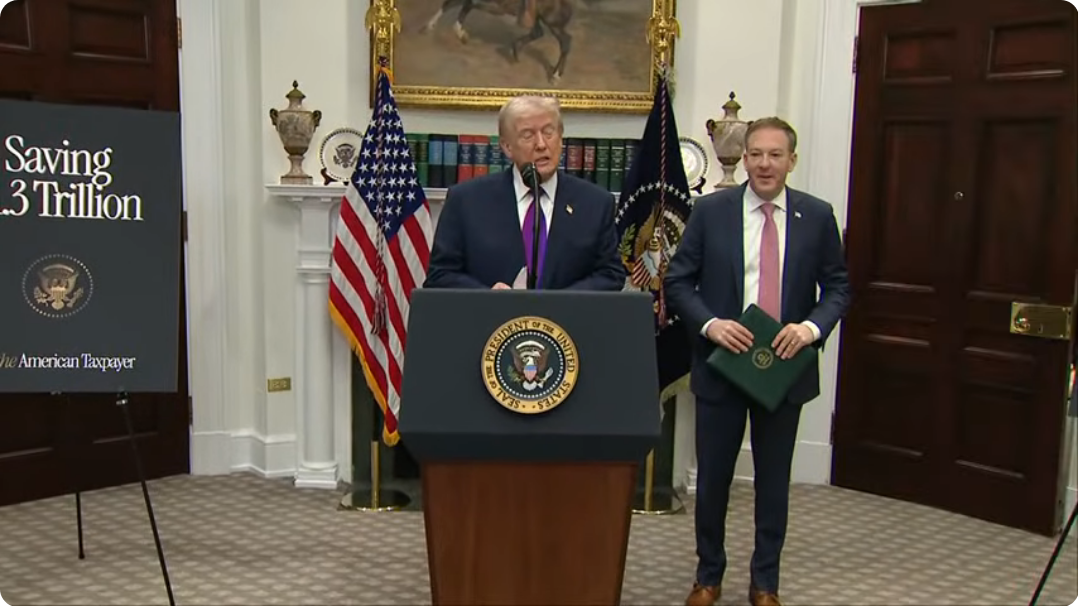

WASHINGTON, D.C. – President Donald Trump appeared with Environmental Protection Agency Administrator Lee Zeldin on Thursday to announce a major policy shift, the formal repeal of the 2009 “endangerment finding.”
That Obama-era determination said greenhouse gases threaten public health and welfare. Trump and Zeldin called the move the largest deregulatory action in US history. They also said it removes the federal government’s main legal basis for regulating carbon dioxide and other heat-trapping emissions under the Clean Air Act.
Inside the White House Roosevelt Room, Trump criticized the policy as government overreach. “We are officially terminating the so-called endangerment finding, a ridiculous Obama-era policy,” he said. He added that the change would end greenhouse gas emissions standards for vehicles for model years 2012 through 2027 and later. Trump described the repeal as the biggest deregulation effort the country has ever seen.
Zeldin, a former New York congressman, backed up Trump’s message and aimed at previous administrations. He called the 2009 finding “the Holy Grail of federal regulatory overreach.” He also accused the Obama and Biden teams of using it to push strict climate rules that, in his view, raised costs and hurt the economy.
Trump signed an executive order
“Today, the Trump EPA has finalized the single largest act of deregulation in the history of the United States of America,” Zeldin said. He claimed the repeal would save taxpayers more than $1.3 trillion, about $3,800 per person, by expanding consumer choice, helping the auto industry, and reducing everyday costs.
The endangerment finding dates back to December 2009. The EPA issued it after the Supreme Court’s ruling in Massachusetts v. EPA (2007). At the time, the agency concluded that six greenhouse gases, including carbon dioxide, methane, and nitrous oxide, pose risks to health and the environment.
Since then, the finding has served as the legal backbone for many federal climate rules. Those include tailpipe limits for cars and trucks, power plant standards, and other climate-related programs. By pulling it back, the Trump administration undercuts the legal support for those rules and could make it harder to regulate emissions from vehicles, factories, refineries, and other sources going forward.
The announcement ends a fast-moving review that started early in Trump’s second term. On his first day back in office, Trump signed an executive order directing the EPA to re-examine the finding’s legal basis.
Zeldin moved the process forward in March 2025 with a formal proposal to reconsider it, then advanced a repeal plan in July. Thursday’s final action came after public comment periods and internal legal work that referenced recent Supreme Court decisions, including Loper Bright Enterprises v. Raimondo and West Virginia v. EPA.
Supporters in the energy sector and among conservative lawmakers cheered the decision. They say the original finding stretched the Clean Air Act past what Congress intended. In their view, the resulting mandates drove up energy costs and limited domestic production. They also argue the repeal will support US oil and gas development, bring back auto jobs, and end what Zeldin has described as an “ideological crusade” against fossil fuels.
Climate Alarmists to Sue
Environmental groups and other critics responded with sharp opposition. They argued the repeal rejects well-established climate science and protects big polluters while putting public health at risk. Organizations, including the Natural Resources Defense Council and the Environmental Defense Fund, said they plan to challenge the move in court.
Former EPA officials and scientists said the evidence linking greenhouse gases to harm has only grown since 2009. They also pointed to recent years of record or near-record heat and costly extreme weather.
“This rule doesn’t change the reality of climate change, it just denies it,” said one former Biden-era EPA adviser. The Sierra Club called the repeal a “brazen assault” on American families.
The group warned it could lead to higher health costs tied to dirtier air, along with worse storms and floods, plus rising insurance bills. Meanwhile, legal analysts expect lawsuits from states, environmental organizations, and possibly cities. Those fights could push the issue back to the Supreme Court.
The ripple effects could reach far beyond vehicle rules. For example, the repeal may wipe out limits on emissions from power plants and industrial sites. It could also slow or scrap Biden-era vehicle standards. In addition, it may tie the hands of future administrations that want to address climate pollution without new legislation from Congress, which remains difficult in a divided Washington.
The move also tracks with conservative policy plans, including Project 2025, that have urged limits on federal climate authority.
As reactions pour in, the repeal highlights the country’s deep divide over climate policy. For Trump and Zeldin, it’s a win for deregulation and cost relief. For opponents, it’s a major setback in efforts to curb warming and reduce climate risks. Legal challenges now look likely, so the final impact may take months or years to sort out.