

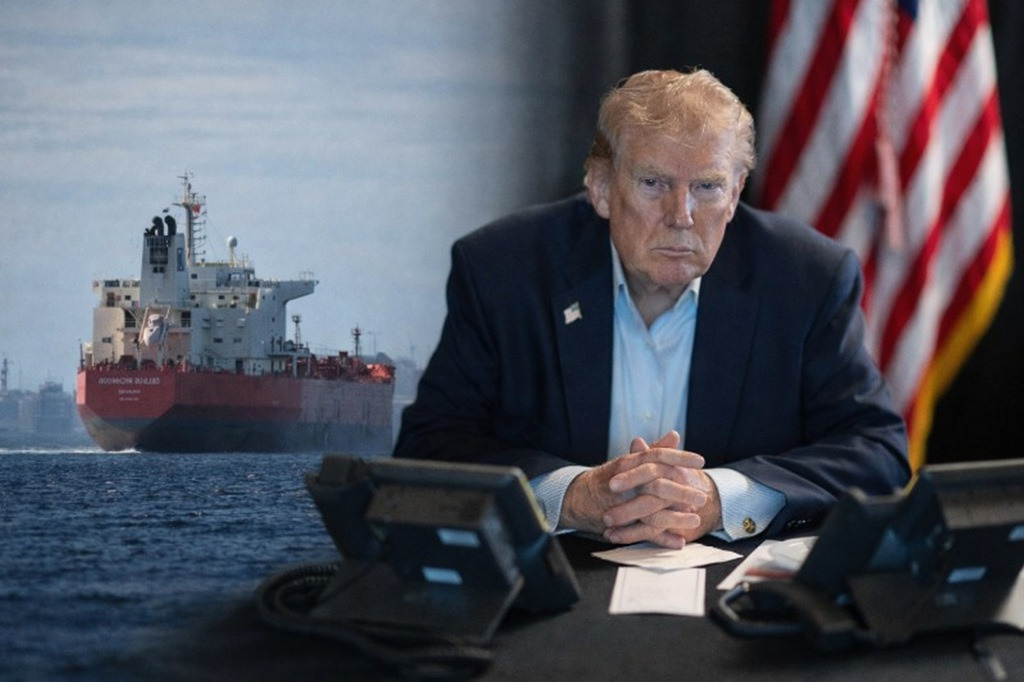


WASHINGTON, D.C. – President Donald Trump has ordered the U.S. government to offer political risk insurance and naval escorts for commercial ships moving through the Strait of Hormuz. The directive follows a pullback by major marine insurers, led by Lloyd’s of London, after threats to Persian Gulf shipping drove war-risk costs higher or pushed coverage off the market.
Supporters say the plan keeps oil and LNG moving and strengthens energy security. Critics say it also challenges a long-standing center of global marine insurance power in London.
The Strait of Hormuz is a narrow 21-mile passage between Iran and Oman. It carries about 20 to 30% of the global seaborne oil trade and a large share of LNG exports from Gulf producers.
After U.S. and Israeli strikes against Iran in late February 2026 (called “Operation Epic Fury” in some reports), threats and attacks around the waterway drove risk levels up fast.
- By early March, traffic through the strait fell by more than 80%. On some days, tankers did not move at all.
- Major Protection and Indemnity (P&I) clubs, including Gard (Norway), Skuld, NorthStandard (UK), the London P&I Club, and the American Club, sent 72-hour cancellation notices for war-risk add-ons that took effect March 5.
- Lloyd’s Joint War Committee widened the “high-risk” area to include the full Persian Gulf. As a result, many underwriters canceled coverage or raised premiums sharply, sometimes two to five times normal levels.
In practice, shipping slowed because money, not missiles, set the limit. Without workable war-risk insurance, shipowners and charterers would not send high-value tankers into danger. That left hundreds of vessels waiting and raised fears of a global energy squeeze.
Lloyd’s holds a major share of marine cargo and war-risk business, and it has long handled complex, high-loss exposures. Its marine roots go back centuries to Britain’s early merchant trade.
Trump’s Response: The U.S. Steps Into Maritime Insurance
On March 3, Trump posted on Truth Social that he had instructed the U.S. International Development Finance Corporation (DFC) to provide “political risk insurance and guarantees” for Gulf maritime trade at a very reasonable price.”
The plan includes:
- Political risk insurance covering losses tied to war, terrorism, or government actions.
- Financial guarantees aimed at backing shipowners, charterers, and private insurers.
- U.S. Navy escorts for tankers when needed, echoing past U.S. protection missions in the region.
- A later announcement of a $20 billion reinsurance facility meant to steady prices and help restore traffic.
Trump framed the goal in simple terms: “No matter what, the United States will ensure the free flow of energy to the world.”
Using the DFC this way stands out because the agency usually supports development-related financing in emerging markets. Still, there is a recent parallel. In 2023, an insurance effort helped support Ukraine grain exports with participation from Lloyd’s and other firms.
What This Could Mean for Lloyd’s of London and the UK
Lloyd’s remains a global hub for specialty insurance and brings billions into the UK economy each year through premiums, jobs, and related services. Around 50,000 people work in insurance and connected roles in the City of London. Marine and energy coverage sit at the center of that system, and war-risk insurance, while niche, can carry real geopolitical weight.
Some analysts think Trump’s move could pull business away from London over time:
- If U.S.-backed coverage stays dependable and priced well, some shippers may favor it after the crisis.
- British headlines have floated the idea that Trump could weaken a roughly £50bn insurance giant.
- Lloyd’s has taken a cooperative tone with the DFC and says it still leads on war-risk expertise. It also argues coverage is still available, even at higher rates, and that some traffic has started to return.
Even so, the message is hard to miss. A private insurance market in London has long been able to slow trade with pricing and capacity. Now, a state backstop is trying to remove that pressure point.
Bigger Ripple Effects for Energy, Alliances, and Markets
This standoff shows how finance, military power, and energy supply connect in real time.
- Energy security and prices: By pushing shipments to resume, the U.S. reduces the risk of price spikes at home and helps allies that depend on Gulf oil and LNG.
- Tension with close partners: In London, some see the policy as a direct hit to a key national industry.
- Oil market reaction: Prices jumped at first, then eased after Trump’s announcement. Still, war-risk costs remain high, and sentiment is shaky.
- Limits of insurance alone: Shipping leaders warn that guarantees only help up to a point. If attacks continue, fear can outrun price. At the same time, more naval activity can raise the sense that the route is a live conflict zone.
The administration’s approach blends money, security promises, and military readiness. In effect, the U.S. is presenting itself as the backstop for key sea lanes.
What Comes Next for Hormuz Shipping and War-Risk Coverage
Results will hinge on execution. That includes the fine print of DFC coverage, how it coordinates with private insurers, and whether Navy escorts become routine. Lloyd’s has signaled it can work with the U.S. effort, so a shared model may emerge instead of a clean replacement.
Still, the larger shift is clear. Where private underwriters once had near veto power over a critical chokepoint, direct government support is moving in to keep tankers sailing.
For now, the U.S. has acted to prevent a supply shock, and it has turned an insurance freeze into a test of who guarantees global energy flows.