Politics
Carney and Starmer’s Iran U-Turn Betrays Their Closest Ally
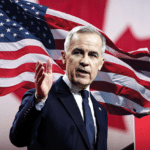
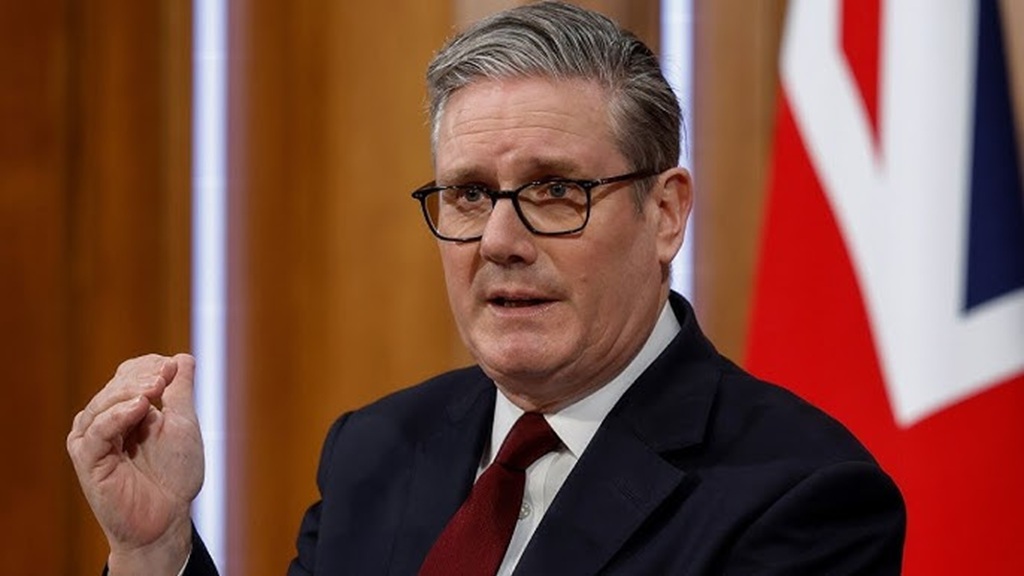
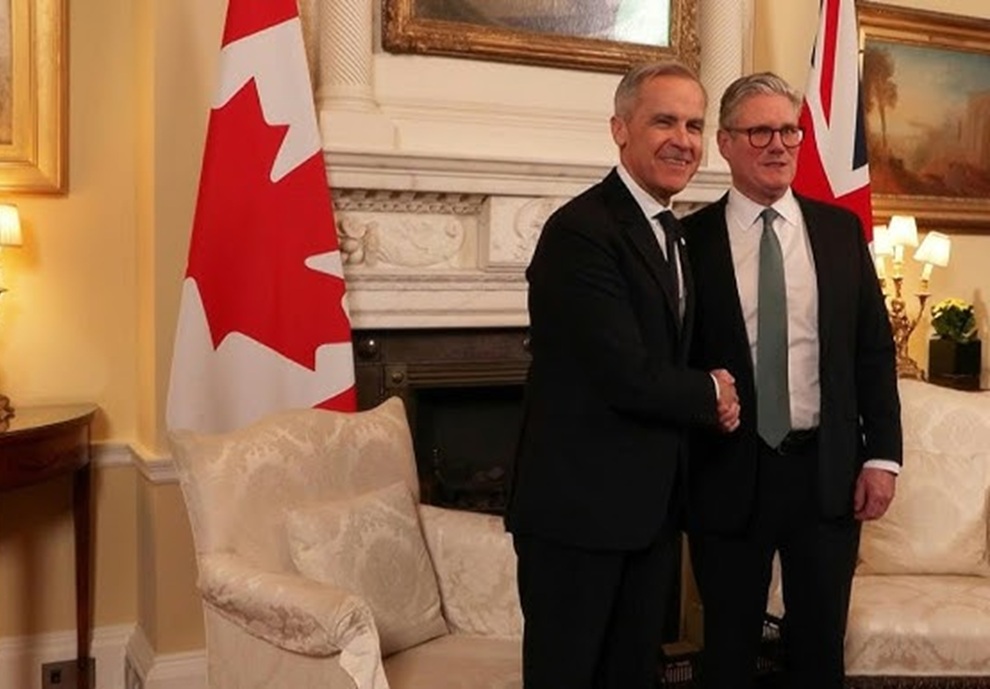
WASHINGTON, D.C. – As the Middle East conflict intensifies, Canadian Prime Minister Mark Carney and UK Prime Minister Keir Starmer face growing backlash over their shifting stances on the joint U.S.-Israeli campaign against Iran.
Early reactions sounded supportive of strikes meant to cripple Iran’s nuclear program and remove senior regime leaders. Soon after, both leaders leaned into calls for restraint, expressed regret, and pointed to international law.
Critics say the change in tone looks like weakness. They also warn that it harms trust with Washington and Tel Aviv. Others argue that both leaders are putting domestic politics ahead of alliance unity.
With Iran firing back and the risk of a wider war rising, their moves have sparked a fresh debate. Are they responding to political pressure at home, or trying to defend global rules?
What Set Off the Iran Conflict
The U.S.-Israeli operation began in late February 2026. It hit Iranian nuclear sites and senior leadership, including Supreme Leader Ayatollah Ali Khamenei. The U.S. and Israel described the strikes as preemptive self-defense tied to Iran’s nuclear ambitions and support for regional militant groups. Iran answered with missile attacks on Israel and U.S. partners, pushing the region closer to a broader conflict.
- Key events timeline:
- February 28, 2026: First U.S.-Israeli strikes kill Khamenei and weaken Iran’s military capacity.
- March 1-2, 2026: Iran launches retaliatory strikes across the region, including at U.S. bases.
- March 3-4, 2026: Carney and Starmer release statements that mix support with warnings and criticism.
The offensive has split allies. Some countries, including Australia, have raised legal concerns without fully condemning it. Others, like France, have criticized the operation for sidestepping the UN.
Carney’s Early Support, Then a Quick Change in Tone
Mark Carney, newly in office after a Liberal victory, first sounded aligned with Washington. On February 28, Carney and Foreign Affairs Minister Anita Anand said, “Canada supports the United States acting to prevent Iran from obtaining a nuclear weapon and to prevent its regime from further threatening international peace and security.” The message matched Canada’s long-running concerns about Iran’s human rights record and nuclear activity.
Still, Carney softened his approach within days while visiting Australia. At the Lowy Institute in Sydney, he called the crisis “another example of the failure of the international order.” He also said the U.S. and Israel acted “without engaging the United Nations or consulting with allies, including Canada.” Even while keeping broad support for the goal, he added that he backed it “with regret,” and he urged fast de-escalation to reduce the chance of a larger war.
Opponents quickly called it a reversal. Conservative MP James Bezan wrote on Facebook: “Mark Carney’s flip-flops on Iran are leaving Canadians confused. Carney first said he supported U.S. airstrikes, then expresses regret about backing them.” Some analysts point to tension inside the Liberal Party. For example, former Foreign Minister Lloyd Axworthy compared the moment to Canada’s 2003 decision not to join the Iraq invasion.
- Why Carney may have shifted:
- Pressure from party voices that want UN involvement and coalition decision-making.
- Polling suggests Canadians distrust one-sided U.S. military action.
- A desire to avoid deeper military involvement, since Carney hasn’t ruled out support but keeps stressing diplomacy.
As a result, Canada’s role in global security is under sharper scrutiny. Supporters call it careful and principled. Critics call it turning away from allies when it matters.
Starmer’s Cautious Line and His Refusal to Join the Offensive
Keir Starmer, prime minister since Labour’s 2024 landslide, has kept a steadier but guarded position. On February 28, he said, “The United Kingdom played no role in these strikes but we have been clear, the Iranian regime is abhorrent.” He also condemned Iran’s retaliatory attacks. At the same time, he framed UK involvement as defensive, including support to protect allies under collective self-defense.
By March 3, Starmer told Parliament the UK “does not believe in regime change from the skies.” That statement created distance from U.S. President Donald Trump’s harder line. Starmer also said UK bases in Cyprus and elsewhere would support defense, not offensive strikes. Trump responded by mocking Starmer as “not Winston Churchill,” and he framed Starmer’s approach as weak.
Starmer’s caution reflects lessons many in Labour associate with the 2003 Iraq War. He has called for de-escalation and a negotiated outcome, which also puts him closer to countries like France.
- Criticism aimed at Starmer:
- Conservatives say he’s hesitating and damaging UK-U.S. ties.
- Some critics see him trying to satisfy anti-war voices inside Labour.
- Trump claimed Starmer is influenced by Muslim voters, after Labour faced setbacks in some Muslim-majority areas.
Even so, Starmer has repeatedly supported Israel’s security. Still, his hesitance on arms sales has added strain to the relationship.
International Law: Real Principle or Handy Cover?
Both leaders often point to international law to explain their positions. Carney said the strikes appear “inconsistent with international law” because the UN wasn’t involved.
At the same time, he supported the goal of stopping Iran from obtaining a nuclear weapon. He also pointed to years of stalled UN resolutions and failed diplomacy, framing the crisis as proof that the system isn’t working well.
Starmer, a former Director of Public Prosecutions, has stressed that UK defensive actions meet international law standards. He backed that up by releasing legal advice. He also pushed back on unilateral regime change, citing UN Charter limits on the use of force without Security Council approval.
- The case for and against this argument:
- Pros: It supports multilateral action, may limit escalation, and keeps room for diplomacy.
- Cons: Critics say it works as an excuse, while ignoring Iran’s alleged breaches tied to the Nuclear Non-Proliferation Treaty and ongoing human rights abuses.
- Past comparisons, including Iraq, shape the debate. Some fear legal caution leads to drift and instability, while others see it as a guardrail.
So far, supporters praise the legal focus as responsible. Hawks dismiss it as unrealistic when facing an Iran they view as a direct threat.
Domestic Politics: Voters, Party Pressure, and Cabinet Tensions
A repeated charge is that both leaders are responding to politics at home, including worries about backlash from Muslim voters. In the UK, Labour has struggled in several Muslim-heavy constituencies.
In some areas, pro-Palestinian organizing helped Green Party candidates make gains. Starmer’s appearance at a “Big Iftar” event in Westminster, where he spoke about rising anti-Muslim hostility and defended his Iran approach, added fuel to claims he’s trying to placate critics.
Trump said Starmer is “pandering to the UK’s Muslim voters” because he won’t join offensive strikes. Conservative voices, including Priti Patel, have called Starmer weak on major foreign policy tests, and they argue voter politics is shaping his choices.
Carney faces a different kind of pressure. Liberal divisions seem to matter more than any single voting bloc. MPs like Will Greaves have urged restraint in public, with a focus on civilian protection and consistent messaging.
Canada’s diverse population also raises the stakes, including a significant Iranian-Canadian community. One Canadian-Iranian user on X criticized Carney’s emphasis on diplomacy in light of Iran’s treatment of protesters.
- Signs ideology may be shaping decisions:
- Starmer leads a party with a strong anti-war streak, even if he has moderated it in office.
- Carney’s background as an economist ties him to a rules-based approach over unilateral action.
- Both leaders face internal friction; for Starmer, reports suggest figures like Ed Miliband questioned close alignment with the U.S.
Aides reject claims of voter-driven pandering. Even so, the political math at home keeps shaping how both leaders speak and act.
Credibility Problems at Home and Overseas
The public shifts have come with a cost. In Washington, Trump has attacked Starmer’s response as “feeble,” putting pressure on the “special relationship.” Carney’s mixed messaging has also drawn scrutiny from U.S. commentators, who question whether Canada is reliable in a crisis.
At home, Carney faces Conservative attacks that paint his position as unclear. Polling also shows Canadians are split on how far to support military action. In the UK, critics from the Conservatives and Labour’s left accuse Starmer of making the country look indecisive on the world stage.
- How allies and rivals may read it:
- Critics say the U.S. and Israel feel “spat upon,” because support looks delayed or conditional.
- NATO unity could weaken if major partners hesitate, which may encourage adversaries like Iran or Russia.
- Online reactions show frustration, with X posts calling Starmer a “flip-flop” on Israel-Iran issues.
Defenders answer with one central point: caution can prevent a repeat of Iraq. From that view, steady diplomacy protects long-term credibility better than rushing into another open-ended fight.
What This Means for Western Alliances
The Carney and Starmer episode shows real strain inside Western alliances at a dangerous moment. As Iran rebuilds and retaliates, shared policy matters more than ever. Their focus on de-escalation could help open talks. Still, critics worry it weakens deterrence and sends the wrong signal.
In Canada, Carney’s Indo-Pacific trip points to deeper work on alliances outside the Middle East. That also hints at a desire to avoid getting pulled into a regional war. In the UK, Starmer has focused on domestic security and community safety, including steps meant to protect both Jewish and Muslim communities during a tense period.
- Possible paths ahead:
- Escalation: If Iran widens the fight and partners respond, Canada and the UK could be pulled into defense roles.
- Diplomatic push: A renewed UN track could support their legal framing, if major powers commit to it.
- Political fallout: Backlash from voters could shape future policy choices in both countries.
Mark Carney and Keir Starmer are trying to balance alliance ties, international rules, and politics at home. Their shifting language may reflect real concern about legality and escalation.
For critics, it looks like hesitation and betrayal of close partners. As the Iran conflict keeps moving, both leaders will need to choose clarity over mixed signals, and allies will be watching what they do next.
Related News:
Iran’s International Law Claims Ring Hollow Amid Decades of Violations
Politics
New York Governor Hochul Slammed For Begging Rich to Return
NEW YORK – Governor Kathy Hochul faces criticism from both sides of the aisle. She recently urged wealthy people who fled the state to come back. However, folks still remember her 2022 campaign remarks. Back then, she told opponents to grab a bus ticket to Florida.
This change fuels charges of inconsistency. It also spotlights New York’s shrinking tax base. The state struggles to fund its big social programs as a result.
At a Politico event this month, Hochul discussed state finances. She rejected New York City Mayor Zohran Mamdani’s push for higher taxes on the rich. Instead, she stressed the need to keep or attract high earners.
“We need high-net-worth people to back our generous social programs,” she said. Some patriotic millionaires already pay extra, she noted. Then she added a key point. “First, let’s head to Palm Beach and convince some to return home. Our tax base has shrunk too much.”
Hochul admitted that other states offer lower taxes for people and businesses. Data backs this up. Many rich New Yorkers have moved to Florida, Texas, and similar spots in recent years.
Critics point to her words from four years ago. Hochul campaigned against Republican Lee Zeldin. She aimed barbs at Donald Trump and Dutchess County Executive Marc Molinaro.
“Trump, Zeldin, and Molinaro should jump on a bus to Florida where you fit. Get out of town. You don’t match our values,” she declared.
Now, people say those comments pushed conservatives and tax-weary wealthy folks to leave. Many packed up for warmer, cheaper states. Social media lights up with side-by-side videos of her old rant and new appeal. Commentators call it desperate or a total reversal. Budget woes drive the shift, they claim.
New York’s Tax Base Challenges
The state counts on top earners for most income tax revenue. A few percent of residents cover a huge chunk. When they go, schools, health care, transit, and services suffer big losses.
IRS data shows an outflow of rich people and workers. Palm Beach County in Florida draws a lot of that wealth.
Hochul’s camp highlights New York’s strengths in finance, tech, culture, and business. Still, they recognize the competition. Florida’s no-income-tax policy and lower living costs pull people away.
Several factors fuel this exodus, reports show. High income taxes lead the pack since New York tops national rates. Housing, utilities, and daily costs stay sky-high, especially near the city. Remote work after COVID lets pros relocate easily. Policy clashes over crime, schools, and rules send some packing. Plus, many skipped town during pandemic lockdowns and stayed gone.
Reactions Roll In from New Yorkers
Responses hit fast and hard. Nassau County Executive Bruce Blakeman, a Republican running for governor, dubbed it Hochul’s most honest moment. He mocked the pitch to swap Palm Beach sunshine, no state tax, and calm for New York’s issues. Cut taxes and costs instead of pleading, he advised.
Conservatives and business leaders agree. They push for tax cuts, fewer rules, and safer streets to compete. Appeals to patriotic millionaires won’t cut it, they say.
Some Democrats back her, though. They view it as facing facts. A wide tax base funds key services without slamming one group. The state offers incentives to lure businesses and people, they add. Online, memes mock the flip. “Come back, we need your tax money” pops up everywhere.
Bigger Picture: Blue State Exodus
New York isn’t unique. California and Illinois lose residents and firms to low-tax red states, too. This trend stirs national debates. Experts warn of a downward spiral. Fewer taxpayers force rate hikes. That chases away more people.
Hochul resists broad tax hikes on the rich during budget battles. She wants the state to stay competitive. Yet progressives like Mamdani demand more from top earners. Her words seek balance. Keep taxes fair and draw back high earners. With re-election looming, this topic matters. Voters watch budget moves, the economy, and daily life.
Tax-cut fans urge affordable homes, safe streets, cheap energy, and pro-business rules. Left-leaning critics want steeper taxes on the rich and bigger social spending.
Regular New Yorkers ask why people left and what pulls them back for good. Hochul reopened that talk publicly. Her Palm Beach plea may fall flat without policy fixes. Reactions so far scream too late. The next months will show if migration reverses or wealth keeps flowing out. Her mixed signals leave some confused and others mad.
Trending News:
Who Is Leading the Democratic Party in 2026?
Politics
Trump Ousts Attorney General Pam Bondi, Taps Loyalist Todd Blanche
WASHINGTON, D.C. – President Donald Trump shocked the Justice Department on Thursday. He fired Pam Bondi as U.S. Attorney General. Her deputy, Todd Blanche, steps in right away as acting attorney general.
Trump posted the news on Truth Social. He called Bondi a great American patriot. She now heads to a key private-sector job. Trump praised Blanche as a talented legal expert. This switch follows weeks of backlash against Bondi’s leadership. People questioned her work on big cases.
Bondi served about a year as attorney general. She started in early 2025. The Senate confirmed her on strict party lines.
Both parties criticized her during that time. Some said she chased politically driven cases. Others doubted the handling of the Jeffrey Epstein files. Epstein, the convicted sex offender, still draws huge attention.
Lawmakers from both sides accused her team of delaying sensitive papers. They wanted more openness. Bipartisan pressure built up.
Bondi fought back in statements. She highlighted fraud fights and immigration work. Reports show Trump talked with advisors for days about a change. Bondi knew about those chats.
In her statement, Bondi said she felt proud to serve. She plans a smooth handover with Blanche over the next month. She looks forward to her private job. There, she will keep backing Trump’s goals.
Meet Todd Blanche: Trump’s Pick for Acting AG
Todd Blanche, age 51, has a solid legal background. He began as a federal prosecutor in New York City’s Southern District. For almost 10 years, he tackled violent crimes, fraud, and corruption.
Later, he joined private practice at Cadwalader, Wickersham & Taft as a partner. He handled investigations and defenses. His clients included Paul Manafort and Rudy Giuliani. Most importantly, he defended Donald Trump.
Blanche led Trump’s team in the New York hush-money case with Stormy Daniels. He also worked on the 2020 election issues and the classified documents matter.
Trump trusted him after that close teamwork. Post-2024 election, Trump picked him as deputy attorney general. The Senate approved him 52-46 in March 2025.
As deputy, Blanche ran daily operations. That covers the FBI, DEA, ATF, and U.S. Marshals. He even acted as the librarian of Congress briefly. This firing marks the second major cabinet exit lately. Other spots in the administration faced shake-ups, too.
Friction points included several issues. First, the Epstein files stirred trouble. People questioned the release timing and fullness. That led to favoritism claims.
Next, some saw aggressive pursuits against Trump’s foes. In addition, internal fights over staff, focus, and messages grew. Trump stressed loyalty and outcomes in his post. He thanked Bondi. He showed faith in Blanche’s skills. Blanche replied fast on social media. He thanked Bondi for leadership and friendship. He also thanked Trump for the chance.
How Parties Responded
Democrats hit back hard. Senate Minority Leader Chuck Schumer worried about Blanche’s Trump lawyer’s past. They fear it mixes loyalty with fair justice. Some noted his Ghislaine Maxwell interview. Maxwell is linked to Epstein. Critics called it wrong, but transcripts showed no formal deal.
Republicans backed the move. They praised Bondi’s crime and border work. They view Blanche as a steady prosecutor who gets Trump’s plans. Experts note acting AGs often fill in short-term. The White House hunts for a Senate-approved permanent pick. EPA head Lee Zeldin pops up in talks.
The department has over 115,000 staff. It covers security and rights protection. Top changes hit morale, probes, and policies. Blanche promises steady work in key spots. He talks up fraud battles, police support, and trust-building lately.
Fans like his prosecutor-defense mix for balance. Critics worry Trump ties mean more politics. For now, he handles the switch. He juggles big cases while they pick a long-term boss.
Trump might nominate Blanche full-time. Sources say he considers other loyal conservatives, too. Any pick needs Senate okay. Republicans hold a slim edge. Hearings could spark fights over independence. Bondi’s leave prompts oversight vows. Both parties plan checks, maybe testimony on old calls.
Trump ousted Pam Bondi after 14 months. Todd Blanche, his ex-lawyer and deputy, takes the acting AG role. Criticism over the Epstein files and more drove it. Bondi heads private; she sees it as an honor.
Todd Blanche offers New York prosecution chops and private know-how. Parties split: loyalty vs. fairness worries. It fits recent staff shifts. Blanche now guides Justice amid heat. Watch how he handles probes and politics.
Related News:
Democrat Mayors Reject Trump’s Help as Crime Explodes in Blue Cities
Politics
President Trump Addresses Nation on War with Iran
WASHINGTON, D.C. – President Donald Trump addressed the American public from the White House on Wednesday night in his first prime-time national address since the United States and Israel launched coordinated strikes on Iran in late February, declaring that American military objectives are on the verge of being achieved and that the conflict, now in its 32nd day, will conclude “very shortly.”
Speaking for roughly 19 minutes, the president said U.S. forces have achieved “overwhelming victories” but did not offer a definitive timeline as questions swirled about when and how the war could formally wrap up.
According to a White House official ahead of the address, the president was expected to reaffirm his intention to end the war within the next three weeks and relay an “operational update” on the progress of the conflict, which he and top administration officials have characterized as running ahead of schedule.
“Operation Epic Fury”: Four Goals, One Deadline
“I’ve made clear from the beginning of Operation Epic Fury that we will continue until our objectives are fully achieved,” Trump told the nation. “Thanks to the progress we’ve made, I can say tonight that we are on track to complete all of America’s military objectives shortly, very shortly.”
The president again outlined the four core objectives the White House says it is pursuing: destroying Iran’s missiles and production facilities, annihilating its navy, ensuring Iran can no longer support regional militant groups, and guaranteeing that Tehran cannot obtain a nuclear weapon.
Trump reminded the nation that past American conflicts — World War I, World War II, the Korean War, the Vietnam War, and the war in Iraq — lasted for years, while he expects this operation to conclude soon. “We are in this military operation, so powerful, so brilliant, against one of the most powerful countries for 32 days, and the country has been eviscerated,” he said.
Threats Against Iran’s Energy Infrastructure
In some of the speech’s most pointed language, Trump escalated his warnings against Tehran, threatening severe consequences if Iran’s leadership refuses to negotiate.
The president said the U.S. will hit Iran “extremely hard” over the next two to three weeks and threatened to obliterate all of Iran’s electric generating plants and target its oil sites if the country’s leaders don’t make a deal.
Trump had previously threatened to destroy Iran’s water and energy infrastructure if a deal to end the war and reopen the key trade route is not reached soon. Wednesday night’s address signaled no retreat from that posture.
The remarks drew immediate condemnation from international observers and human rights organizations who warned that targeting civilian energy infrastructure could constitute a violation of the Geneva Convention.
The Strait of Hormuz: An Economic Crisis at Choke Point
Central to Wednesday’s address was the closure of the Strait of Hormuz, the narrow waterway through which roughly one-fifth of the world’s oil supply passes. Iran has effectively shuttered the passage since the war began, triggering a cascading global economic shock.
As a result of the war, Iran has sharply curtailed traffic through the Strait of Hormuz, leading to higher oil prices, with gasoline in the U.S. now averaging more than $4 per gallon — a level not seen since 2022.
Higher fuel costs are beginning to ripple through prices on a wide variety of goods. The Strait’s closure has also raised the price of some fertilizers, hurting farmers.
Trump told allies that countries heavily relying on the Strait of Hormuz “must take care of that passage” and “grab it and cherish it,” suggesting nations struggling to secure sufficient fuel should purchase it from the United States. He added that once the conflict concludes, “the strait will open up naturally.”
Earlier in the day, Trump had urged allies who did not join the war but are facing fuel shortages to “build up some delayed courage, go to the Strait, and just TAKE IT,” saying the United States “won’t be there to help you anymore.”
Iran Rejects Ceasefire Claims, Vows to Continue Fighting
Hours before Trump’s primetime address, the president posted on social media claiming Iran’s president had asked for a ceasefire — a claim Tehran flatly denied.
Iran’s foreign minister called Trump’s claim “false and baseless,” according to a report on Iranian state television.
Iranian Foreign Minister Abbas Araghchi told Al Jazeera that Tehran is not in direct negotiations with Washington, despite Trump’s claims that the U.S. is in “serious discussions” with what he described as a “new, and more reasonable regime” in Iran. “Negotiation is when two countries engage in talks to reach an agreement, and such a thing does not exist between the United States and us,” Araghchi said.
Iran’s foreign minister also said his country is prepared for “at least six months” of war, directly contradicting Trump’s two-to-three-week timeline for wrapping up the operation. “We do not set any deadlines for defending ourselves,” Araghchi told Al Jazeera. “We will defend our country and our people as far as necessary and by any means required.”
Regime Change and Nuclear Ambiguity
Trump addressed the sensitive issue of regime change, saying, “Regime change was not our goal. We never said regime change. But regime change has occurred because of the deaths of all of their original leaders. They’re all dead. The new group is less radical and much more reasonable.”
On the question of Iran’s nuclear capability — cited by the administration as a central justification for launching the war — the president’s position remained notably ambiguous. Trump said Tuesday, “They will have no nuclear weapon, and that goal has been attained.” But he later hinted that another president may have to return to the issue in the future, saying Iran “will not be able to do a nuclear weapon for years.”
Netanyahu, for his part, asserted that the U.S.-Israeli strikes have eliminated Iran’s ability to produce nuclear weapons and ballistic missiles, thereby removing what he called “two existential threats” to Israel.
Lebanon, Gulf States, and the Widening War
Lebanon has become another major front in the larger Middle East war. More than 1,300 people in Lebanon have been killed in about four weeks of Israeli attacks, according to Lebanon’s Health Ministry, and more than a million people have been displaced by the fighting and Israel’s broad evacuation warnings.
A drone attack struck Kuwait International Airport’s fuel depots on Wednesday, causing a “massive blaze” with significant damage to fuel tanks, though no injuries were reported. Meanwhile, Bahrain’s Interior Ministry said it was working to extinguish a fire at a company facility following a separate Iranian drone attack.
Some Persian Gulf allies, including Saudi Arabia and the United Arab Emirates, have privately urged the Trump administration to press ahead with strikes on Iran to ensure the regime can no longer threaten the region with ballistic missiles and drones. “Our message is: Finish the job,” said one senior Gulf official.
Public Opinion and Political Pressures
The address comes at a politically fraught moment for the administration. Trump’s approval rating has continued to slide amid the war, hitting first-term lows in both the New York Times and RealClearPolitics polling averages.
New CNN polling shows just one-third of the American public believes Trump has a clear plan to handle the situation in Iran. Americans are not sold on the war’s costs, and significantly more Americans say the economy — rather than the war — is the most important issue facing the country.
Oil prices fell below $100 per barrel, and Asian shares surged on Wednesday over renewed optimism about a potential de-escalation following Trump’s suggestion he would likely end U.S. operations within several weeks. Brent crude, the international benchmark, dropped to $99.05 per barrel in early trading.
The foreign ministers of Pakistan and China issued a joint statement Tuesday calling for talks as part of a broader peace plan, demanding a ceasefire, an end to attacks on civilian infrastructure, and the reopening of the Strait of Hormuz.
As the conflict enters its second month with no formal ceasefire in sight, the coming days may prove decisive — a sentiment echoed by Defense Secretary Pete Hegseth, who declared earlier this week that the “upcoming days will be decisive” in the war with Iran.
This is a developing news story. Updates will be published as further information becomes available.
Related News:
Iran Rejects China’s Mediation Offer in Ongoing War with US and Israel
Trump Warns NATO Allies: America Won’t Protect Slackers After Iran Clash
-
China2 months agoChina-Based Billionaire Singham Allegedly Funding America’s Radical Left
-
Politics2 months agoCNN Delivers Stark Reality Check to Democrats Over Voter ID
-
News3 months agoMosque Set Ablaze in Iran a Citizens Revolt Against the Islamic Regime
-
Politics2 months agoIlhan Omar’s Connections to Convicted Somali Fraudsters Surface
-
Politics3 months agoPresident Trump Addresses ICE Actions Amid Minnesota Unrest
-
Politics3 months agoTim Walz Exposed For Faking Financial Records In State Audit
-
News3 months agoFormer CNN Anchor Don Lemon Facing Charges Under Ku Klux Klan Act
-
News3 months agoErika Kirk’s Early EMP Documentary Fuels CIA Grooming Rumors